Rami Malek has the teeth, the walk and the fist, and the Live Aid finale is as good as everyone says. Around it, Anthony McCarten’s script turns one of the loudest lives in British pop into a well-behaved one.
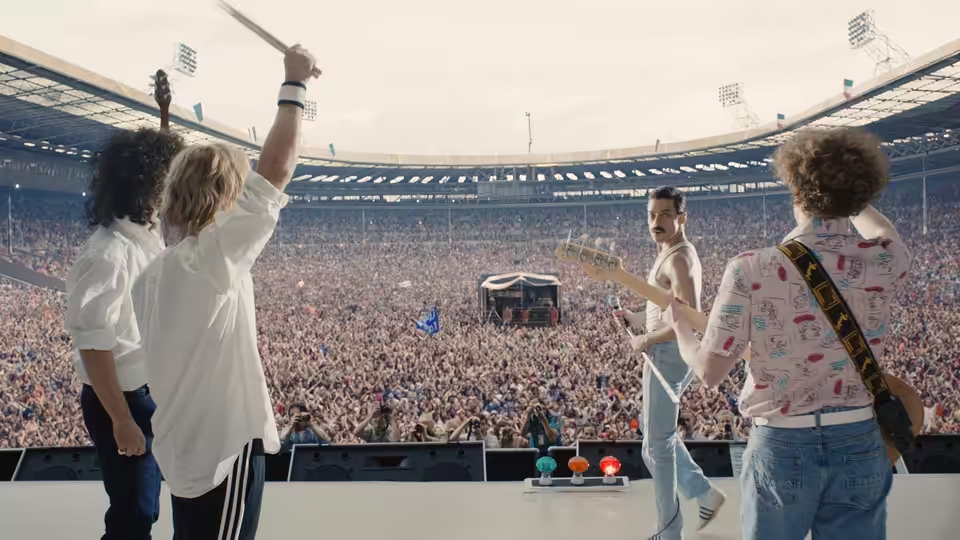
Bryan Singer’s film runs from Farrokh Bulsara loading bags at Heathrow in 1970 to Freddie Mercury walking out at Wembley for Live Aid in 1985, and it opens with the second, so you know where it is heading. Anthony McCarten’s script, from a story he wrote with Peter Morgan, fills the years between with scenes from other rock films: the pub where the singer quits, the van sold to pay for a recording, the executive who does not get it, the manager who does. At 135 minutes it moves quickly and says little.
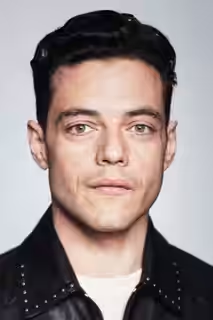
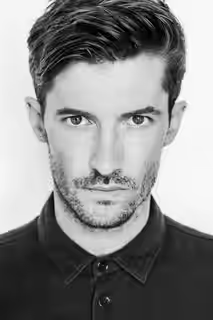
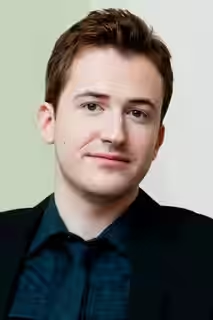
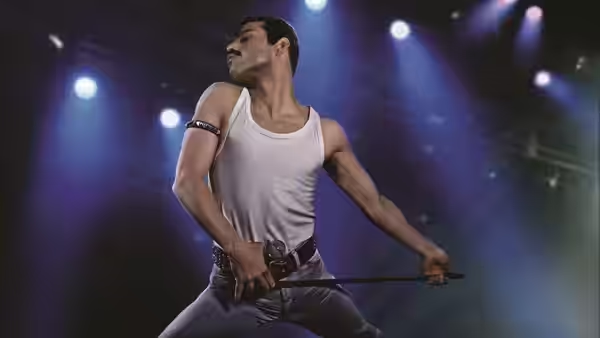
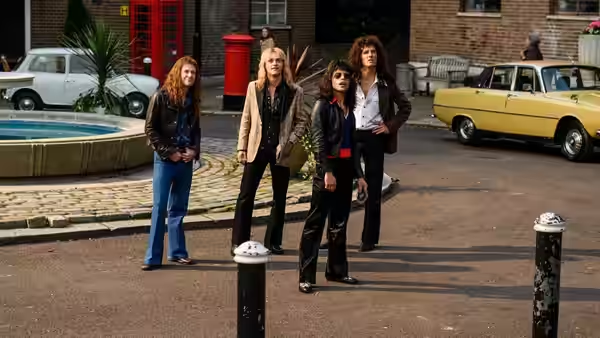
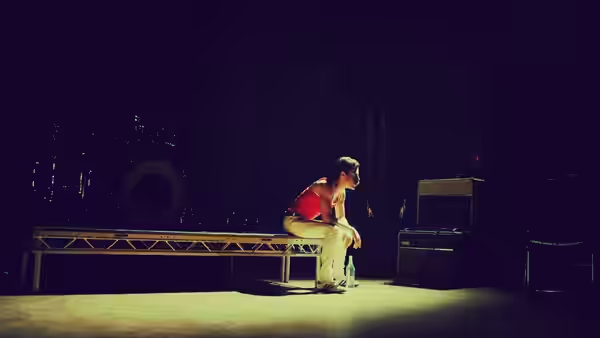
Rami Malek is the reason to watch it. He wears false teeth he never quite gets his lips over, and rather than hide this he uses it; his Freddie talks with a hand near his mouth and sings with the whole jaw thrown forward. On stage he has the walk exactly, the half mic stand held like a sceptre. Off stage he has a watchful loneliness the script keeps forgetting to write lines for. The band around him are a sitcom family: Gwilym Lee’s Brian May the sensible one, Ben Hardy’s Roger Taylor the one who throws things, Joseph Mazzello’s John Deacon the one nobody notices until he plays the bass line of “Another One Bites the Dust”.
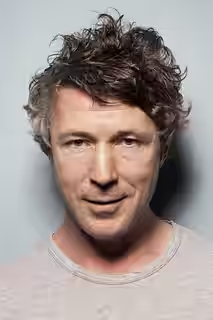
The scenes where the songs get made are where the film is happiest and where we were not. Aaron Haye gives the band a farmhouse studio full of tape reels and hay, and Singer stages the recording of the title track as a demonstration, part by part, with a joke on the end of each. John Ottman cuts the film as if afraid it will get away from him; a conversation with John Reid (Aidan Gillen) across a pub table is chopped into so many angles that we started counting and gave up. Mike Myers turns up as Ray Foster, an executive who insists nobody will play a six-minute song. We did not laugh. We were bored, and then cross about being bored, because the man they were making a film about never bored anyone.
Lucy Boynton’s Mary Austin is the second-best performance and the worst used. She plays the woman Freddie loves and cannot stay with in a stillness the script rewards by making her its conscience, which is a job rather than a part. Allen Leech’s Paul Prenter is lit and written as the bad influence from his first scene, so the harder parts of Mercury’s life can be kept at arm’s length. The 12A certificate is not the problem. A film can be discreet and still honest; this one is discreet and vague.
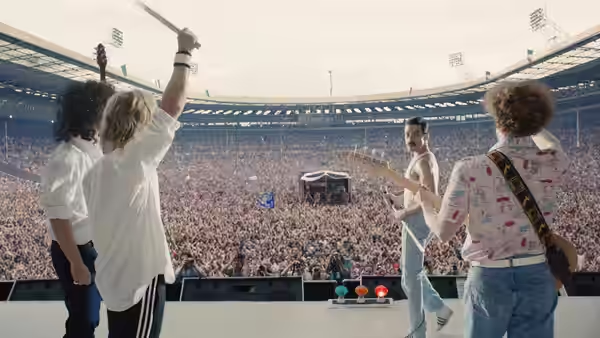
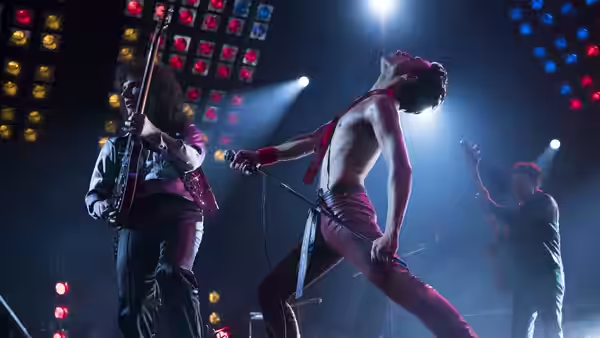
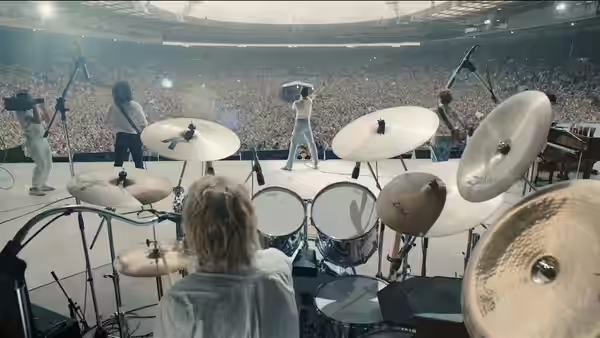
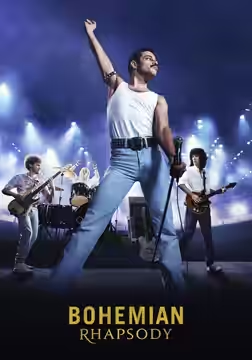
On stage it comes alive, and Newton Thomas Sigel has a good deal to do with that. He shoots the early gigs low and hot, and the arena years from a crane sweeping the crowd during “We Will Rock You”. Julian Day’s costumes do the biography the script does not: harlequin leotards, then leather, then the white vest, jeans and studded armband of 1985, a man who has stopped decorating himself. The Live Aid recreation runs close to twenty minutes and is the best thing here, because it is the stretch where Singer lets the performance carry itself. The plastic cups sit on the piano, Malek plays the opening bars of “Bohemian Rhapsody”, and the crowd answers every call. We were moved, more than we expected and more than the two hours before had earned, and we could not say afterwards how much of that was the film and how much was the songs.
McCarten wrote The Theory of Everything, another film that took a difficult life and made it comfortable, and the method is the same here. The rock biopic at its best gets close enough to its subject to be surprised by him, and nobody here is surprised by Freddie Mercury. They know how it ends and they are hurrying to get there.
See it if you love the songs and can forgive the film for loving them more than it loves the man. Watch at home and you will be tempted to skip to Wembley. We would not blame you, and on the evidence neither would the film.