Pedro Almodóvar’s noir about a blind screenwriter and the woman he lost is immaculately made and oddly cool to the touch. The colours and Penélope Cruz hold the eye; the heart is harder to find under so much plot.
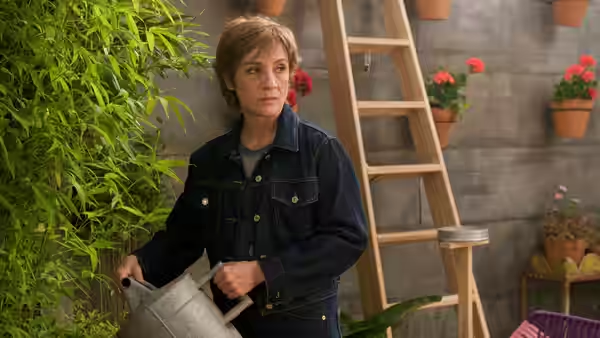
Pedro Almodóvar’s Broken Embraces is told by a man who cannot see. Harry Caine (Lluís Homar) is a blind screenwriter in Madrid, looked after by his agent Judit García (Blanca Portillo) and her son Diego (Tamar Novas). When the papers report the death of a financier called Ernesto Martel, the past rings his doorbell in the shape of a young director calling himself Ray X (Rubén Ochandiano). What follows is a thriller about jealousy, a melodrama about an affair and a comedy about making a comedy, each built with care. It is cool to the touch, it means to be, and that is where our reservations start.
The story Harry tells, from a chair beside Diego’s hospital bed, goes back to the early 1990s, when he was still Mateo Blanco and still directing. Lena (Penélope Cruz) is Martel’s secretary, then his mistress, and she wants to act. Mateo gives her the lead in Girls and Suitcases; Martel (José Luis Gómez) pays for the film so he can keep her in sight; Martel’s son follows the shoot with a video camera, making a documentary nobody asked for. The comedy itself is a near-copy of Almodóvar’s own Women on the Verge of a Nervous Breakdown (1988), gazpacho and all, and Carmen Machi gets its best scene, a neighbour’s monologue she carries alone.
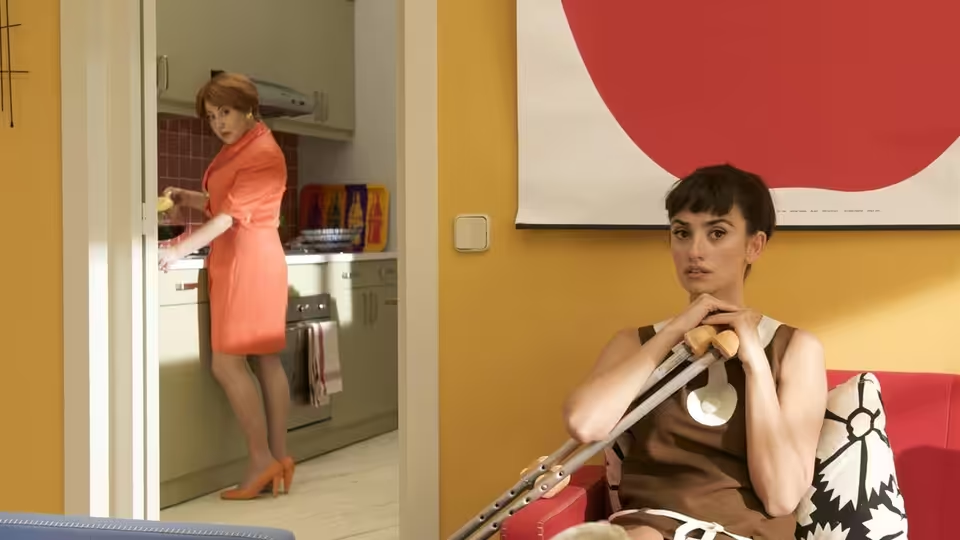
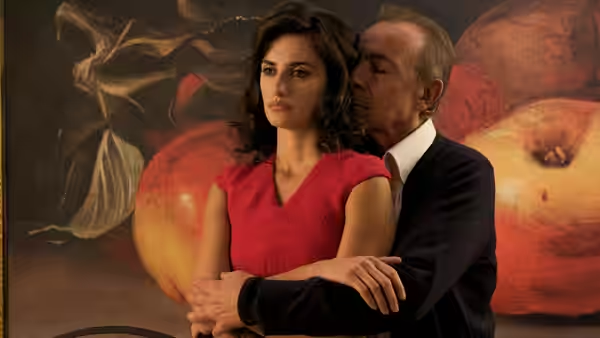
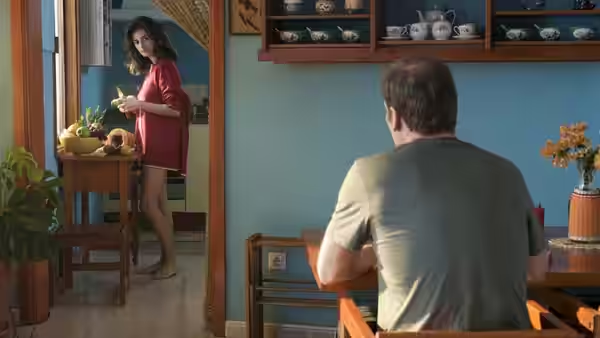
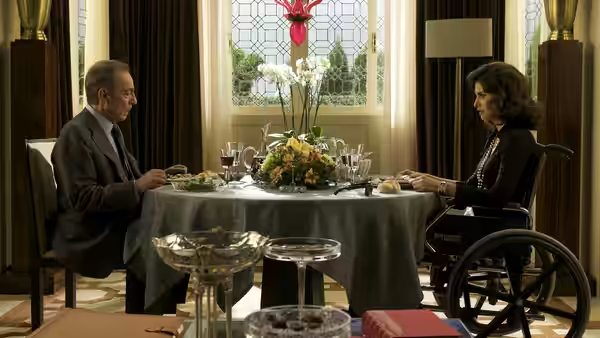
Rodrigo Prieto lights the present in greys and pale daylight and the past in saturated colour, so that every cut back to Lena is a cut to red: her lips, her dress, the sofa behind her. Sonia Grande runs Cruz through a screen test in wigs and frocks, Audrey Hepburn one moment and Marilyn Monroe the next, and Mateo falls for all of them. Antxón Gómez and Víctor Molero give Martel a large, hard, expensive house and Harry a flat lined with scripts he can no longer read. Alberto Iglesias writes a low string theme for the lovers and nervous plucked cues for the watching, and his is the one department that seems to know this is a tragedy. José Salcedo cuts between the decades on a line and a glance, and we were never lost.
Homar is the steady centre. As Harry he is dry, flirtatious and a little vain about his blindness; as Mateo he is a director who has stopped watching his film to watch his lead. Portillo says least and carries most. Gómez plays Martel as courtesy with a grip in it. The scene we cannot shake is his: Martel in a screening room with a lip reader (Lola Dueñas) beside him, having his son’s footage of Lena read back line by line, so he can learn what she says about him when she thinks he cannot hear. We were chilled by it, more than by anything the plot does later, because here is a man paying a professional to narrate his own humiliation, and listening with perfect manners.
Cruz is the problem, through no fault of hers. Lena is looked at from the first frame to the last, by Martel, by his son’s camera, by Mateo, by Prieto, and looking is not the same as knowing. She is given little to want beyond a part and a way out, and the film is more interested in her sunglasses than in either. In Volver (2006) Almodóvar gave her a kitchen, a daughter and a secret, and she was alive in every scene. Here she is photographed, over and over, and photographed well.
The second half takes a turn we will not describe. What we can say is that once the plot has collected its pieces, Almodóvar lays them out one at a time, and the last half hour is mostly explanation. Every photograph, every reel of footage and every lie turns out to have its reason, and he is thorough about it in a way that costs him feeling. We admired the tidiness and felt our attention loosen.
Set beside All About My Mother (1999) and Volver, this is the minor work, the one where the director’s love of film has crowded out his love of the people in it. The reviews so far split down the middle, and we land in the middle with them.
See it for the colour, for Homar, for Machi’s monologue and for the lip reader. Watch it at home with the lights down, where the reds are richer and the plot has room to be slow, which suits it. It runs 127 minutes and carries a 15.