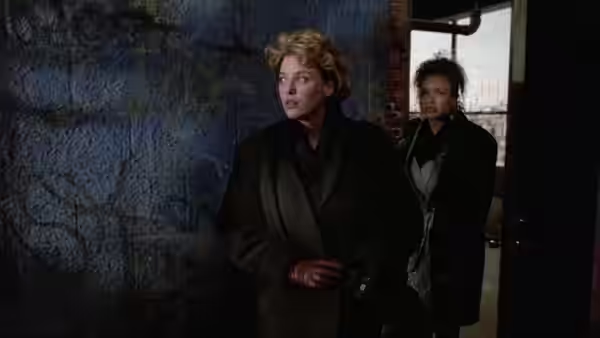
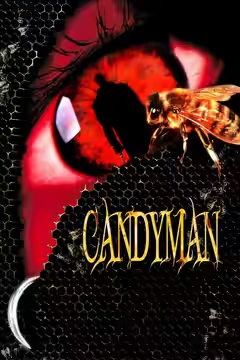
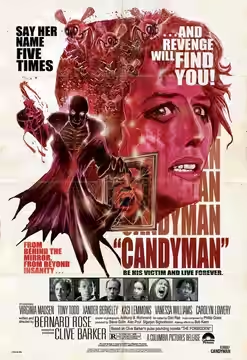
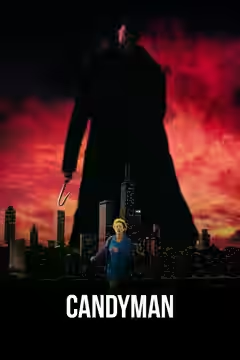
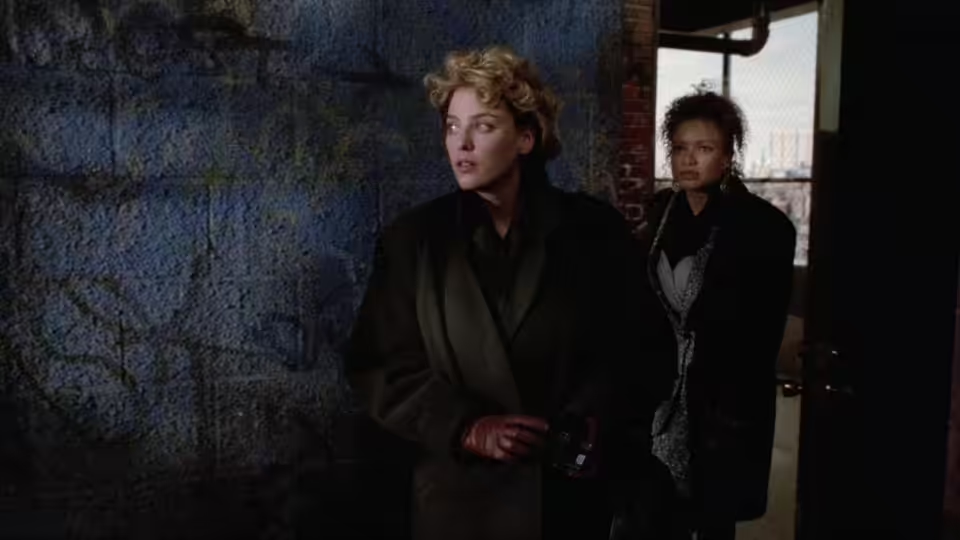
Helen Lyle (Virginia Madsen) and Bernadette Walsh (Kasi Lemmons) in a graffiti-covered abandoned building
Film review

Candyman

1992 · Directed by Bernard Rose · 1h 40m

In a sentenceTony Todd makes a hook-handed killer seem worth hearing out, which is not a sensible survival instinct

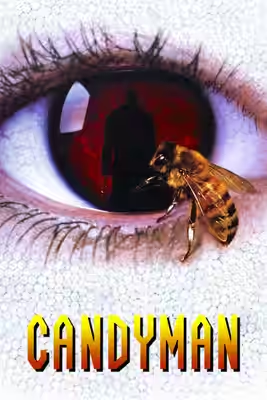
In Chicago, doctoral student Helen Lyle (Virginia Madsen) investigates urban legends and the people who pass them on. Her research leads her to the Cabrini-Green housing project, where stories circulate about a hook-handed figure known as Candyman (Tony Todd). His name comes with a challenge: say it five times. Helen sets out to examine the stories, but her investigation raises the possibility that the figure she is studying may be real. Bernard Rose writes and directs this horror film, with Kasi Lemmons as Bernadette Walsh and Xander Berkeley as Trevor Lyle.

Plays from YouTube when you press play; nothing loads from them until then.

Fi1m review

Bernard Rose makes urban folklore frightening and difficult to dismiss, with Tony Todd’s seductive monster and Philip Glass’s music doing much of the work. The plotting is less assured, but we recommend it to anyone who likes horror with something troubling behind it.

Bernard Rose’s Candyman is a frightening, unusually thoughtful horror film, even when its plotting asks for more patience than it earns. Its subject is the urban legend: who tells it, who believes it and who gets to treat somebody else’s fear as research. Helen Lyle, played by Virginia Madsen, approaches the stories as a doctoral student. Rose gives that academic curiosity an uncomfortable edge. We can enjoy the investigation while recognising how much easier it is to study a place when we do not have to live there.

Adapted from a story by Clive Barker, the film takes its investigation to Chicago’s Cabrini-Green housing project. The setting gives Rose a way to consider race and class through the familiar business of following a frightening rumour. Jane Ann Stewart’s production design makes the housing project’s neglect oppressive, and Anthony B. Richmond’s cinematography makes it frightening even before we consider what might be supernatural. It is effective, although there is a cost. The more threatening the estate looks, the harder it becomes to separate the residents’ circumstances from the film’s appetite for a scare.

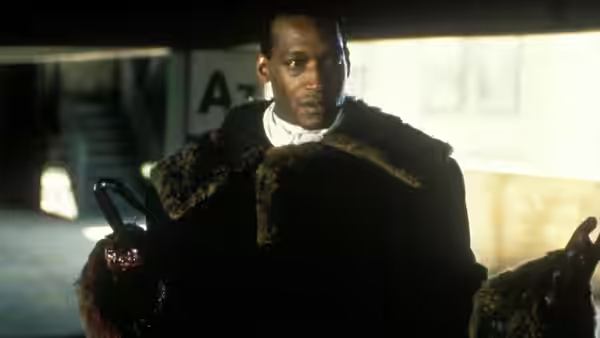
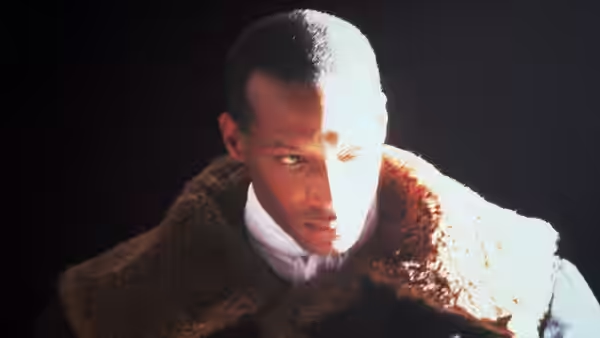
Tony Todd gives Candyman the confidence of someone certain that he will be heard. As the hook-handed figure, he makes the threat seductive, with none of the reassurance that usually accompanies charm. We were unnerved by that attraction: Todd makes being noticed by this figure seem desirable when it plainly ought to be terrifying. The performance gives Rose room for romantic feeling without softening the horror. A less persuasive presence would leave the film’s larger ambitions looking rather exposed.

Virginia Madsen has the less immediately striking role, and does valuable work with it. Helen’s curiosity remains credible even when the story begins to strain belief. Madsen keeps us concerned about what this investigation is doing to her, so the film need not rely on our interest in the legend alone. Rose’s writing does occasionally ask her to make shaky plotting look inevitable. The performance holds our attention through those less convincing stretches.

Philip Glass’s music helps make the film’s romanticism credible. It gives the threat a mournful quality, allowing fear and attraction to occupy the same scene without Rose having to explain the connection. The music stays troubling even when the plotting becomes busy, and we would lose a good deal of the film’s force without it. Dan Rae’s editing is less secure, with stretches that lose urgency despite the effectiveness of the individual shocks.

The more substantial reservation concerns Rose’s handling of race. The film asks us to think about the people who live in the housing project, then keeps returning to the visiting researcher’s ordeal. That imbalance is not erased by taking prejudice seriously. Rose deserves credit for making the question part of the horror, but we wanted the residents to matter more as people in their own right.

Candyman has more to offer than the familiar slasher pleasure of waiting for a recognisable monster to appear. Across 100 minutes, Rose makes room for dread, sexual unease and questions about whose suffering becomes entertainment. The violence is forceful, and anyone drawn by the intelligence of the premise should know that the film is quite prepared to be a gory shocker. Watch it for Todd and Madsen, but do not mistake the thoughtful passages for an offer of a comfortable evening.

Critical consensus AI synthesised

75
Positive
10
Mixed
1
Negative
1

Most critics find Candyman an intelligent, unsettling horror film, with ten of the twelve reviews leaning positive. Praise centres on Bernard Rose’s controlled direction and the atmosphere he builds around urban legends, race and class. Philip Glass’s score is a frequent point of agreement, while Tony Todd and Virginia Madsen draw praise for performances that give the supernatural threat weight. The favourable reviews see ideas beneath the shocks, particularly in the film’s treatment of fear and its Chicago setting.

The spread is wide, however, with reservations about plot coherence, pacing and the handling of racial themes. Some critics accept the ambiguities as part of the unease; others find the ideas inadequately developed. The New Yorker regards the racial material as an effective gimmick within a gory tale. The Los Angeles Times is the clearest dissenter, arguing that the gore overwhelms the film’s moral ambitions and that its story fails to hold together.

The Hollywood Reporter
14 September 1992 · THR Staff
90*

The review hails the film as high-caliber horror in its purest form, with a powerful and seductive Candyman portrayed by Tony Todd and strong performances from Virginia Madsen and others. It praises the taut direction, impressive bee effects, and Philip Glass score.

Read the full review →
Slant Magazine
★★★½/4 · Eric Henderson
88

The critic finds Bernard Rose's film a startlingly effective shocker that gains power on reflection, blending romanticism with dystopian elements and subtle political undercurrents around urban legends and race. It notes the systematic degradation of the protagonist amid strong performances.

Read the full review →
Empire
1 January 2000 · Adam Smith
85*

The critic describes it as one of the most interesting and scary horror movies of the 90s that leaves a very dark taste in the mouth despite its sugary title. They single out the intelligent, challenging approach and the fantastic Philip Glass score.

Read the full review →
Time Out
27 May 2016 · NF
85*

Rose delivers a faithful, scary and visually imaginative adaptation of Barker's story about a doctoral student researching an urban myth that may be real. He stages the suspense and horror with skill and panache, resulting in one of the best sustained horror movies in years.

Read the full review →
Little White Lies
28 October 2018 · Anton Bitel
80*

Rose's adaptation relocates Clive Barker's story to Chicago's Cabrini-Green projects and explores boundaries of sex, class and race through a grad student's investigation of urban myths. The film offers unresolved narrative ambiguities and a haunting Philip Glass score that keep the myth alive.

Read the full review →
Radio Times
★★★★ · Alan Jones
80

Rose's electrifying shocker, inspired by Barker's story, follows a student uncovering a hook-handed killer linked to urban legends in Chicago. It is intelligent, gripping, gimmick-free and atmospheric, with a terrific performance from Madsen and bold direction that milks every terrifying moment.

Read the full review →

Straight answers AI written, from our review

Is Candyman worth watching?
Candyman is worth watching for anyone who likes horror with something troubling behind it, and we scored it 81. Tony Todd's seductive, hook-handed monster and Philip Glass's mournful music do much of the work, with Virginia Madsen keeping the investigation credible. The plotting is less assured, and the film's handling of race leaves the housing project's residents mattering less than the visiting researcher.
How long is Candyman, and what is it rated?
Candyman runs 1h 40m. It is a drama and horror film.
Where can I watch Candyman in Romania?
Candyman is streaming on SkyShowtime in Romania. Availability is checked daily; the links above go straight to each service.
How violent or frightening is Candyman, and is it suitable for children?
Candyman is an 18 certificate horror film and is not suitable for children. The violence is forceful and the film is quite prepared to be a gory shocker, however thoughtful its premise, so the squeamish should stay away. There is also sustained dread and sexual unease, which makes it a film for adults rather than younger teenagers.
What should I watch after Candyman?
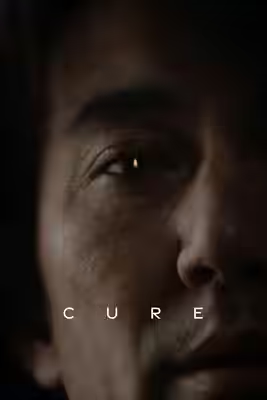
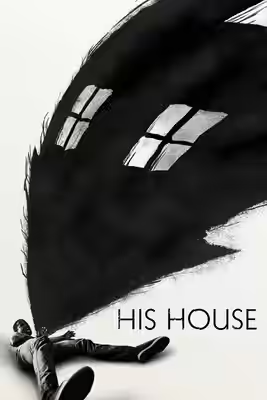
After Candyman, try Cure (1997, Fi1m 85): An investigation in which finding the pattern offers precious little reassurance. Then His House (2020, Fi1m 79): Housing, displacement and haunting meet in horror that takes its characters seriously.

Cast

If you liked this, try…

  1. The Innocents (1961) · not reviewed yetFor a haunting sustained by doubt, repression and a fiercely committed lead.

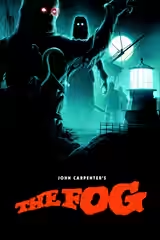
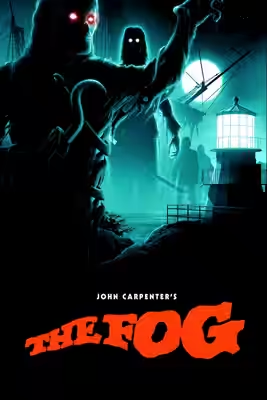
  2. The Fog (1980) · not reviewed yetAnother community’s buried wrongdoing returns in a form that cannot be negotiated with.

  3. Cure (1997, Fi1m 85)An investigation in which finding the pattern offers precious little reassurance.

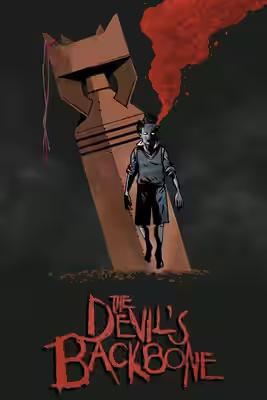
  4. The Devil's Backbone (2001) · not reviewed yetGhosts and human cruelty share a home, with considerable feeling for the children.

  5. His House (2020, Fi1m 79)Housing, displacement and haunting meet in horror that takes its characters seriously.

Free account

Know what to watch tonight

Two lists that know where things are streaming, collections you can share, your own score beside ours, and Discover that remembers what you have seen.

  • Want to see, sorted by what is streaming now
  • Seen, with your score out of ten
  • No adverts, ever