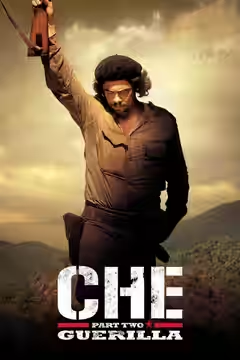
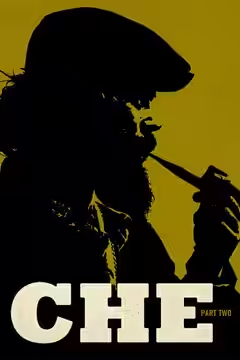
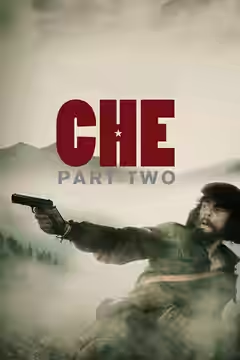
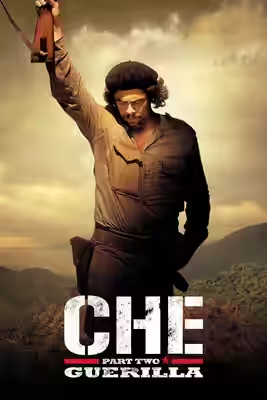
Che: Part Two poster

Che: Part Two

2008 · Directed by Steven Soderbergh
2h 15mDramaHistoryWar15
76
Fi1m score
74
Critics · 7
Audience · not yet

Where to watch in the UK

Checked 10 September at 22:29. Prices and availability change; the service’s page is the last word.

Synopsis

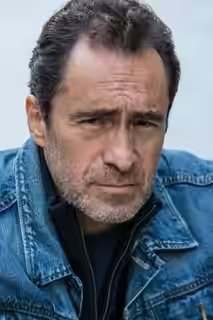
Havana, 1965. Fidel Castro (Demián Bichir) reads out a letter in which Ernesto Che Guevara (Benicio del Toro) gives up his posts and his Cuban citizenship to fight elsewhere. A year later Guevara arrives in Bolivia under a false name, disguised as a middle-aged businessman, and joins a small group of Cuban veterans at a remote farm in the south-east. The plan is to raise a guerrilla army among the peasants and miners, with the help of the Bolivian Communist Party. The party declines. The peasants are wary. Steven Soderbergh’s film follows the column through 1967, as recruits arrive and desert, supplies run short, and the Bolivian army, advised by the Americans, begins to close in.

Fi1m review

In a sentenceA man leaves the best job in the revolution to go and starve in somebody else’s forest

Soderbergh’s account of Che Guevara’s Bolivian campaign is exact, patient and refuses to explain anything, and Benicio del Toro is quietly remarkable in it. It is a good film that asks more of your evening than most and does not always repay the middle hour.

Steven Soderbergh’s second Che film opens in Havana in 1965, with Fidel Castro (Demián Bichir) reading out a letter in which Ernesto Che Guevara gives up everything the Cuban revolution had given him and leaves to start again somewhere else. Somewhere else is Bolivia. Guevara (Benicio del Toro) arrives in La Paz a year later as a balding businessman, joins a handful of Cuban veterans at a farm in the south-east and waits for a revolution that never gets going. The film runs 135 minutes and Soderbergh’s decision is to show the campaign day by day and not to explain it.

It is a good film and a stubborn one. If you want to know why a man walks away from a ministry to starve in a forest, it will not say. The script, credited to Peter Buchman, Benjamin A. Van Der Veen and, to our surprise, Terrence Malick, keeps close to Guevara’s own campaign diary. We admired that. We also spent a stretch around the hour mark wanting something, anything, to happen, and we suspect Soderbergh would say that is roughly how the men in the column felt.

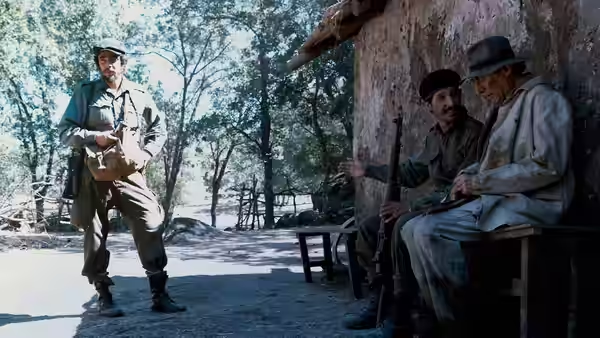
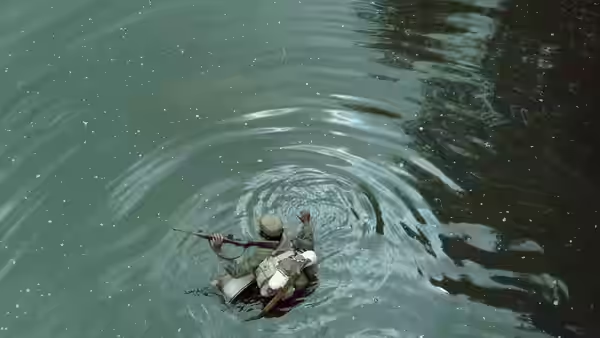
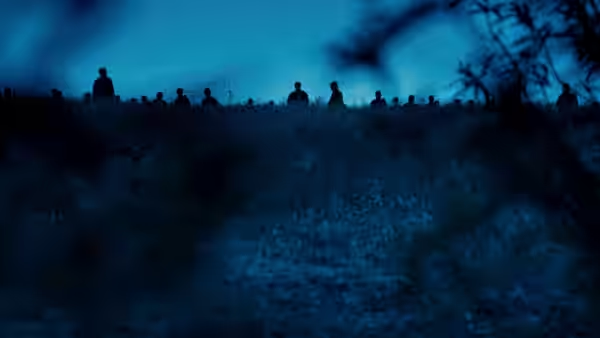
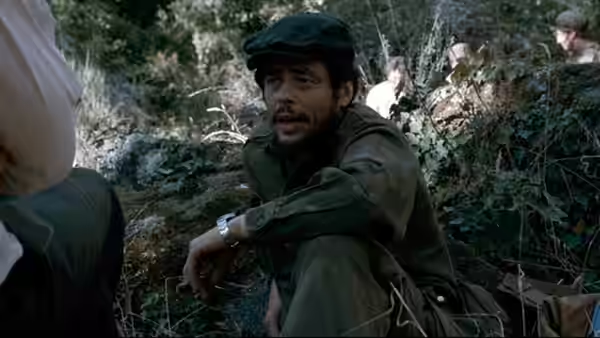
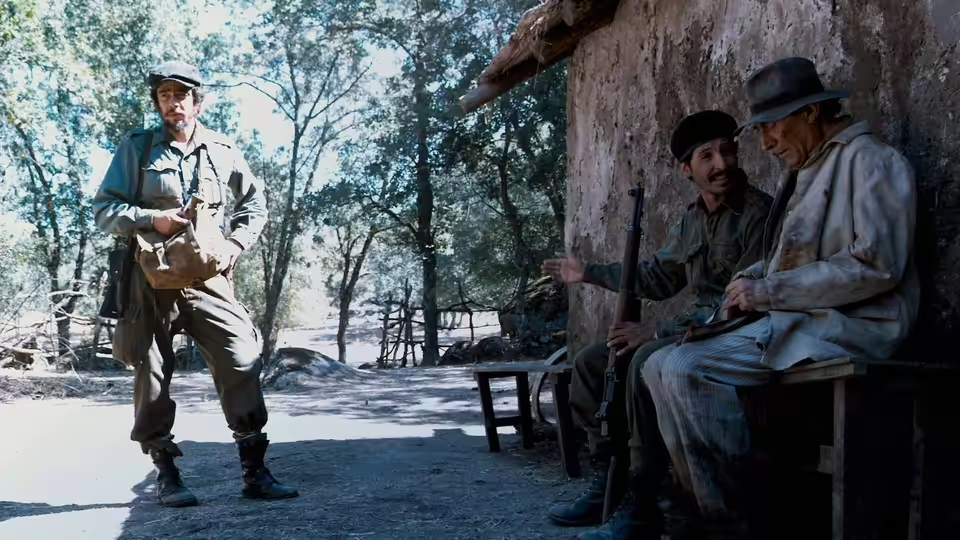
Soderbergh shot it himself, in greens and browns. The camera stays with the guerrillas, hand-held, at shoulder height, and the horizon is rarely in the frame. The skirmishes are short, confusing and over, and Pablo Zumárraga cuts them without slow motion or a shot that tells you who is winning; you count the bodies afterwards. Alberto Iglesias’s score is a few strings that arrive late and leave early. Antxón Gómez gives the camp a tin-roofed farmhouse and an oven dug into a bank, and Bina Daigeler’s fatigues start clean and end in rags without anyone saying a word about it.

Del Toro spends most of the film listening. Early on, the leader of the Bolivian Communist Party comes to tell him the party will not help, and del Toro says almost nothing while the campaign dies in front of him. With the two visitors from outside, Régis Debray (Marc-André Grondin) and Ciro Bustos (Gastón Pauls), he is patient and dry. The moment that got at us was smaller. Guevara has run out of asthma medicine, and he sits against a tree while the column waits, and del Toro breathes as though each breath has to be argued for. We forgot he was famous and worried that he was ill.

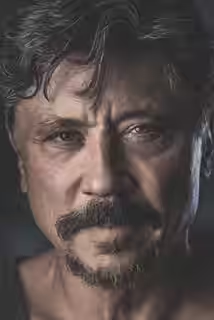
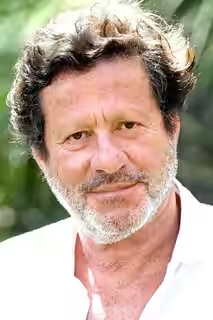
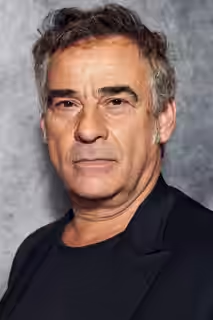
Carlos Bardem’s Moisés Guevara brings recruits down from the mines and half of them do not last a month. Cristian Mercado’s Inti is the one local who believes. Eduard Fernández’s Ciro Algarañaz, the farmer next door, decides the strangers must be making cocaine, which is the funniest thing in the film and does them no good at all. The peasants, asked for food and silence, give a little of the first and none of the second. Joaquim de Almeida’s President Barrientos gets a handful of scenes with American advisers, and Soderbergh shoots the government in the same flat daylight as the guerrillas. Nobody is lit as a villain.

Because Soderbergh will not explain, the middle hour repeats itself: march, hunger, argument, march. Most critics have said so, though the more admiring ones take the repetition as the point. We half agree. The skirmishes are indistinguishable on purpose, but a film can be right about tedium and still be tedious, and there are twenty minutes here where the discipline looks like a shrug. How it ends is a matter of record. We will not describe how Soderbergh stages it, except to say that he does not change his method for it, and that we were glad.

Che: Part One had a war that was won. This one has a greener country, a smaller band and a man walking towards something everyone in the audience knows about. It stands on its own, and we think it is the better film. It is a 15 certificate and the violence is brief and unglamorous. Watch it with a meal already inside you. It is a hungry film, and it makes you notice.
Critical consensus AI synthesised

74
Positive
4
Mixed
3
Negative
0

Most critics agree on what Che: Part Two is doing and split on whether it is worth the effort. The praise clusters around Benicio del Toro, whose quiet, unshowy performance is singled out again and again, and around Soderbergh’s refusal of biopic habits: no psychology, no speeches, just the daily grind of a failing campaign reconstructed with unusual care. The reservations cluster just as tightly. A large share of the reviews find the film emotionally flat, the marches tedious and the skirmishes hard to tell apart, and several say the fastidiousness leeches the drama out of the story. The spread is moderate rather than wide; nobody dismisses it, but a good number stop short of recommending it. Variety, writing from the festival, is the harshest, arguing neither half stands alone and the whole offers more aggravation than reward. The Guardian and The Skinny take the opposite view, finding Part Two the more coherent and affecting of the pair.

The AV Club
12 December 2008 · A- · Keith Phipps
90

Soderbergh emphasizes observation over ideology with an eye toward the mundane details of life on the front lines of a revolution, building to a thrilling climax in the first half and a kind of grace in the second. The film renders Guevara as an undemonstratively magnetic figure driven by his convictions.

Read the full review →
Empire
29 January 2009 · Andrew Male
80*

The critic views the film as a grim, melancholic depiction of Guevara's failed Bolivian campaign, marked by hunger and defeat. They single out Benicio Del Toro's quiet and magisterial performance for praise, especially in a tense persuasion scene.

Read the full review →
Time Out
17 February 2009 · ★★★★ · David Jenkins
80

Part Two stands alone effectively as Soderbergh's study of Che Guevara's failed 1966 Bolivian campaign. It highlights the director's focus on the realities of revolutionary struggle and Benicio del Toro's restrained performance, while noting that the film's academic tone and emphasis on source material details can sometimes hinder dramatic flow.

Read the full review →
Slant Magazine
26 September 2008 · ★★½/4
62

Soderbergh’s professed neutrality toward Guevara’s life and times succeeds mostly in leeching the emotion out of them, resulting in a work of intelligent fastidiousness rather than vivid inspiration. Part Two traces the leader’s ultimately doomed attempt to bring the revolution to the rest of Latin America as a death march.

Read the full review →
Los Angeles Times
12 December 2008 · Sheri Linden

The film rebels against biopic conventions by focusing on the rigors and specifics of armed struggle rather than psychological drama. It is an extraordinary, challenging work that favors action and strategy over emotional aha moments.

Read the full review →
The Guardian
20 February 2009 · Peter Bradshaw

The second part works better on its own as a coherent, mysterious evocation of Che's final doomed campaign in Bolivia. Soderbergh's austere, experimental approach shows only the outer man and avoids conventional character insight or cliché.

Read the full review →

Cast

Benicio del Toro
Ernesto Che Guevara
Carlos Bardem
Moisés Guevara
Demián Bichir
Fidel Castro
Joaquim de Almeida
President René Barrientos
Pablo Durán
Pacho (Alberto Fernández Montes de Oca)
Eduard Fernández
Ciro Algarañaz
Marc-André Grondin
Régis Debray
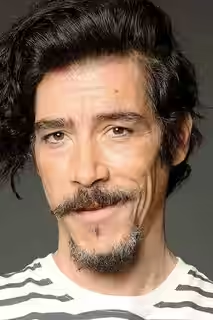
Óscar Jaenada
Darío (David Ardiazola)

Stills

If you liked this, try…

The Battle of Algiers poster

The Battle of Algiers

1966 · Pontecorvo’s insurgency film, shot like news footage, with the same refusal to cheer.

Army of Shadows poster

Army of Shadows

1969 · Melville’s Resistance drama: cold rooms, waiting, and people who know they will lose.

The Motorcycle Diaries poster

The Motorcycle Diaries

2004 · The young Guevara on the road, for anyone who wants the man before the beret.

Memories of Underdevelopment poster

Memories of Underdevelopment

1968 · Havana after the revolution, seen by a man who stayed and cannot decide why.

Bloody Sunday poster

Bloody Sunday

2002 · Greengrass’s Derry, hand-held and hour by hour, with the same faith in the record.