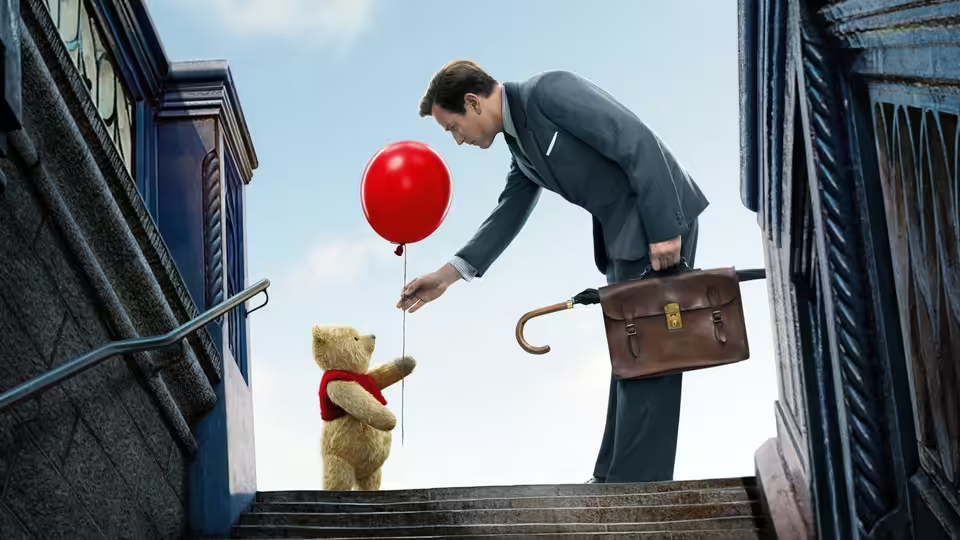
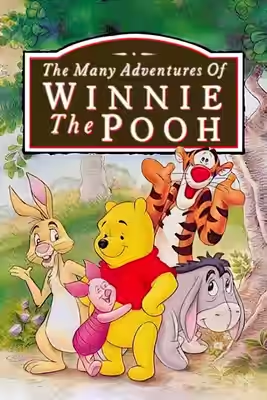
Jim Cummings gives Pooh the warmth this melancholy family film needs. Marc Forster is less sure what to do with the grown-ups, whose familiar troubles keep interrupting the pleasure of the reunion.
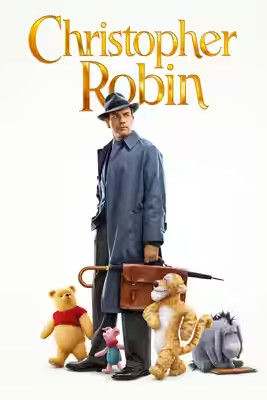
Marc Forster’s Christopher Robin is a gentle, uneven family film whose appeal depends heavily on already caring about Pooh. Its strongest idea is to let the reunion feel a little sad: Christopher has grown up, and the animals still offer the comfort of a life he no longer leads. There is something recognisable in that, especially for adults who have allowed work to occupy more space than they intended. The story surrounding it is considerably less interesting.
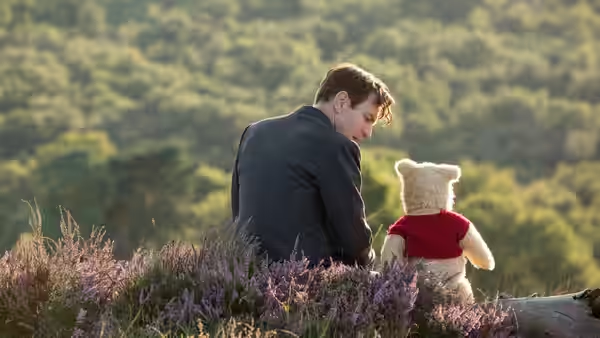
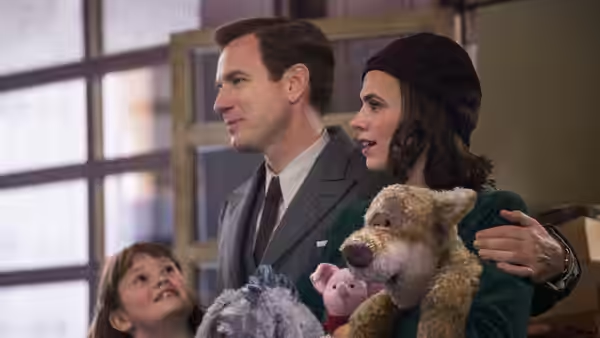
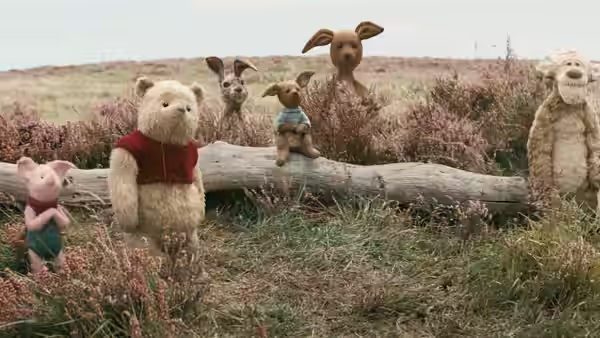
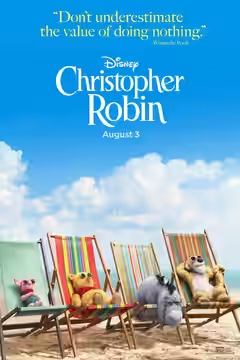
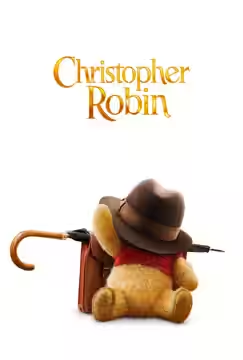
Jim Cummings gives Winnie the Pooh a patient, slightly puzzled warmth without making him sound as though he is dispensing advice professionally. The worn fur helps; this bear looks as if he has been held and carried about. We were unexpectedly moved by that careworn appearance and the tenderness of the voice. The animation allows the animals to seem vulnerable without demanding pity. Brad Garrett’s Eeyore is also welcome, his gloomy observations providing some relief from the encouragement to enjoy life.
Ewan McGregor is most persuasive when Christopher smiles at Pooh, allowing affection to replace the strain of being responsible. That small change tells us more than the film’s explanations of what he has lost. The screenplay by Allison Schroeder, Alex Ross Perry and Tom McCarthy gives him a familiar problem, then spends too long making sure we understand it. Work competes with family, childhood seems more inviting, and the lesson becomes clear well before the film has finished teaching it.
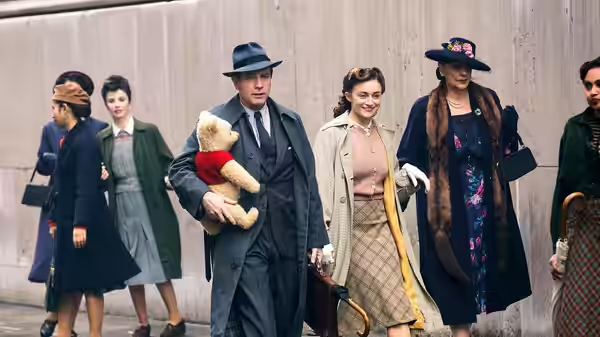
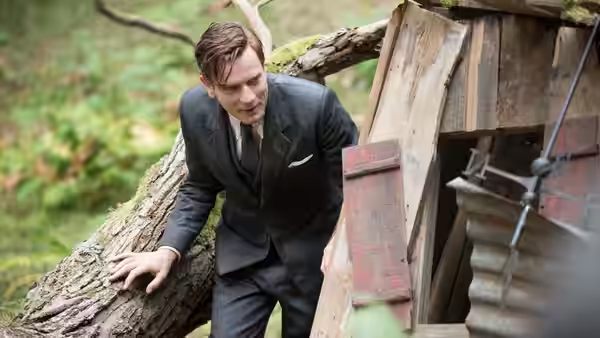
Matthias Königswieser’s cinematography sets the honey-coloured Hundred Acre Wood against the greyness of adult life, and the contrast is immediately readable. It also becomes a little insistent: the images leave Christopher scarcely any reason to prefer being grown up. Jennifer Williams’s production design makes the adult surroundings feel solid and orderly, but they are not particularly inviting places to spend time. The care taken with the film’s appearance is evident, especially in the weathered animals, whose worn surfaces make their return feel personal.
The workplace passages are where the film loses us. Their concerns are familiar enough to need little explanation, yet Matt Chessé’s editing cannot make them feel brief, and the busier plotting offers little compensation. The music by Geoff Zanelli and Jon Brion supplies warmth, though we found the voices quite capable of doing that work unaided. Pooh’s patient wordplay is enjoyable in small exchanges; when the film leans on it to explain how to live, the sweetness becomes wearing.
Marc Forster deserves some credit for allowing so much weariness into a family fantasy. The melancholy is not merely there to make the cheerful passages seem brighter, and the animals’ fragility makes the sadness more convincing. Yet the film is much less convincing about what an adult can do with that feeling. Its view of childhood risks making ordinary responsibility seem like a betrayal, which is a peculiar burden to place on a comforting bear.
Existing Pooh admirers have the clearest reason to spend 104 minutes here. Younger viewers may be less patient with all the grown-up worries, and the comedy rarely gets the freedom that might help them through. Choose it for a quiet, faintly sad reunion, with some patience for the office scenes.