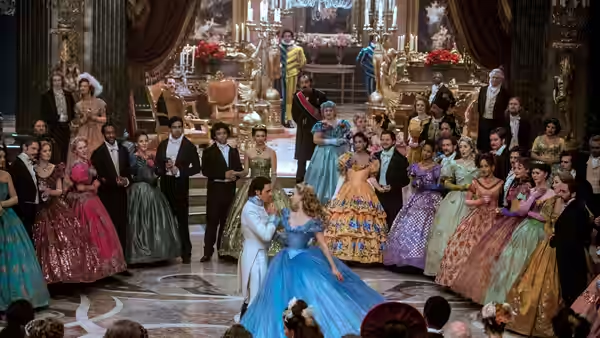
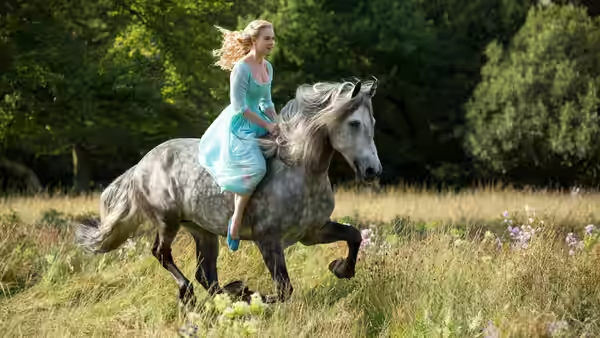
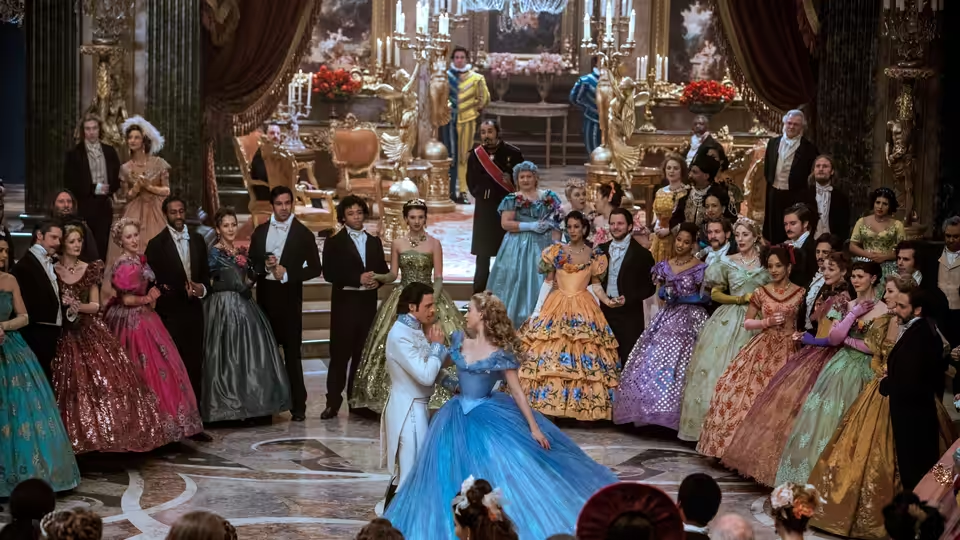
Cinderella (Lily James) dances with the Prince at a crowded royal ball
Film review

Cinderella

2015 · Directed by Kenneth Branagh · 1h 45m · RTC A

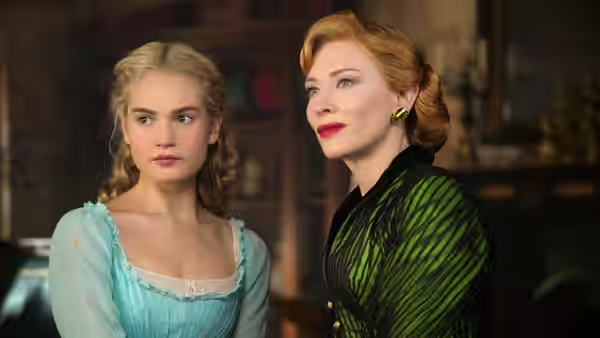
In a sentenceEveryone is kind and well lit, and then Cate Blanchett comes down the stairs in green and steals the house

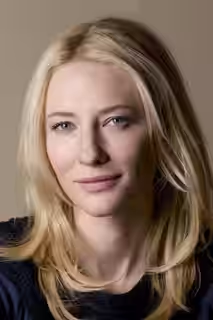
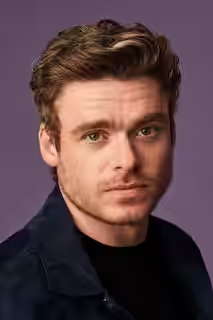
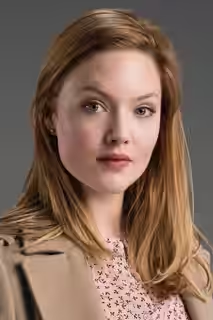
Cinderella (Lily James) grows up in a country house with a merchant father (Ben Chaplin) and a mother (Hayley Atwell) who, before she dies, tells her to have courage and be kind. Her father remarries Lady Tremaine (Cate Blanchett), who brings two daughters, Anastasia (Holliday Grainger) and Drizella (Sophie McShera), and when he dies abroad the stepmother dismisses the servants and sends the girl to the attic. The sisters coin the name from the ash on her face. Riding out to escape the house, she meets a man (Richard Madden) hunting in the forest who does not say who he is. At the palace his dying father the King (Derek Jacobi) wants him married for advantage. Then a ball is announced, open to every maiden in the kingdom.

Plays from YouTube when you press play; nothing loads from them until then.

Fi1m review

Kenneth Branagh tells the old story straight, with no winks and no revisions, and most of the time that is enough. Lily James is warm, Cate Blanchett is better than the film needs, and the prince is a well-dressed gap.

Kenneth Branagh has made a Cinderella with no irony in it. Nobody turns out to be secretly the villain, the stepmother is wicked because she is wicked, the slipper is glass and the pumpkin becomes a coach. Chris Weitz’s screenplay takes Charles Perrault’s story and adds a few rooms: a dying king, a scheming duke, a meeting in a forest before the ball. It is a good film of its kind, slow to start and a little pleased with its own virtue, and at 105 minutes it does not outstay the story.

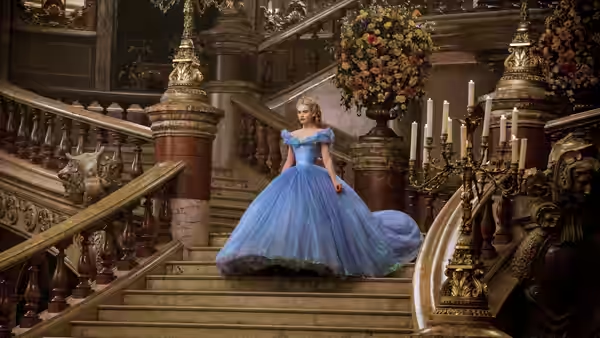
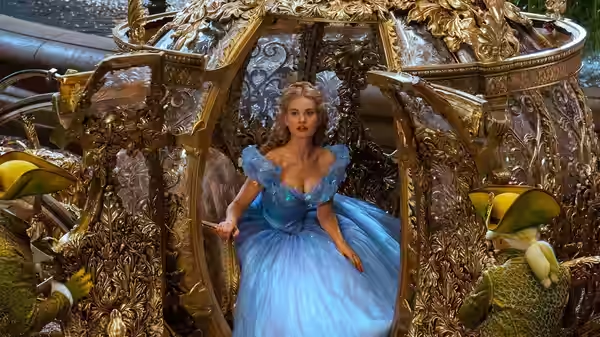
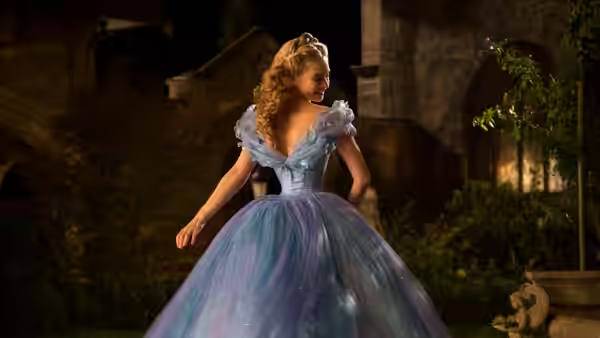
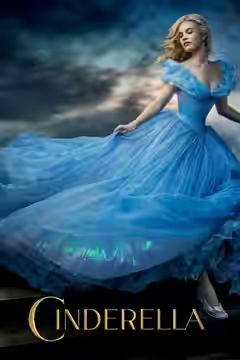
Dante Ferretti builds the Tremaine house as a cluttered merchant’s home, with a kitchen you could cook in and an attic you could not sleep in, and the palace as acres of pale stone and gilt that Haris Zambarloukos lights so the ballroom seems to glow from inside. The colours are pushed high: the stepsisters wear pink and yellow that quarrel in every frame they share. Sandy Powell’s costumes do more storytelling than some of the dialogue. Blanchett’s gowns are cut like something from the 1940s, veiled hats and a nipped waist, and they say she has been elegant for a long time. The blue ball gown moves like water, which is the whole job of it.

The ball is the film’s best stretch and Branagh knows it. Patrick Doyle, who has scored his films since Henry V (1989), writes a waltz that rises exactly when it should, Martin Walsh cuts between the dancing couple and the staring court without once losing where anyone is standing, and the camera moves with the skirt. We are not easily got at by a frock. Yet the first time James turned under the chandeliers and the dress lifted off the floor, we felt the lift the film was reaching for, and we did not resent it.

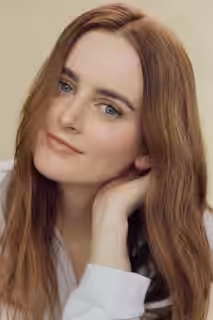
Lily James has the harder part and nearly brings it off. She plays goodness as a decision rather than a temperament, and she smiles with her mouth closed, which keeps it from cloying. The script does not help her: her mother’s dying words, have courage and be kind, are repeated so often that by the ball we were saying them along with her. Blanchett has a part somebody has thought about. Her Lady Tremaine is cruel in a voice pitched for the drawing room, laughs a beat too long at her daughters’ jokes, and gets one shot alone on the stairs at night, glass in hand, that is lonelier than anything the heroine suffers.

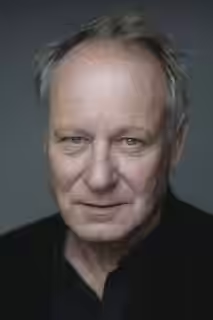
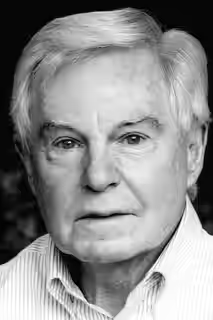
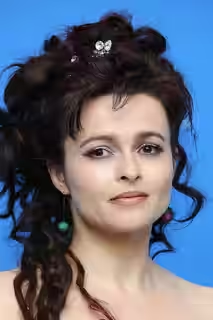
The men are thin. Richard Madden’s Prince is given nothing to want except her, and his scenes with Derek Jacobi’s dying King, the old man asking him to marry sensibly, the young one asking to marry well, read as if written to a word count. Stellan Skarsgård’s Grand Duke mutters and plots, and the second half lets him into a bargain we will not describe. Nonso Anozie has the warmest male part as the Captain, mostly by looking amused. Helena Bonham Carter, who also narrates in a tone of mild astonishment, arrives as the Fairy Godmother, turns lizards into footmen and a goose into a coachman, and is gone inside ten minutes. The film is better and sillier while she is in it.

The first half hour drags. Ben Chaplin and Hayley Atwell are given the loving parents and the early deaths, and Branagh lingers over the house, the garden and the mice for longer than a story everyone already knows can carry. Weitz’s additions, the forest meeting most of all, help the romance and cost the pace, and there is a preaching streak in the writing that none of the actors can quite hide.

This is of a piece with Branagh’s Much Ado About Nothing (1993): sunny, sincere, fond of a big room and a speech said straight. See it with children, or with someone who will not groan at a pumpkin. It carries a U, and for once that is the point: there is nothing here to warn anyone about except the goodness, and there is a great deal of that.
Critical consensus AI synthesised

71
Positive
17
Mixed
7
Negative
0

Most critics like it and none dislikes it outright. Branagh’s decision to play the fairy tale straight, without irony or revision, is counted a strength by the majority, who call the result charming and old-fashioned. The ballroom sequence is singled out again and again, as are the costumes and production design. Lily James is widely credited with making Ella’s goodness believable rather than cloying, and Cate Blanchett’s stepmother is the other performance nearly everyone mentions.

The reservations are about the same thing as the praise. Several critics find the faithfulness safe, a little dull and short of any fresh angle on a familiar story. A smaller group goes further: The AV Club calls it lavish but emotionally empty, Little White Lies finds it cold and underwhelming, and Slant thinks it favours plot efficiency over visual artistry. The spread is narrow, though, and even the doubters admire the look of it.

Evening Standard
27 March 2015 · David Sexton
82*

Sexton finds Branagh’s adaptation surprisingly touching and says it stands comparison with Disney’s animated classic. He especially praises the lavish staging and Lily James’s captivating, unaffected performance.

Read the full review →
Radio Times
★★★★ · Alan Jones
80

The review praises Branagh’s makeover as wonderful and Lily James as a particularly strong Ella. It also singles out Cate Blanchett’s exceptional, vividly villainous stepmother for praise.

Read the full review →
Total Film
23 March 2015 · ★★★★ · James Mottram
80

Mottram finds Branagh’s loving, lavish adaptation charming, though its safe traditionalism may appeal more to traditionalists than revisionists. He particularly praises the sumptuous ballroom sequence and Cinderella’s striking blue gown.

Read the full review →
Film Comment
· Michael Sragow
75*

Sragow gives Branagh’s adaptation a positive assessment. He praises the revival’s brio and sparkling cast.

Read the full review →
The Guardian
29 March 2015 · Mark Kermode
75*

Kermode finds Branagh’s adaptation charmingly old-fashioned, with plenty to like and a little to love. He particularly praises the breathtaking ball sequence, its choreography, sets and cinematography.

Read the full review →
Empire
30 September 2013 · Olly Richards
70*

The review finds the film retrograde but spirited, funny and well presented. It particularly praises Cate Blanchett’s flamboyant, purposeful performance as the stepmother.

Read the full review →

Straight answers AI written, from our review

Is Cinderella worth watching?
Cinderella (2015) is worth watching for families and for anyone who wants the old story told straight, and we scored it 72. Kenneth Branagh adds no winks or revisions, Lily James is warm, and Cate Blanchett is better than the film needs. The first half hour drags and the prince is thinly written, but the ball earns its glow.
How long is Cinderella, and what is it rated?
Cinderella runs 1h 45m and is rated A by the RTC in Mexico. It is a romance and fantasy film.
Where can I watch Cinderella in Mexico?
Cinderella is streaming on Disney+ in Mexico. Availability is checked daily; the links above go straight to each service.
How does Cinderella compare to Cinderella?
Cinderella (2015) is longer, grander and more sincere than the 1950 Disney cartoon it honours, and the earlier film is the shorter and sillier of the two. Branagh's version has the better stepmother and a ballroom lit to glow from inside, while the cartoon has the funnier mice and the tidier telling. Children will take either; the live-action one asks for more patience.
What should I watch after Cinderella?
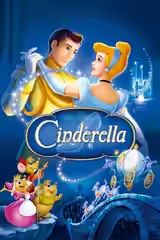
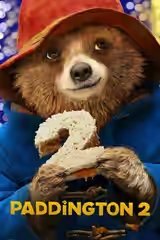
After Cinderella, try Cinderella (1950, Fi1m 72): The Disney cartoon Branagh is honouring; shorter, sillier, and the mice are funnier. Then Paddington 2 (2017, Fi1m 91): Another film that believes politeness is a form of courage, and proves it.

Cast

Awards

Academy Awards, 2016

Nominated
Best Costume Design

Saturn Awards, 2016

Won
Best Fantasy Film

If you liked this, try…

  1. La Belle et la Bête (1946) · not reviewed yetCocteau’s fairy tale, told straight and by candlelight, with living arms holding the lamps.

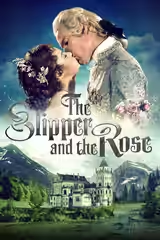
  2. The Slipper and the Rose (1976) · not reviewed yetThe British musical Cinderella, whose prince is given rather more to think about.

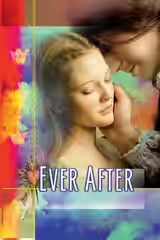
  3. Ever After (1998) · not reviewed yetDrew Barrymore’s Cinderella argues back; the sincerity is the same, the heroine is not.

  4. Cinderella (1950, Fi1m 72)The Disney cartoon Branagh is honouring; shorter, sillier, and the mice are funnier.

  5. Paddington 2 (2017, Fi1m 91)Another film that believes politeness is a form of courage, and proves it.