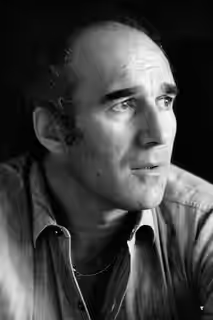
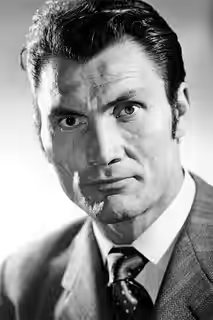
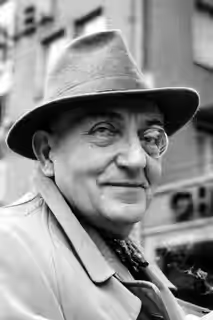
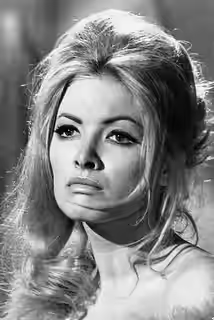
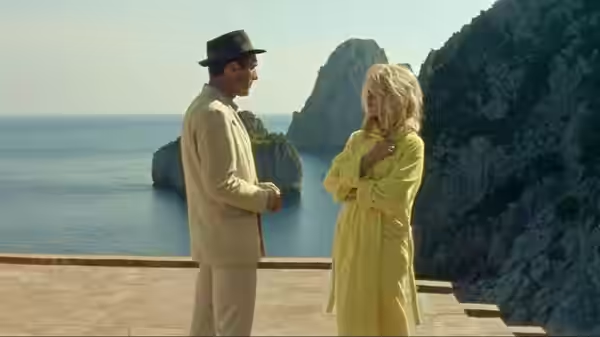
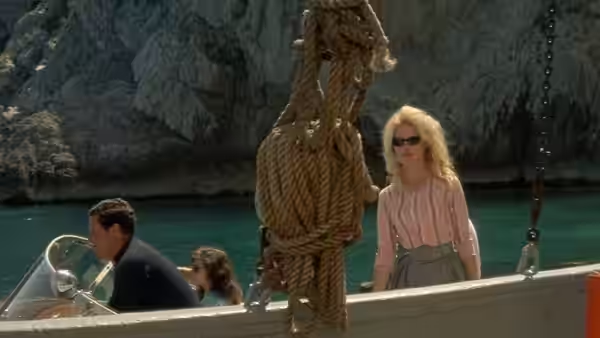
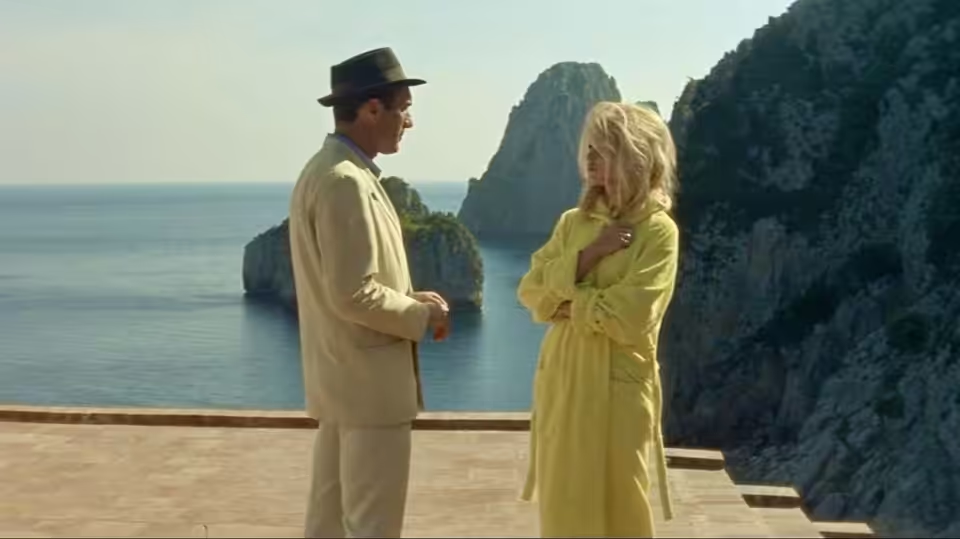
Paul Javal (Michel Piccoli) faces Camille (Brigitte Bardot) on a terrace above the sea
Film review

Contempt

1963 · Directed by Jean-Luc Godard · 1h 43m

In a sentenceEverybody in this film needs a translator, including the two people who share a bed

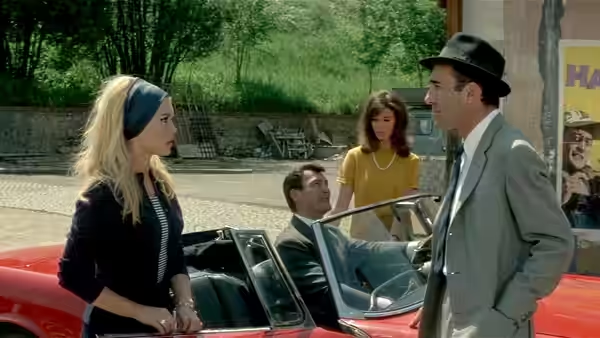
Paul Javal (Michel Piccoli), a playwright, is offered work at the Cinecittà studios in Rome. Jeremy Prokosch (Jack Palance), an American producer, is making a film of The Odyssey with Fritz Lang (playing himself) directing, hates the rushes of gods and statues Lang has shot, and wants Paul to rewrite the script. Paul takes the job to pay for the flat he and his wife Camille (Brigitte Bardot) are buying. Francesca Vanini (Giorgia Moll) translates between Prokosch and everyone else. When Camille comes to the studio, Prokosch invites the couple to his villa, drives her there alone in his red sports car, and Paul lets him. By the time Paul arrives, something in Camille has closed, and she will not tell him what.

Plays from YouTube when you press play; nothing loads from them until then.

Fi1m review

Godard’s story of a screenwriter, his wife and an American producer in Rome is a handsome film and a cold one. Raoul Coutard’s colours and Georges Delerue’s strings do the feeling; the people are left to fall apart in a half-built flat.

Paul Javal (Michel Piccoli) writes plays. An American producer, Jeremy Prokosch (Jack Palance), is making The Odyssey at Cinecittà in Rome with Fritz Lang directing, and wants Paul to rewrite it. Paul takes the job to pay for the flat he and his wife Camille (Brigitte Bardot) are buying. Jean-Luc Godard, adapting Alberto Moravia’s novel, tells the rest in 103 minutes, and it is clear early that neither the film nor the marriage is going well. We recommend it, with a warning. It is a handsome film and a cold one, and the middle third asks for a patience it does not always repay.

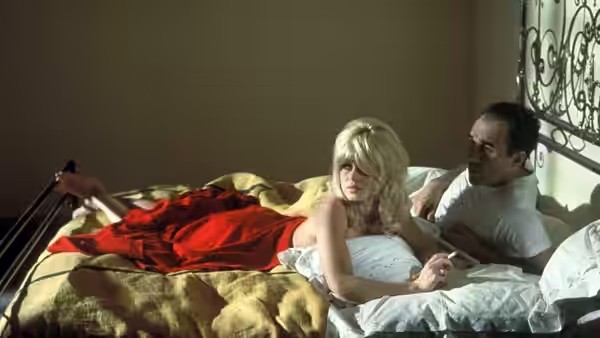
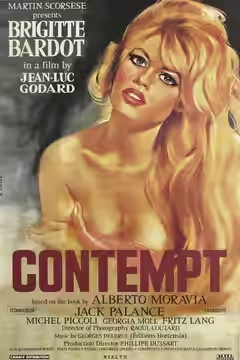
The producers sold it on Bardot, and the poster promised “much, much more Bardot”. Godard gives them the scene. Camille lies naked on a bed and asks Paul whether he likes her feet, her knees, her shoulders, her face, and Paul says yes to each. Then Raoul Coutard drops a red filter over the shot, then a blue one, so the body the poster promised turns into a slab of colour. From there Coutard shoots Rome in hard sunlight and flat blocks of red, white and blue, and Tanine Autré puts Camille in a yellow dressing gown and, later, a black wig, so the colours carry more of the story than the lines do.

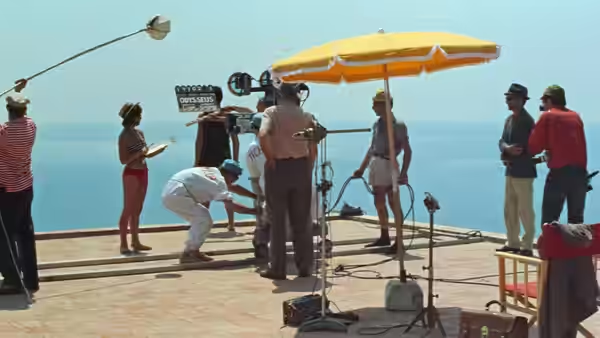
Palance plays Prokosch as a man who has never been contradicted. He bounds down the steps of an empty studio lot and needs Francesca Vanini (Giorgia Moll) to translate everything he says into French and everything he hears into English. Moll does the hardest job in the film without fuss; half her lines are other people’s, softened. Lang, playing himself, is the only person on screen at peace, watching his rushes with the calm of a man who knows the picture will be taken from him. Those rushes, plaster gods with painted eyes turning against the sky, are the loveliest things in the film.

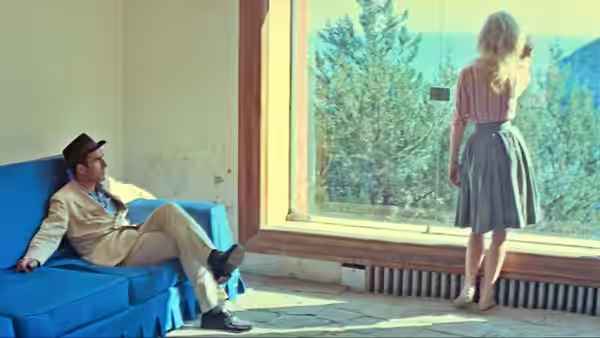
Then the flat. Camille and Paul go home to rooms they cannot yet afford, half-plastered, with a bath, a lamp and a door that will not stay shut, and they argue for about half an hour. Coutard’s camera tracks left and right across the flat, following whoever is talking, and Godard barely cuts; Lila Lakshmanan and Agnès Guillemot leave this one alone. Camille puts the wig on and takes it off. Paul gets into the bath with his hat on. She says she does not love him any more and will not say why; he asks why a dozen times. Twenty minutes in we wanted it to end. It did not, and we realised we were feeling exactly what Paul was feeling, and had been put in his place on purpose. It is the scene most critics argue about, and it is the film.

What stops the thing freezing over is Georges Delerue. He writes one theme, strings, slow, rising and never quite settling, and Godard brings it back over the statues, the bed, the sea. It moved us more than a shot of a plaster Neptune has any right to. The music does the mourning nobody on screen can manage.

The flaws are real. Paul is weak and a little cruel, and Piccoli plays him truthfully, which means a hundred minutes with a man we would cross a street to avoid. Bardot is given almost nothing to say that explains Camille, and Godard shoots her as a face and a body as if daring us to notice, and the daring gets tiring. He also cannot resist the quotations, the sight of his own cameraman and himself at Lang’s side. Some critics say it has dated; we would not go that far, but it is a young man’s film about a marriage, and it knows less about women than about cinema.

The second half moves to Capri and a red house on a cliff, and we will say nothing about what happens there. Watch it in one sitting and let the argument run. Then read the tagline again. The men who paid for the film sold it the way Prokosch would have, and Godard had already told them what he thought of that.

Critical consensus AI synthesised

85
Positive
6
Mixed
1
Negative
0

The reviews are warmly positive, and the praise gathers around the same places. Most critics single out Raoul Coutard’s photography, with the opening camera movement praised in particular, and the long marital argument at the film’s centre, which several find emotionally exact. Brigitte Bardot’s performance draws notice for the fragility under the surface, and the film’s mixing of Homer, film-making and a failing marriage is generally read as a strength rather than a distraction.

The reservations are about how the film wears. The Guardian thinks it has dated and curdled, and Eye for Film finds it clever and enjoyable without being convinced it is a major work. The AV Club, though admiring, calls it hard to like and thinks the domestic argument slows things down. The spread is fairly narrow: nobody dismisses it, and even the mildest verdict finds plenty to enjoy.

Slant Magazine
1 September 2013 · ★★★★/4 · Chuck Bowen
100

Bowen praises the film as an emotionally devastating, visually sumptuous work that turns its cultural references toward personal loss. He singles out Brigitte Bardot’s performance for conveying Camille’s suppressed fragility and challenging the objectification invited by the opening scene.

Read the full review →
Time Out
21 December 2015 · ★★★★★ · Dave Calhoun
100

The five-star rating signals a strongly positive verdict. The available description singles out Camille’s growing contempt for Paul as the film’s central relationship.

Read the full review →
Los Angeles Times
16 January 2014 · Kenneth Turan
80*

Turan finds the film atypical, unforgettable, and melancholy, yet memorable. He especially praises its emotionally realistic marital argument sequence and the cinematography and music that support it.

Read the full review →
The Guardian
31 December 2015 · ★★★★ · Peter Bradshaw
80

Bradshaw calls the film fierce but argues that it has dated and curdled. He singles out its uncompromising deconstruction of cinema and sexual allure.

Read the full review →
The AV Club
13 December 2002 · Scott Tobias
75*

Tobias finds the film difficult to like but ultimately an eloquent, cohesive statement about art, commerce, and love. He praises its enduring potency and Raoul Coutard’s rapturous photography, while noting that a long domestic argument disrupts the film’s momentum.

Read the full review →
/Film
14 September 2022 · Jeremy Smith
90*

The critic regards Contempt as a masterpiece that transformed his understanding of Godard and cinema. He especially praises the opening camera movement and its lyrical effect.

Read the full review →

Straight answers AI written, from our review

Is Contempt worth watching?
Contempt is worth watching for anyone patient with a marriage coming apart in near silence, and we scored it 86. It is a handsome film and a cold one: Raoul Coutard's colours and Georges Delerue's strings carry the feeling, and the half-hour argument in a half-built flat asks for a patience it does not always repay. Go in for the look and the music rather than for the people.
How long is Contempt, and what is it rated?
Contempt runs 1h 43m. It is a drama and romance film.
Where can I watch Contempt in Argentina?
Contempt is not on any streaming or rental service in Argentina at the moment. It is available in 13 other countries; change your country at the top of the page to see where. Availability is checked daily.
How does Contempt compare to Journey to Italy?
Contempt is the colder of the two films, and Journey to Italy the more moving. Rossellini's married couple come apart in Naples and Ingrid Bergman gives us reason to care about them; Godard learned from that film and it shows, but he keeps his couple at arm's length. Choose Rossellini if you want to feel the hurt, Godard if you want to watch it composed.
Is Contempt based on a true story or a book?
Contempt is based on a novel by Alberto Moravia, not on a true story. Godard keeps the outline of a screenwriter, his wife and a producer in Rome, and uses the making of a film of The Odyssey to frame their marriage. You do not need to know the book; the film is very much Godard's own, and stands without it.
What should I watch after Contempt?
After Contempt, try Journey to Italy (1954, Fi1m 82): Rossellini’s married couple come apart in Naples; Godard learned from it and it shows. Then Marriage Story (2019, Fi1m 84): Baumbach’s divorcing couple have the same argument, only louder and in Los Angeles.

Cast

If you liked this, try…

  1. Journey to Italy (1954, Fi1m 82)Rossellini’s married couple come apart in Naples; Godard learned from it and it shows.

  2. Two Weeks in Another Town (1962) · not on Fi1m yetMinnelli’s Hollywood people making a film in Rome, a year earlier and much louder.

  3. Scenes from a Marriage (1973) · not on Fi1m yetBergman’s six hours of a marriage arguing; the flat scene stretched to a series.

  4. Pierrot le Fou (1965) · not on Fi1m yetGodard again, in colour and by the sea, warmer and far sillier.

  5. Marriage Story (2019, Fi1m 84)Baumbach’s divorcing couple have the same argument, only louder and in Los Angeles.