Tim Burton’s vampire comedy has a handsome house, Eva Green at full tilt and one joke, which Johnny Depp tells well for an hour. Then the script runs dry and the subplots take over. See it for the set-dressing and Green; not for the story.
Barnabas Collins (Johnny Depp) is cursed in the eighteenth century, dug up in 1972, and spends the rest of Dark Shadows being baffled by it. That is the film’s one joke, and Tim Burton knows it. The source is Dan Curtis’s daytime soap, which ran on American television from 1966 to 1971 and is remembered with great affection by people who were small when it was on. Seth Grahame-Smith’s script, from a story he wrote with John August, treats the soap as a mood to be revisited rather than a plot to be followed, and over 113 minutes the difference shows.
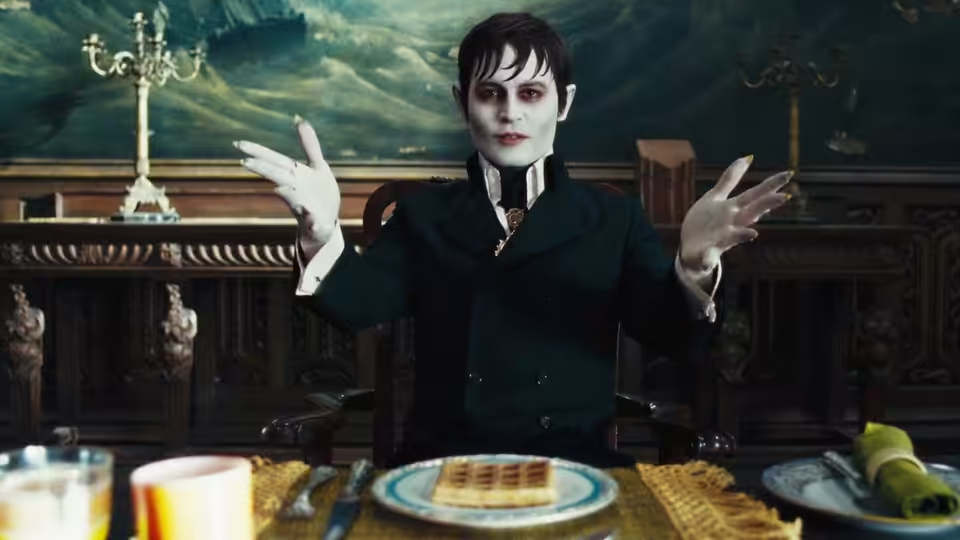
Depp is good, and good in a way he had stopped being for a while. He plays Barnabas straight: spine rigid, consonants clipped, a man who takes the golden arches on the road into town for a sign of the devil and the television for a box with small musicians trapped inside it. We laughed, out loud, at his first walk through Collinsport, because Depp never winks; the horror on his face when the Carpenters appear in the corner of the sitting room is real horror. The trouble is that the film has perhaps a dozen variations on this and no second idea, and by the time he is making the same face at a car, a road sign and a hairdryer we were counting them.
Eva Green is the other reason to watch. Angelique, the witch who cursed him, has spent two centuries building a cannery empire in his absence, and Green plays her as a woman who has had a long time to rehearse being wronged and has decided to enjoy it. Colleen Atwood puts her in scarlet and in a white trouser suit, and Green walks in both as if daring the furniture to object. She and Depp get one long scene in her office that is the only stretch of the film with any appetite in it, and we will say no more about where it goes.
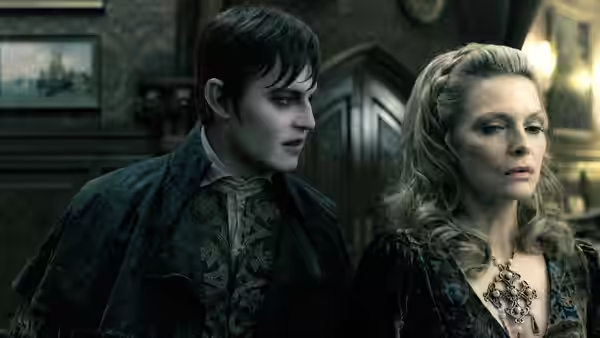
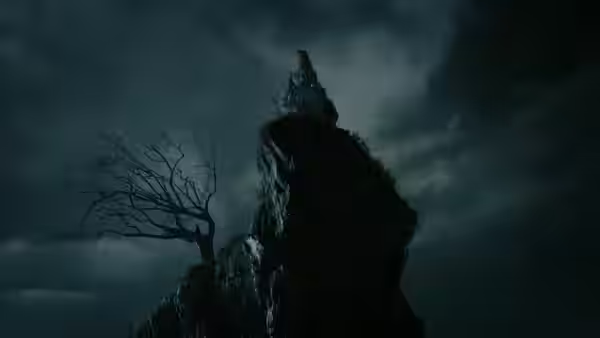
The house is the third. Rick Heinrichs has built Collinwood as a mansion the sea got into, with waves carved into the woodwork and a great hall furred with dust and cobwebs. Bruno Delbonnel lights the interiors in candle amber and keeps the exteriors in a grey, wet Maine light, so that every face comes out the colour of milk. Danny Elfman supplies harpsichord and low strings and then stands aside for the records, which include Alice Cooper appearing as himself at a ball Barnabas throws and being taken by his host for a remarkably plain woman. It all looks expensive and it mostly looks right.
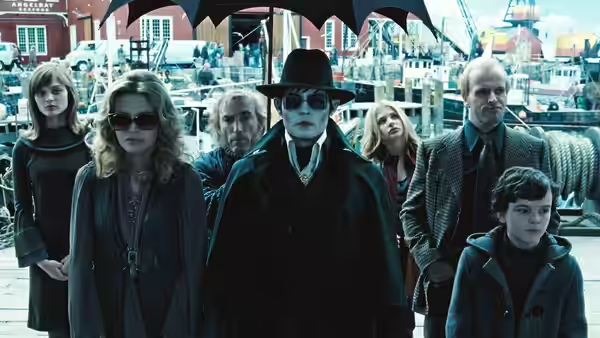
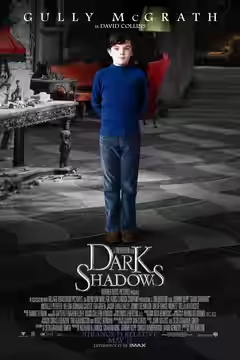
What it does not have is a story, and the middle hour is where you notice. Michelle Pfeiffer’s Elizabeth gets to be stern and little else. Helena Bonham Carter’s Dr. Hoffman is drunk, funny, and given a strand that is picked up and put down like a book nobody finishes. Chloë Grace Moretz sulks on command and is then handed a late development we will not describe and the film barely does. Jonny Lee Miller, Jackie Earle Haley and Gulliver McGrath are each given a room and a costume and no reason to be in them, and Christopher Lee turns up for a single scene as a fisherman named Clarney. Victoria Winters (Bella Heathcote), who is meant to be the love story, vanishes for twenty minutes at a time. Chris Lebenzon cuts between these people as if dealing cards, and we were bored, and then cross about being bored, because the cards are good ones.
The ending is a large effects set piece in which the house suffers, and it is the loudest and least interesting thing here. Burton has made gothic comedy with a spine before: Sleepy Hollow (1999) had a mystery to solve and solved it, and Ed Wood (1994) loved its trash with precision. Here the affection is for the wallpaper. Nothing in the second half is as alive as Barnabas shouting at a television set.
Most critics split down the middle on this one, and so do we. See it for the house, for Green and for Depp’s first hour, which is funnier than anything he had done in some years. At home you can admire the great hall and take a break during the cannery business, which is roughly the proportion the film deserves.