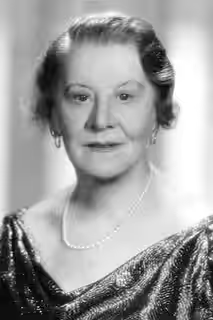
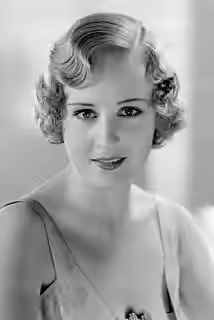
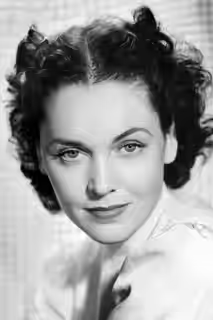
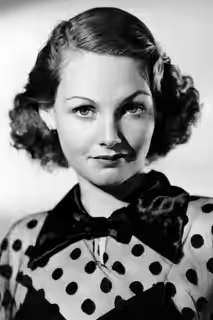
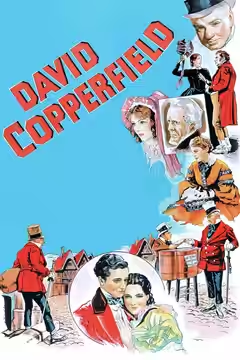
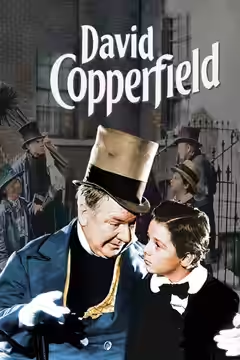
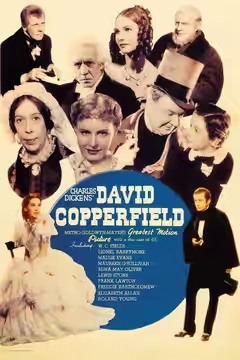
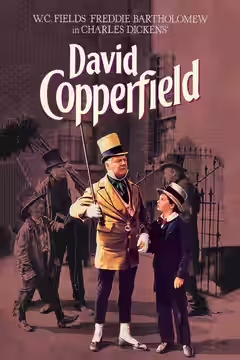
George Cukor’s David Copperfield squeezes the novel into 130 minutes and, for its first hour, is as good as a Dickens film gets, carried by Freddie Bartholomew and Edna May Oliver. Once Frank Lawton takes over, it becomes a procession of well-cast chapters.
The problem with filming David Copperfield is that there is too much of it, and producer David O. Selznick, director George Cukor and screenwriter Howard Estabrook chose to solve that by keeping nearly everyone and giving them less time each. The result is a film in two halves that do not quite belong together. The first, with Freddie Bartholomew as the boy, is very good. The second, with Frank Lawton as the man, is handsome, faithful and slightly beside the point. We recommend it, and we recommend it chiefly for the hour in which a small boy is frightened.
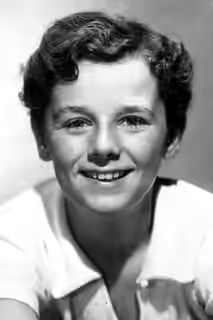
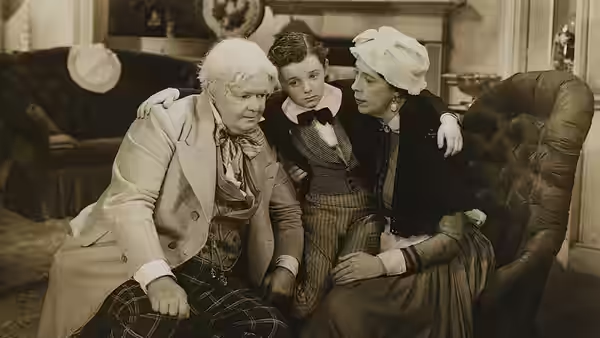
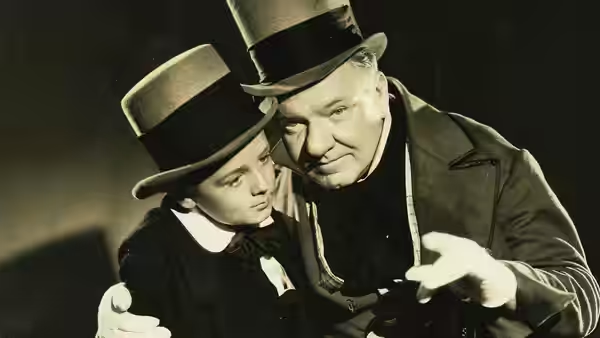
Bartholomew plays David without a trace of the stage child. He listens more than he speaks, and when Basil Rathbone’s Murdstone first stands in the parlour with a hand resting on Elizabeth Allan’s shoulder, the boy’s face does the work the novel does in three pages. Rathbone frightened us. He never raises his voice; he lowers it, and the beating that follows is staged mostly on Bartholomew’s face and the door. Allan plays Clara as a pretty, weak woman who knows she has made a mistake and cannot say so, and Jessie Ralph’s Peggotty, all bosom and apron and outrage, is the only warmth left in the house once the Murdstones have it.
Oliver T. Marsh photographs Blunderstone in soft grey daylight and London in soot, with ceilings that seem to press down on the child. Dolly Tree puts Murdstone in unbroken black and gives Aunt Betsey a bonnet you could defend a coastline with. Robert J. Kern cuts from chapter to chapter without dawdling, which is how the film fits so much in, and Herbert Stothart’s score is the one department that does not trust us: it swells over the sad scenes as though we might otherwise miss them.
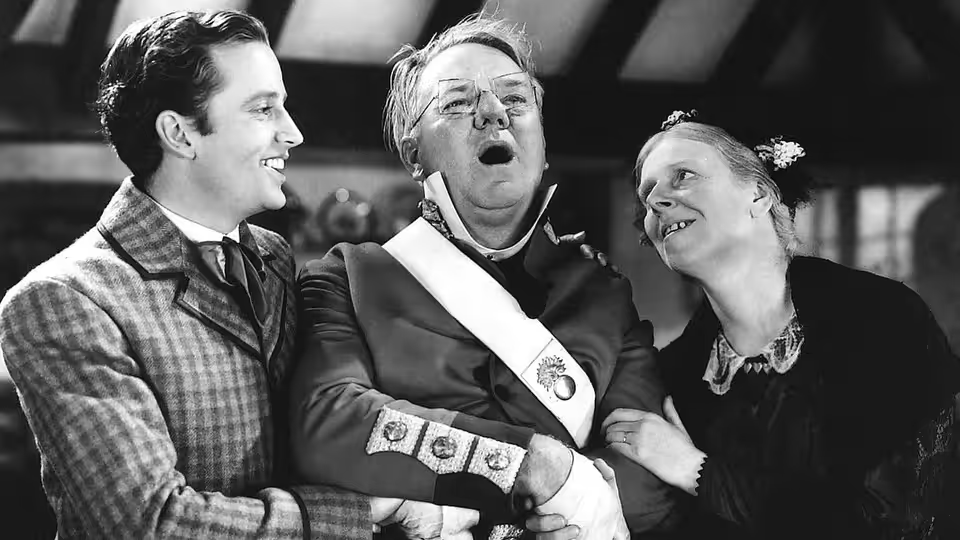
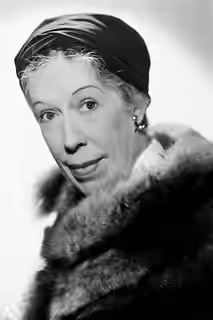
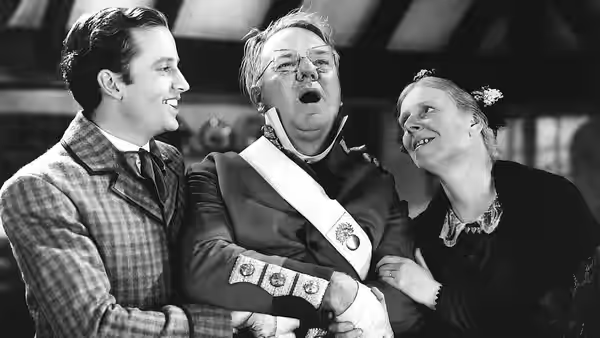
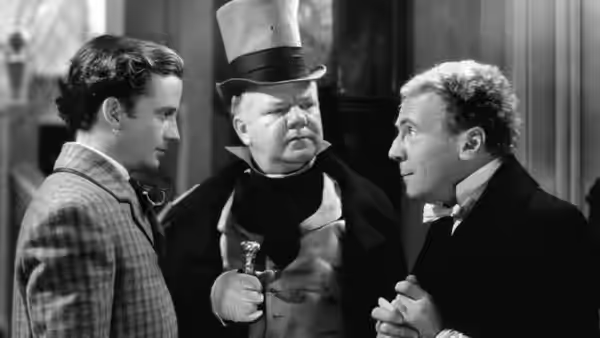
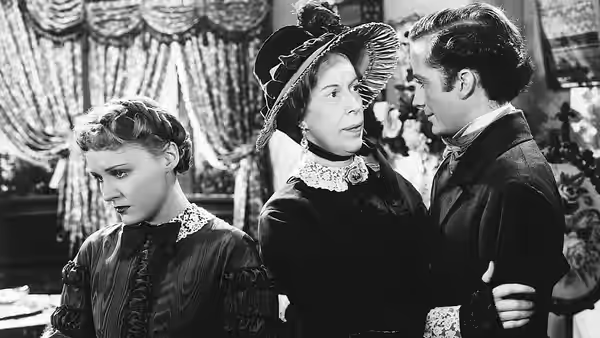
Edna May Oliver’s Aunt Betsey is the performance we would show anyone. Her first scene, chasing donkeys off her patch of green at Dover, is played entirely straight, and that is the joke. We laughed out loud, and then watched her take in the ragged child on her doorstep and change, over one long look, from a comic turn into a guardian. W. C. Fields, as Micawber, is the other thing most critics remember, and rightly; he plays the man’s optimism as a kind of professional pride and never asks us to find him pathetic.
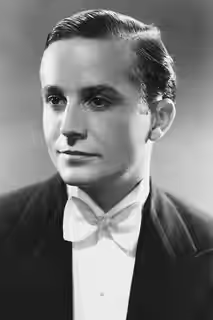
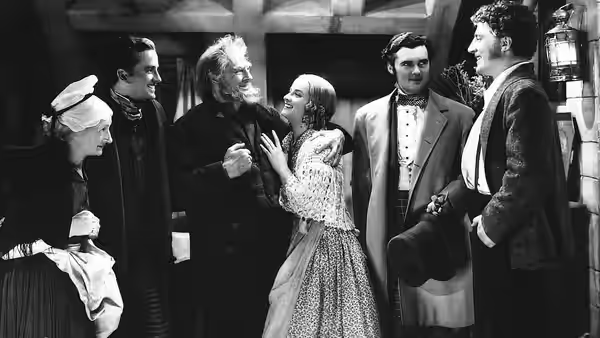
Then David grows up, and the film loses its centre. Frank Lawton is pleasant and upright and gives us nothing to worry about, which in a Dickens hero is a fault. Around him the book’s second half arrives in instalments. Maureen O’Sullivan’s Dora Spenlow is a doll with a small dog. Madge Evans’s Agnes Wickfield waits, patiently, in a series of doorways. John Buckler’s Ham and Herbert Mundin’s Barkis get their scenes and are gone. The novelist Hugh Walpole turns up as the Vicar, and Empire credits him with a share of the adaptation, which may explain the fidelity: everyone is here, and hardly anyone is here for long.
Cukor was always better with actors than with spectacle, and this film confirms it. The rooms are the right size, the faces are the right faces, and the big set pieces are competent rather than alive. What the second half needs is a David who wants something as badly as the boy wanted to reach Dover. It does not get one, and so it becomes a very well-cast illustrated edition.
Watch the first hour with a child of about Bartholomew’s age. Watch the second with the novel open beside you, so that you know which chapter you are in.