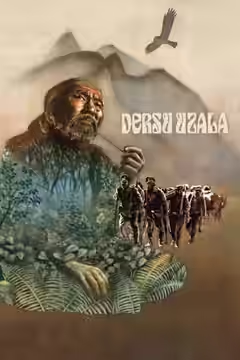
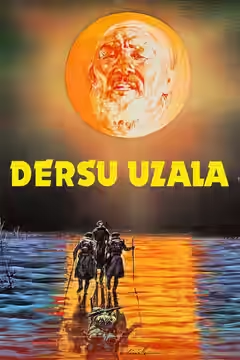
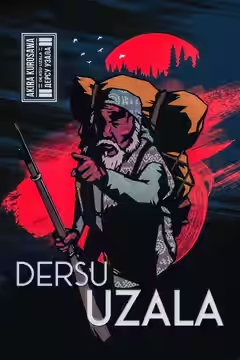
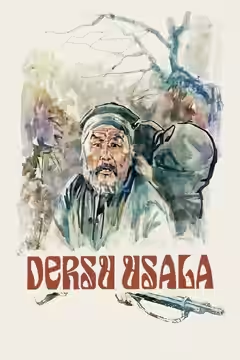
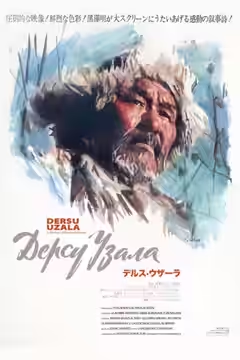
Akira Kurosawa’s forest adventure is patient, tense and moving, with Maksim Munzuk making its trapper worth the company. The film admires Dersu a little too unquestioningly, but the friendship survives that excess of affection.
Akira Kurosawa’s Dersu Uzala is a moving adventure about friendship and surviving the cold, weakened a little by its fondness for making the trapper a lesson to everyone else. The forest gets enough attention for the men’s need for one another to make practical sense. There is pleasure in their companionship, but danger is never far away. We recommend it, with some patience for the passages that keep admiring what we have already learned to admire.
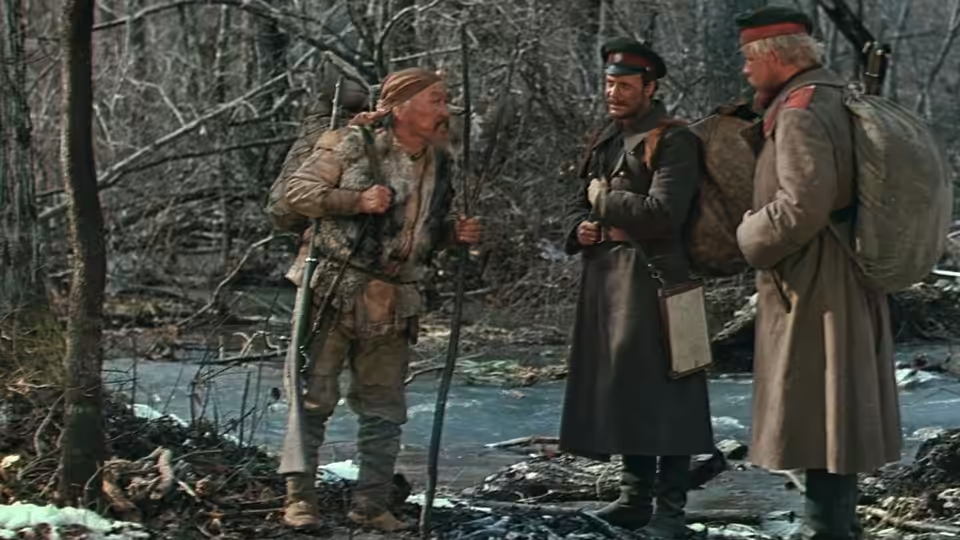
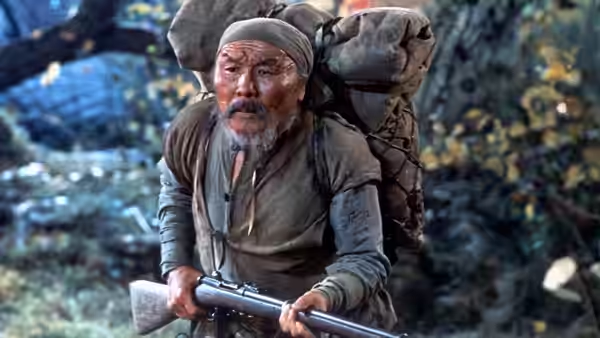
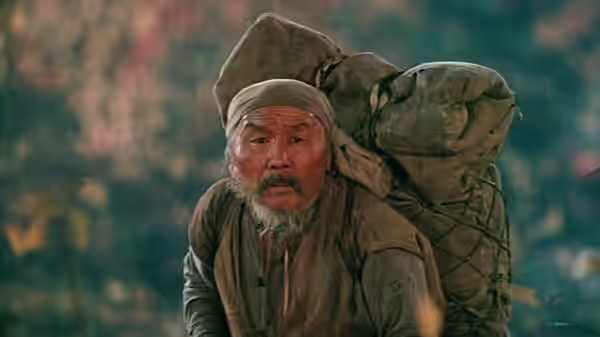
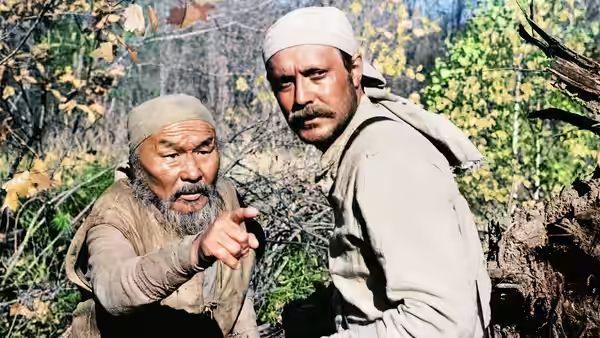
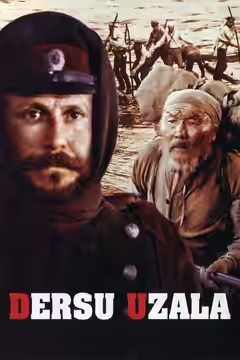
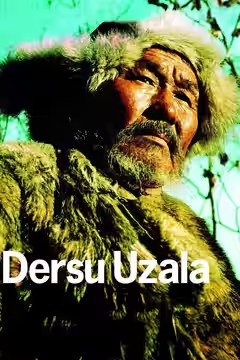
Maksim Munzuk plays Dersu Uzala, a lifelong trapper, with the assurance the film needs if its admiration is to make sense. Such a character could easily become a collection of good instincts arranged for everybody else’s benefit. The performance keeps our attention on a person even when the film seems tempted to turn him into an example. Yury Solomin’s Arsenev gives the friendship its other half, and the warmth between them makes their company worth keeping through the quieter stretches.
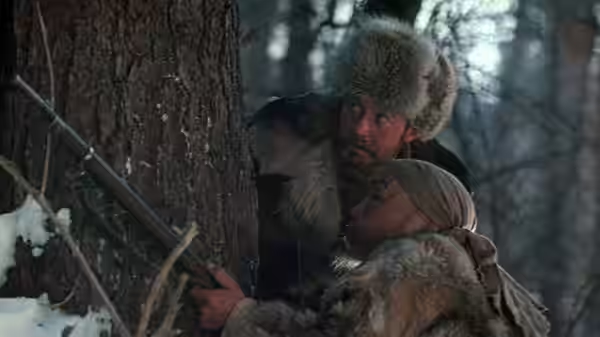
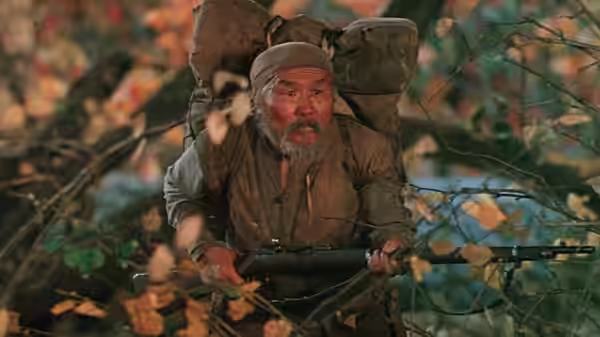
Yuri Gantman, Fyodor Dobronravov and Asakazu Nakai share the cinematography credit, and their handling of colour and light makes the forest worth sustained attention. Its beauty never makes it look reliably welcoming. The scale matters because the people have to survive within it, and the photography keeps that difficulty before us even when there is pleasure in looking. The landscape earns its prominence by making us consider how exposed the men are.
We were frightened by the struggle to survive the cold. The danger is plain enough to need little explanation, and the film gives us time to think about what enduring it would mean. Its patience pays off here: having spent so long attending to the forest, we cannot dismiss it as scenery when survival becomes difficult. The friendship is most affecting under this pressure, when another person’s knowledge and willingness to help become necessities.
Valentina Stepanova’s editing allows that attention, although 141 minutes is more than the film always needs. Some stretches prolong our admiration without doing much to deepen it. Yuri Raksha’s production design stays unobtrusive beside the landscape, which suits a film so interested in what people cannot control. Isaac Schwartz’s music supports the tenderness, though the passages of danger make the stronger impression without needing to insist on our affection for Dersu.
The reservation concerns the writing, credited to Yuri Nagibin and Akira Kurosawa from a novel by Vladimir Arsenyev. Respect for a man who understands the forest is easy to share; the trouble comes when his understanding begins to seem like an answer to everything. The film can make Dersu’s goodness feel settled in advance, leaving Maksim Munzuk to supply the human particularity. That limits the friendship a little, since one partner sometimes seems to be there chiefly to improve the other.
Adventure films can become tiresome when every difficulty exists to prove somebody right, and this one occasionally approaches that habit. Its feeling for companionship is strong enough to keep the fault from spoiling it. There is enough danger in the forest, and enough warmth between the men, to make the slower passages worth accepting. Give it an unhurried evening; the struggle against the cold deserves more attention than a glance between conversations.