Glenda Jackson makes this dementia drama painful and compelling, giving Maud an energy that resists easy pity. The mystery is less persuasive, and the pace occasionally drifts, but we recommend it for her performance.
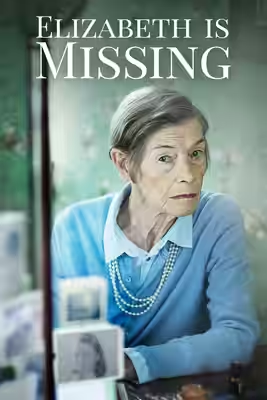
Elizabeth Is Missing is a moving dementia drama with a mystery that does not always deserve its leading performance. Aisling Walsh directs Andrea Gibb’s adaptation of Emma Healey’s novel, allowing Maud Palmer Horsham to remain difficult as well as vulnerable. Glenda Jackson gives her enough force that we want to understand her even when certainty is out of reach. We recommend it with a warning: anyone chiefly interested in solving the case may find the plotting less rewarding.
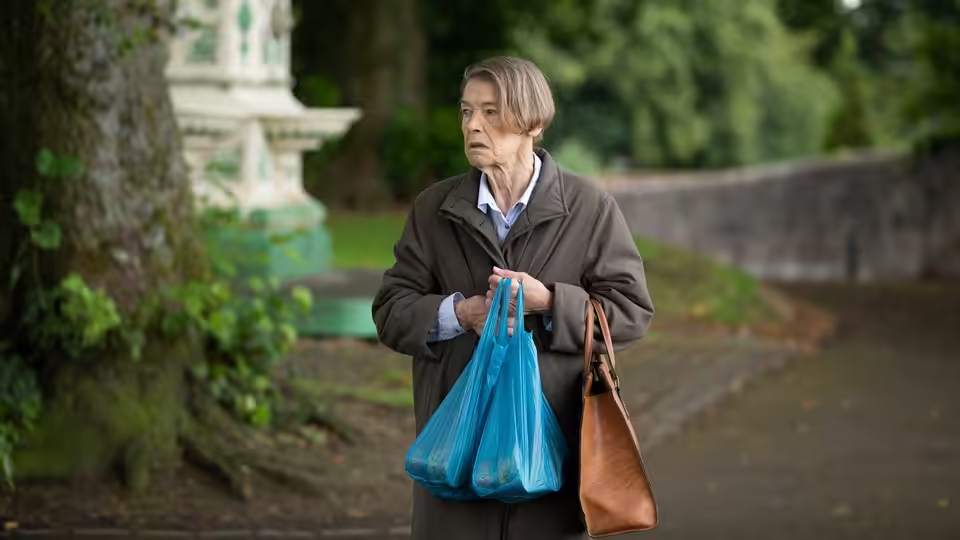
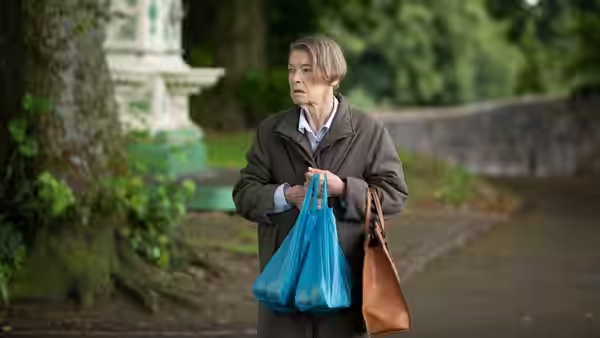
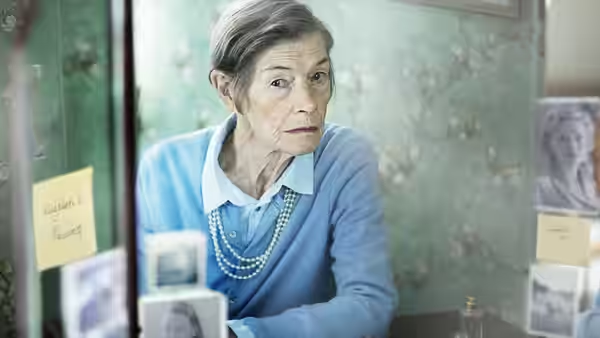
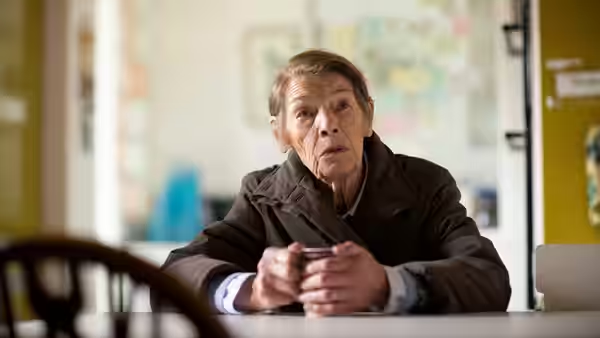
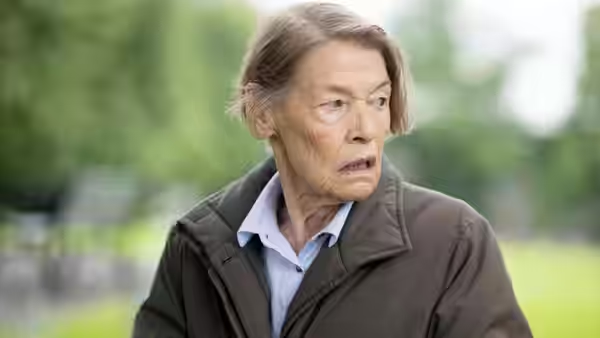
Glenda Jackson does not make Maud merely bewildered. There is impatience in the performance, and a stubborn energy that makes being understood seem urgently important to her. We found her confusion distressing because that determination remains so strong when her memory will not co-operate. The performance gives us someone with the capacity to demand our attention, become exasperating and suffer, without making any of those things cancel out the others.
The film is attentive to what dementia does to a family, including the strain of trying to help someone whose understanding of events cannot be relied upon. Aisling Walsh avoids making patience seem easy, or treating exasperation as proof of a lack of love. A drama like this can become an exercise in congratulating the healthy for looking after the ill. Here, the difficulty of caring for Maud receives its due without taking attention away from her own distress.
Lukas Strebel’s cinematography is unobtrusive enough to let us concentrate on the effort in the central performance. John Hand’s production design is similarly restrained; we attend to Maud rather than admiring the work around her. That modesty is useful in a film which could easily make suffering look tasteful and leave it at that. Dominik Scherrer’s music supplies sympathetic accompaniment, although the performance rarely needs help telling us how much this hurts.
At 87 minutes, the film has little space to waste, which makes its occasional slow stretches noticeable. Alex Mackie’s editing sustains Maud’s uncertainty, but some passages prolong it without giving us much else to consider. We understand why a brisk succession of clues would be wrong for a story asking us to share her difficulty. Even so, there are stretches where the pace slackens after we have understood what the film needs us to understand.
Andrea Gibb has the demanding task of turning unreliable recollection into an investigation that still needs to make sense. The plotting sometimes leans on coincidence, and a few developments do not withstand the attention the mystery invites. We will not describe where those problems occur. They are worth mentioning because the film asks us to follow events carefully, and we wanted firmer reasons for some of the connections it makes.
Within the familiar territory of a drama about illness, the film distinguishes itself by allowing its central character so much stubbornness. Glenda Jackson keeps Maud from becoming a meek illustration of a diagnosis, and the compassion is more convincing for it. Those looking for the steady pleasure of clues falling into place should adjust their expectations. Watch it for her, and allow for a mystery that cannot quite keep up.