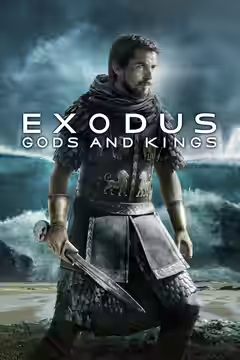
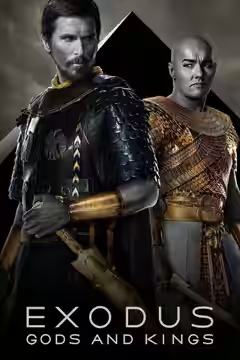
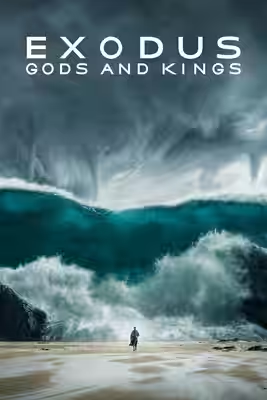
Ridley Scott films the plagues as the best half-hour of large-scale horror he has staged in years, and surrounds them with a 150-minute war film in which nobody is allowed a personality, least of all Moses. For the frogs and the water; not for the man.
Ridley Scott’s Moses runs 150 minutes, opens on a caption reading 1300 BCE and has four credited screenwriters: Adam Cooper, Bill Collage, Jeffrey Caine and Steven Zaillian. It wants to do the Exodus the way Gladiator did Rome, two men raised as brothers who end up commanding opposite armies, and to be sceptical about the miracles while showing every one. For about forty minutes in the middle, when the plagues come, it is as frightening as anything Scott has made in years. The rest of the time it is a handsome film in which nobody says anything a person would say.
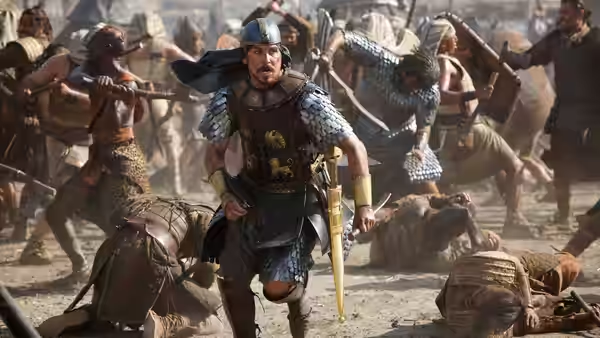
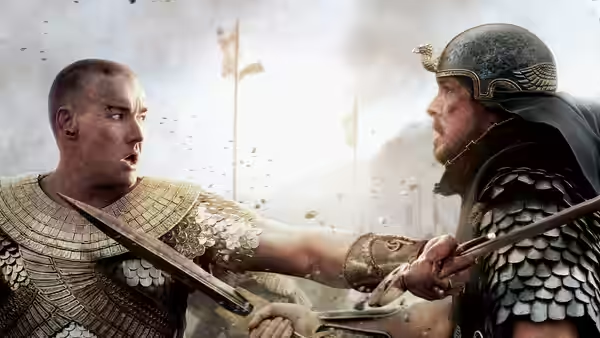
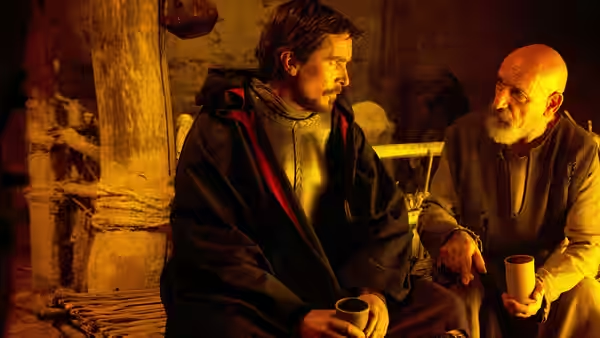
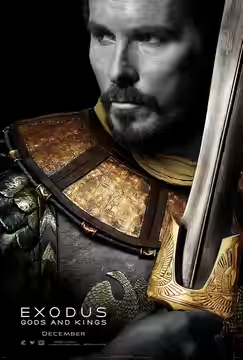
Christian Bale plays Moses as a general first and a prophet under protest. He is good at the soldiering: at Kadesh he rides into the Hittite chariots with the flat irritation of a man doing a job, and when the High Priestess (Indira Varma) reads a prophecy out of a bird’s insides he looks at her as if she had quoted for a repair. The film gives him that scepticism and then nothing to do with it. When God appears, as a boy credited as Malak (Isaac Andrews), Moses argues with him, loses, and does as he is told, and the arguments are the same argument several times over. Bale is never bad. He is never handed a scene in which Moses decides something.
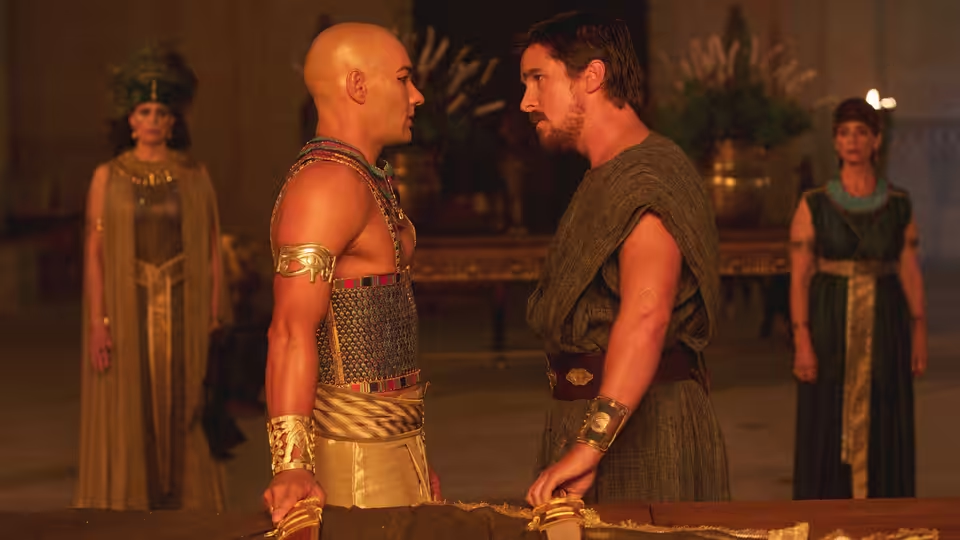
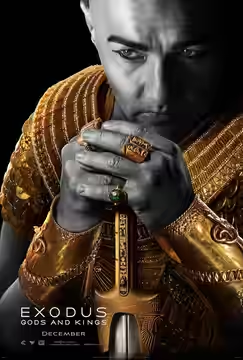
Joel Edgerton has more fun. His Ramses is shaved, kohl-eyed and gold-plated, keeps cobras as pets, and seems permanently puzzled that running Egypt involves so many decisions. It is a camp performance in a solemn film, and we were relieved every time he came back, because he is the only person on screen who behaves as if the stakes are his.
The rest of the cast turn up and are not used. María Valverde’s Séfora gets the film’s one quiet stretch, in Midian, and the script is through it in minutes.
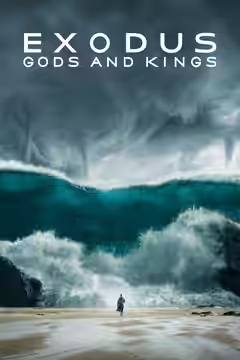
Then the plagues, and the film we were promised. The Nile does not turn red because a staff is dipped in it; it turns red because the crocodiles come in from the banks and start on the fishermen, and the water clouds from the bottom up. Frogs follow the blood and get into the beds. Flies follow the frogs, boils follow the flies, and Dariusz Wolski and Mark Patten shoot it all in a bleached, dusty light that turns the palace gold to brass and leaves the courtiers’ sores looking wet. Billy Rich cuts the locusts as weather, a brown bank rolling over a field, and the dark comes down on Memphis as a smear. We were horrified, properly horrified, and glad of it. Scott has filmed the plagues as a public health disaster that happens to have an author, and we had not seen them done that way before.
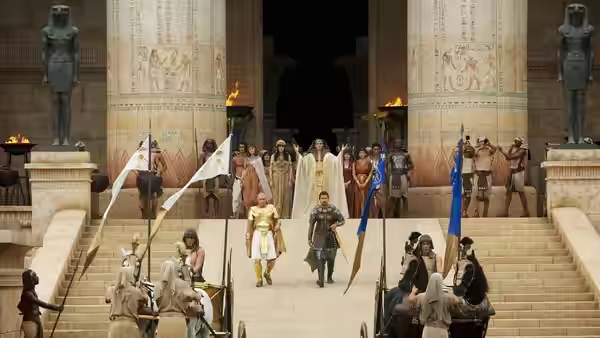
Arthur Max builds Memphis as a building site, scaffolding up the flank of a half-finished colossus, and the film is at its most intelligent when it treats Egypt as a place that runs on labour and is beginning to notice. Janty Yates puts the court in pleated linen and gold and the Hebrews in undyed brown, which tells you who to root for before anyone speaks.
The casting was argued over before the film opened, and we will add only that a film which hands its Egyptian court to white actors has made a choice, and the choice shows whenever the camera pulls back on a crowd. The larger failure is dramatic. Scott cannot decide whether God is real or a blow to the head, so Moses can be neither believer, madman nor politician, and the end of a story everybody knows arrives without anyone on screen having seemed to want it.
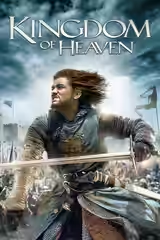
Kingdom of Heaven, from 2005, had the same shape, and in its longer cut it knew what it thought. This one has four writers and the opinion of none of them. See it in a cinema if one is showing it, for the frogs and the water, which shrink on a television to a weather report. The 15 certificate is for the crocodiles, who earn it. The rest you may find yourself admiring from a distance, which is roughly how Moses treats God.