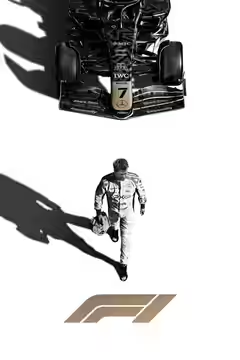
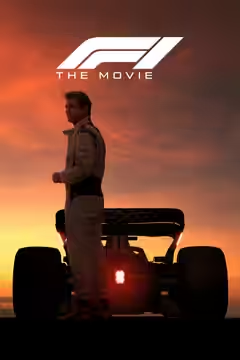
Joseph Kosinski puts a camera inside a real Formula One car and the racing is as thrilling as any we have seen on screen. Everything between the races is a sports film we have watched a dozen times, with better tailoring and a longer running time.
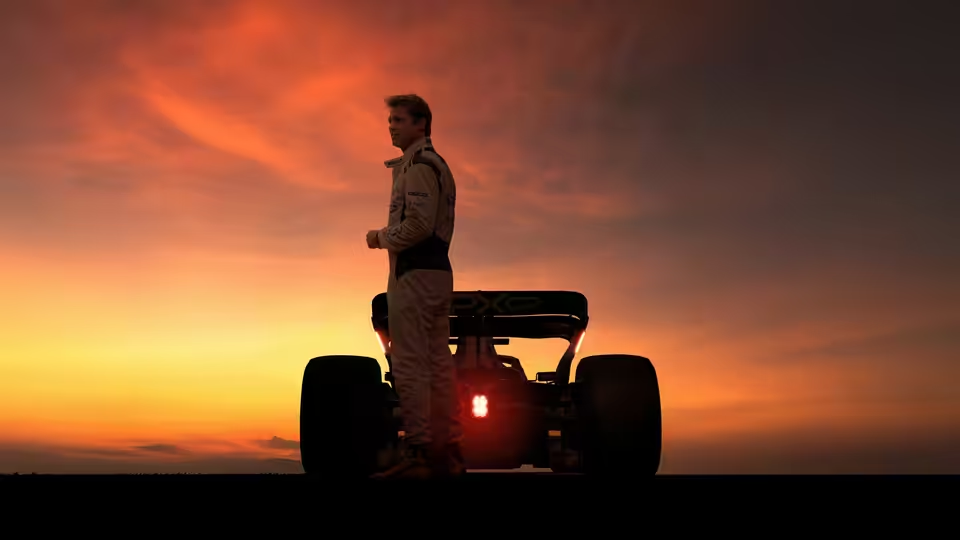
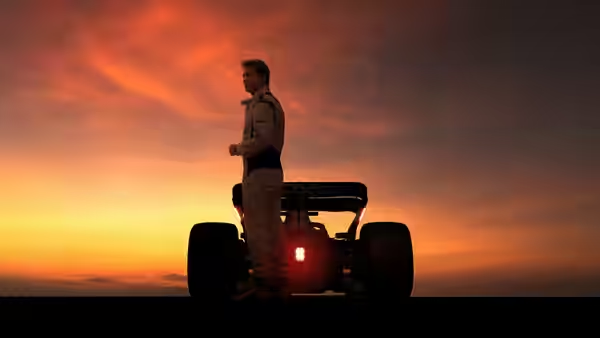
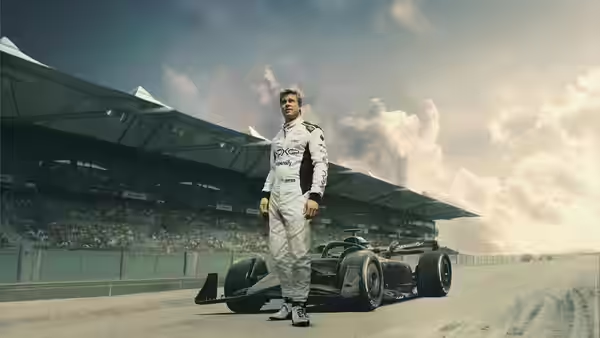
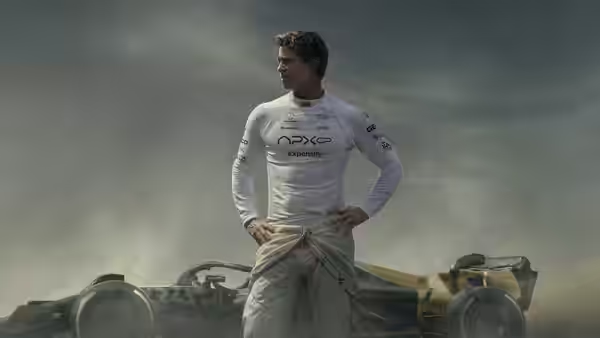
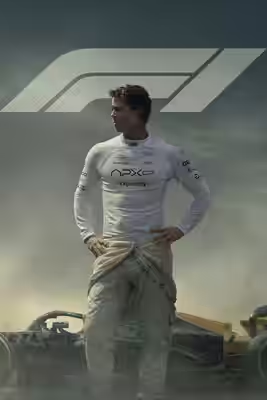
Joseph Kosinski directed Top Gun: Maverick, in which an ageing man in a fast machine taught a younger man to be less careful. F1 is the same film with the sky taken out. Sonny Hayes (Brad Pitt) is a driver whose Formula One career ended in a crash decades ago and who has driven whatever will have him since. His old teammate Ruben Cervantes (Javier Bardem) now owns APXGP, the worst team on the grid, and asks him back for one season to partner the rookie Joshua Pearce (Damson Idris). The racing here is as good as any we have seen. The rest is a sports film we have watched many times before, and at 156 minutes we had time to notice.
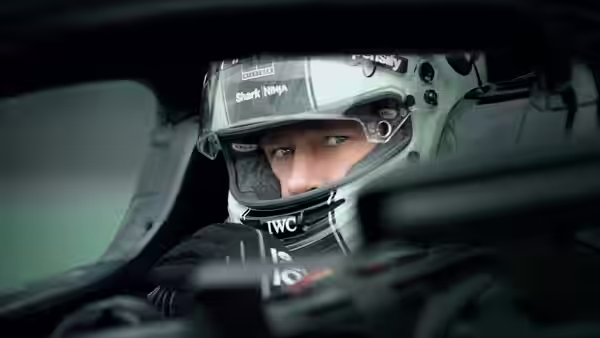
Claudio Miranda, who also shot Maverick, fixes his cameras to the cars themselves, and the difference is plain in the first lap. The camera sits at the driver’s shoulder and the track comes at us in a grey smear with the kerbs snapping past on either side; when a car goes off, the world tips and we tip with it. Patrick J. Smith and Stephen Mirrione cut between cockpit, pit wall and helicopter at a rate that ought to be confusing and mostly is not, because they hold each onboard shot just long enough for us to feel the corner. The first full race had us leaning forward with our hands gripped together, and we do not follow the sport. It does this several times.
Hans Zimmer keeps his score to a low pulse under the engines and lets them do the talking; his big themes arrive between races, where there is less to compete with. Mark Tildesley and Ben Munro build the APXGP garage in black carbon and blue screens, always a little untidy, so it reads as a team that cannot afford its neighbours’ polish. Julian Day covers everyone in sponsor logos, as the sport requires, and puts Pitt in jeans and denim off duty so that he looks like a man who has wandered in from an older film.
Pitt plays it that way, loose and amused, doing his slow grin at anyone who tells him he cannot do something. It is a star performance rather than an acting one, and well judged for what this is. Idris has the harder part, a young man told he is the future and then told he is doing it wrong, and he plays the sulk and the pride without asking to be liked too soon. Bardem gives Ruben warmth and a permanent look of financial worry. Kerry Condon, as the technical director Kate McKenna, gives the most precise performance in the film and is asked to do the least with it: she designs the car, and then a man arrives to tell her about the car. Tobias Menzies watches from the hospitality suite as a board member with opinions.
The trouble is Ehren Kruger’s screenplay, which has one scene and writes it many times. Somebody tells Sonny he is too old. Somebody tells Joshua he is too young. Sonny says the car is not the point and then drives the car. Between these, the film relies on television commentary to tell us what we have just watched, a crutch in a drama. Around the ninety-minute mark the film starts swapping races for montages of them, drivers and crowds and podiums going by in a few seconds each, and our attention slipped. It came back. The pattern did not stop.
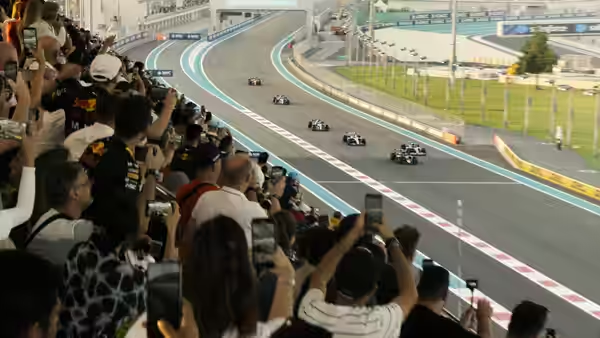
It is also, and nobody pretends otherwise, an advert. The film was shot at real Grand Prix weekends among the real teams, Lewis Hamilton is one of its producers, and no team boss ever says anything a sponsor would mind. This does not spoil the races. It does mean that when the film reaches for something about age and second chances, the reach is cautious, because the brand has to come out of the crash intact.
Maverick told a nearly identical story and knew when to stop talking. This one belongs in a cinema, on the largest screen we can find; the onboard shots need the size and the engines need the volume. At home the races shrink to something we might have caught on a Sunday afternoon, and the dialogue does not improve.