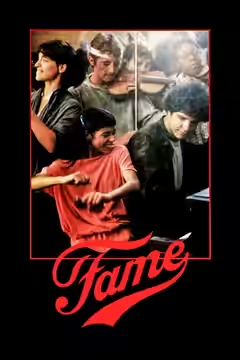
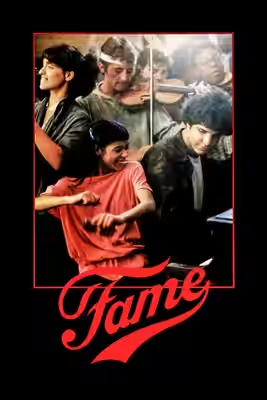
Alan Parker’s four years at New York’s High School of Performing Arts is loud, sweaty and often moving, and it never settles on which of its eight students it is about. Worth the evening for the numbers and for Irene Cara.
After Bugsy Malone (1976) and Midnight Express (1978), Alan Parker went to New York to follow a class of hopefuls through four years at the High School of Performing Arts, from audition day to graduation. Christopher Gore’s script gives us eight students and no main one. The result is a loose, loud, episodic film that is at its best when the school breaks into noise and at its weakest when it sits a character down to talk about their feelings. We liked it, and we can tell you exactly where it is thin.
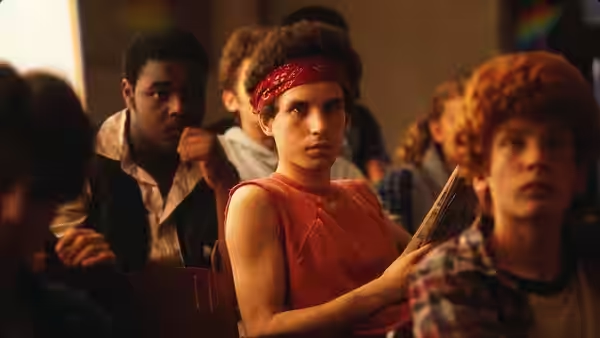
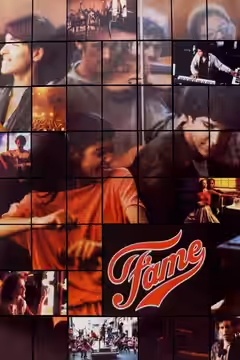
The opening half hour is the auditions, and Gerry Hambling cuts them as a mosaic: a bar of a song here, a wrong note there, a girl doing Shakespeare at a wall. Leroy Johnson (Gene Anthony Ray) has only come to partner a friend, dances in jeans and a vest and takes the attention off her. Coco Hernandez (Irene Cara) tries every department going. Doris Finsecker (Maureen Teefy) sings with her mother (Tresa Hughes) conducting from the seats, and Bruno Martelli (Lee Curreri) wheels in more keyboards than the music department owns. By the time the first bell rings we know these people, which is more than most ensemble films manage in two hours.
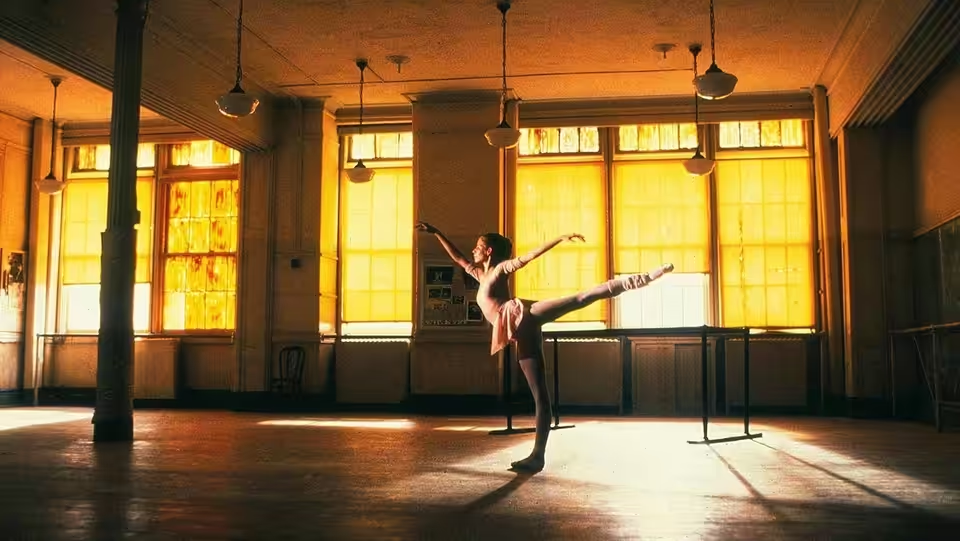
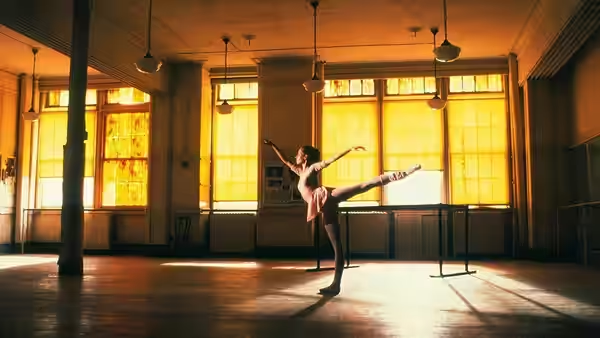
Michael Seresin shoots the building in what looks like the light that was there, grey winter mornings through chicken-wire glass, strip lights buzzing over the lunch tables, so the place feels like a school and not a set. Geoffrey Kirkland’s corridors are scuffed to the height of a shoulder bag and the radiators look like they have never worked. Kristi Zea puts the dancers in cut-off sweatshirts and leg warmers that are plainly their own and the rich girl, Hilary Van Doren (Antonia Franceschi), in things that have been ironed. The whole film has the smell of a gym.
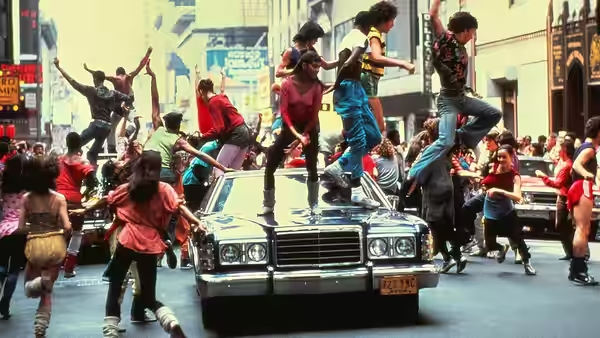
Then the numbers. In the cafeteria, Bruno’s tape starts, somebody drums on a tray, Cara climbs onto a table and within a minute the entire lunch room is a rhythm section. Michael Gore’s songs do a lot of the work, and the title song does the most: Bruno’s father plays it from his cab outside the school and the street fills with students dancing on the bonnet, on the roof, on the pavement, while the traffic sits and honks. We grinned at it like idiots and did not stop until the cab drove off. Cara also gets a quiet one, alone at a piano, and Parker has the sense to leave the camera where it is.
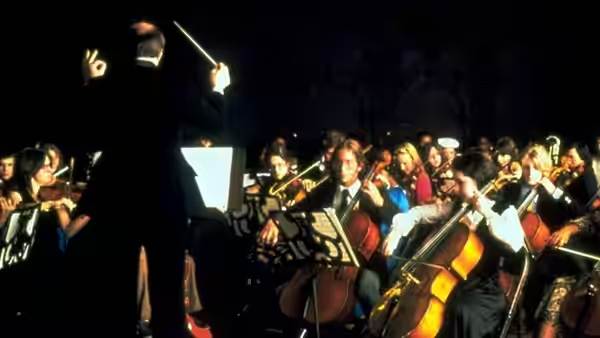
The trouble is arithmetic. Eight stories in 134 minutes means some get a paragraph. Hilary’s strand is handled in two scenes and a taxi. Lisa Monroe (Laura Dean) gets one. Montgomery MacNeil (Paul McCrane) says one brave and honest thing about himself early on, and the script then has almost nothing for him to do for three years. The teachers fare better: Mrs. Sherwood (Anne Meara) refusing to let Leroy hide the fact that he cannot read is the one strand with a proper argument in it, and Mr. Shorofsky (Albert Hague) telling Bruno that a synthesiser is not an orchestra is a quarrel the film has the decency to lose on both sides.
Barry Miller’s Ralph Garci gets the longest arc and the most speeches, and Miller is good enough that the speeches nearly work. There is a scene late on with Coco, a stranger and a camera that we will not describe. It is the one time Parker holds a shot and lets a face do everything, and Cara is so exposed in it that we wanted him to cut away and were glad he did not.
Bugsy Malone had one idea and ran it to the end; this has eight and finishes about four of them. It is still a good evening, with the sound up, and if the genre is yours you will forgive the stretches where everyone is in a classroom. It runs 134 minutes and carries a 15, for the language and for that scene.