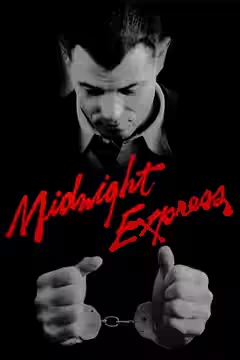
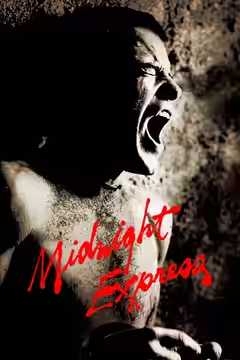
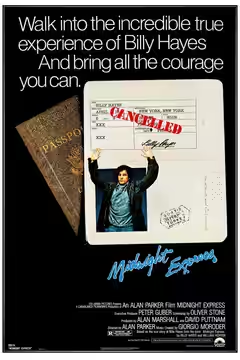
Alan Parker’s prison drama is built with real skill and it grips, often against our will. But Oliver Stone’s script paints every Turk in the same dark shade and asks for a sympathy for its hero that it never quite earns.
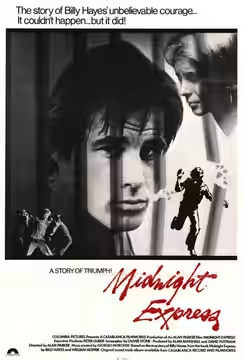
Midnight Express is taken from Billy Hayes’s account of his years in a Turkish prison after he was caught smuggling hashish out of Istanbul, and Alan Parker films it as a descent, one locked door after another. It is a superbly made film and a crude one, and the two facts sit side by side for 121 minutes. We can recommend it to anyone who wants to see how a director and an editor can hold an audience by the throat. We cannot pretend the hands are clean.
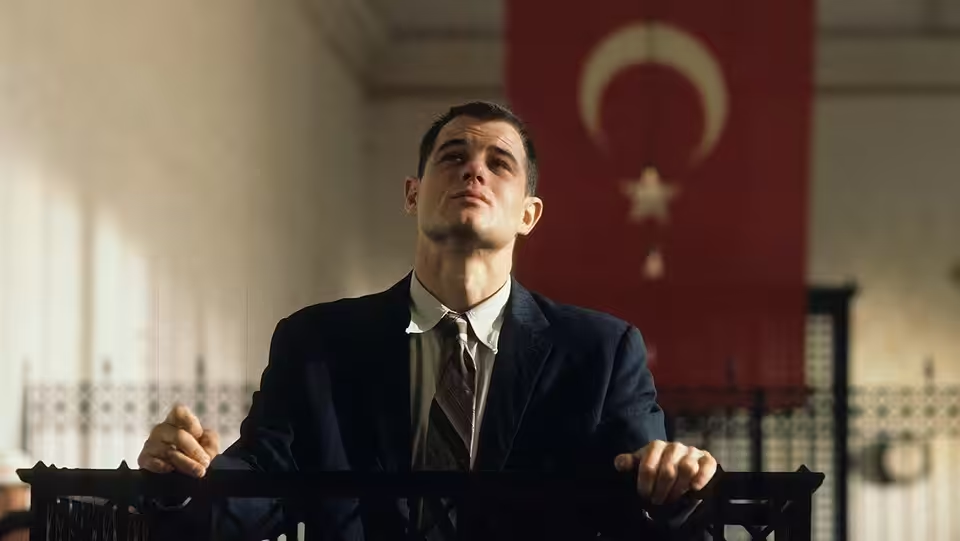
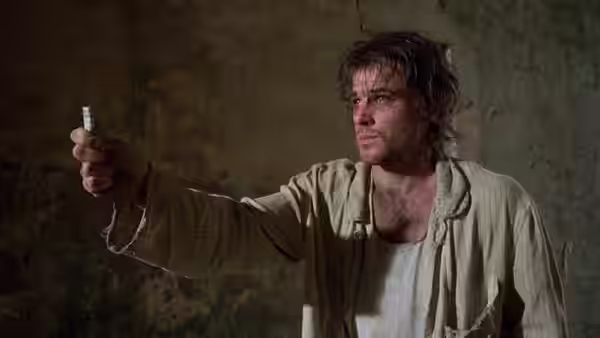
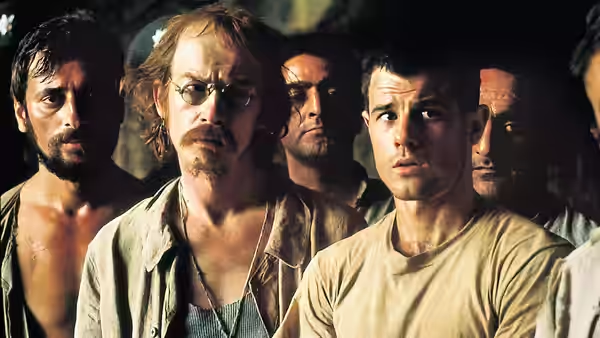
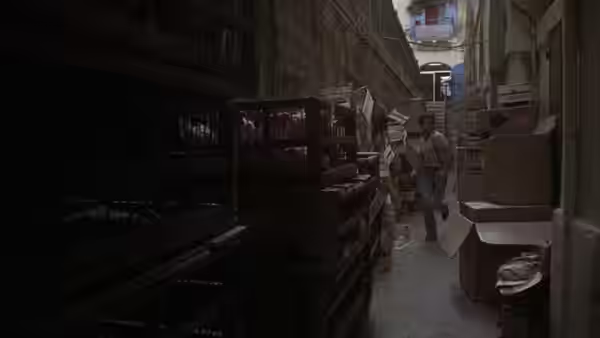
The craft is the first thing we notice and the last thing we forget. Michael Seresin shoots the airport in flat, hot daylight and the prison in the brown light that comes through high barred windows, so the prisoners look like something left in a cupboard. Geoffrey Kirkland’s prison is stone, iron and dirty whitewash, with a courtyard that never gets the sun. Milena Canonero dresses the men in layers of pale, greying cloth that seem to have grown on them. Gerry Hambling cuts the opening search to the sound of Billy’s own heartbeat: nothing happens for two minutes and we could not breathe.
Giorgio Moroder’s score is all synthesiser, a pulse and a rising sequence of chords that has nothing to do with Turkey or 1970 and everything to do with panic, and it suits a film that is not about a place but about a man losing his footing. When it drops out and the prison is left with its own sounds, footsteps, a bolt, a man weeping somewhere, the silence does as much work as the music.
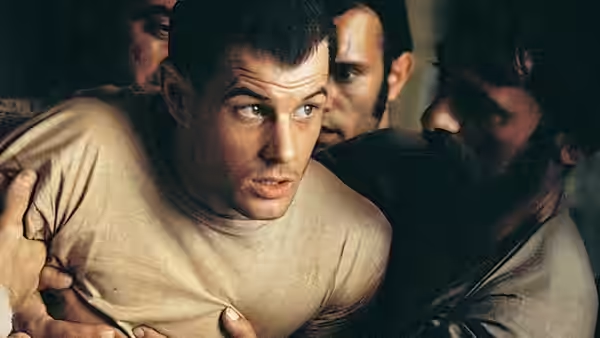
Brad Davis plays Billy as a boy who thinks charm will get him out, and the performance is a slow record of the charm being taken away. John Hurt’s Max is the film’s finest hour, a wreck of an Englishman who has made peace with his own ruin and offers Billy advice in the voice of a man reading aloud from the back of a cereal packet; he is funny, and then he is not, and Hurt never signals the change. Randy Quaid gives Jimmy a rage that gets everyone into trouble, and Paolo Bonacelli’s Rifki, all smiles and ledgers, is a proper piece of villainy.
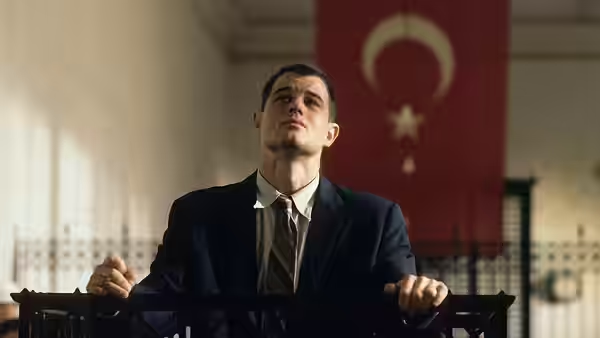
Then there is the problem, and it is not a small one. Oliver Stone’s screenplay gives us a Turkey in which every guard is a sadist, every official is for sale and every lawyer is a crook. The Turkish dialogue is left without subtitles, so the people running Billy’s life are noise to us as they are to him; that is a defensible choice for one scene and a lazy one for two hours. The script also wants Billy treated as a wholly innocent man, when the film has shown us the hashish in the first five minutes. The late courtroom tirade Stone writes for Billy, which we will not quote, is the film at its ugliest and its most pleased with itself.
Here is what we felt. Early on, Hamidou has Billy hung by his ankles and beaten on the soles of his feet, and Parker holds the shot while Paul L. Smith works, patient and bored, as if shelling peas. We were horrified, and we were meant to be, and it worked. Later, as the film piled on another cruelty and another and the score rose to tell us how to take it, we noticed we were still gripped and resented it, the way we resent a stranger who has grabbed our arm to make a point.
The great prison films, A Man Escaped or Cool Hand Luke, let the audience find the horror in a routine. Parker finds it in a set piece, then finds a bigger one. The set pieces are among the best staged of their decade. But the film is finally more interested in what can be done to a body than in what a cage does to a mind, and Hurt, who plays the second thing, is left at the edge of the frame.
See it for Seresin, Hambling, Moroder and Hurt, and for a first hour that would teach anyone how to build dread. Go in knowing that the country on screen is a nightmare rather than a place. It carries an 18 certificate and earns it.