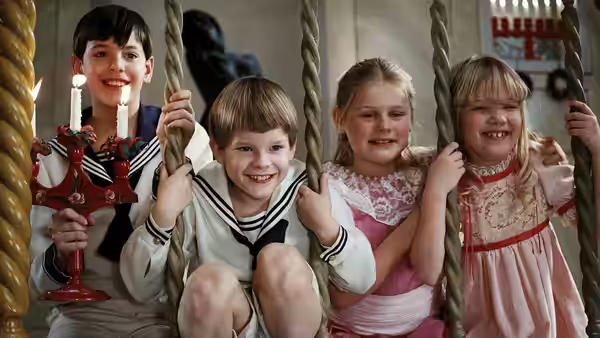
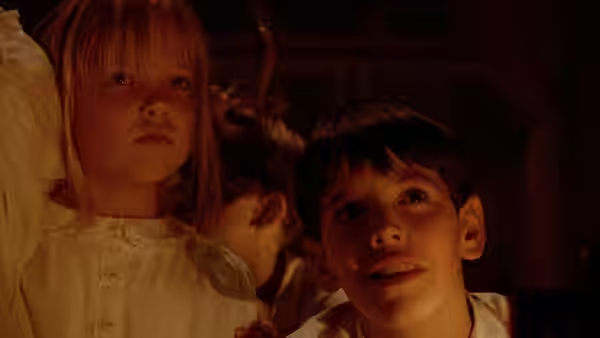
Boy in a knit sweater points at a figure in a candlelit puppet theater
Film review

Fanny and Alexander

1982 · Directed by Ingmar Bergman · 3h 08m

In a sentenceThree hours with somebody else’s relatives, and we would accept another invitation

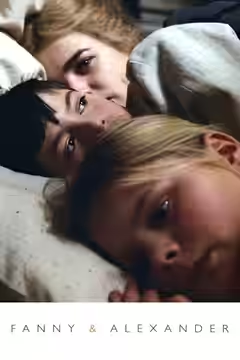
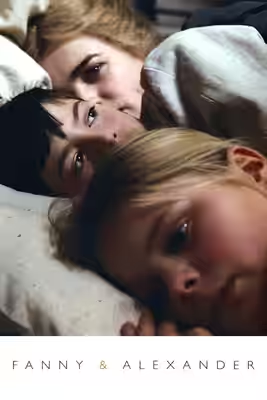
Pernilla Allwin and Bertil Guve play Fanny and Alexander Ekdahl, two children growing up in a well-to-do family in Uppsala. Around them, the adults pursue their own concerns, while the children try to understand the pleasures, tensions and rules of family life. Ewa Fröling plays Emilie Ekdahl, Gunn Wållgren plays Helena, and Jan Malmsjö plays Bishop Edvard Vergerus, whose strict authority threatens the children’s freedom. Ingmar Bergman’s drama follows childhood through domestic life and imagination, as Alexander’s view of the world brings everyday experience into contact with fantasy.

Plays from YouTube when you press play; nothing loads from them until then.

Fi1m review

Ingmar Bergman’s family drama is warm, funny and frightening, with Bertil Guve giving childhood a stubborn, watchful presence. We would send a stranger to see it, though Fanny deserves more of the attention Alexander receives.

Ingmar Bergman’s Fanny and Alexander earns its 188 minutes by making us care about a family before asking us to fear for its children. We would recommend it even to someone who thinks a long family drama sounds like an obligation. Written and directed by Bergman, it makes room for adult foolishness, affection and cruelty without treating childhood as a period of uninterrupted innocence. Fanny and Alexander are trying to understand people who can be loving and frightening, sometimes for reasons the children cannot see.

Pernilla Allwin and Bertil Guve play the children, and Guve gives Alexander the awkwardness that keeps a threatened child from becoming a convenient little saint. He can be difficult, and the film respects him enough to allow it. That matters in a story where imagination gives a child some freedom from what adults insist is true. Bergman lets fantasy belong to the children’s experience, so it never feels added merely to make their lives more interesting to watch.

Jan Malmsjö’s Bishop Edvard Vergerus is the reason that freedom matters. We were frightened by his insistence on obedience: Malmsjö makes the bishop’s certainty feel like something a child cannot reason with or escape. The struggle between the boy and this severe adult gives the film its hardest scenes, and Bergman does not make the abuse easier to bear by turning it into a lesson about courage. The unequal contest is painful to watch, even before we begin to worry about what happens next.

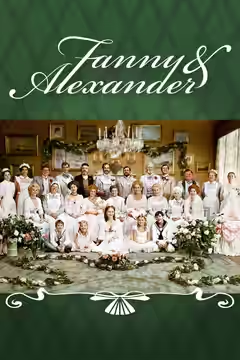
Sven Nykvist’s photography gives the well-to-do household enough warmth to make its comforts matter. The production design helps us believe in a family whose life extends beyond the children, rather than providing a handsome background for their troubles. There is pleasure in looking at this home, and that pleasure makes the family’s unhappiness harder to dismiss. Bergman understands that children can be loved, materially comfortable and still have good reason to be afraid of adults.

With Ewa Fröling as Emilie and Gunn Wållgren as Helena, the adult company has enough presence to keep Alexander from swallowing the whole family. Sylvia Ingemarsson’s editing allows the family chronicle to take its time without losing the pressure of the children’s predicament. Music by Benjamin Britten and Robert Schumann contributes to the feeling that private fears can become overwhelming. The film is generous with humour, too, and the comic passages make the adults seem more recognisable before their failings begin to hurt.

Our reservation is there in the title: Fanny receives less attention than Alexander, and Allwin deserves more time to make Fanny’s experience distinct from his. Some of the adult business holds us less closely than the children’s predicament, and a few stretches feel overextended. These are costs of Bergman’s willingness to let the household occupy so much time. They matter, though neither makes us wish for a brisker, tidier version of the whole film.

The fantasy belongs naturally in this family drama because children do not keep fear, invention and everyday experience in separate compartments. Bergman is interested in how it feels to live with those things together, and gives us little reason to demand neat explanations. We would not come to it expecting its mysteries to behave like clues in a detective story. Allow it an evening without interruptions; keeping track of a large family is difficult enough without answering messages.


Critical consensus AI synthesised

89
Positive
13
Mixed
0
Negative
0

All thirteen reviews are positive, and the praise gathers in the same places. Most critics remark on the warmth and humour, which they find unusual for Bergman, and call this the most accessible of his films. The portrayal of childhood is the achievement named most often, along with the reading of the film as a summing-up of his lifelong concerns with family, faith and imagination. Sven Nykvist’s photography, the production design and the ensemble acting, the children in particular, are singled out repeatedly, as is the opening Christmas sequence.

The spread is narrow and the reservations are mild. The New Yorker enjoys the film enormously but finds it straining for greatness and less alive than Bergman’s earlier work. Collider is warm but cooler than most, reserving its praise for the bishop as a complex antagonist. Several critics note the darkness under the warmth: The Guardian finds the depiction of abuse disturbing, and The Times describes a battle of wills with a memorable jump scare.

Radio Times
★★★★★ · Tom Hutchinson
100

The critic praises the film's warmth, humour and compassion as making it one of Bergman's most accessible works. They highlight the autobiographical elements and Sven Nykvist's Oscar-winning photography as key strengths in this magical family saga.

Read the full review →
RogerEbert.com
8 July 1983 · ★★★★/4 · Roger Ebert
100

The critic calls the film big, exciting and ambitious, seeing it as a resolution of Bergman’s career-long exploration of human experience rather than merely its summary. He singles out its detailed, specific portrayal of a Swedish family across generations for particular praise.

Read the full review →
Time Out
2 January 2008 · ★★★★★ · Melissa Anderson
100

The review celebrates the film's compassionate and detailed portrayal of childhood as its standout achievement. It notes the summation of Bergman's lifelong themes around family, faith and the magical yet oppressive nature of growing up.

Read the full review →
Slant Magazine
10 November 2011 · Chris Cabin
95*

The critic calls Fanny and Alexander a towering masterpiece that transcends Bergman's career, the best childhood or memory film ever made. They single out its powerful visual exploration of imagination, storytelling, and how fantasy helps mirror, deflect, and rearrange reality.

Read the full review →
Empire
1 January 2000 · Alan Morrison
90*

The critic calls the film an accomplished masterpiece with excellent performances and rarely bettered direction. The Dickensian spirit is evident in the social and domestic landscapes of the story of two children trapped in a turbulent family.

Read the full review →
Evening Standard
10 April 2012 · Derek Malcolm
90*

The critic describes the film as the culmination of a lifetime's work documenting one year in a well-to-do family in Uppsala. It is beautifully acted with superb production design and a magical take on childhood that shows Bergman understood the young.

Read the full review →

Straight answers AI written, from our review

Is Fanny and Alexander worth watching?
Fanny and Alexander is worth watching for anyone who can give a family drama an uninterrupted evening, and we scored it 92. Ingmar Bergman makes us care about the Ekdahl household before asking us to fear for its children, and the humour makes the adults recognisable before their failings hurt. Our reservation is that Fanny receives far less attention than Alexander.
How long is Fanny and Alexander, and what is it rated?
Fanny and Alexander runs 3h 08m. It is a fantasy and drama film.
Where can I watch Fanny and Alexander in Saudi Arabia?
Fanny and Alexander is not on any streaming or rental service in Saudi Arabia at the moment. It is available in 14 other countries; change your country at the top of the page to see where. Availability is checked daily.
How violent or frightening is Fanny and Alexander, and is it suitable for children?
Fanny and Alexander carries a UK 15 certificate, and the frightening passages come from a child's contest with an adult rather than from onscreen violence. Jan Malmsjö's bishop insists on obedience in a way a child cannot reason with, and the abuse is painful to watch. It is not for young children; a thoughtful teenager could take it, though they should be warned it is hard going.
What should I watch after Fanny and Alexander?
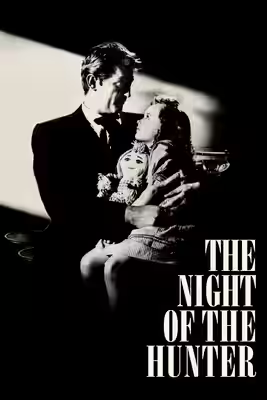
After Fanny and Alexander, try The Night of the Hunter (1955, Fi1m 91): A child’s fear of righteous authority becomes a frightening, carefully controlled fairy tale. Then The Spirit of the Beehive (1973, Fi1m 87): Another child’s imagination makes a troubled adult world both stranger and more bearable; and The Return (2003, Fi1m 88): A severe father’s arrival turns two brothers’ lives into a test of obedience.

Cast

Awards

Academy Awards, 1984

Nominated
Best Director
Won
Best Cinematography
Won
Best Costume Design
Won
Best International Feature Film
Won
Best Production Design

International Submission to the Academy Awards, 1984

Nominated
International Submission to the Academy Awards

Guldbagge Award for Best Actor in a Leading Role, 1983

Won
Guldbagge Award for Best Actor in a Leading Role

If you liked this, try…

  1. The Night of the Hunter (1955, Fi1m 91)A child’s fear of righteous authority becomes a frightening, carefully controlled fairy tale.

  2. The Spirit of the Beehive (1973, Fi1m 87)Another child’s imagination makes a troubled adult world both stranger and more bearable.

  3. A Summer at Grandpa's (1984) · not reviewed yetAn unhurried childhood visit lets adult troubles creep into the children’s summer.

  4. The Long Day Closes (1992) · not reviewed yetFamily warmth and cinema shape a boy’s memories, with little need for plot.

  5. The Return (2003, Fi1m 88)A severe father’s arrival turns two brothers’ lives into a test of obedience.

Free account

Know what to watch tonight

Two lists that know where things are streaming, collections you can share, your own score beside ours, and Discover that remembers what you have seen.

  • Want to see, sorted by what is streaming now
  • Seen, with your score out of ten
  • No adverts, ever