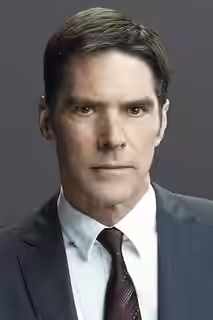
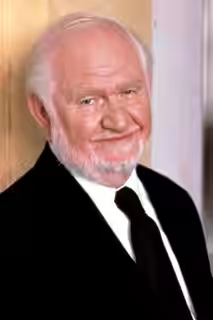
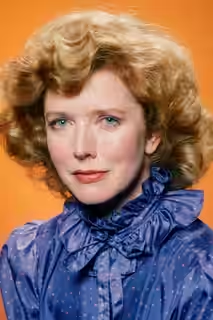
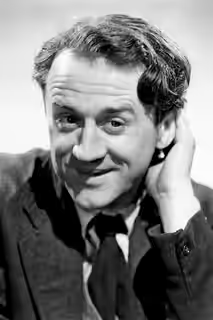
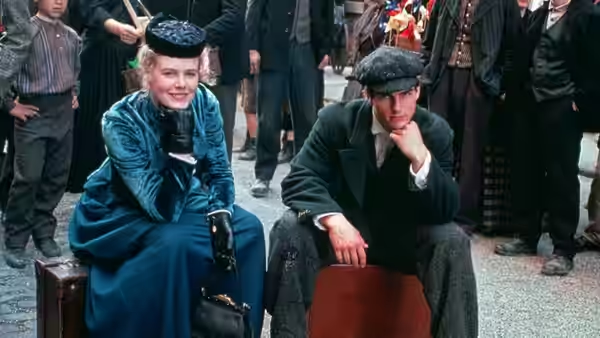
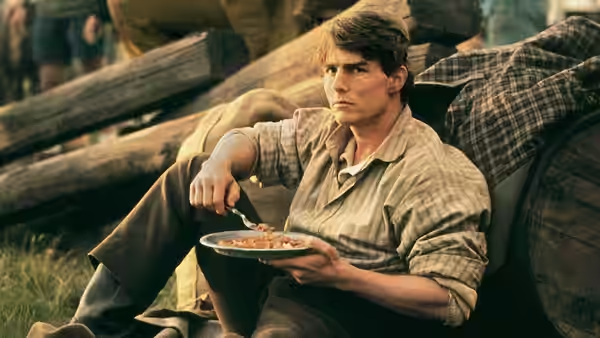
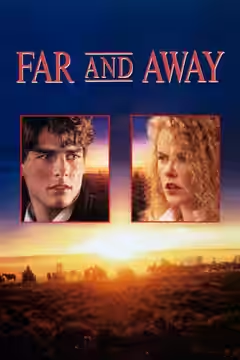
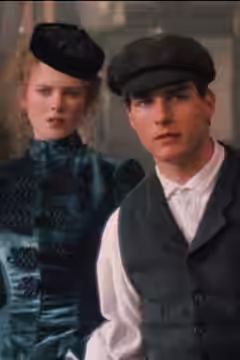
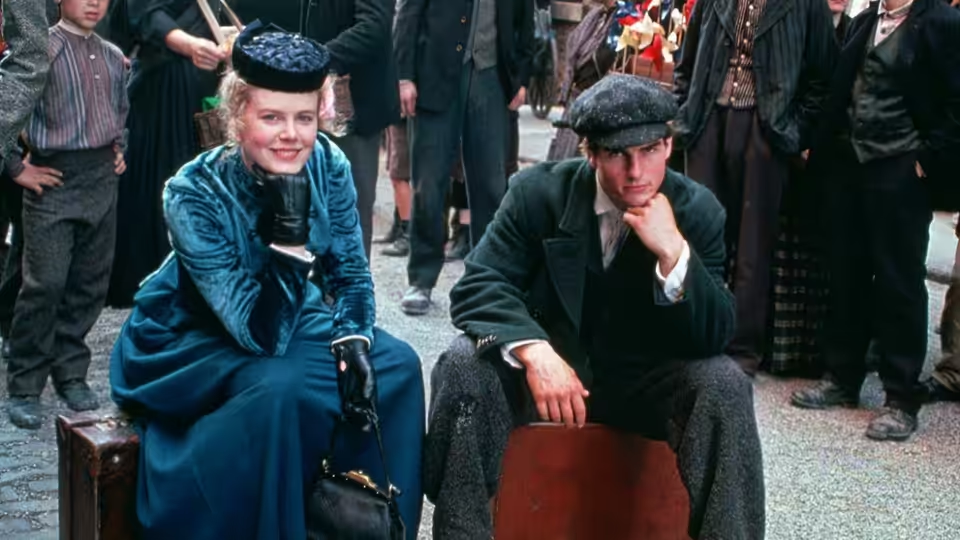
Shannon Christie and Joseph Donnelly sit among a crowd in town
Film review

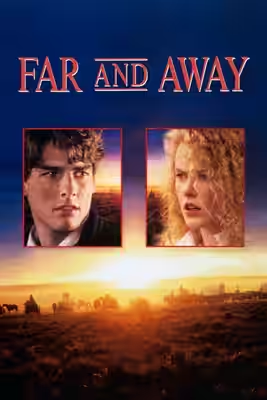
Far and Away

1992 · Directed by Ron Howard · 2h 20m

In a sentenceTwo hours of Tom Cruise and Nicole Kidman not kissing, then a horse race; the horse race wins

Rural Ireland, late in the nineteenth century. Joseph Donnelly (Tom Cruise), a tenant farmer’s son, buries his father Joe (Niall Tóibín) after the landlord’s men burn the family cottage to the ground. He takes a rusting gun and sets off to kill the landlord, Daniel Christie (Robert Prosky), and instead ends up injured and recovering under the landlord’s own roof. There he meets Shannon Christie (Nicole Kidman), the daughter of the house, who is set on America and the free land she has heard is being opened there. Stephen Chase (Thomas Gibson), the agent who ordered the burning and expects to marry her, stands in the way. Shannon needs a servant to travel with; Joseph needs to get out of Ireland. They sail for Boston together, with no money and very little patience for each other.

Fi1m review

Ron Howard shoots Ireland, Boston and Oklahoma wide and golden, and it all looks superb. Bob Dolman’s script gives Cruise and Kidman a romance made of squabbles and a Boston middle that goes nowhere slowly. Stay for the land run; the rest is handsome and inert.

Ron Howard’s Far and Away is a 140-minute attempt at the sort of film nobody had made for twenty years: a wide-screen romance that crosses an ocean and most of a continent and ends with a cavalry charge for free land. Howard and Bob Dolman wrote the story and Dolman the script, and the intention is plain in every frame. It wants to be big, simple and sincere. It manages the first and the third.

Tom Cruise plays Joseph Donnelly, a tenant farmer’s son in Ireland, and Nicole Kidman plays Shannon Christie, the landlord’s daughter who hires him, more or less, to get her to America. The first half-hour, in Ireland, is the film’s most confident. Joseph’s father (Niall Tóibín) dies in the mud, the cottage burns, and Joseph sets off with a rusty gun to kill a man he has never met. It is a fairy tale and it knows it, and Cyril Cusack, as Danty Duff, delivers his lines with exactly the right amount of twinkle.

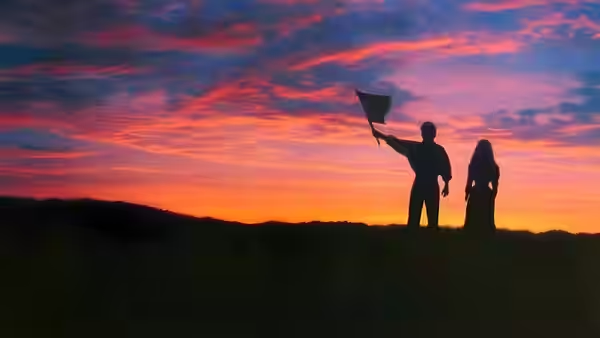
The look is the reason the film still gets talked about. Mikael Salomon shoots it wide, and the width earns its keep: the Irish coast is green to the horizon, the Boston streets have brick you could count, and the Oklahoma prairie at the end runs flat and gold to the edge of the frame. Jack T. Collis and Allan Cameron’s design fills that frame with the right things, peat smoke and soot and canvas. Joanna Johnston keeps Kidman in good cloth and Cruise in the same filthy shirt for most of two hours, which is a nice piece of patience. John Williams supplies a tin-whistle theme with a large orchestra behind it, and the music does a great deal of the emotional work the script has left undone.

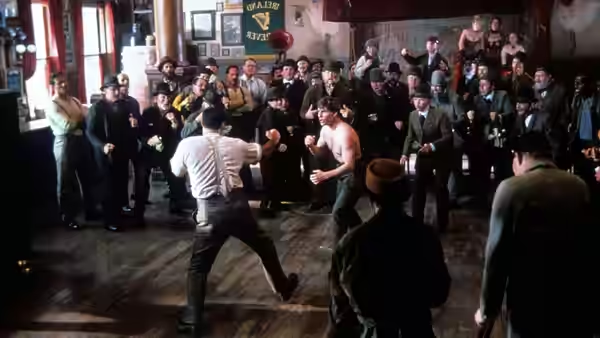
Because the script is the problem. Dolman has given Cruise and Kidman a romance made entirely of rows, in which each is too proud to say what the audience worked out in the first reel, and he keeps them at it for two hours. In Boston, where the middle of the film takes place, Joseph fights bare-knuckle for the ward boss Kelly (Colm Meaney) and Shannon discovers what work is. There is a great deal going on and none of it moves the two of them an inch. We were bored, and then we were cross about being bored, because the Irish opening had been so clean and the fights are staged with real care. Daniel P. Hanley and Mike Hill cut the Boston stretch as a sequence of bouts and quarrels, and by the fifth of each we had stopped counting.

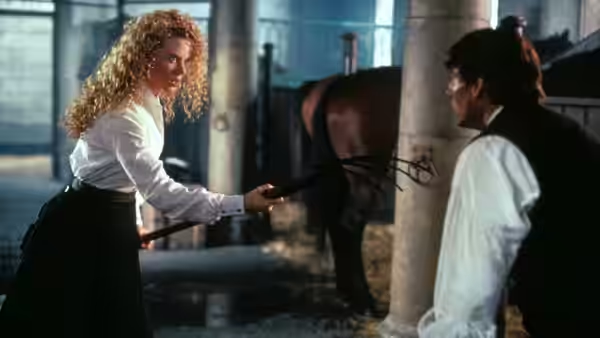
Cruise works hard. He is physically right for Joseph, quick and small and cocky, and the boxing scenes show it. The accent is another matter. It wanders between counties inside a sentence, and we winced the first time and had, by the end, agreed a truce with it. Kidman fares better. Her Shannon is spoiled, brave and rather funny, and she is the one performer who seems to know this is a comedy of manners with horses in it. Thomas Gibson’s Stephen Chase is a villain of the moustache-twirling kind, given one note and asked to hold it for 140 minutes. Robert Prosky and Barbara Babcock, as Shannon’s parents, get a scene or two of comic bewilderment and are good value in them.

Then the land run, staged with hundreds of riders and wagons and horses that look as if they are doing real damage to one another. Howard films it wide and long and does not cheat. We sat up. After two hours of people not quite kissing, the sight of a whole crowd galloping at an empty prairie is a relief, and for about twenty minutes this is the film Howard set out to make.

Howard’s gift is for rooms full of people talking over one another, and he is less sure with two people on a hillside. The film looks like the wide-screen romances of thirty years earlier. It does not feel like them, because the lovers in those films wanted things they could not have, and these two only need to admit they like each other.

Watch it in the biggest room you have, with the lights off, for the first half-hour and the last twenty minutes. The ninety minutes between are handsome and slow, and you may find yourself admiring the brickwork.
Critical consensus AI synthesised

47
Positive
0
Mixed
3
Negative
4

Nobody is enthusiastic. The reviews settle between mixed and poor, and the kindest of them stop at calling the film engaging. Where praise exists it goes to the look of the thing: the panoramic photography and the spectacle of the land rush are singled out more than once, and several critics grant it a pleasing momentum even when they doubt there is much underneath. The sense of an old-fashioned studio epic, done with gloss and some swagger, runs through most of the notices.

The complaints are about everything that is not scenery. The film is called shallow, leisurely and short of dramatic urgency, its dialogue flat, its characters borrowed, its plot overstuffed with familiar material. The spread is narrow: the harshest notice, from the Guardian, dismisses it as cliché piled on cliché, while Empire alone finds the melodrama assured enough to carry the evening. Two of the seven are only partly readable and give no verdict.

Empire
1 January 2000 · Mark Dinning
65*

The review finds the film melodramatic but ultimately assured and engaging. It praises the swagger and solid storyline for maintaining momentum.

Read the full review →
The New York Times
22 May 1992 · Janet Maslin
64*

The blocked page does not reveal the critic’s verdict. Its headline frames the film as an old-fashioned epic, but the review’s specific praise or complaint is unavailable.

Read the full review →
Time Out
· CM
64*

The available description presents it as an old-fashioned period romance and a change of pace for its stars. The accessible text does not disclose the critic’s verdict or a specific point of praise or complaint.

Read the full review →
Radio Times
★★ · Sue Heal
40

Heal finds the film entertainingly glossy but ultimately shallow. She singles out its visual panache and pleasing momentum, while criticizing its lack of depth.

Read the full review →
Variety
11 May 1992 · festival review · Todd McCarthy
40*

McCarthy finds the film handsomely mounted and amiable but overly old-fashioned, leisurely, and lacking dramatic urgency. He praises the crisp, luminous cinematography and the spectacle of the land rush.

Read the full review →
Los Angeles Times
22 May 1992 · Kenneth Turan
30*

Turan finds the film an uninspired, often tedious period epic, despite its energetic climax. He praises the panoramic photography and visual richness, but faults the flat dialogue and derivative characters.

Read the full review →

Straight answers AI written, from our review

Is Far and Away worth watching?
Far and Away is worth watching only for its Irish opening and its closing land run, and we scored it 52. Mikael Salomon's wide photography and a crowd of galloping horses make those forty minutes handsome; the ninety minutes between, in Boston, are Cruise and Kidman squabbling without moving an inch.
How long is Far and Away, and what is it rated?
Far and Away runs 2h 20m. It is an adventure and drama film.
Where can I watch Far and Away in Brazil?
Far and Away is available to rent from Amazon Prime Video from R$6.90. Availability is checked daily; the links above go straight to each service.
How violent or frightening is Far and Away, and is it suitable for children?
Far and Away carries a 12 certificate, and its violence is of the old-fashioned adventure kind: a father dies, a cottage burns, and Joseph fights bare-knuckle bouts in Boston that are staged with care but not dwelt on. Older children should be fine with it; the greater risk for them is boredom in the long middle stretch.
What should I watch after Far and Away?
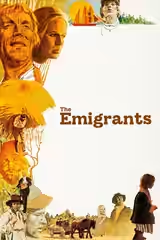
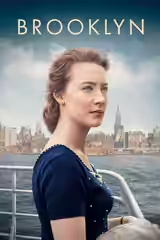
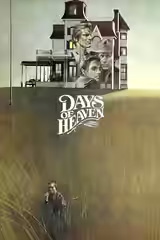
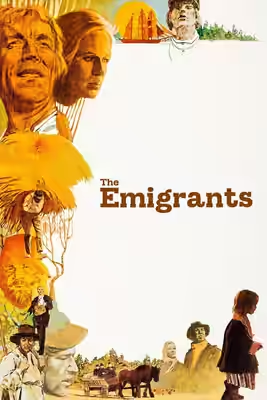
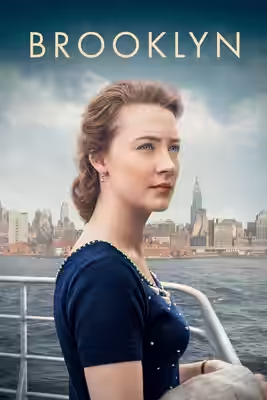
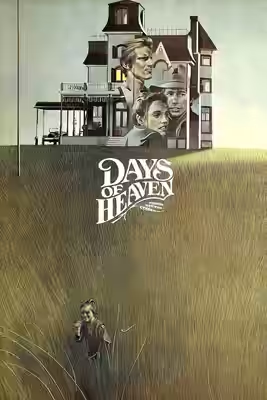
After Far and Away, try The Emigrants (1971, Fi1m 85): Jan Troell’s Swedes cross to Minnesota slowly, truthfully, and with mud on everything. Then Brooklyn (2015, Fi1m 83): An Irish girl in America, told small and quiet, and far more moving for it; and Days of Heaven (1978, Fi1m 85): Malick’s prairie at dusk, if what you loved here was the light on the wheat.

Cast

If you liked this, try…

  1. The Emigrants (1971, Fi1m 85)Jan Troell’s Swedes cross to Minnesota slowly, truthfully, and with mud on everything.

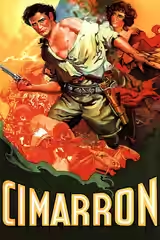
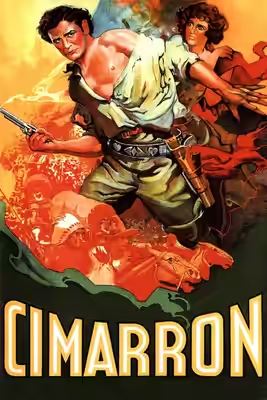
  2. Cimarron (1931) · not reviewed yetThe first big screen land run, creaky around it but still a genuine stampede.

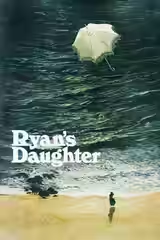
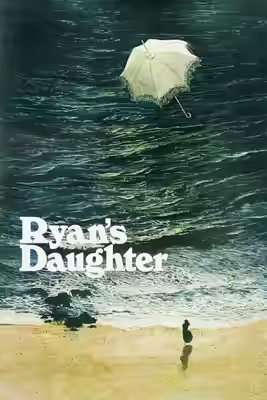
  3. Ryan's Daughter (1970) · not reviewed yetLean on the Irish coast: the scale this film wants, with the ache attached.

  4. Brooklyn (2015, Fi1m 83)An Irish girl in America, told small and quiet, and far more moving for it.

  5. Days of Heaven (1978, Fi1m 85)Malick’s prairie at dusk, if what you loved here was the light on the wheat.

Free account

Know what to watch tonight

Two lists that know where things are streaming, collections you can share, your own score beside ours, and Discover that remembers what you have seen.

  • Want to see, sorted by what is streaming now
  • Seen, with your score out of ten
  • No adverts, ever