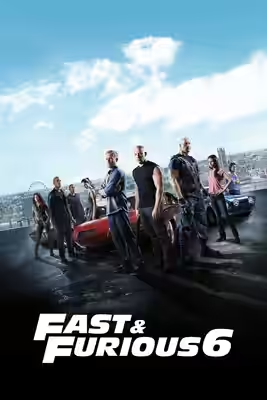
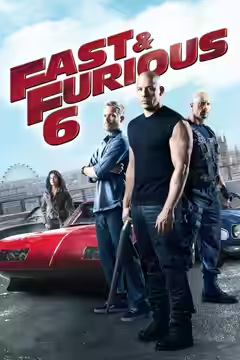
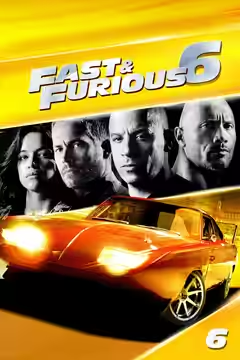
Justin Lin’s sixth Fast film is loud, daft and far better built than it needed to be. The tank on the motorway is worth the evening on its own; the film is also twenty minutes longer than it has any reason to be.
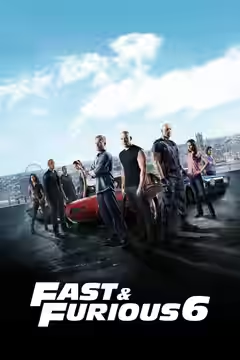
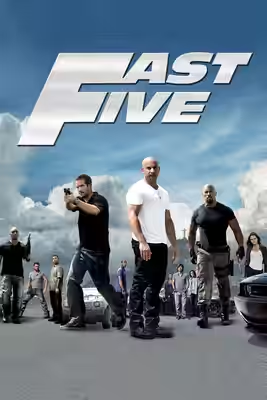
Fast Five (2011) turned a series about street racing into a series about heists. Fast & Furious 6 turns it into a spy film, more or less. Justin Lin, directing his fourth of these, and the writer Chris Morgan give Dom’s crew a mirror image to fight, a military device to chase and the whole of London to drive through, and the pitch is the oldest one in the genre: the law needs criminals to catch a criminal. It is a very silly film made by people who know exactly what they are doing, and it is twenty minutes too long.
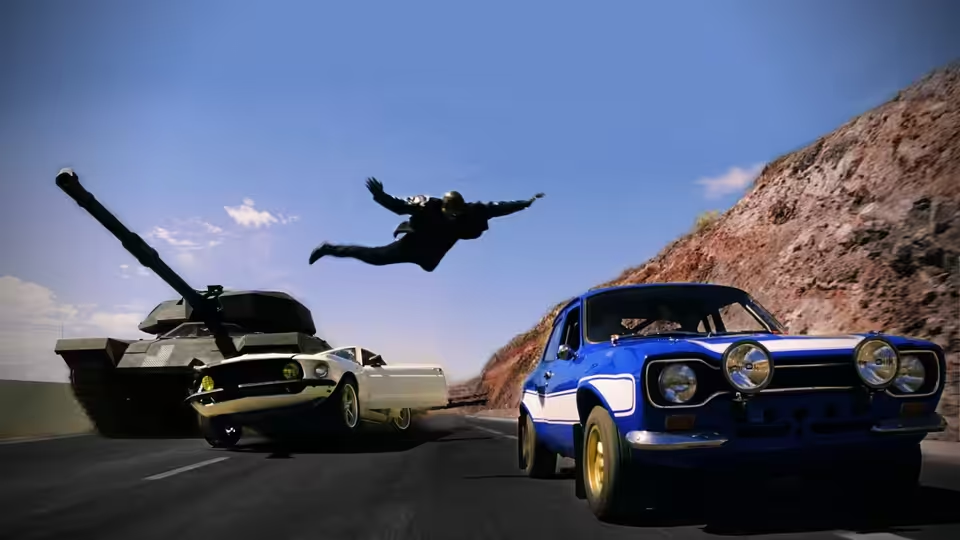
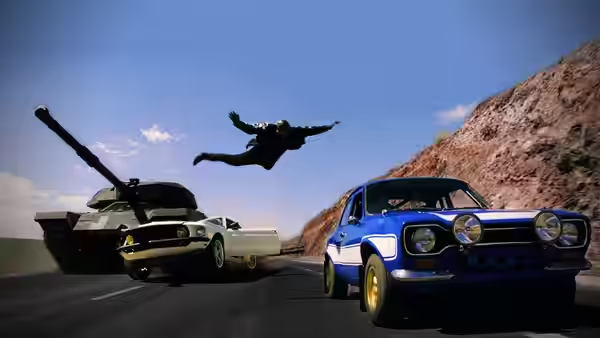
Lin’s gift is clarity, and it is on show in the best sequence here. A tank comes out of the back of an army lorry on a Spanish motorway in full daylight and starts driving over traffic, and for the next ten minutes we always know where the tank is, where Brian is, where the bridge ahead is and how far it is to the gap. Stephen F. Windon shoots it in flat, hard sun with no shadows to hide anything. We laughed out loud when the tank appeared, and we were not laughing at the film; we were laughing at the nerve of it, done completely straight, with real metal going through real cars. It is the happiest we have been in a cinema in some time, and we are not proud of that, but there it is.
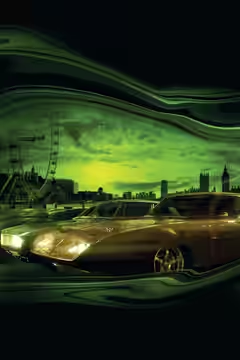
The London chase earlier in the film is a different matter. It is at night, on wet streets under orange lamps, with Shaw’s low wedge-shaped cars built by Jan Roelfs’s department to go under things and flip them, and it is cut by five credited editors, Christian Wagner, Kelly Matsumoto, Leigh Folsom Boyd, Greg D’Auria and Dylan Highsmith. That is a lot of hands, and in the dark it shows. There are stretches where we could not have said which car was which or which way the river was. It is exciting in the way a lot of noise is exciting, and it is the one place the film settles for that.
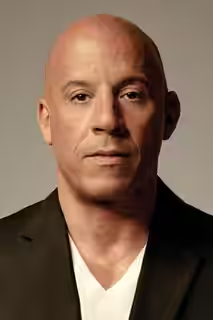
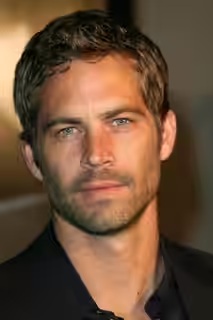
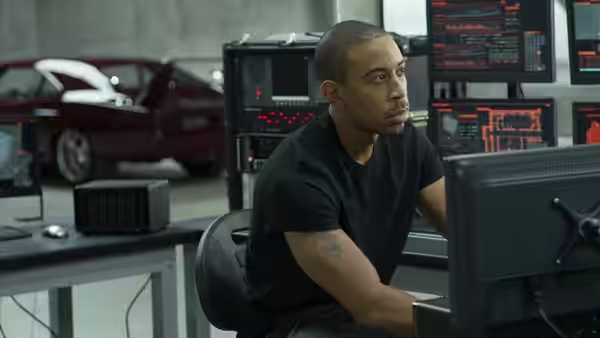
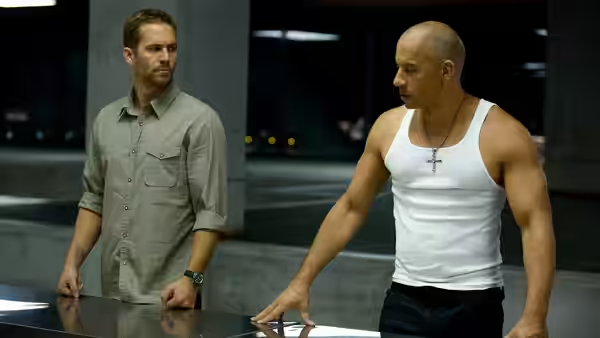
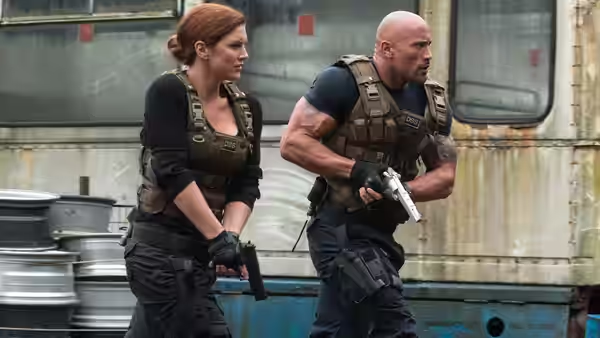
The cast know their jobs and do them. Vin Diesel murmurs about family in a voice that sounds like a lorry idling, and the film treats every murmur as scripture. Dwayne Johnson, enormous and glistening, walks into every room as if he owns the lease. Michelle Rodriguez gets two fights with Gina Carano, the first in a Tube station, and they are the most convincing violence in the film, because Carano hits like someone who has done it for a living. Tyrese Gibson and Ludacris do the jokes; Sung Kang and Gal Gadot do the quiet grown-up romance; Paul Walker does earnest, as he always did, and does it well. Luke Evans’s Shaw is a thin villain, all speeches about precision and a face that never changes, and the film would be sharper with someone across from Diesel who seemed to want anything.
Morgan’s dialogue is the price of admission. People say the word family roughly as often as other films say the word the, and the speeches about codes and loyalty are delivered at a pace that suggests nobody expected them to be listened to. What Morgan does well is structure: every set piece gives each member of the crew one job, so the film never has to park anybody. Lucas Vidal’s score is brass over a low electronic pulse, with Boys Noize supplying the thump under the chases, and it knows when to stop and let the engines do the work.
The last set piece is well staged, and it goes on for so long that we checked our watch twice and felt faintly guilty about it. A set piece that lasts long enough to make you do arithmetic has lost something, however good the stunts.
Against the series’ own standards this is near the top: more confident than the fourth film, bigger than Fast Five without being as neat. See it with company who will shout at the screen; that is the audience it was made for, and they are right. It runs 130 minutes and carries a 12A.