Norman Jewison’s film of the stage musical is long, brown and often lovely. Chaim Topol’s Tevye is the reason to sit through 181 minutes; the film around him does not always know when to stop, but it knows where to look.
Norman Jewison’s film of Fiddler on the Roof takes Joseph Stein’s stage musical, drawn from Sholem Aleichem’s stories of a Jewish milkman in Tsarist Russia, out of the theatre and into the mud. A show about a village should be shot in one. The result runs 181 minutes, is coloured like an old photograph, and is good for most of its length and a little too pleased to be sad for some of it. It is worth an evening, and the evening is long.
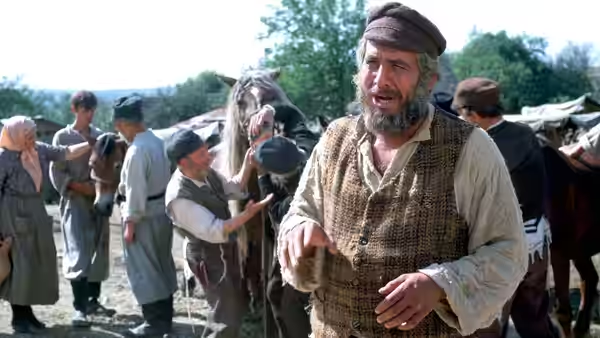
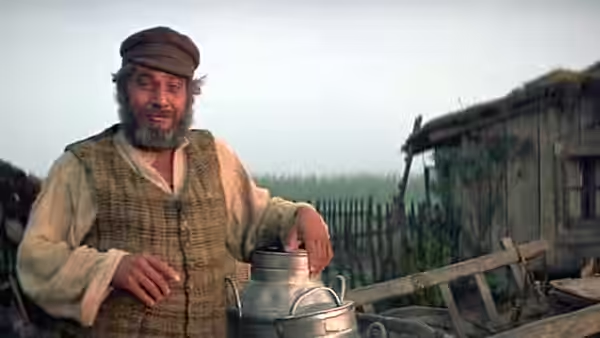
Chaim Topol is the reason. His Tevye is a big man who moves like a smaller one, and he talks to God the way you would to a neighbour who has borrowed something and not returned it. “If I Were a Rich Man” is done alone in a barn with a horse for an audience, and Topol plays it as a man thinking out loud, breaking off to check the sky for a reply. When the daughters slip out of his hands his face does the grief before the script gets to it. Norma Crane’s Golde meets him with a dryness that suggests thirty years of not being impressed, and their scenes are the best acted here.
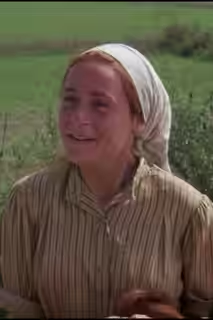
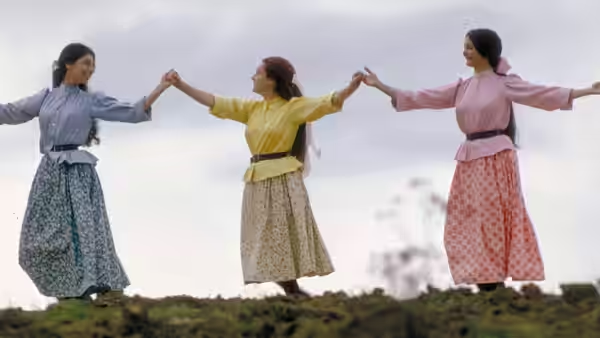
Oswald Morris shoots it in browns, greys and the yellow of tallow, with the colour drained so far that a splash of anything brighter registers as an event. Robert F. Boyle built Anatevka as a real place of thatch, crooked fences and standing water, and Joan Bridge and Elizabeth Haffenden dress it in wool that has been patched and patched again. The opening “Tradition” moves through the whole village at first light, milk cart, bakery, study house, and by the end of it we knew where everyone lived.
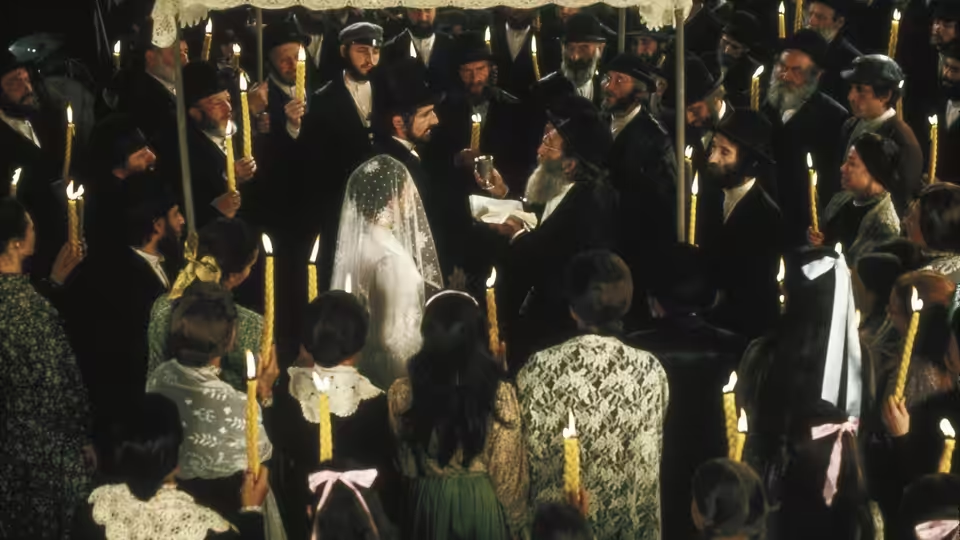
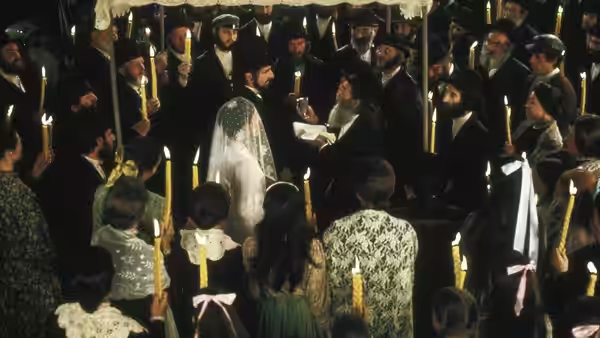
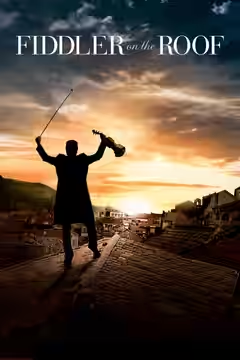
The wedding is the film’s finest half hour and the place it got us. The guests hold candles under a black sky, Morris lights the faces from below with almost nothing else, and “Sunrise, Sunset” is sung by people who look as though they are about to lose something. We have heard that song at more weddings than we can count and had long stopped hearing it; here it moved us far more than we expected. John Williams takes Jerry Bock’s tunes and gives them a full orchestra without smothering them, and the fiddle that opens the film is left thin and alone, which is right.
The dancing is where the move from stage to screen costs the most. Robert Lawrence and Antony Gibbs cut the tavern sequence for “To Life”, Jews and Russians drinking in the same room, with real momentum, and the dream in which the butcher’s dead wife rises shrieking is the one stretch where the film drops the realism and comes alive as theatre. Elsewhere the numbers are shot in real yards and lanes, and people breaking into song beside a real chicken look faintly embarrassed; “Matchmaker” is staged as if the camera would rather be somewhere else. Around the two-hour mark we caught ourselves checking how much was left, and were then a little ashamed, since what was left is the point.
The daughters are uneven. Rosalind Harris’s Tzeitel has spine, Michele Marsh gives Hodel a stillness the second half needs, and Neva Small’s Chava is barely written. Paul Michael Glaser’s Perchik declares his politics as if reading them off a card. Leonard Frey is better than the part as Motel, the tailor who cannot speak to Tevye without apologising, and Molly Picon’s Yente is pure stage business, which sits oddly in a film this determined to be real. The second half takes turns we will not describe, and Jewison holds on each longer than he needs to.
Most critics have landed roughly where we have, complaining of the same things: the length, the sentiment, the dances. Against the big musicals of its time this is one of the few that trusted its material enough not to prettify it, and the mud and the candles are what stay. It carries a U certificate. Give it the whole evening, and a break in the middle, because Topol has earned the second half whether or not the film around him always has.