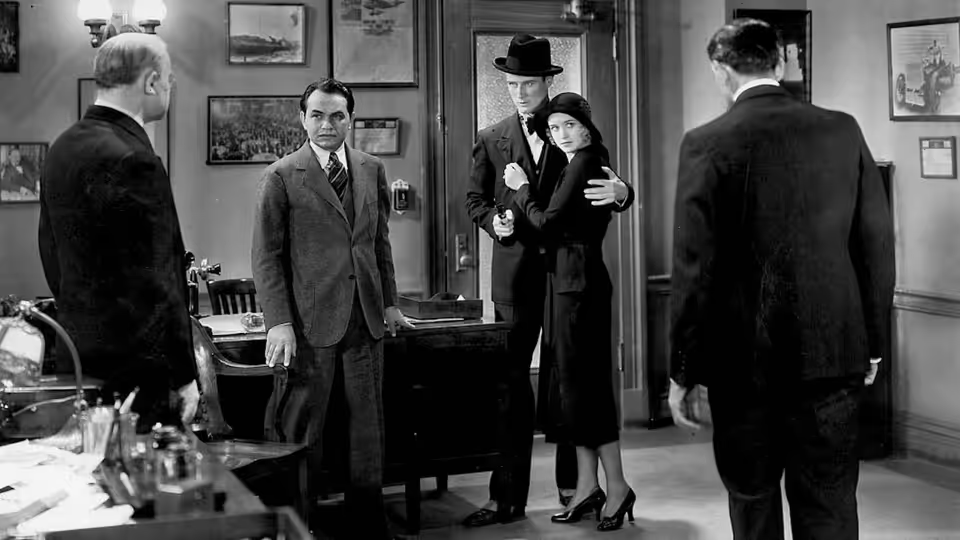
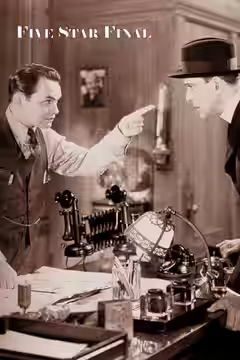
Mervyn LeRoy’s attack on the scandal press is still angry and still recognisable, and Edward G. Robinson and Boris Karloff are both excellent in it. Its stage origins show, and the last act tips into melodrama, but the anger holds it upright.
Mervyn LeRoy made this the same year as Little Caesar, and it takes Edward G. Robinson out of the gangster’s overcoat, puts him behind a managing editor’s desk, and argues that the desk is worse. Adapted from a stage play, with a screenplay by Byron Morgan, it is about a tabloid that revives a twenty-year-old murder case to sell papers, and about what that does to the family the case belongs to. It runs 89 minutes and does not waste many of them. We think it is still worth an evening, with the reservation that its second half has not aged as well as its first.
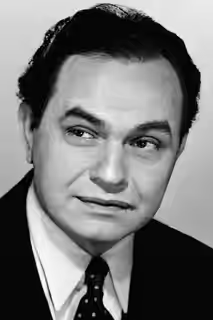
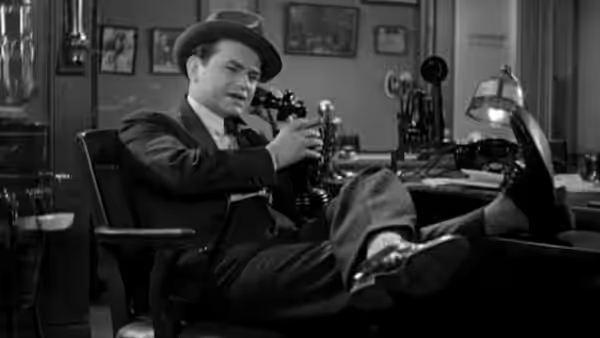
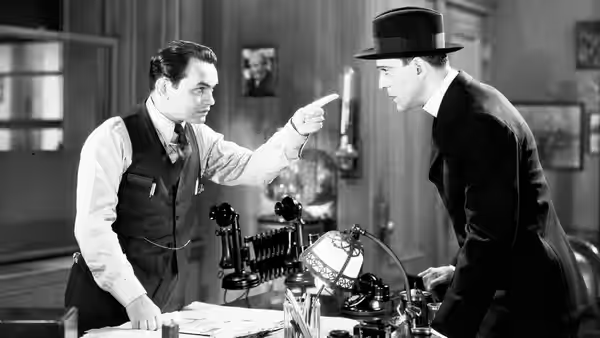
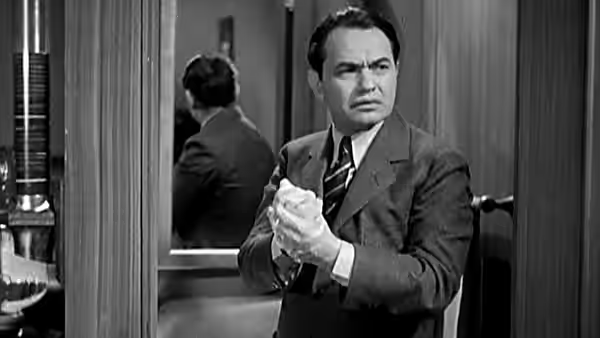
Robinson plays Joseph W. Randall as a man who knows precisely what he does for a living and has arranged his face so that nobody can tell. He washes his hands constantly, at the basin in his office and at the bar, and LeRoy never has anyone remark on it. Randall talks fast, drinks steadily and despises his publisher, and Robinson lets us see that the contempt is the only thing keeping him going. Aline MacMahon’s Miss Taylor, his secretary, is the conscience of the newsroom and is dry rather than pious about it; she has the best throwaway lines in the film and delivers them to his back.
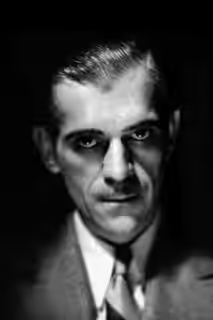
Then there is Boris Karloff. As T. Vernon Isopod, a thrown-out divinity student who does the paper’s dirtiest errands, he is oily, courteous and plausible, and it is the plausibility that chills. Watching him take tea in the Townsend flat in a borrowed collar, asking gentle questions and writing nothing down, we understood exactly how such men get through doors. He made Frankenstein for James Whale the same year. This is the more frightening performance because nothing about it is made up.
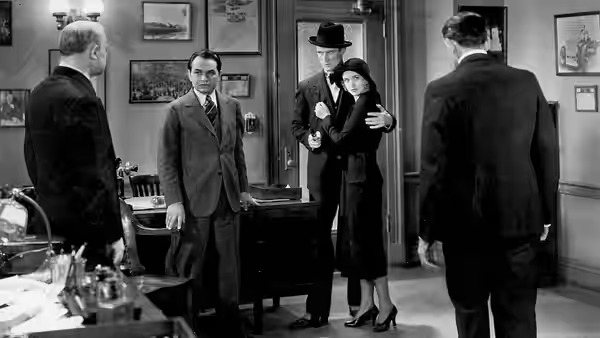
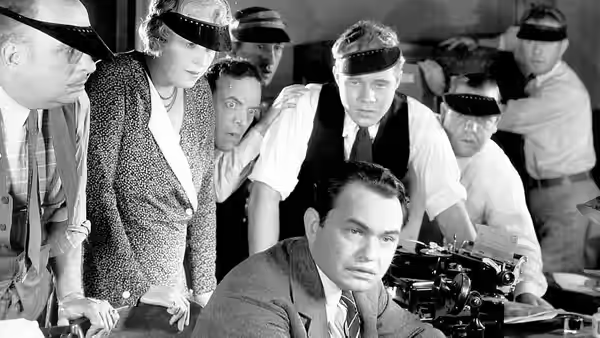
Sol Polito lights the Gazette hard and flat, every desk and telephone visible, and the Townsend flat soft and small, so we can see what the paper is about to walk into. The set piece is a telephone conversation split three ways across the frame, editor, mother and daughter in separate panels, the news travelling between them faster than anyone can stop it. Frank Ware cuts the newsroom quick and the flat slow, and for the most part that is the right choice. Earl Luick puts Randall in suits that cost money and Isopod in a collar that plainly does not belong to him.
We were angrier than we expected to be. The scene that did it is not the tragedy but a meeting: Oscar Apfel’s Hinchecliffe talking circulation with Purnell Pratt and Robert Elliott, wondering aloud whether a moral crusade or a murder would shift more copies, and settling the question in under a minute. It is 1931 and it could be this morning. LeRoy does not underline any of it; he simply lets the men talk and lets Robinson listen.
What has dated is the family. H. B. Warner and Frances Starr play the Townsends in the register of the parlour drama, entering, announcing their feelings and standing still, and the dialogue Morgan gives them is the stiffest in the film. The second half takes a turn we will not describe, and it is the turn the whole picture has been built for, but Marian Marsh plays the aftermath pitched at the back row of a theatre, and the tears run longer than the point needs. Most recent critics have called the film dated, and about these scenes we agree with them.
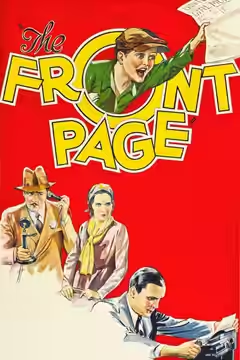
Set against The Front Page, which Lewis Milestone directed the same year, this is the slower and more furious film. Milestone’s reporters are rogues and the film enjoys them; LeRoy’s are guilty and the film says so. George E. Stone’s Ziggie and Ona Munson’s Kitty are allowed to be funny, but the jokes are on their way somewhere. LeRoy would make I Am a Fugitive from a Chain Gang the following year, and you can see him learning here how to be angry at an institution without shouting.
See it for Robinson at the basin, for Karloff at the tea table and for that telephone scene. Forgive the parlour. The press it describes has changed its typeface and not much else.