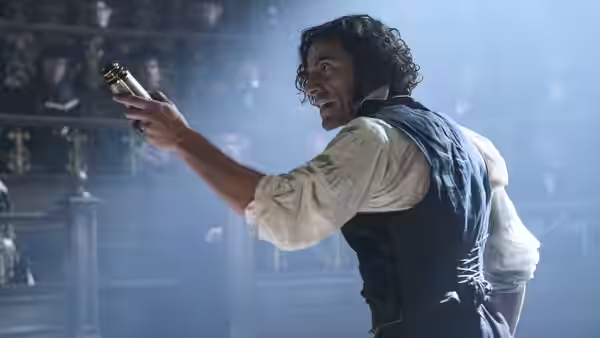
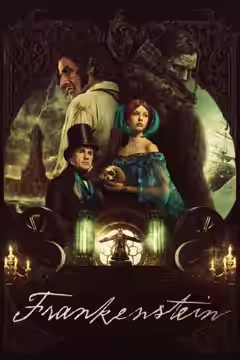
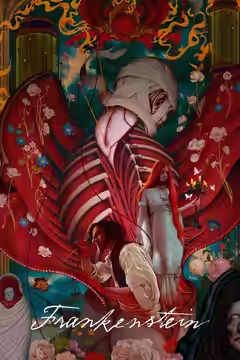
Del Toro has plainly been planning this for years, and half of it is worth the wait. Jacob Elordi’s Creature is patient and sad and holds the picture together; Oscar Isaac’s Victor spends his half shouting at machinery.
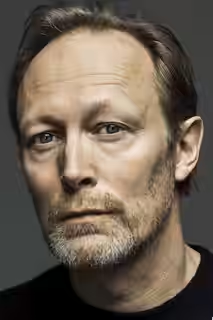
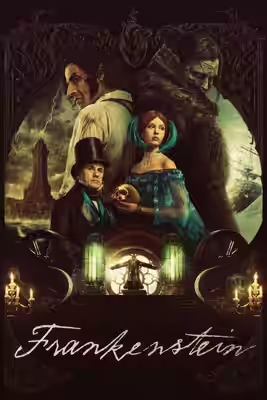
A ship is stuck in Arctic ice, and a man is brought aboard half dead, followed across the floe by something large that wants him. Captain Anderson (Lars Mikkelsen) gets the story first from the man, Victor Frankenstein (Oscar Isaac), and later from the thing itself. Guillermo del Toro has written and directed his own version of Mary Shelley’s novel, and it runs 150 minutes. It is good. It is not quite the film most of its admirers say it is, because the first hour or so belongs to Victor, and Victor is exhausting company.
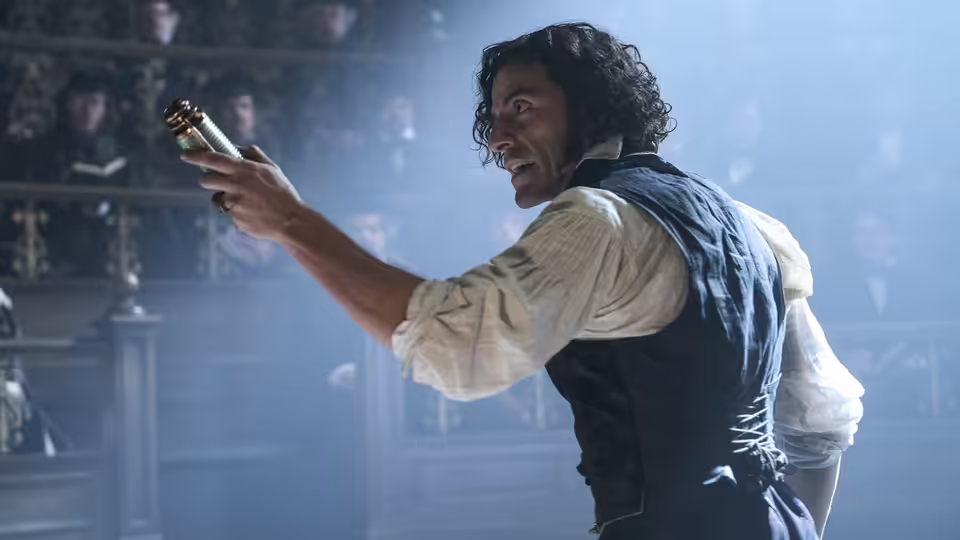
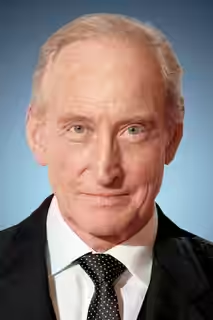
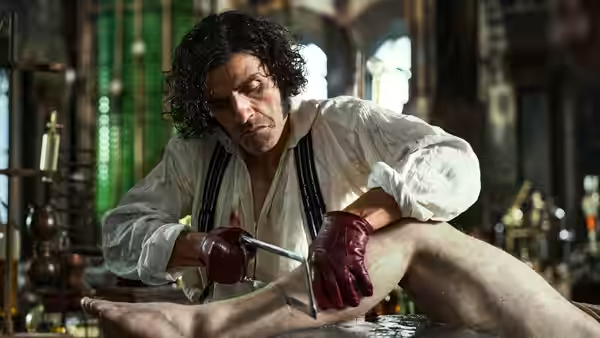
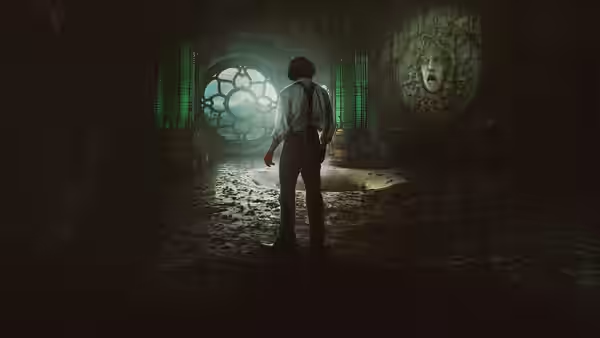
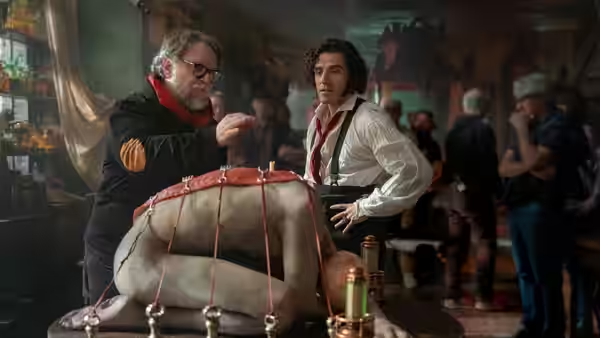
Victor’s half begins in childhood: a father, Leopold (Charles Dance), a surgeon who teaches anatomy with a strap, and a mother, Claire (Mia Goth), who dies giving birth to his brother William. The boy (Christian Convery) decides death is an insult he will answer. Cast out of medicine, he finds a patron in Harlander (Christoph Waltz), an arms dealer with reasons of his own, and builds a laboratory in a tower. Tamara Deverell’s tower is the best set in the film, a column of iron and glass with a tank at its centre, and Dan Laustsen lights it in cold blue-green for the stone and hot amber for the fire. Kate Hawley puts Isaac in a long red coat so he is the only warm thing in the laboratory.
The creation is the sequence everyone will talk about. Alexandre Desplat’s score climbs with the lightning, the body in the tank jolts, and del Toro holds on Isaac’s face while he waits to find out what he has made. What he has made sits up and says one word, his maker’s name. We were moved by that, more than we expected from a scene we have seen a dozen times, and the reason is Elordi’s voice: a small, uncertain sound coming out of an enormous body. Victor hears it as a failure. Del Toro has found the whole story in that one exchange, and then tells it to us several more times.
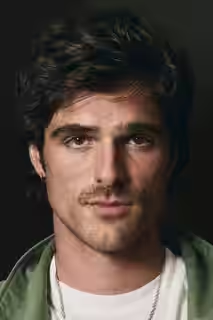
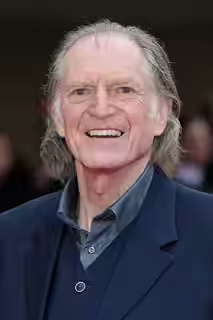
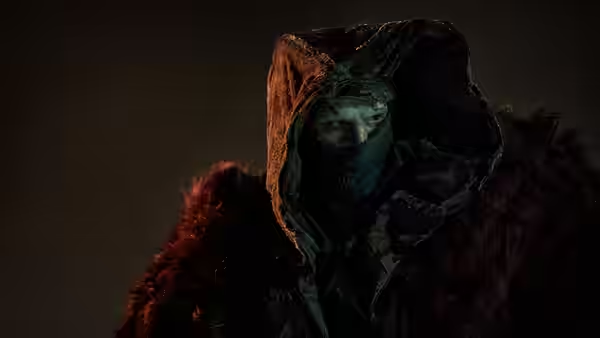
The second half belongs to the Creature, and that is where we would send you. Jacob Elordi plays him without bolts or scars; the body is put together like a porcelain figure, with fine seams where the parts meet, and the face is mostly his own. He moves as if the limbs were borrowed, which they were. The stretch in the forest, where he is taken in by a blind old man (David Bradley) who cannot see what he is and treats him as a guest, is the only part of the film that trusts silence. Evan Schiff, who cuts the Victor scenes fast and crowded, lets these run. Bradley plays it plainly and it is enough.
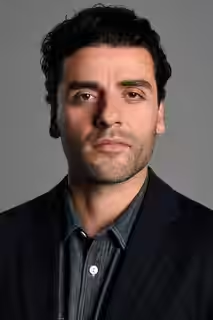
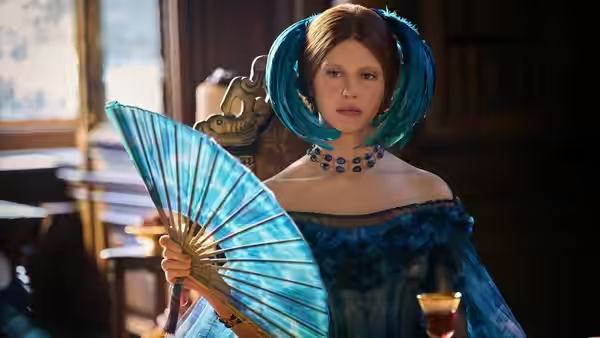
Most of the human cast around Victor does not work. Waltz’s Harlander is there to sign cheques and look sinister, and does both as if he has read the script once. Goth’s Elizabeth, engaged to William (Felix Kammerer), has been given more to do than Shelley gave her, an interest in insects and a habit of saying the film’s themes aloud, and the film cannot decide what she is for. Kammerer barely registers. Isaac plays Victor at a pitch of constant fury, and after forty minutes we stopped hearing it. He is better in the frame story, wrapped in blankets, telling the captain what he did.
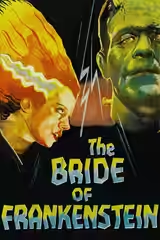
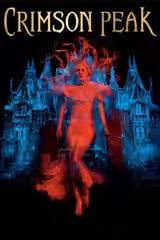
Del Toro has made this film before, in pieces. The great gothic house from Crimson Peak is here, and the gentle monster from The Shape of Water, and the argument about fathers from Pinocchio, assembled with enormous care. In the first half the care gets in the way. Every frame is full and nothing is allowed to be plain. James Whale’s 1931 version got the same story done in about seventy minutes, and while we would not swap Elordi for Karloff, we did think about that runtime more than once.
It is a 15 certificate and earns it early, where Victor gathers his parts from a battlefield. Sit through the first hour for the sake of the second. The Creature had to, and he came out of it better than anyone around him expected.