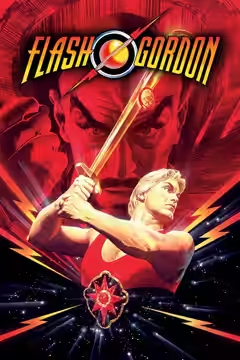
Mike Hodges’s comic-strip adventure is knowing, loud and dressed like nothing else, and Max von Sydow plays Ming dead straight. The hero is a blank and the last half hour loses its way, but it remains a good night.
Three years after Star Wars (1977) took the Saturday-morning serial and asked us to believe in it, Dino De Laurentiis went back to the comic strip the serials came from and asked us only to enjoy it. Mike Hodges, the director of Get Carter (1971), is not the obvious man for the job and turns out to be a good one. He shoots the thing flat and straight, as if the panels of the strip had been photographed in order with the colour turned up. Lorenzo Semple Jr., who wrote the 1960s Batman television series, knows that a line announcing fourteen hours to save the Earth must be said with no smile at all. It works more often than not.
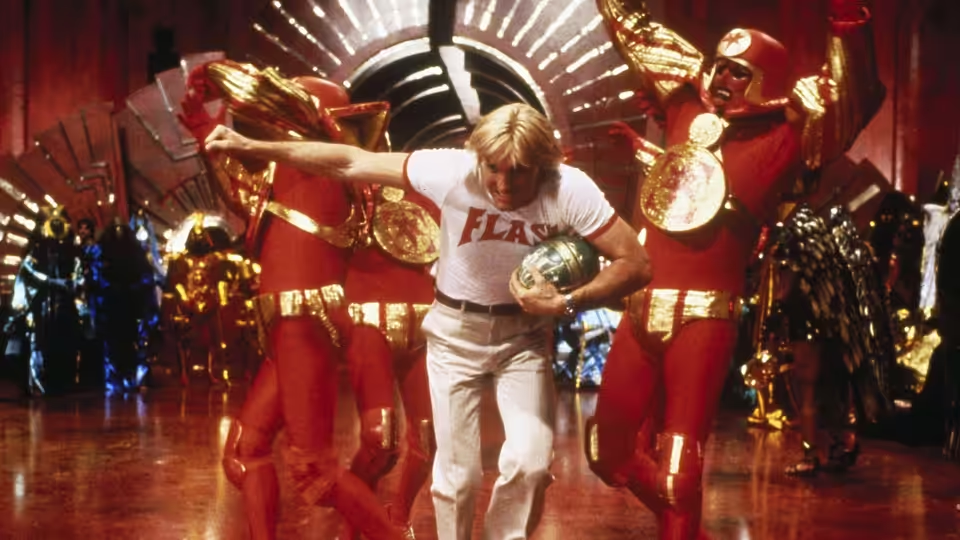
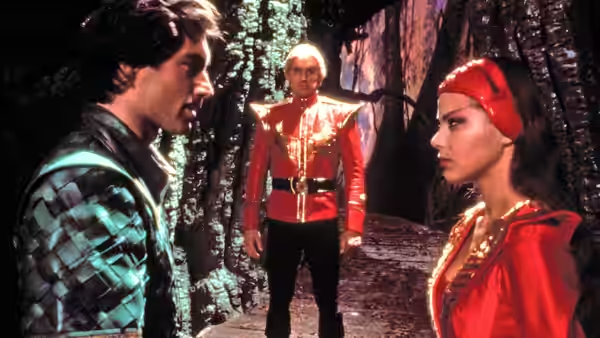
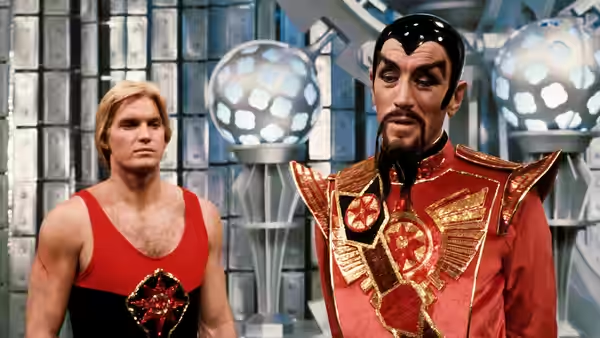
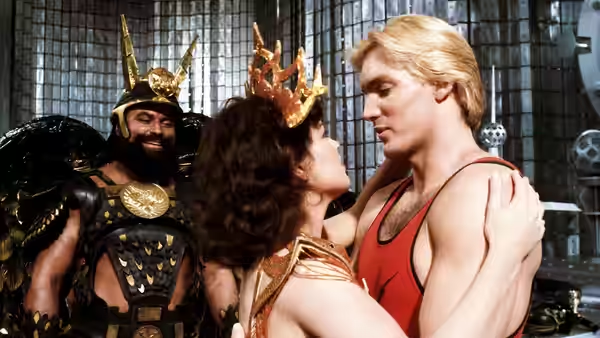
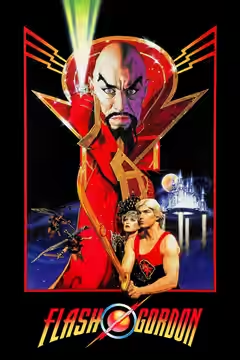
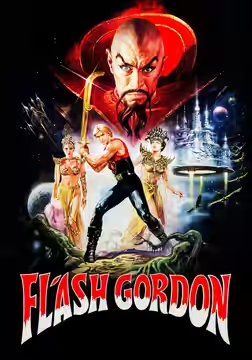
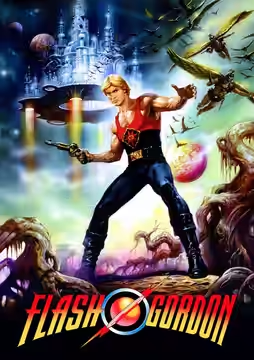
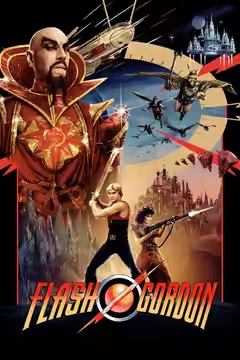
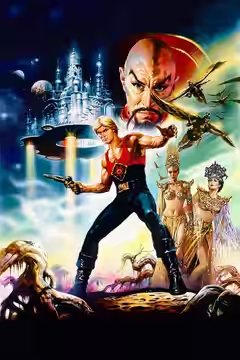
Danilo Donati dresses Mongo as if money and shame had run out on the same afternoon, and we mean that kindly. Ming wears red and gold with a collar that rises behind his head like the back of a throne; Klytus is a gold mask and a black robe; the Hawkmen fly on feathered wings strapped over bare chests. Gilbert Taylor, who photographed Star Wars, lights all of it bright and even, with no shadows to hide a seam in, so every colour arrives at full strength. The sky over Mongo is a churn of red and orange cloud with no horizon, and the palaces hang in it with the proportions of a trophy. Nothing is pretending to be real, and for an hour that is a pleasure.
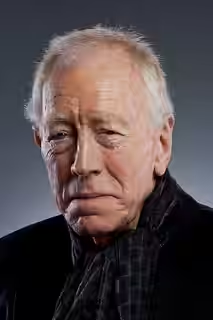
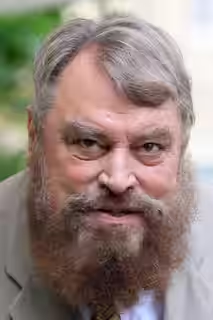
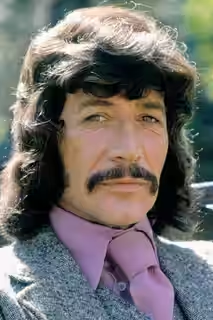
Max von Sydow is the reason it holds. He does not wink once. His Ming is a bored tyrant who finds Earth a pleasant afternoon’s distraction, and when he explains that he will destroy it because he is curious to see what it does, he says so with the emphasis of a man ordering lunch. Peter Wyngarde has only his voice to act with behind the mask, and it is enough, silky and amused, a torturer who enjoys the paperwork. Brian Blessed, in wings, shouts every line to the far end of a stadium, and the film needs him; whenever it threatens to become tasteful he arrives and prevents it. Timothy Dalton plays Prince Barin as a straight-faced Errol Flynn in green leather.
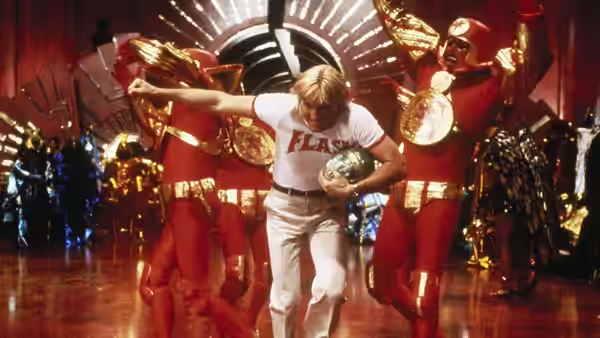
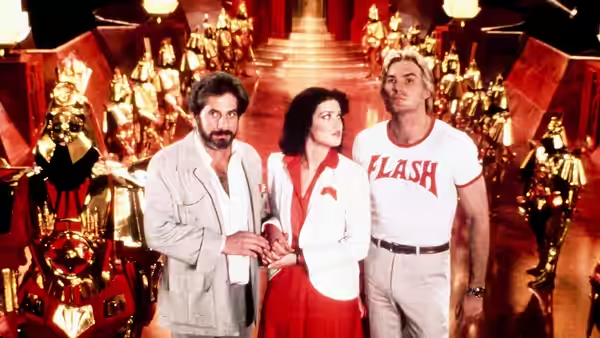
The leading man is the hole in the middle. Sam J. Jones is handsome and willing, and he says his lines rather than meaning them. Melody Anderson’s Dale is written to scream and then, oddly, to fight, and she is better at the second. Chaim Topol overdoes Zarkov. And yet the film’s joke is clearest at the moment Jones is most at home in it: an ordinary quarterback with no powers at all taking on the household of a galactic emperor with a game. We laughed, loudly and without irony, when Flash fights Ming’s guards in the throne room with a football and a running play while Dale and Zarkov cheer from the sidelines and the court look on, appalled.
The music arrives from two directions. Brian May, Freddie Mercury, John Deacon and Roger Taylor, which is to say Queen, supply a theme that chants the hero’s name over a drumbeat and a guitar that turns every rocket launch into a stadium entrance. Howard Blake is also credited for the music, and his orchestral passages carry the stretches the band leaves alone, so the score swings between the band and the orchestra every few minutes. That is mostly the fun of it, until the last half hour. We were bored for the first time, and faintly annoyed about it, during the final battle, which Malcolm Cooke cuts as a rush of men in wings against red cloud; we lost the geography and then, for perhaps ten minutes, our interest. A film this gaudy should not be able to bore anyone.
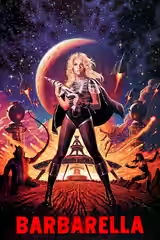
Barbarella (1968), another De Laurentiis production, is the closer cousin than Star Wars: the same bright nonsense, the same thin story under it, better villains here and a worse hero. See it with people, and not quietly, ideally with someone who has never seen it and will not believe what Blessed is wearing. It runs 111 minutes and carries a PG, and both numbers are about right.