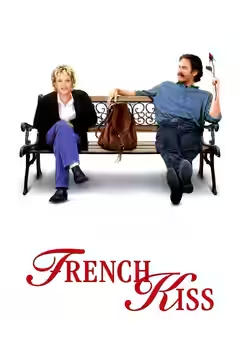
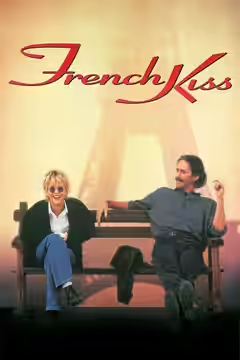
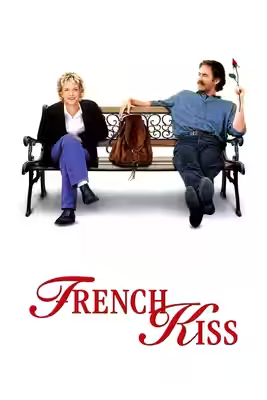
Kevin Kline, stubbled and shameless, carries a romantic comedy that Lawrence Kasdan directs as if from a deckchair. The scenery is lovely and the jokes about the French land more often than they should; the romance arrives on schedule and nobody seems to mind.
Lawrence Kasdan wrote and directed Body Heat and The Big Chill, films in which grown adults said sharp things to one another, and in French Kiss he directs a script by Adam Brooks about a woman who is frightened of aeroplanes and a man who smuggles vines. It is a holiday film in both senses. It takes its heroine from Toronto to Paris to the south of France, and it gives the impression that its director went along for the scenery and let the plot look after itself. There is pleasure in it, nearly all of it supplied by Kevin Kline, and there is not a great deal else.
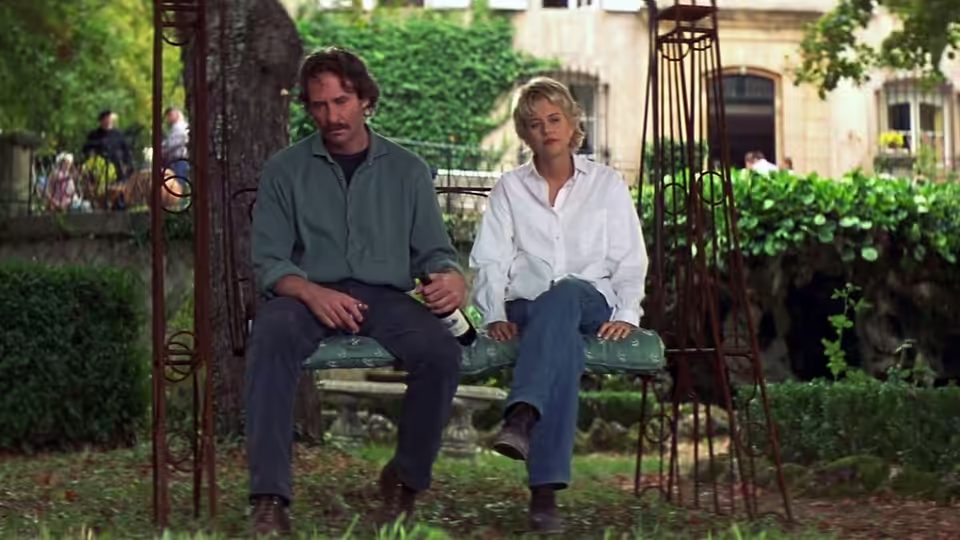
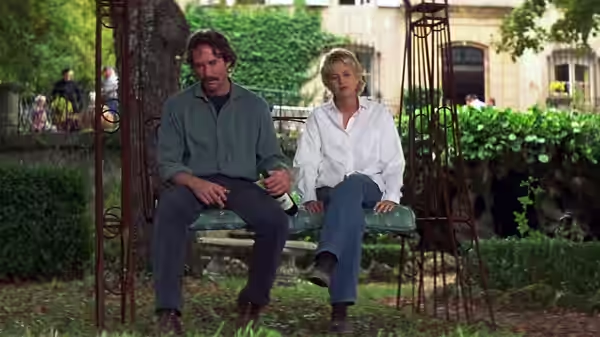
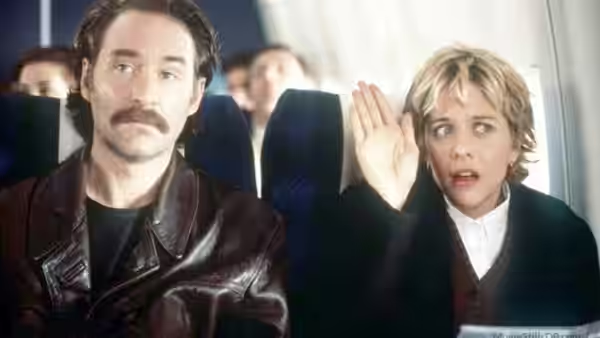
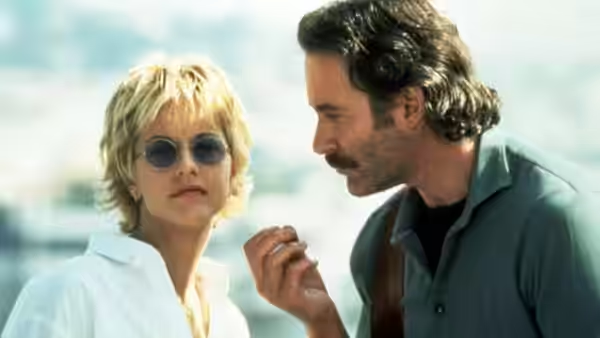
Kline plays Luc Teyssier as a man who has never once been embarrassed. He slouches, he lies in a low grumble, he wears Joanna Johnston’s black leather jacket as if he slept in it, and he pronounces each English word as though it has personally offended him. The accent could have been a party turn. Kline makes it a person, a thief who is more honest about what he wants than anyone else on screen. We laughed, out loud and more than once, during the flight itself, Kline talking Kate through take-off with a running lecture that is half comfort and half seduction, and we spent the rest of the film waiting for him to be given a scene that good again.
Meg Ryan, who also produced, plays Kate as the Meg Ryan character with the dial turned up: the crumpled face, the hands in the air, the small indignant shriek. She is skilled at being flustered and the film asks for little else. Brooks’s idea, that a woman who has arranged her whole future must learn to be surprised by it, is a sound one, and Ryan plays the arranging well. The change of heart is harder to credit, because the script writes the result and skips the steps. Somewhere around the second train we realised we had stopped minding whether she got Charlie back, and we are not sure the film noticed either.
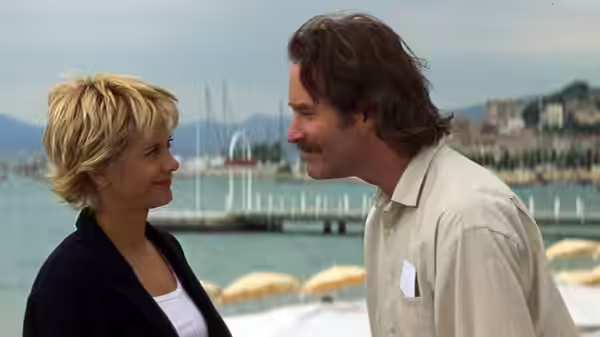
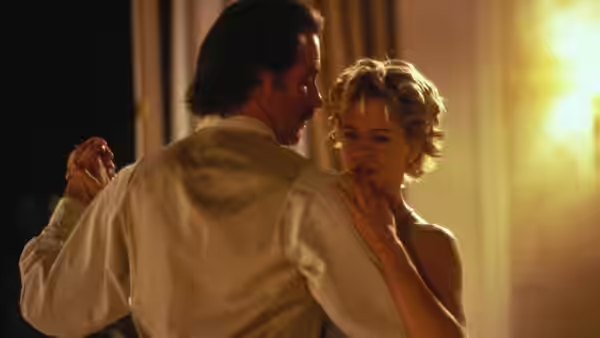
It does look well. Owen Roizman shoots Paris in grey, all wet pavements and pale stone, so that when the film reaches the south the light turns gold and the frame seems to relax with it. Jon Hutman gives the farmhouse where Luc stops off a kitchen table, dust and worn stone, and it is the one place in the film that feels lived in rather than visited. James Newton Howard keeps the score light and the soundtrack leans on the French standards you would expect, which suits a film that is itself a postcard. None of this is ambitious. All of it is pleasant to sit in front of.
The trouble is the middle. Joe Hutshing has 111 minutes to fill and the hour between Paris and the coast is spent on trains, in hotel corridors and on roads, with the same two arguments going round. Timothy Hutton’s Charlie has a conference and a face and nothing else; Suzan Anbeh is asked to stand in doorways and be lovely, and does. Jean Reno turns up as the policeman, wears a good coat, and is given little to do beyond looking tolerant. François Cluzet gets one decent scene with a stolen bag and then vanishes into the plot.
Kasdan at his best wrote people who were cleverer than their situations. Here nobody is. The film’s jokes about the French, the rudeness, the cheese, the shrug, are old ones told briskly, and we laughed at a few of them and then felt a little tired of ourselves. Most critics have been harder on the film than we are, and we understand why: it is thin, it is predictable, and it knows it. We are inclined to forgive it a little more than they did because Kline is on screen for most of it.
Watch it at home on a wet evening with someone who finds Kline funny, which is the audience it was made for. The 15 certificate is for language and not much else. If you want Kasdan, go back to The Big Chill; if you want Kline doing an accent for the sheer joy of it, this will do nicely.