David Ayer makes tank warfare frighteningly physical, and Brad Pitt gives the crew a persuasive centre. But the writing too often mistakes brutality for insight, leaving a forceful war drama with familiar things to say.
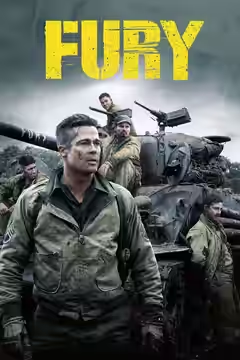
David Ayer’s Fury wants the familiar tank-crew story to hurt, and much of it does. The fighting is forceful and intelligible, the living conditions convincing, and the men damaged enough to make their company uncomfortable. It is a decent war film with a substantial weakness: the writing keeps explaining the hardness that the actors have already established. For anyone chiefly interested in the mechanics and terror of armoured combat, there is enough here to justify the evening.
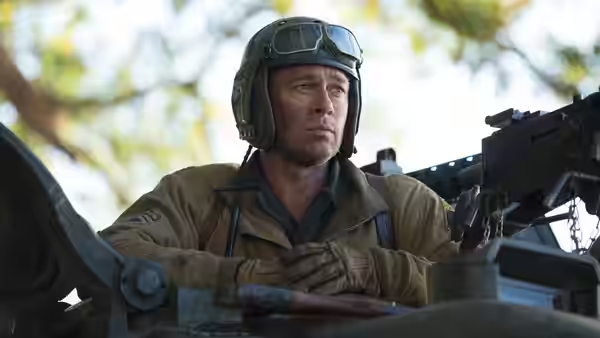
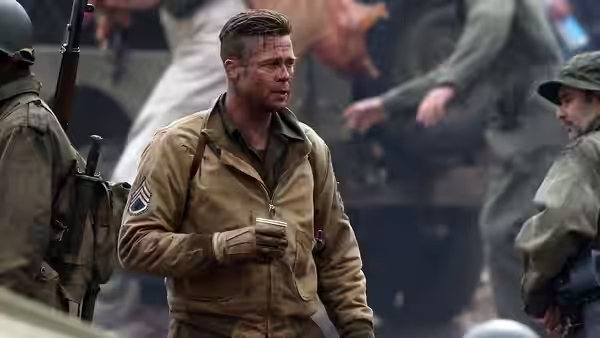
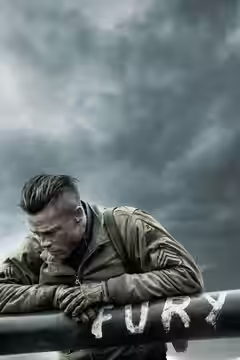
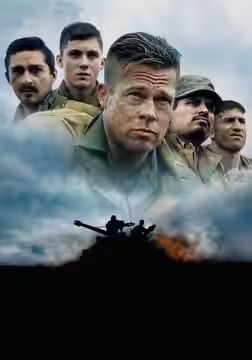
Brad Pitt, as Don ‘Wardaddy’ Collier, supplies the authority that holds it together. His stillness is effective because the film surrounds him with so much aggression; he does not need to compete. He allows the character’s ugliness to remain visible without making him impossible to watch, and that matters in a film so eager to treat hardness as a qualification. His presence makes the crew’s dependence on one another more persuasive than the dialogue about it.
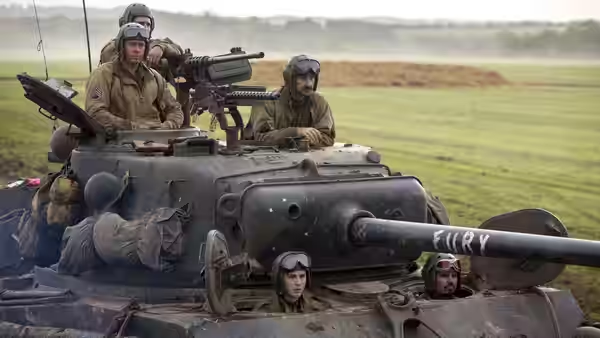
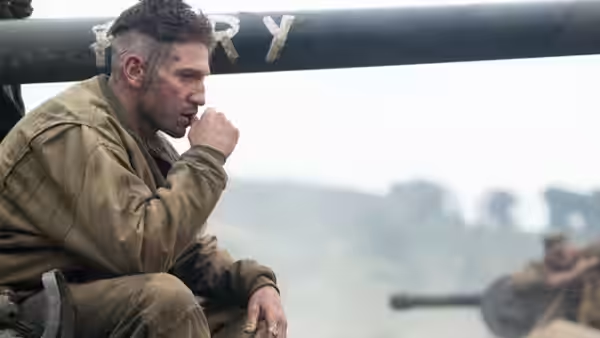
Logan Lerman’s Norman Ellison is less well served by the screenplay, which gives us the familiar inexperienced arrival through whom to discover the veterans’ world. He makes the discomfort credible, even when the lesson is being underlined. Shia LaBeouf, Michael Peña and Jon Bernthal help make the crew believable as men accustomed to one another, though the script gives them too little beyond their allotted types. The performances suggest shared experience that the writing often reduces to an exchange about toughness.
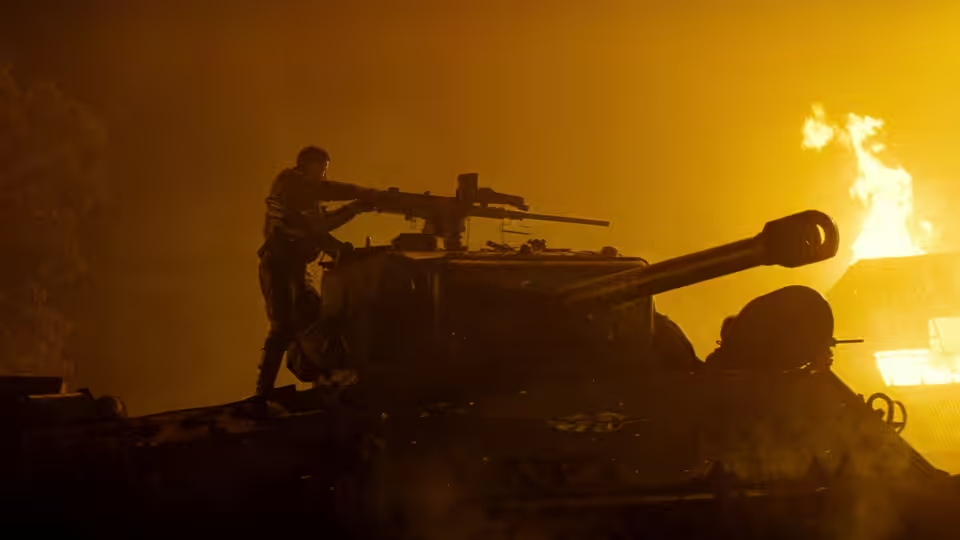
Roman Vasyanov’s cinematography makes the battlefield feel harsh and heightened, with little relief from its ugliness. The effect is oppressive, but it does not make the fighting unreadable. Editors Jay Cassidy and Dody Dorn keep the action coherent enough for danger to register as something happening in a particular place, rather than a general bombardment. Andrew Menzies’s production design makes the tank interior feel lived in, with too little room for the men using it. The confined space helps explain why the crew must work together, even when their behaviour makes that difficult.
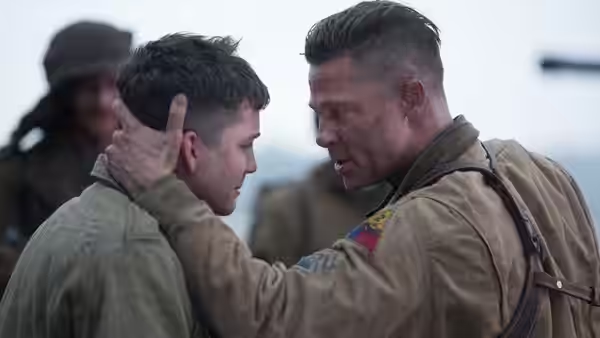
We were horrified by the crew’s cruelty towards Norman. Logan Lerman’s discomfort gives that aggression a human cost, making it impossible to dismiss as colourful behaviour. But David Ayer pushes the lesson so hard that these exchanges also expose the limits of his approach. Norman’s education follows a familiar route, and showing it more graphically does not make it more revealing.
Steven Price’s score is forceful enough to suit the battles, though its insistence becomes tiring when the film asks for solemn admiration. The same problem affects the later stretch, whose growing grandiosity sits awkwardly with the grubby physical detail that made the fighting persuasive. Nothing about those developments needs revealing to say that the film becomes too pleased with its warriors. It spends so much effort establishing the damage done to these men that its appetite for heroics feels poorly examined.
Within the war genre, Fury is strongest when it concentrates on the work of surviving a battle. It is less useful when it tries to turn that work into a general account of manhood, loyalty and what violence teaches. At 135 minutes, the repetition matters, even with Brad Pitt giving the film a steady centre. Choose it for the tank warfare; patience with speeches about toughness will help.