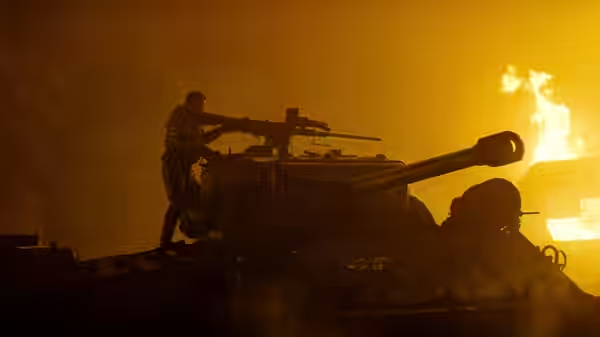
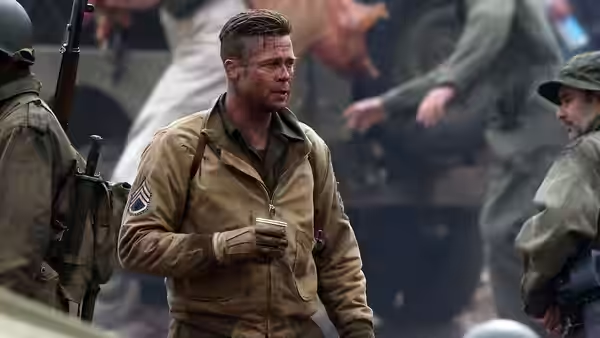
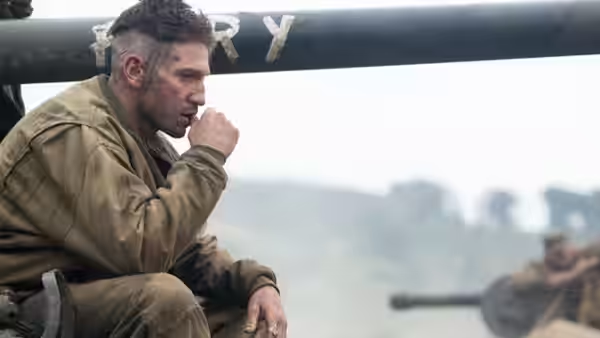
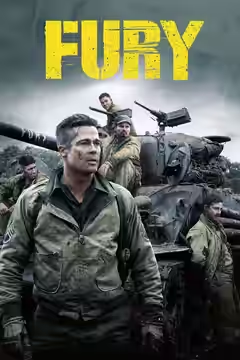
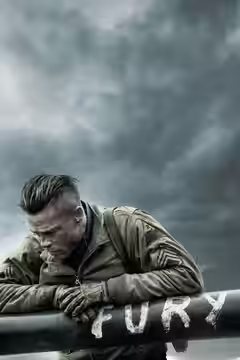
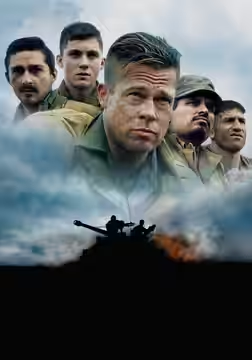
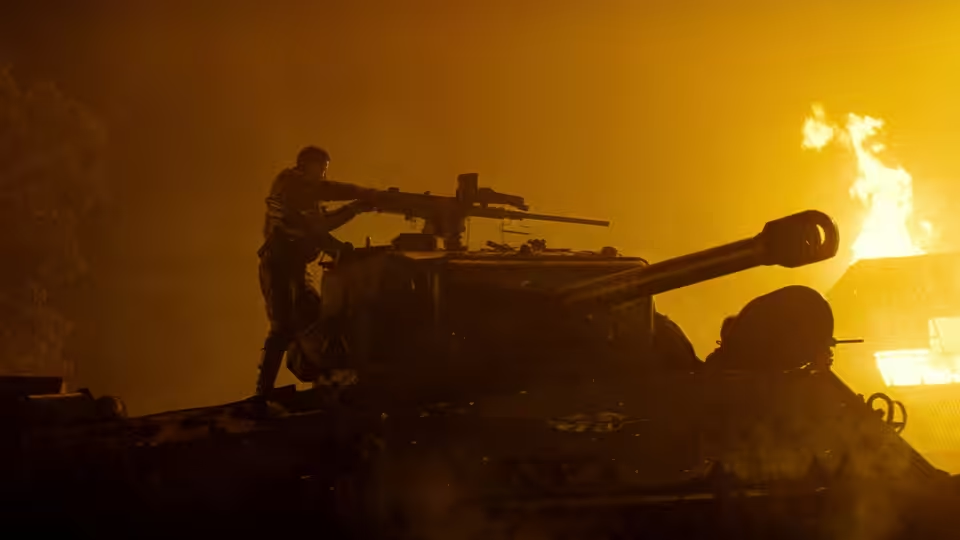
A soldier stands atop a tank silhouetted against a blazing sunset
Film review

Fury

2014 · Directed by David Ayer · 2h 15m

In a sentenceThe tank crew could use more elbow room and fewer lessons about manhood

During the Second World War, Norman Ellison (Logan Lerman) joins a Sherman tank crew as a replacement driver. His new companions include Don ‘Wardaddy’ Collier (Brad Pitt) and Boyd ‘Bible’ Swan (Shia LaBeouf), men accustomed to the fighting and to one another. Norman has to learn how to function alongside them while confronting their treatment of anyone who hesitates. Inside the tank, survival depends on the crew working together, but fitting in means accepting behaviour he finds difficult to stomach.

Plays from YouTube when you press play; nothing loads from them until then.

Fi1m review

David Ayer makes tank warfare frighteningly physical, and Brad Pitt gives the crew a persuasive centre. But the writing too often mistakes brutality for insight, leaving a forceful war drama with familiar things to say.

David Ayer’s Fury wants the familiar tank-crew story to hurt, and much of it does. The fighting is forceful and intelligible, the living conditions convincing, and the men damaged enough to make their company uncomfortable. It is a decent war film with a substantial weakness: the writing keeps explaining the hardness that the actors have already established. For anyone chiefly interested in the mechanics and terror of armoured combat, there is enough here to justify the evening.

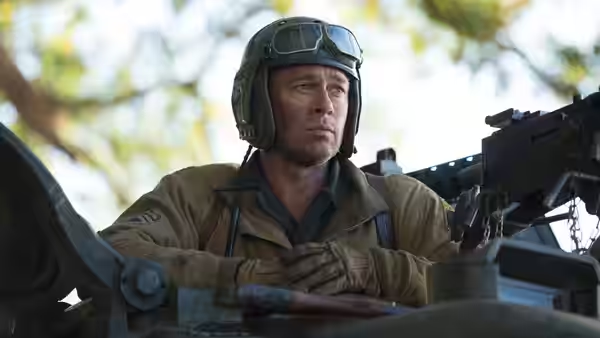
Brad Pitt, as Don ‘Wardaddy’ Collier, supplies the authority that holds it together. His stillness is effective because the film surrounds him with so much aggression; he does not need to compete. He allows the character’s ugliness to remain visible without making him impossible to watch, and that matters in a film so eager to treat hardness as a qualification. His presence makes the crew’s dependence on one another more persuasive than the dialogue about it.

Logan Lerman’s Norman Ellison is less well served by the screenplay, which gives us the familiar inexperienced arrival through whom to discover the veterans’ world. He makes the discomfort credible, even when the lesson is being underlined. Shia LaBeouf, Michael Peña and Jon Bernthal help make the crew believable as men accustomed to one another, though the script gives them too little beyond their allotted types. The performances suggest shared experience that the writing often reduces to an exchange about toughness.

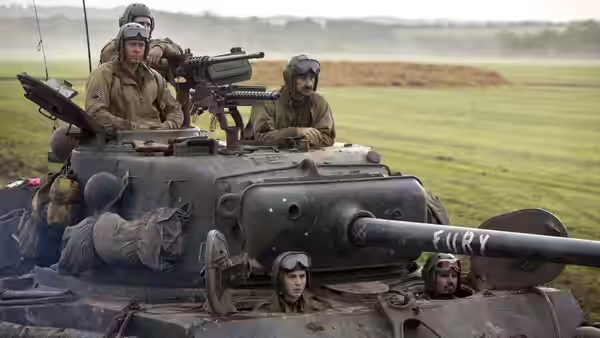
Roman Vasyanov’s cinematography makes the battlefield feel harsh and heightened, with little relief from its ugliness. The effect is oppressive, but it does not make the fighting unreadable. Editors Jay Cassidy and Dody Dorn keep the action coherent enough for danger to register as something happening in a particular place, rather than a general bombardment. Andrew Menzies’s production design makes the tank interior feel lived in, with too little room for the men using it. The confined space helps explain why the crew must work together, even when their behaviour makes that difficult.

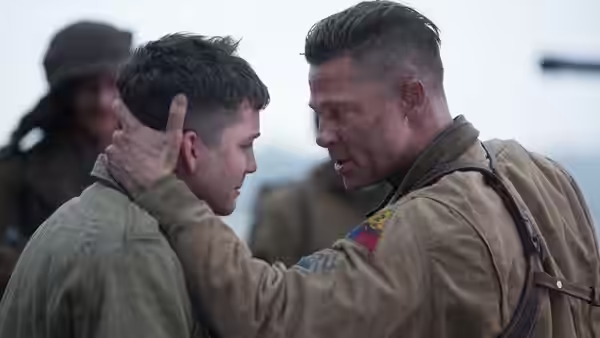
We were horrified by the crew’s cruelty towards Norman. Logan Lerman’s discomfort gives that aggression a human cost, making it impossible to dismiss as colourful behaviour. But David Ayer pushes the lesson so hard that these exchanges also expose the limits of his approach. Norman’s education follows a familiar route, and showing it more graphically does not make it more revealing.

Steven Price’s score is forceful enough to suit the battles, though its insistence becomes tiring when the film asks for solemn admiration. The same problem affects the later stretch, whose growing grandiosity sits awkwardly with the grubby physical detail that made the fighting persuasive. Nothing about those developments needs revealing to say that the film becomes too pleased with its warriors. It spends so much effort establishing the damage done to these men that its appetite for heroics feels poorly examined.

Within the war genre, Fury is strongest when it concentrates on the work of surviving a battle. It is less useful when it tries to turn that work into a general account of manhood, loyalty and what violence teaches. At 135 minutes, the repetition matters, even with Brad Pitt giving the film a steady centre. Choose it for the tank warfare; patience with speeches about toughness will help.

Critical consensus AI synthesised

65
Positive
12
Mixed
11
Negative
5

The reviews lean cautiously favourable on Fury, with praise clustering around the tank battles, convincing military detail and performances. Critics repeatedly single out the cramped conditions inside the tank and the physical force of combat, finding the action persuasive even when the writing disappoints. Brad Pitt draws particular praise for his charisma and restraint, while several reviews credit the crew’s performances with giving familiar wartime roles some human weight.

The spread is wide, and the central disagreement concerns what the brutality achieves. The Wrap sees a thoughtful, humane account of war; Slant Magazine argues that the film glorifies warriors while presenting its violence as an anti-war message. Reservations elsewhere cluster around thin characterisation, heavy-handed themes and a climactic battle that strains credibility. Even some admirers find the storytelling conventional, while the harsher reviews see technical accomplishment offering little insight into the suffering depicted.

Los Angeles Times
16 October 2014 · Kenneth Turan
90*

Turan calls Fury a memorable addition to the war-movie canon, praising how it refreshes traditional expectations with a modern sensibility. He singles out its painstaking physical realism and unflinching depiction of violence.

Read the full review →
The New Yorker
16 October 2014 · David Denby
90*

Denby calls Fury one of the great war movies and praises its visceral, coherent action staging. He also singles out the tank crew’s performances, while criticizing Norman’s clichéd character and the scene that forces him to kill a prisoner.

Read the full review →
Evening Standard
20 October 2014 · festival review · David Sexton
85*

Sexton calls the film extraordinarily intense and unmissable, while noting it is less overwhelming than Come and See and less ambitious than Saving Private Ryan. He praises its graphic violence and unsparing detail in depicting tank warfare.

Read the full review →
Little White Lies
21 October 2014 · 3/4/3 · Adam Woodward
80

The critic finds the film soulful but unoriginal, with a problematic jingoistic subtext. He praises the visceral battle scenes, especially the Sherman’s clash with a German Tiger.

Read the full review →
Radio Times
★★★★ · Stella Papamichael
80

Papamichael presents the film as a heart-pounding war drama. She singles out Logan Lerman’s replacement driver as the perspective through which the reality of conflict becomes clear.

Read the full review →
The Independent
26 October 2014 · Laurence Phelan
75*

The review regards the film’s brutal ugliness as an appropriate way to tell a war story. It singles out the graphic violence and the damage war has done to the characters.

Read the full review →

Straight answers AI written, from our review

Is Fury worth watching?
Fury is worth watching for its frighteningly physical tank warfare and Brad Pitt’s steady authority, though we score it 67 for weaknesses that matter. We find the cramped teamwork and coherent battles persuasive, but the repeated lessons about toughness and manhood make its 135 minutes feel longer than necessary.
How long is Fury, and what is it rated?
Fury runs 2h 15m. It is a war and drama film.
Where can I watch Fury in Israel?
Fury is available to buy from Apple TV from ₪14.90. Availability is checked daily; the links above go straight to each service.
How violent or frightening is Fury, and is it suitable for children?
Fury has a UK 15 certificate, and its forceful combat and disturbing cruelty make it unsuitable for children and a difficult choice for the squeamish. We find the crew’s aggression towards their inexperienced replacement particularly upsetting; the oppressive battlefield and cramped tank interior add to the strain, making this better suited to older teenagers and adults comfortable with harsh war drama.
How does Fury compare to Das Boot?
Fury offers close-quarters teamwork and battlefield dread, but we recommend Das Boot as the more gripping and humane war drama. Both make confined spaces and exhausted crews central to the strain; choose Fury for the physical detail of tank combat, and Das Boot for submarine tension without the same wearying emphasis on lessons about toughness.

Cast

If you liked this, try…

  1. Lebanon (2009) · not on Fi1m yetAnother tank crew, with the cramped interior making every decision feel worse.

  2. Das Boot (1981, Fi1m 89)For the close quarters, exhausted teamwork and dread between bouts of action.

  3. The Big Red One (1980) · not on Fi1m yetA more episodic soldier’s view, with room for absurdity alongside the killing.

  4. The Ascent (1977) · not on Fi1m yetFor a harsher examination of what survival demands from people under occupation.

  5. The Steel Helmet (1951) · not on Fi1m yetA small patrol allows franker arguments about the country its soldiers serve.

Fury (2014) review: forceful tank battles carry a familiar story (Israel) | Fi1m