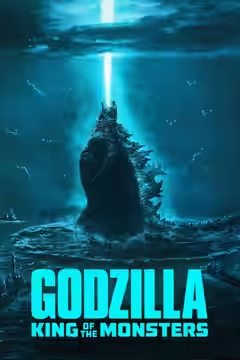
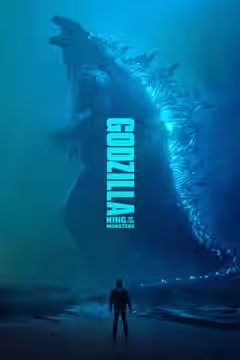
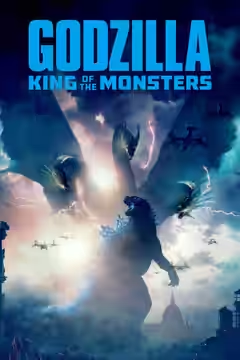
Michael Dougherty gives the monsters their entrances, and Mothra’s is worth the ticket. Everything in between is people in bunkers reading the plot to each other, and there is a great deal of in between.
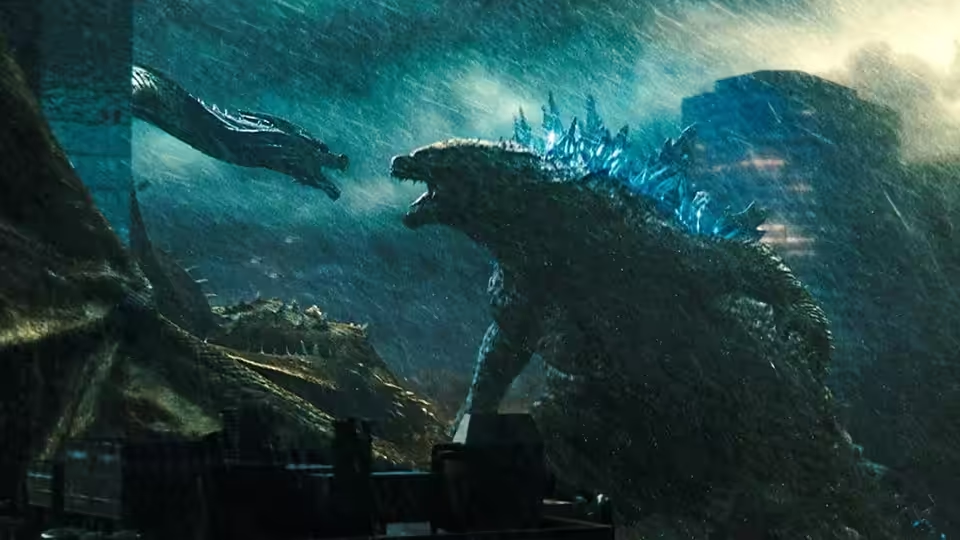
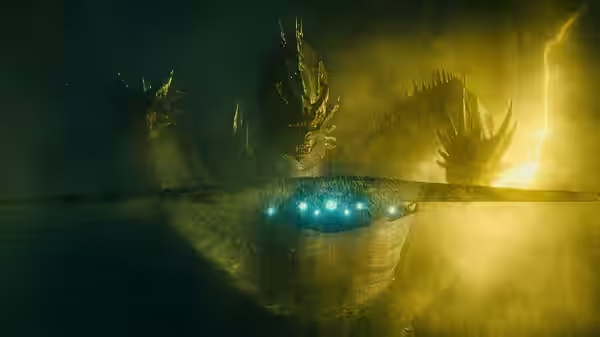
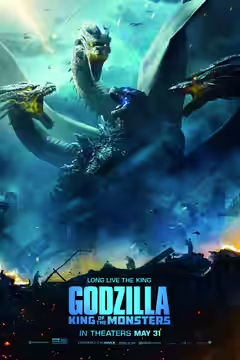
Michael Dougherty’s film is a sequel to Gareth Edwards’s Godzilla of 2014, and it sets out to correct that film’s one famous complaint: that you hardly saw the monster. Here you see him inside the first half hour, and Mothra, Rodan and the three-headed Ghidorah besides, most of them at night and in weather. The correction is real and the film is in trouble anyway, because the people it puts between the monsters are the dullest set of experts a blockbuster has assembled in some time. At 132 minutes, that is a lot of experts.
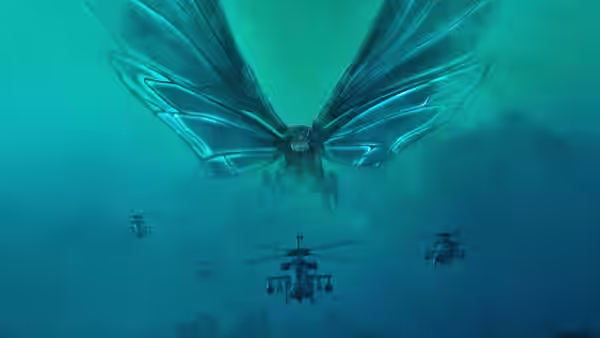
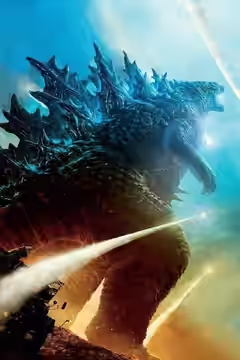
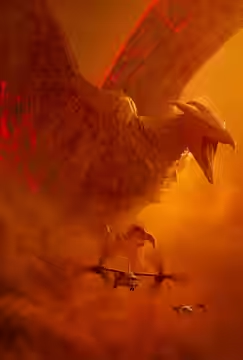
The moments that work belong to the creatures. Mothra breaks out of her cocoon under a waterfall and unfolds wings that glow blue and white through the spray, and Lawrence Sher lights her from inside so she reads as a stained-glass window with a pulse. We sat up. Rodan comes out of a volcano and takes a squadron of jets out of the sky with a single roll, and for a minute the film is the boyish thing it wants to be. Bear McCreary brings back the old Toho march for Godzilla and the Mothra hymn for Mothra, and both land, partly because he plays them straight and does not apologise for them.
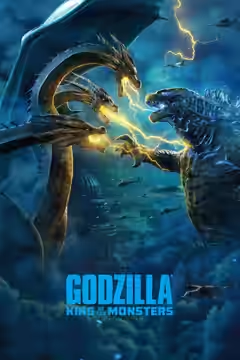
The trouble is that Dougherty wants to hide the monsters and show them at the same time. Sher shoots nearly every battle at night, in rain or snow or volcanic ash, lit in orange and blue, and while a single frame is often handsome, a fight in this weather is a series of silhouettes. Bob Ducsay, Richard Pearson and Roger Barton cut away from the creatures to a room of people watching screens so often that we started to feel we were also watching screens, which we were. By the time Godzilla and Ghidorah meet properly, we could tell who was winning only because a scientist said so.
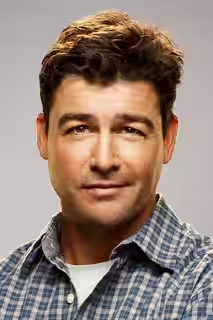
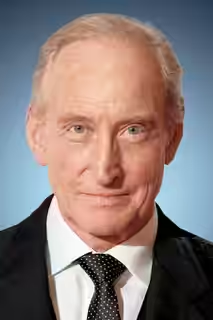
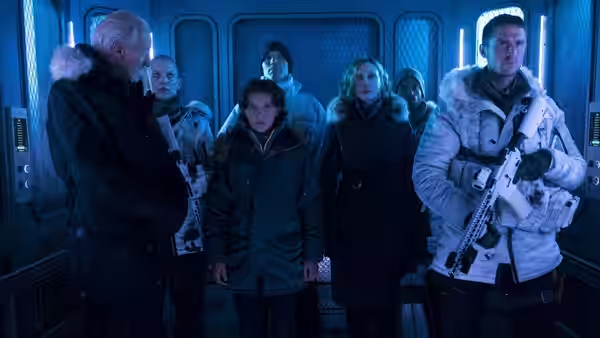
The scientists are the problem. Kyle Chandler’s Mark Russell walks into Monarch’s bunker and is angry at everyone for the next two hours, which is the whole of the character. Vera Farmiga is handed a speech about the planet’s fever that Dougherty and Zach Shields’s script plainly believes is a position and is in fact a plot summary. Bradley Whitford and Thomas Middleditch are there to say the thing an audience member might say, a job that should have been given to nobody. Charles Dance arrives with a beard and a plan and the film forgets him for long stretches. Sally Hawkins and Ken Watanabe, who were quiet and good in 2014, are quiet again; Watanabe is given one scene later on with some weight to it, and we will not describe it.
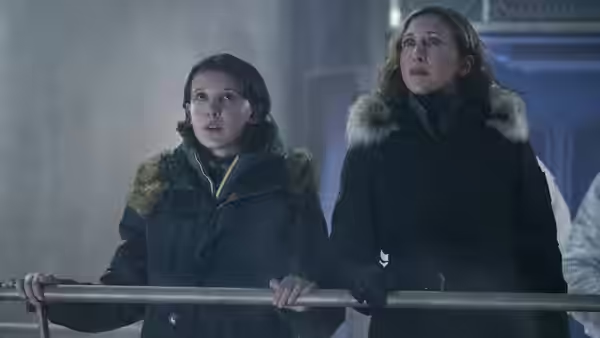
Millie Bobby Brown does the most with the least. Madison is written as a child who understands the monsters better than the adults, which is old, but Brown plays her listening rather than talking, and the best human shot in the film is her face, streaming wet, as something enormous walks towards her and she decides not to be frightened. We were bored through the middle hour, the one spent in Alan Hook and Scott Chambliss’s flying command centre, a grey aircraft with a bridge window and a war table, and then cross about being bored, because a film with a moth the size of a cathedral in it has no business being boring.
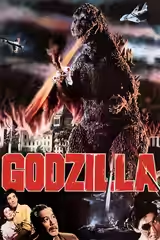
Against the genre’s own standard this is middling. Ishirō Honda’s Godzilla of 1954 was about a country that had been bombed and it showed you the burned city the morning after. Dougherty gestures at that, with talk of the Titans healing the earth, but he does not show anyone living in the rubble, only people in bunkers talking about it. Edwards kept the creature away from us and was accused of coldness; Dougherty throws it at us and is warm about nothing. Most critics landed in the middle and so have we.
See it if the shot of Mothra in the rain did something to you in the trailer; there are five or six more like it, and a cinema screen is where they belong. The 12A is honest: buildings fall and nobody inside them is shown. At home you will be tempted to skip the briefings, and you should give in.