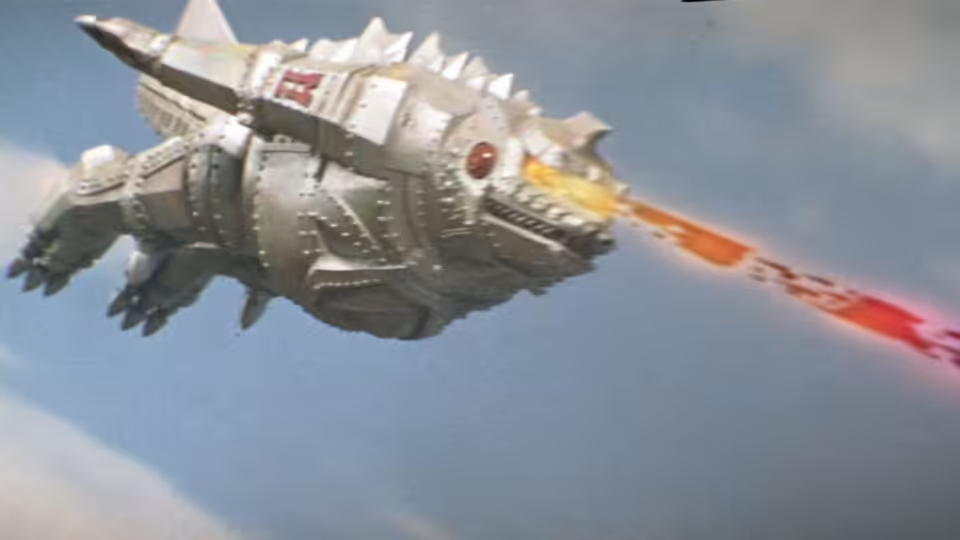
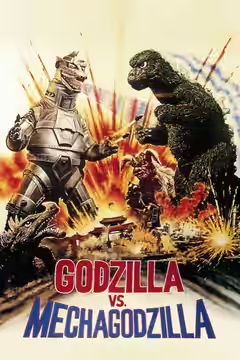
Jun Fukuda gives Godzilla a chrome double with missiles in its fingers, and the monster scenes are the reason to be here. Between them, spies, priests and professors run about Okinawa explaining things, and the film keeps stopping to let them.
Jun Fukuda’s Godzilla vs. Mechagodzilla runs 84 minutes and tries to be three films in that time: a lost-civilisation adventure on Okinawa, a spy picture full of Interpol agents and men in sunglasses, and a wrestling bill with a robot on it. Hiroyasu Yamaura and Fukuda wrote the script from a story by Masami Fukushima and Shinichi Sekizawa, and you can see the joins. The third film is the one worth your evening.
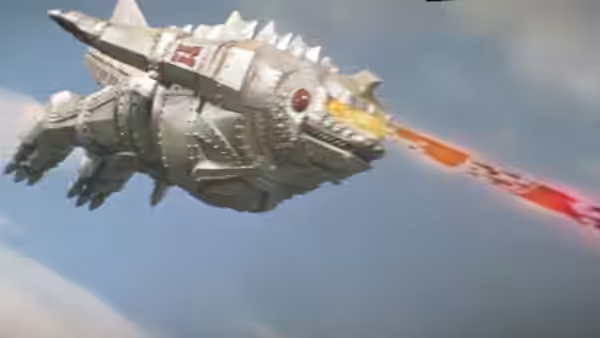
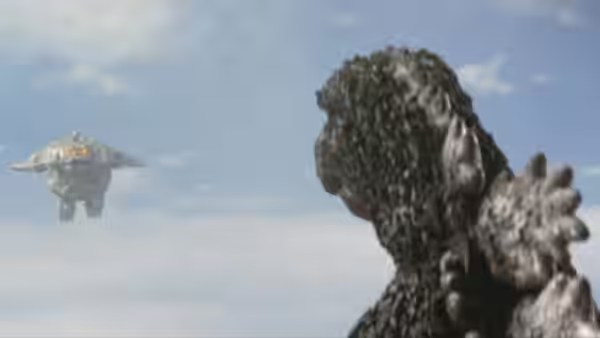
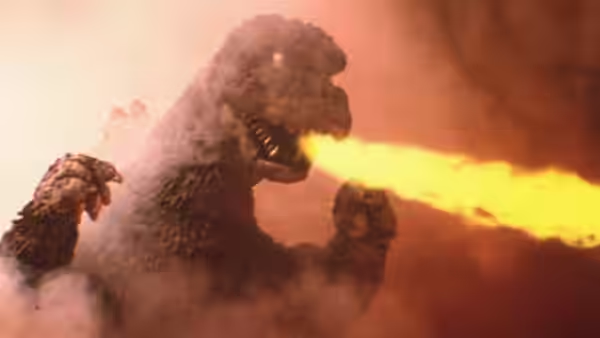
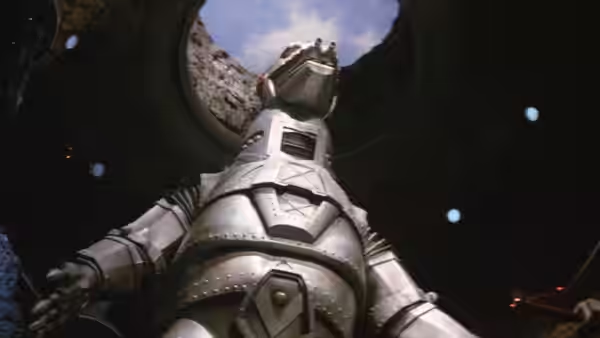
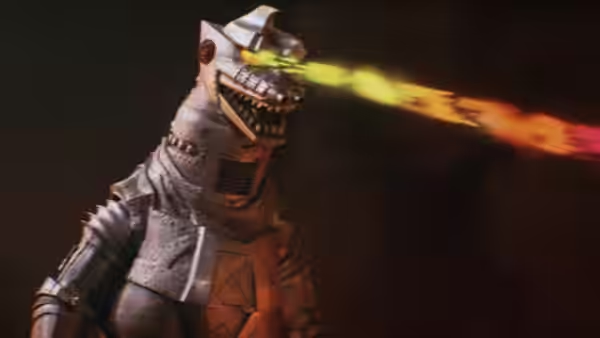
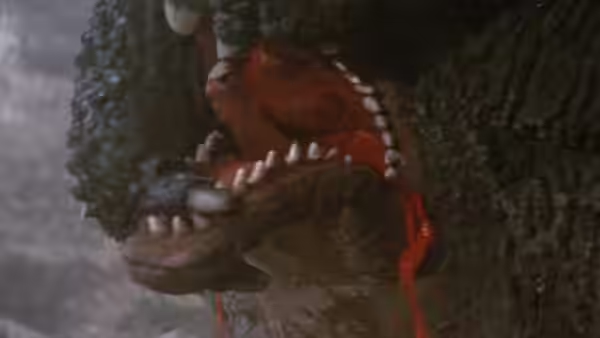
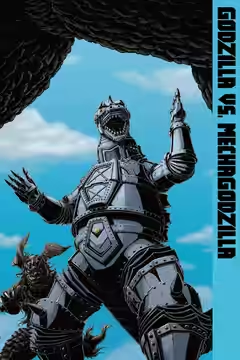
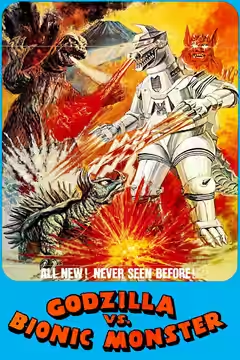
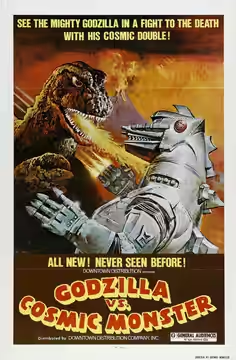
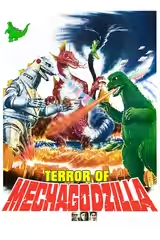
The robot is the reason it has lasted. Tomoki Kobayashi and Nobuyuki Yasumaru are credited with costume design, which in a Godzilla picture means building the monsters, and Mechagodzilla is a fine piece of work: a full-body chrome plate that catches Yuzuru Aizawa’s light, fingers that fire off as missiles, a head that spins to throw up a shield, a beam from the eyes in rainbow colours. When the false Godzilla’s skin burns away to show the metal underneath, we sat forward, and we had read the title. That is the film doing its one job well. The real Godzilla, beside it, has seen better days; the suit is heavy at the jowls and the eyes have the fixed look of a toy left on a shelf.
The people are harder to love. Masaaki Daimon plays the engineer Keisuke Shimizu with the stiffness of a man reading his lines off the horizon, and Kazuya Aoyama, as his brother Masahiko, mostly runs. Reiko Tajima’s archaeologist Saeko is handed the prophecy to translate and little else. Akihiko Hirata, as Professor Miyajima, brings some weight, and Hiroshi Koizumi’s Professor Wagura is there to nod at him. Shin Kishida’s Interpol agent Nanbara, in dark glasses and a karate stance, is the film’s idea of cool, and he is not wrong. Gorō Mutsumi plays the alien leader Kuronuma as a middle manager with a grievance, which is funnier than it sounds.
We were bored for stretches, and we can say where. Every time the script leaves the monsters to follow Daigo Kusano’s Yanagawa and his fellow agents around the island, it becomes men in sunglasses chasing men in sunglasses, and Michiko Ikeda cuts between the chases, the cave and the resort as if asked to keep three pots warm at once. Nobody stays on screen long enough to matter. When the sunglasses come off and we see what was under them, we laughed, then felt a little ashamed, because the effect is not meant to be funny and the actors are doing their best inside it.
Kazuo Satsuya’s production design is more careful than the film around it. The alien base is a room of consoles and coloured light; the Azumi cave is a proper set, with a stone guardian and carved script, and Aizawa lights it so the shadows move when the actors do. The Okinawa exteriors are bright and open, all coast and sky, and the film looks better outdoors than most Godzilla pictures of its decade. Masaru Satō’s score is the other pleasure: brass, a walking bass under the fights and a lounge shuffle under the spies, as if the whole thing were happening in a hotel bar.
The Okinawan strand, with Masao Imafuku as the high priest Tengan Kunito and Beru-Bera Lin as Princess Nami, is played with a sincerity the rest of the film does not attempt. The prophecy promises a second guardian monster, and how it is roused in the last act we will leave to you; we will say the method is the film’s most agreeably daft idea and that Satō gets a song out of it. The final fight is staged with room to see who is hitting whom, which is not always the case in this series.
Set against the 1954 original this is a toy-box film, and it knows it. Fukuda is not making a warning about the bomb; he is making a Saturday matinee with a chrome centrepiece, and on those terms it is one of the more watchable Godzilla pictures of the 1970s. The 12A is right. A child will be fine throughout, and an adult will be fine for about half of it.
See it for the robot, ideally with someone young enough to want one. The middle forty minutes are for putting the kettle on.