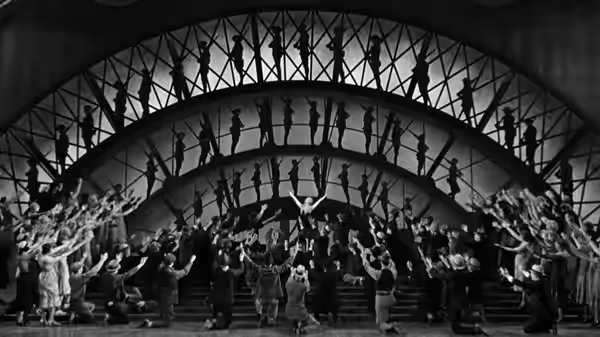
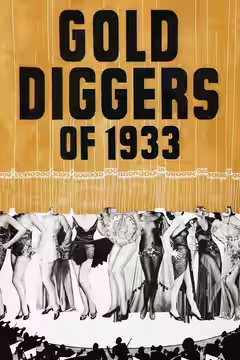
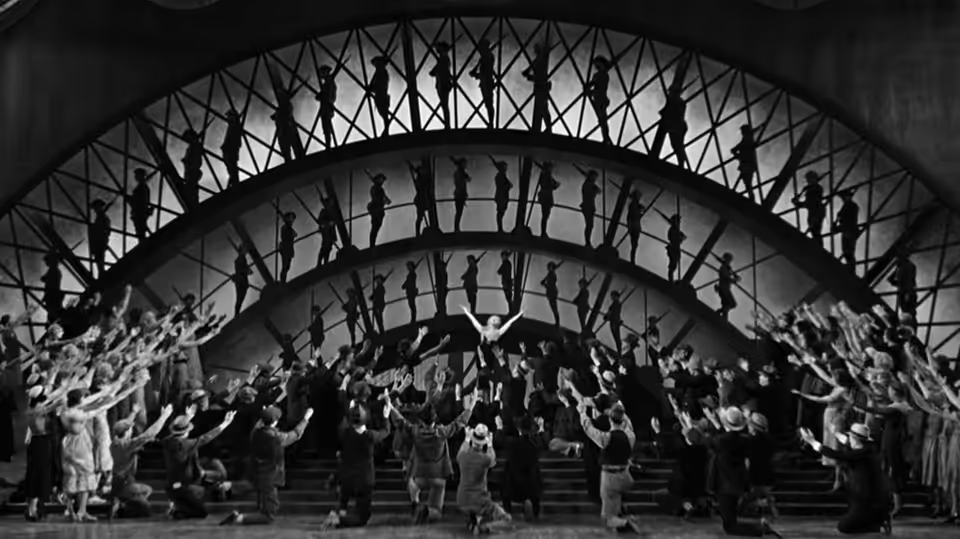
Chorus dancers fill a grand arched stage as performers line the balconies above
Film review

Gold Diggers of 1933

1933 · Directed by Mervyn LeRoy · 1h 37m

In a sentenceJoan Blondell could make a polite greeting sound like a demand for better pay

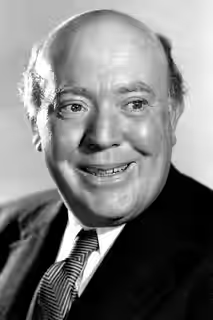
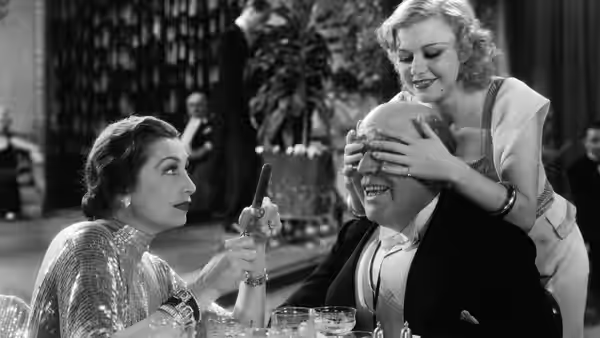
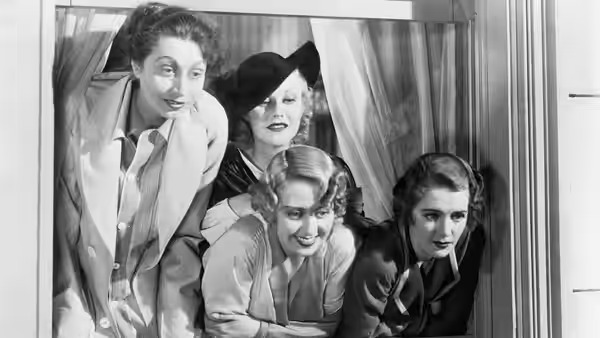
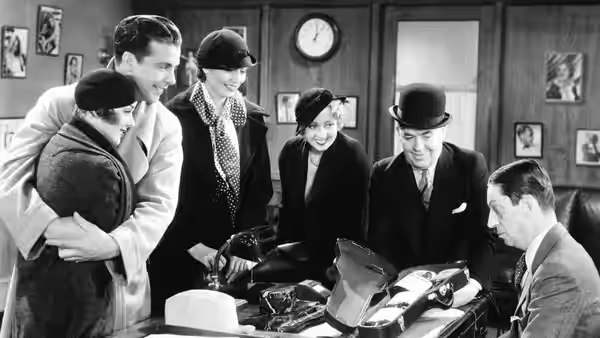
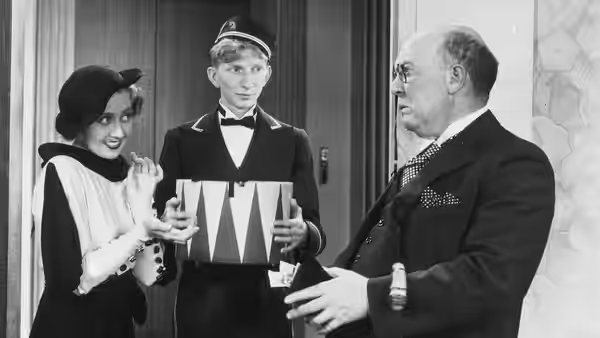
Carol (Joan Blondell), Trixie (Aline MacMahon) and Polly (Ruby Keeler) head the ensemble of this backstage comedy, where romance shares the bill with musical numbers. Brad (Dick Powell), Lawrence (Warren William) and Peabody (Guy Kibbee) are among the men in their orbit, while Fay (Ginger Rogers) and Barney (Ned Sparks) complete the principal company. The story moves between comic exchanges, romantic complications and performances, with drama also part of the programme. Mervyn LeRoy directs, with music by Harry Warren and Al Dubin and a running time of 97 minutes.

Fi1m review

Mervyn LeRoy’s backstage musical is a pleasure, with sharp comic performances and inventive numbers. The romance feels routine beside Joan Blondell and Aline MacMahon, but the film has plenty to keep us happily occupied.

Gold Diggers of 1933 is a brisk, funny musical whose strongest pleasure is the confidence of its company. Mervyn LeRoy gives the comedy enough room to breathe without treating the business between numbers as something to apologise for. We recommend it, with a reservation about a romance that becomes rather ordinary beside the livelier performances around it. The film has enough comic talent to keep that weakness from becoming a serious drag.

Joan Blondell’s Carol establishes the right tone: alert, practical and too quick to be easily flattered. There is a useful firmness beneath Blondell’s humour, which keeps the character from becoming merely agreeable company. Aline MacMahon brings a blunter comic energy to Trixie, with less interest in softening a line for the sake of good manners. We laughed at her sharp delivery, and at how little she seems to care about winning our approval. Those performances give the comedy its bite.

Ruby Keeler and Dick Powell, as Polly and Brad, are agreeable presences, though their gentler appeal leaves less to discuss. Keeler’s directness has charm; Powell’s ease makes him pleasant company. The writing by James Seymour and Erwin S. Gelsey is less distinctive when it asks us to invest in romance, and the shifts away from the sharper comedy can feel like a small reduction in ambition. The tenderness is welcome, but some of the exchanges need more personality.

Busby Berkeley’s choreography provides another substantial reason to watch. The elaborate organisation of the numbers has a rhythmic excitement that survives close attention, with pleasure in following how one arrangement gives way to another. We can feel the care taken over the movement without being made to admire the labour behind it. Some passages do grow a little remote, as though their neatness has become more important than the performers. The strongest numbers keep both in view.

Sol Polito’s photography makes the abundance easy to take in, with a clarity that helps the eye follow the performers. Orry-Kelly’s costumes share the comedy’s cheerful appetite for display, and their contribution is fun without distracting from the people wearing them. George Amy’s editing keeps the film moving briskly enough that its weaker passages rarely settle into a prolonged nuisance. It runs 97 minutes, and the pace seldom slackens for long.

Harry Warren and Al Dubin’s music also gives the film room for feelings beyond flirtation and comic impatience. We were moved by Etta Moten’s singing in ‘Remember My Forgotten Man’, where the gravity of the voice demands a different kind of attention. The music can bear that weight without losing the directness that makes the lighter material appealing. That range matters in a film whose dramatic writing is not always as persuasive as its performers.

Within the backstage musical, there is always a risk that the show will make the story look like an inconvenient interval. LeRoy avoids that often enough because Blondell and MacMahon are worth watching without any elaborate accompaniment. Their comic assurance makes the dialogue scenes worth returning to, even after the choreography has expanded our expectations. Choose it for the numbers, and leave room for the women doing the talking.

Critical consensus AI synthesised

3 of 6
Positive
2
Mixed
1
Negative
0
Variety
31 December 1932 · Variety Staff
78*

Variety gives the film a favorable verdict, especially praising Busby Berkeley’s musical numbers. It also singles out the romance plot and several supporting performances as strengths.

Read the full review →
The New Yorker
75*

The critic finds the film’s musical numbers uneven in sensual appeal but says it thrives on Busby Berkeley’s genius. They single out his elaborate, rhythm-driven choreography as the film’s defining strength.

Read the full review →
Time Out
· GA
65*

The page identifies this as a review, but the review text is unavailable. Its metadata calls the film an archetypal Warners backstage musical, without revealing the critic’s verdict or specific praise.

Read the full review →

Straight answers AI written, from our review

Is Gold Diggers of 1933 worth watching?
Gold Diggers of 1933 is worth watching for its sharp comic performances and inventive musical numbers, and we score it 82 out of 100. We particularly enjoy Joan Blondell and Aline MacMahon, whose brisk, pointed delivery makes the routine romance feel less troublesome. It suits anyone who likes a backstage musical with lively company between performances.
How long is Gold Diggers of 1933, and what is it rated?
Gold Diggers of 1933 runs 1h 37m. It is a comedy and drama film.
Where can I watch Gold Diggers of 1933 in Serbia?
Gold Diggers of 1933 is not on any streaming or rental service in Serbia at the moment. It is available in 4 other countries; change your country at the top of the page to see where. Availability is checked daily.
How does Gold Diggers of 1933 compare to 42nd Street?
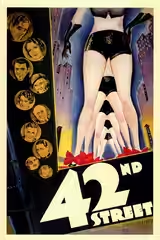
Gold Diggers of 1933 is our choice for sharp comic company, while 42nd Street offers a harder look at money and backstage pressures. We recommend the former for Joan Blondell and Aline MacMahon, though its romance is routine; the latter suits those who prefer a longer dramatic build, with Warner Baxter carrying the first hour before the dance numbers arrive at the end.
What should I watch after Gold Diggers of 1933?
After Gold Diggers of 1933, try 42nd Street (1933, Fi1m 82): Another backstage company discovers how much trouble can precede a good show. Then The Commitments (1991, Fi1m 82): A Dublin band supplies the music, the quarrels and considerably less glamour; and Topsy-Turvy (1999, Fi1m 88): For the rehearsals, bruised pride and patient work behind theatrical pleasure.

Cast

If you liked this, try…

  1. 42nd Street (1933, Fi1m 82)Another backstage company discovers how much trouble can precede a good show.

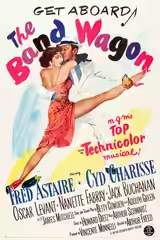
  2. The Band Wagon (1953) · not on Fi1m yetTheatrical vanity gets a fond inspection, with dancing worth the arguments.

  3. The Young Girls of Rochefort (1967) · not on Fi1m yetRomantic near misses and bright choreography give the whole town something to do.

  4. The Commitments (1991, Fi1m 82)A Dublin band supplies the music, the quarrels and considerably less glamour.

  5. Topsy-Turvy (1999, Fi1m 88)For the rehearsals, bruised pride and patient work behind theatrical pleasure.