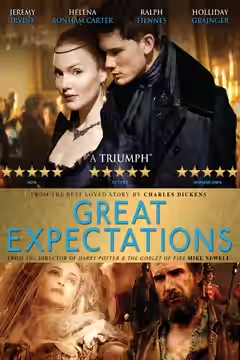
Mike Newell’s Great Expectations gives its supporting cast more to work with than its central romance. There are performances worth watching, but the adaptation is too cautious and compressed to make enough of them.
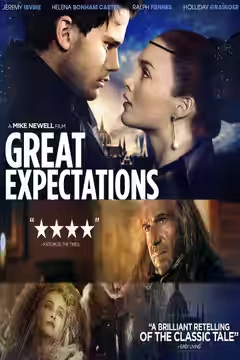
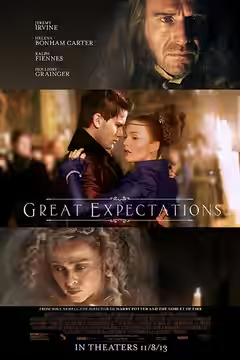
Mike Newell’s Great Expectations is watchable, carefully made and too cautious to recommend without a particular interest in its cast. David Nicholls compresses Charles Dickens’s novel into 128 minutes, leaving the actors to supply much of the feeling that the script has little time to develop. The supporting players often manage it. The central romance is less secure, and a film with so many strong performers should not leave us waiting quite so often for someone else to take over.
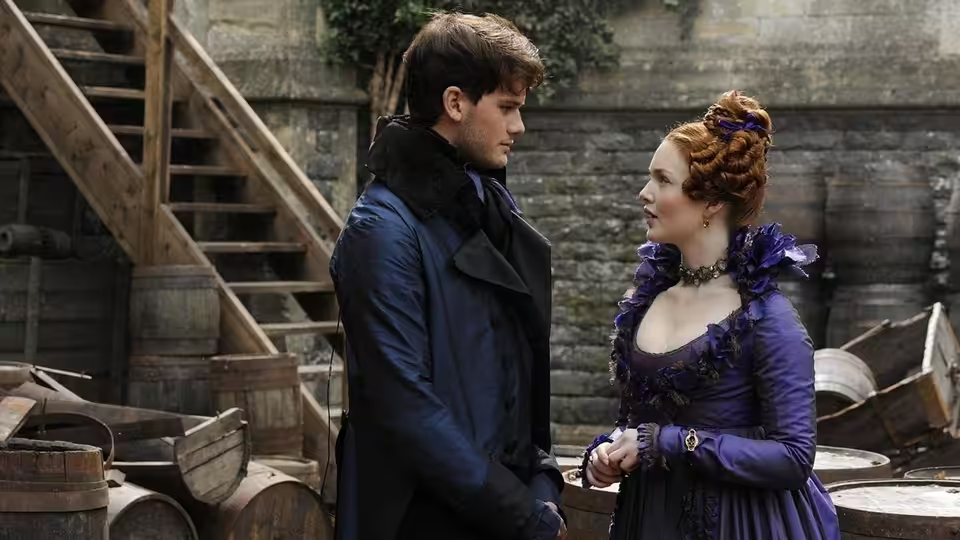
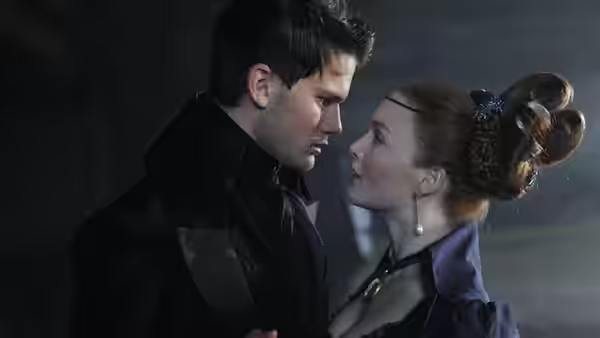
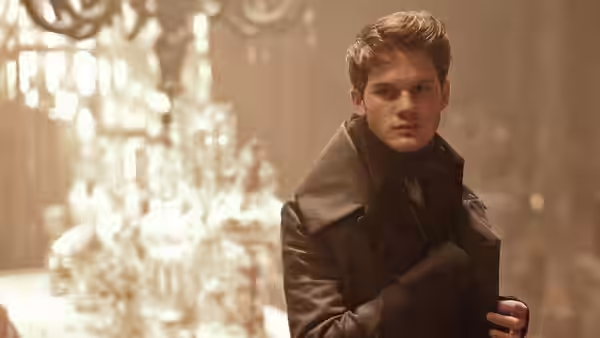
Jeremy Irvine gives Philip ‘Pip’ Pirrip an appealing openness, but his performance does not make the character’s feelings complicated enough to sustain all this attention. Holliday Grainger’s Estella Havisham is more compelling, although the pairing remains uneven. Too often, we find ourselves accepting the importance of their romance because the script insists on it. The screenplay keeps their relationship prominent without giving it enough room to become persuasive, and the careful presentation cannot supply what is missing between them.
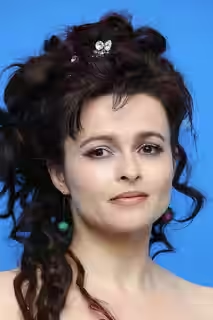
Helena Bonham Carter has a firmer grasp of what makes Miss Havisham worth watching. The elaborate wedding costume could easily do the acting for her, but she finds the passion beneath it. We were moved by her, because she lets us see how much feeling survives beneath the character’s forbidding appearance. Beatrix Aruna Pasztor’s costume design makes an immediate impression, but the performance keeps our attention.
Ralph Fiennes also makes a strong impression as Abel Magwitch, bringing enough feeling to the role to unsettle the film’s otherwise careful manners. He gives us something to care about without making each emotion seem like another item the adaptation must include. Sally Hawkins, as Mrs. Joe, and David Walliams, as Mr. Pumblechook, provide welcome changes of emphasis. Their performances have a definition that the young leads cannot always match, although the contrast also makes the central scenes feel thinner.
John Mathieson’s cinematography favours a grey palette that gives the drama a sombre consistency, though the effect becomes tiring. Jim Clay’s production design rewards a look around the frame even when the storytelling feels dutiful. Yet the surroundings receive a care that the relationships do not always get, and we become too conscious of how neatly everything has been presented. Richard Hartley’s music supplies a romantic emphasis that the leads do not always earn.
Tariq Anwar’s editing has the awkward job of making a compressed screenplay feel unhurried. There is enough momentum to keep the story comprehensible, but too little time to sit with the people once the necessary information has arrived. The later stretch feels particularly hurried, without gaining much urgency from the pace. We do not need every detail of a novel retained, but we do need time to care about what happens to its characters.
A literary adaptation need not justify itself by being radically different, and the familiar complaint that another version is unnecessary seems beside the point. What matters is whether the characters feel worth meeting here. Too often, this version settles for a recognisable performance or a carefully dressed scene when the relationships need more attention. Watch it for Helena Bonham Carter and Ralph Fiennes only if waiting for their next appearance sounds like enough of an evening.