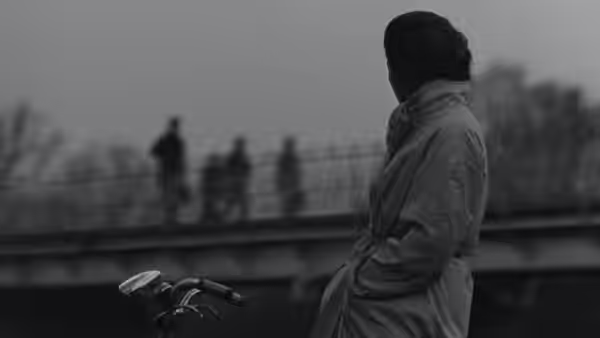
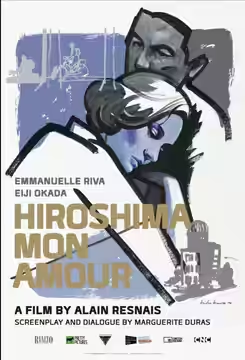
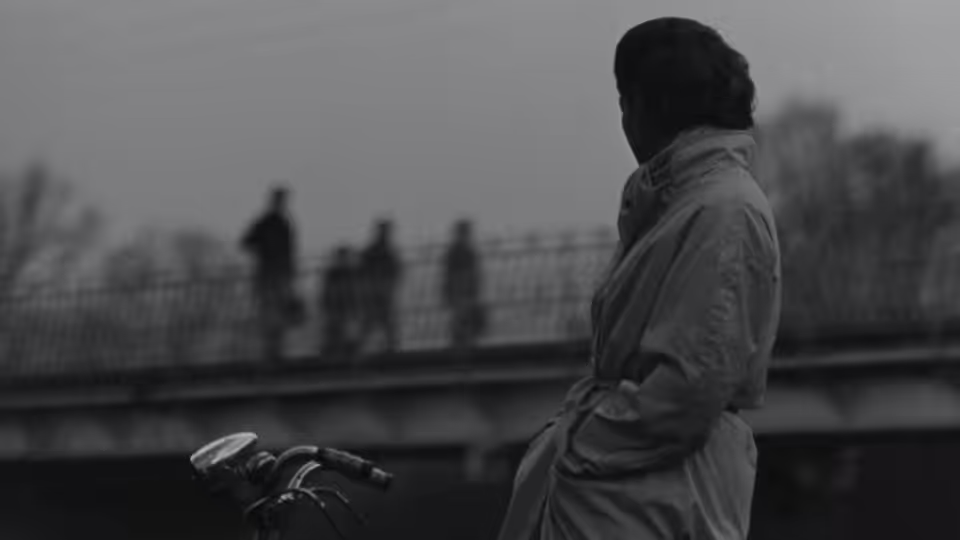
A woman in a coat stands beside a riverside railing, facing distant figures
Film review

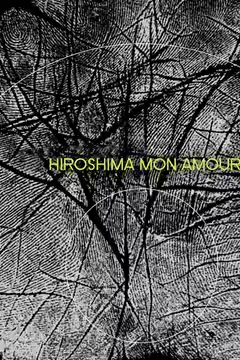
Hiroshima Mon Amour

1959 · Directed by Alain Resnais · 1h 32m

In a sentenceTwo lovers, Hiroshima, and rather more to discuss than the future of their affair

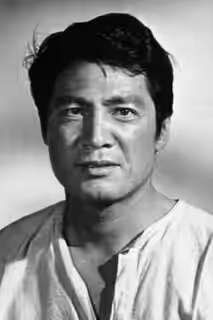
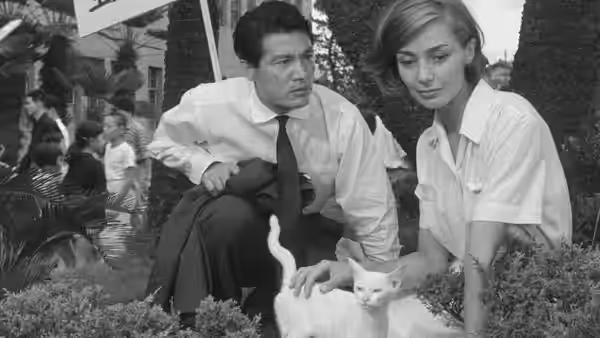
Elle (Emmanuelle Riva) and Lui (Eiji Okada) are lovers whose present is interrupted by recollection. The German Lover (Bernard Fresson) also figures in a story that sets personal experience alongside Hiroshima’s tragedy. Documentary footage shares the screen with the lovers’ exchanges, as images and dialogue move between past and present. Their conversation turns on what can be remembered, what can be understood and what can be conveyed to somebody else. Longing and regret run through their attempts to speak about experiences that another person cannot share.

Plays from YouTube when you press play; nothing loads from them until then.

Fi1m review

Alain Resnais’s demanding romance earns its emotion through Emmanuelle Riva and Eiji Okada, and through editing that lets the past interrupt the present. Some dialogue is overworked; the people speaking it keep us listening.

We recommend Hiroshima Mon Amour, although its solemn dialogue occasionally makes a conversation feel like assigned reading. Alain Resnais takes a love story and keeps interrupting it with memory, documentary images and questions that the lovers cannot settle. Marguerite Duras gives them language that circles back on itself, testing how much can be said about another person’s suffering. That can sound forbidding on paper. On screen, the people speaking matter enough to keep the film from becoming a lecture.

Emmanuelle Riva makes Elle’s need to speak persuasive, including the moments when speech seems to be getting her nowhere. There is effort in the repetition, and the performance gives us a reason to keep listening to it. Eiji Okada’s Lui is an important part of that exchange, giving the words someone to reach. The actors sustain the attraction without making understanding seem easy or inevitable, and their performances keep the questions about memory rooted in a relationship.

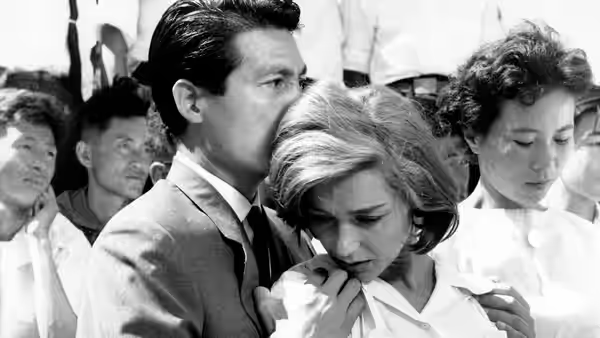
The documentary footage unsettled us because it sits so close to the lovers’ exchanges. A private hurt can absorb someone’s whole attention, and the film makes that uncomfortable in the presence of Hiroshima’s suffering. It risks making catastrophe serve a romance, a risk worth taking seriously rather than waving away because the filmmaking is accomplished. The juxtaposition works for us because it keeps interrupting the pleasure of watching the couple; their longing cannot explain everything being shown.

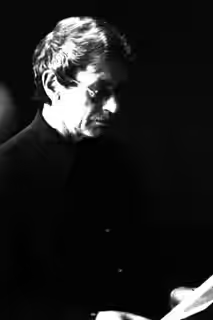
The editing is credited to Jasmine Chasney, Anne Sarraute and Henri Colpi, and it gives recollection an unsettling immediacy. The movement between past and present asks us to make connections before the dialogue has finished explaining them. We have to adjust to its rhythm, but the associations become absorbing once we stop expecting an orderly account of what happened when. Within the romantic drama, this is a demanding approach: the interruptions keep changing how we understand the people speaking. They also prevent the long exchanges from becoming inert.

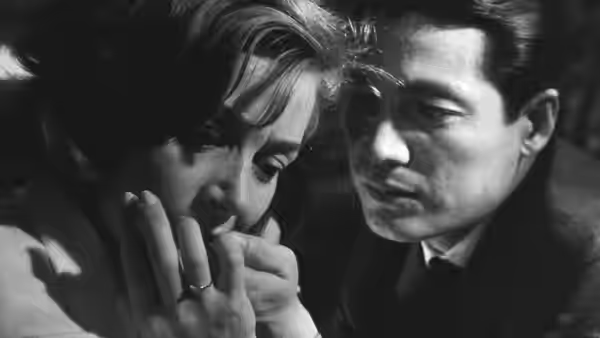
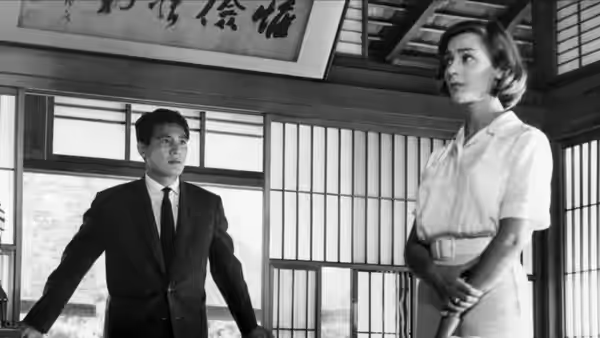
The nighttime riverside scene shows how much cinematographers Sacha Vierny and Michio Takahashi contribute to the intimacy. The darkness gives the encounter a privacy that suits the difficulty of the conversation, without making the city feel irrelevant. We were moved here because the expressive photography allows the lovers’ distress to register without prettifying it. The production design, credited to Petri, Lucilla Mussini, Minoru Esaka and Mayo, is similarly restrained. The settings support the performers without competing for our attention.

Music by Giovanni Fusco and Georges Delerue helps sustain that concentration, leaving the spoken exchanges room to work. The writing is less consistently restrained, and some repetitions establish an emotion only to insist on it again. Marguerite Duras occasionally makes both lovers sound too conscious of the significance of their conversation. Those passages slow the film, and anyone resistant to its deliberate delivery will feel them keenly. The performances make them worth sitting through, though a little less emphasis would have helped.

At 92 minutes, this is a concentrated film that benefits from being watched without interruption. Its difficulty comes from asking us to stay with uncomfortable thoughts while remaining interested in the people having them. It succeeds because the attraction remains palpable through all that talking, remembering and questioning. Give it an evening when neither of you needs the conversation on screen to be easy.

Critical consensus AI synthesised

74
Positive
5
Mixed
1
Negative
1

Most critics respond warmly to Hiroshima Mon Amour, with praise clustering around its treatment of memory and the ways its images, dialogue and editing bring past and present together. The reviews admire the associative cutting, documentary-informed imagery and inventive storytelling, particularly where the lovers’ histories meet the catastrophe of Hiroshima. Several find considerable emotional force in these methods, praising the performances, Marguerite Duras’s dialogue and the expressive cinematography of the nighttime riverside scene.

The spread is wide, though the reservations are concentrated rather than shared across most reviews. Variety offers the clearest dissent: it respects the sombre, tactful direction but finds the film too literary and cerebral, its pace plodding and its love story insufficiently palpable. The central disagreement is over emotional impact: most critics find longing, regret and trauma in the formal experimentation, while Variety finds the lovers remain too symbolic to feel convincing.

Slant Magazine
14 October 2014 · ★★★★/4 · Budd Wilkins
100

The critic praises the film as a formally inventive, emotionally powerful meditation on memory and trauma. They single out the nighttime riverside scene for its expressive cinematography and emotional intensity.

Read the full review →
Los Angeles Times
16 October 2014 · Robert Abele
90*

Abele calls the restored film a must-see and a highlight of Resnais’ work. He praises how its dialogue, documentary footage and performances merge past and present into a haunting experience.

Read the full review →
Empire
6 April 2006 · David Parkinson
75*

Parkinson praises the film as a formally innovative, collaborative work that explores memory and representation. He singles out its associative editing and juxtaposition of the lovers’ past with Hiroshima’s tragedy.

Read the full review →
Total Film
9 January 2016 · Philip Kemp
70*

The review finds Resnais’s debut feature still hypnotic and compelling. It praises the documentary-informed imagery and Marguerite Duras’s dialogue for conveying longing and regret.

Read the full review →
Time Out
· GB
65*

The page identifies this as Time Out’s film review, but the review text is unavailable here. No critical verdict or specific praise or complaint can be established from the accessible material.

Read the full review →
Variety
31 December 1958 · Variety Staff
30*

The critic calls the film a noble attempt but finds it too literary and cerebral, with its love story failing to feel palpable. They single out Resnais’s sombre, tactful direction, while faulting the film for plodding and remaining symbolic.

Read the full review →

Straight answers AI written, from our review

Is Hiroshima Mon Amour worth watching?
Hiroshima Mon Amour is worth watching for its affecting performances and absorbing treatment of memory, and we score it 87. We recommend it for an evening when a demanding romance appeals: the editing lets the past interrupt the present, though the solemn dialogue sometimes repeats what the actors have already made us feel.
How long is Hiroshima Mon Amour, and what is it rated?
Hiroshima Mon Amour runs 1h 32m. It is a drama and history film.
Where can I watch Hiroshima Mon Amour in the UAE?
Hiroshima Mon Amour is streaming on MUBI in the UAE. Availability is checked daily; the links above go straight to each service.
How does Hiroshima Mon Amour compare to Brief Encounter?
Hiroshima Mon Amour is the more formally demanding romance, while we recommend Brief Encounter more readily for its ordinary, frightening account of falling in love. Both give conversations emotional weight, but Hiroshima Mon Amour interrupts its lovers with recollection and documentary footage; it suits those drawn to difficult questions about memory as much as to the affair itself.
What should I watch after Hiroshima Mon Amour?
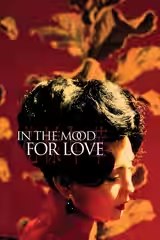
After Hiroshima Mon Amour, try Brief Encounter (1945, Fi1m 90): For another romance whose ordinary conversations carry more than anyone admits. Then In the Mood for Love (2000, Fi1m 91): For lovers whose hesitation matters as much as anything they say; and Phoenix (2014, Fi1m 68): For another love story made painful by the impossibility of forgetting.

Cast

Awards

Academy Awards, 1961

Nominated
Best Writing, Original Screenplay

If you liked this, try…

  1. Brief Encounter (1945, Fi1m 90)For another romance whose ordinary conversations carry more than anyone admits.

  2. Last Year at Marienbad (1961) · not on Fi1m yetFor a more elusive encounter with desire, recollection and uncertain history.

  3. In the Mood for Love (2000, Fi1m 91)For lovers whose hesitation matters as much as anything they say.

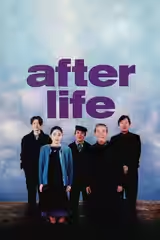
  4. After Life (1998) · not on Fi1m yetFor a gentler, quietly searching film about which memories people keep.

  5. Phoenix (2014, Fi1m 68)For another love story made painful by the impossibility of forgetting.