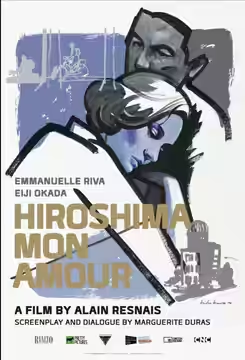
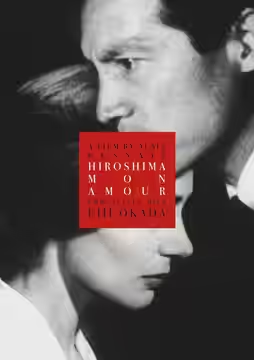
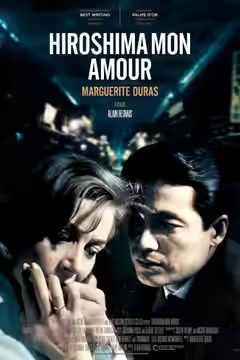
Alain Resnais’s demanding romance earns its emotion through Emmanuelle Riva and Eiji Okada, and through editing that lets the past interrupt the present. Some dialogue is overworked; the people speaking it keep us listening.
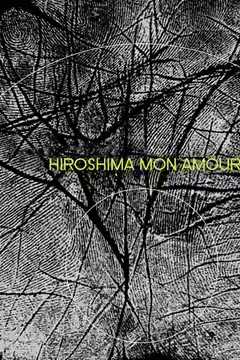
We recommend Hiroshima Mon Amour, although its solemn dialogue occasionally makes a conversation feel like assigned reading. Alain Resnais takes a love story and keeps interrupting it with memory, documentary images and questions that the lovers cannot settle. Marguerite Duras gives them language that circles back on itself, testing how much can be said about another person’s suffering. That can sound forbidding on paper. On screen, the people speaking matter enough to keep the film from becoming a lecture.
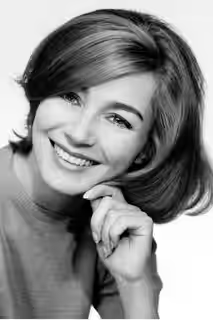
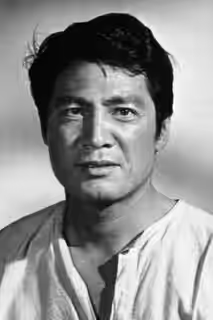
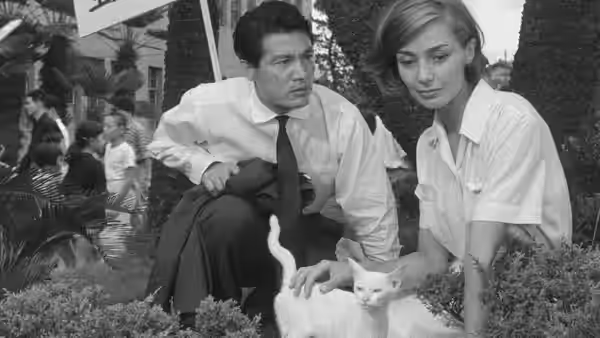
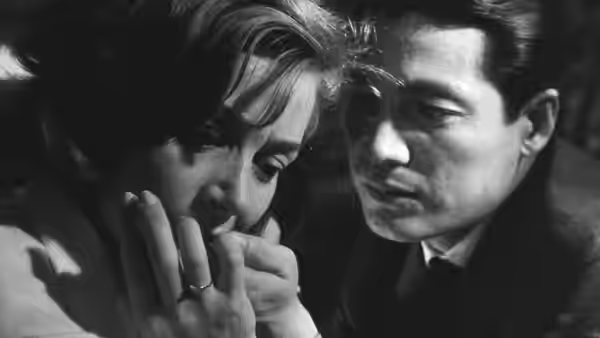
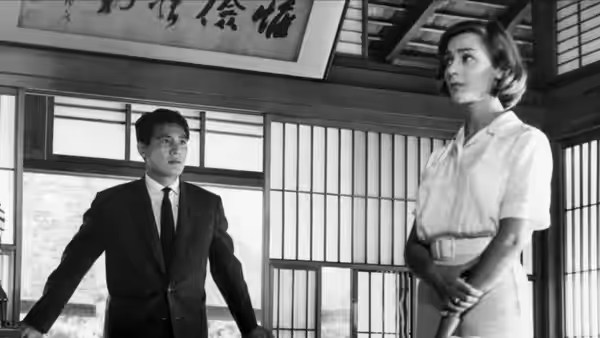
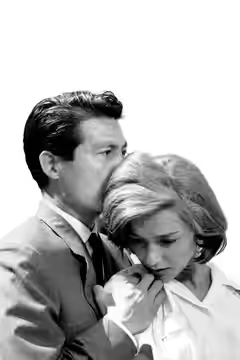
Emmanuelle Riva makes Elle’s need to speak persuasive, including the moments when speech seems to be getting her nowhere. There is effort in the repetition, and the performance gives us a reason to keep listening to it. Eiji Okada’s Lui is an important part of that exchange, giving the words someone to reach. The actors sustain the attraction without making understanding seem easy or inevitable, and their performances keep the questions about memory rooted in a relationship.
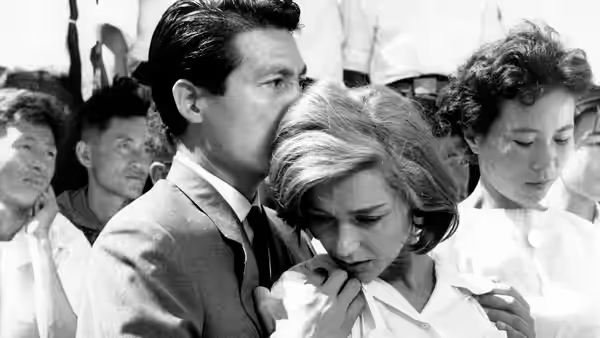
The documentary footage unsettled us because it sits so close to the lovers’ exchanges. A private hurt can absorb someone’s whole attention, and the film makes that uncomfortable in the presence of Hiroshima’s suffering. It risks making catastrophe serve a romance, a risk worth taking seriously rather than waving away because the filmmaking is accomplished. The juxtaposition works for us because it keeps interrupting the pleasure of watching the couple; their longing cannot explain everything being shown.
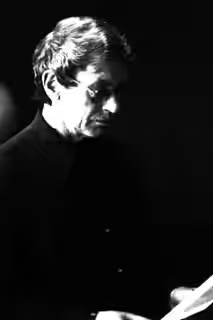
The editing is credited to Jasmine Chasney, Anne Sarraute and Henri Colpi, and it gives recollection an unsettling immediacy. The movement between past and present asks us to make connections before the dialogue has finished explaining them. We have to adjust to its rhythm, but the associations become absorbing once we stop expecting an orderly account of what happened when. Within the romantic drama, this is a demanding approach: the interruptions keep changing how we understand the people speaking. They also prevent the long exchanges from becoming inert.
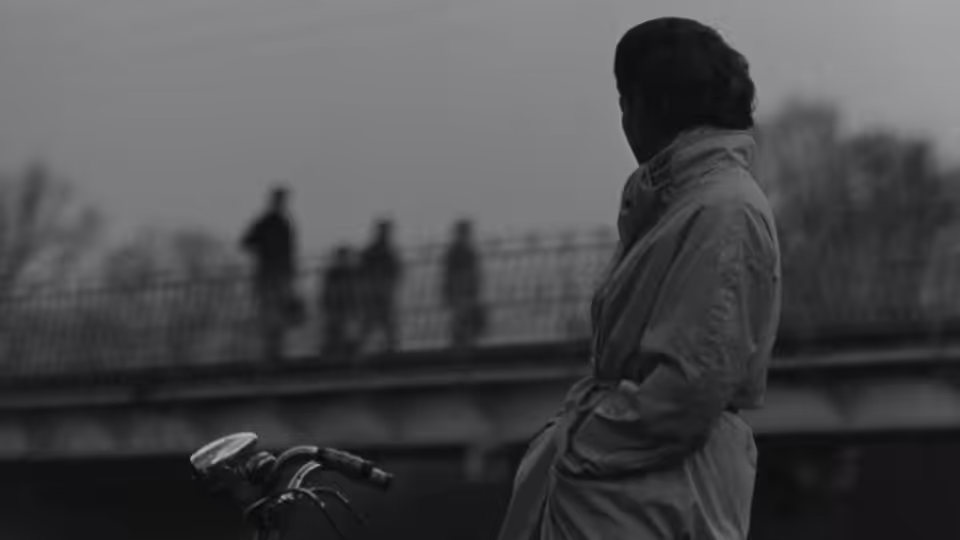
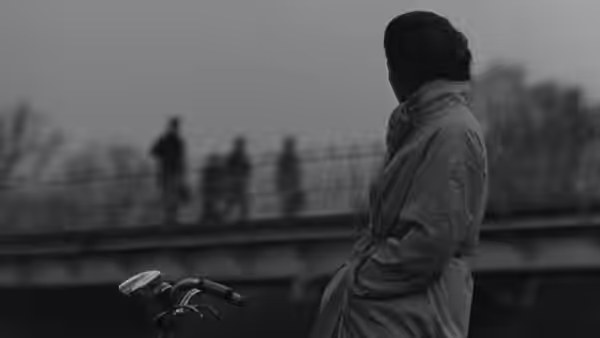
The nighttime riverside scene shows how much cinematographers Sacha Vierny and Michio Takahashi contribute to the intimacy. The darkness gives the encounter a privacy that suits the difficulty of the conversation, without making the city feel irrelevant. We were moved here because the expressive photography allows the lovers’ distress to register without prettifying it. The production design, credited to Petri, Lucilla Mussini, Minoru Esaka and Mayo, is similarly restrained. The settings support the performers without competing for our attention.
Music by Giovanni Fusco and Georges Delerue helps sustain that concentration, leaving the spoken exchanges room to work. The writing is less consistently restrained, and some repetitions establish an emotion only to insist on it again. Marguerite Duras occasionally makes both lovers sound too conscious of the significance of their conversation. Those passages slow the film, and anyone resistant to its deliberate delivery will feel them keenly. The performances make them worth sitting through, though a little less emphasis would have helped.
At 92 minutes, this is a concentrated film that benefits from being watched without interruption. Its difficulty comes from asking us to stay with uncomfortable thoughts while remaining interested in the people having them. It succeeds because the attraction remains palpable through all that talking, remembering and questioning. Give it an evening when neither of you needs the conversation on screen to be easy.