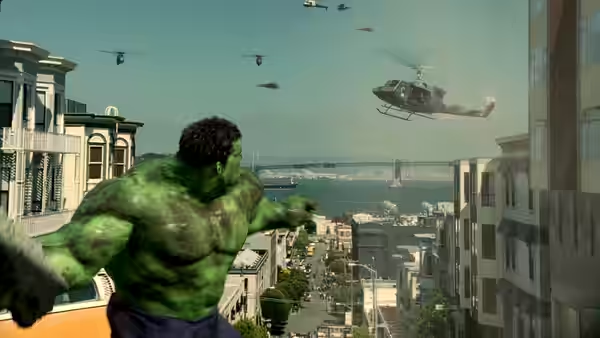
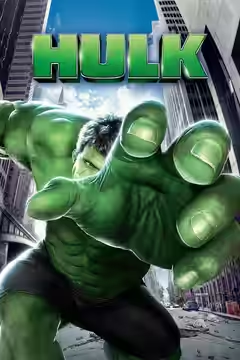
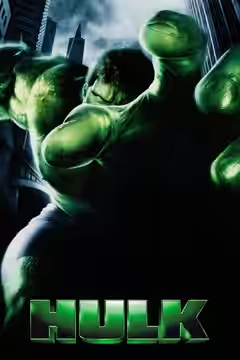
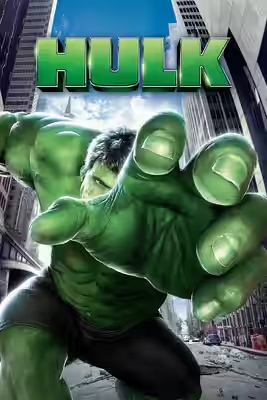
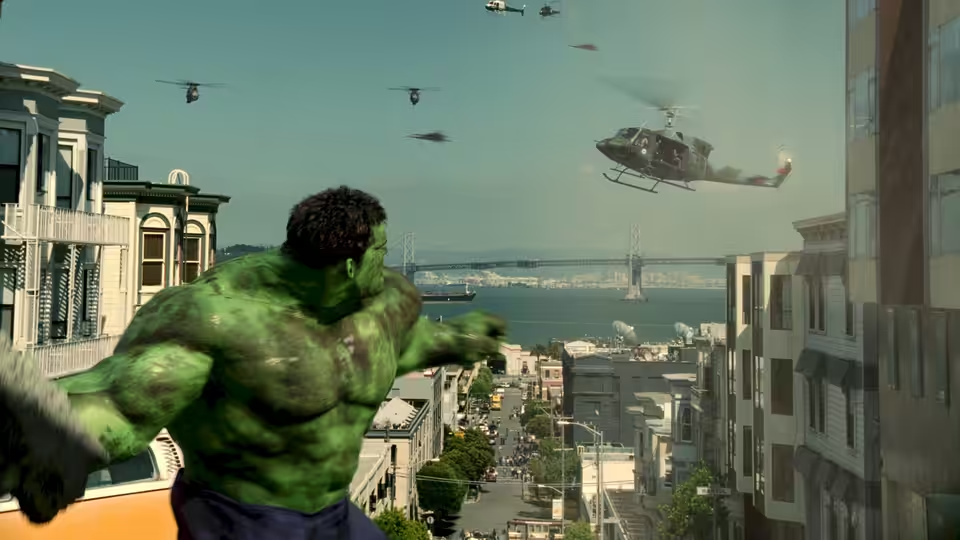
The Hulk hurls a vehicle toward helicopters above a city street
Film review

Hulk

2003 · Directed by Ang Lee · 2h 18m

In a sentenceAng Lee gives a large green man the sort of family problems that require a longer appointment

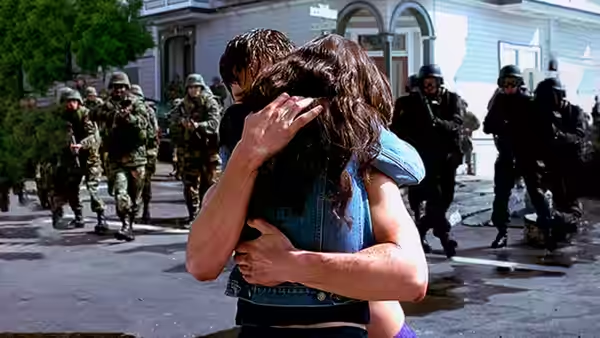
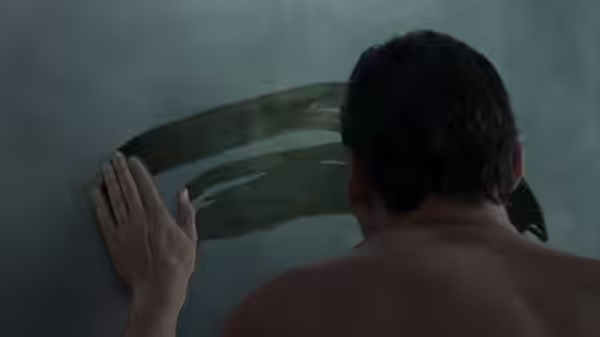
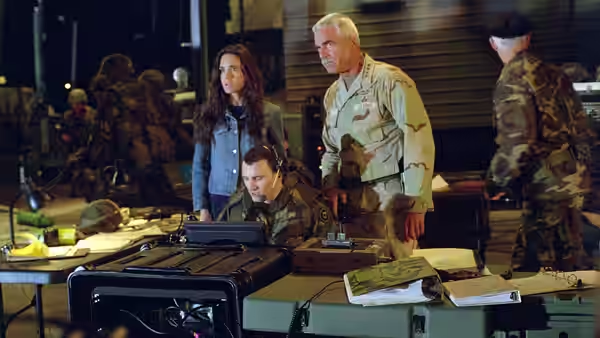
Bruce Banner (Eric Bana) struggles with anger and the effects of childhood trauma. His efforts to keep those feelings contained become a physical problem in the form of the Hulk. Betty Ross (Jennifer Connelly) is caught up in his crisis, while Father (Nick Nolte) brings the story back to the family history behind it. Bruce Banner wants to hold himself together, but understanding his anger means confronting what has shaped him. The threat grows from feelings that can no longer be kept private or safely contained.

Fi1m review

Ang Lee’s Hulk is worth the patience it demands, particularly for Eric Bana and Jennifer Connelly. Its comic-panel editing has more energy than its explanations of childhood trauma, which sometimes stop the drama altogether.

Ang Lee’s Hulk is worth seeing for its performances and its willingness to spend time with an unhappy Bruce Banner. That unhappiness slows an action film almost to a standstill in places, and the result can be absorbing or simply laborious. The director wants the childhood trauma to matter when the Hulk takes over. It does, though the connection would survive considerably less explanation.

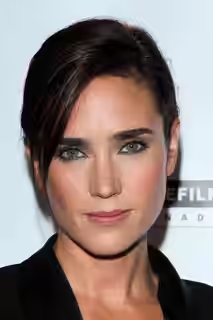
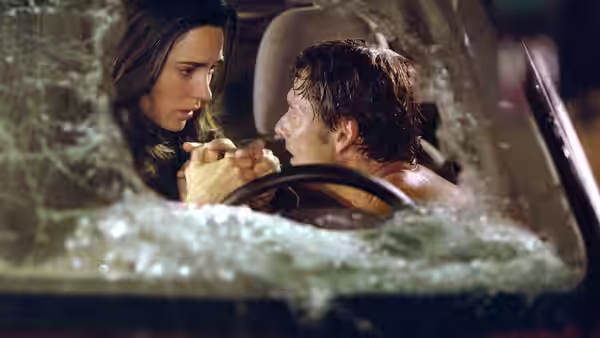
Eric Bana gives Bruce Banner a reserve that can initially look like a shortage of personality, then becomes the performance’s strength. We were moved by the effort of holding the anger back; he makes the restraint look exhausting. Jennifer Connelly’s Betty Ross gives the psychological material an urgency that the screenplay cannot always supply on its own. These performances ask us to pay attention to people whose feelings are difficult to express, and the director is prepared to let that be uncomfortable.

Nick Nolte’s Father is considerably less interested in keeping anything contained. The performance is so unruly that it can pull attention away from Bruce Banner, but its force is welcome among all the careful explanations. Occasionally, the extravagance makes the family history harder to take seriously. Even then, there is pleasure in watching an actor threaten to overwhelm a film that otherwise keeps such tight control of its emotions.

The comic-book approach gives the images a liveliness the conversations sometimes lack. Tim Squyres’s editing divides the screen into panels, making our eye move between pieces of the action rather than simply following one cut after another. The device can make a crowded sequence unusually readable; used repeatedly, it also begins to demand attention for itself. Frederick Elmes’s cinematography gives the desert passages a welcome spaciousness against those busy layouts. We were exhilarated by the Hulk’s movement through that space, which gives his enormous size a freedom the crowded panels cannot.

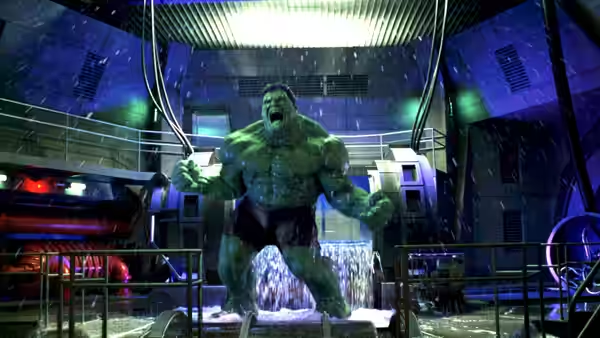
Rick Heinrichs’s production design keeps the surroundings relatively sober, a useful restraint in a film already so busy with its framing. The effects are less consistent: the Hulk can dominate an image while still seeming oddly detached from the man whose distress we have been watching. The music, credited to Danny Elfman and Mychael Danna, presses the sadness too insistently. Some lightness would have helped the quieter scenes, which already have plenty of pain for the actors to work with.

The screenplay by John Turman, James Schamus and Michael France is most persuasive when it lets the family relationships remain uncomfortable without explaining every cause. Too often, the backstory returns to tell us what the performances have already made clear. At 138 minutes, the film has room to explore an unhappy childhood without continually underlining its importance. The action provides some necessary release, but it cannot always recover the pace lost to those explanations.

Superhero films can afford this much unhappiness, and the cast gives it a purpose beyond making the material seem respectable. We would choose Hulk for an evening when the family drama sounds at least as interesting as the destruction. Anyone coming solely for the smashing should allow for considerably more discussion of childhood than the size of the leading man might suggest.
Critical consensus AI synthesised

68
Positive
5
Mixed
5
Negative
1

The reviews lean favourable, but agreement is stronger on Ang Lee’s visual invention than on the film as a whole. Critics repeatedly praise the comic-panel framing, split screens and attempts to give superhero action psychological weight, even when they find the results uneven. Praise for the performances centres on Nick Nolte and Jennifer Connelly, with Eric Bana also drawing approval; the more enthusiastic reviews welcome a substantial drama rather than a conventional superhero adventure.

The divide concerns how well that drama works alongside the action: reservations cluster around heavy backstory, childhood trauma and an ending that strains to deliver. Variety admires the craft but finds the emotion lacking, particularly in the connection between Bruce and the Hulk. Judgements of the digital creature vary sharply too: Empire finds him convincing and central to the entertainment, while Eye for Film finds the CGI conspicuous, contributing to a broad spread of opinion.

Slant Magazine
18 June 2003 · ★★★½/4 · Nick Schager
88

Schager praises the film as a visually distinctive, affecting superhero drama, though its comic-panel style eventually wears thin. He singles out Nick Nolte’s vivid, gleefully unhinged performance as a particular strength.

Read the full review →
The Guardian
14 November 2003 · Rob Mackie
85*

Mackie calls Ang Lee’s film one of the best comic-book adaptations, despite its box-office failure. He praises its memorable desert and San Francisco sequences and the performances, especially Nick Nolte and Jennifer Connelly.

Read the full review →
Empire
1 January 2000 · Simon Braund
80*

Braund calls the film outstanding entertainment, despite an over-ambitious ending and occasional lulls. He especially praises the integrated CGI Hulk, whose larger-than-life presence makes him the star of the show.

Read the full review →
Total Film
18 July 2003 · ★★★★ · Total Film
80

The review finds the film an intriguing, intelligent arthouse blockbuster, though its unusual mix may disappoint viewers expecting a conventional superhero romp. It praises Lee’s visual inventiveness and the cast’s absorbing performances, especially Eric Bana and Jennifer Connelly.

Read the full review →
RogerEbert.com
20 June 2003 · ★★★/4 · Roger Ebert
75

Ebert finds the film uneven but imaginative. He praises Ang Lee’s visual storytelling and comic-book-inspired editing.

Read the full review →
The AV Club
30 June 2003 · Scott Tobias
65*

Tobias finds the film ambitious and substantial, though it never fully reconciles its artistic vision with franchise expectations. He praises Lee’s inventive comic-book visual style, while noting that the action sequences bring life to stretches weighed down by backstory and psychology.

Read the full review →

Straight answers AI written, from our review

Is Hulk worth watching?
Hulk is worth watching if family drama interests you as much as superhero action; we score it 72 out of 100. Eric Bana and Jennifer Connelly make Bruce Banner’s distress matter, while the comic-panel editing gives the action energy. The repeated explanations of childhood trauma slow its 138 minutes considerably.
How long is Hulk, and what is it rated?
Hulk runs 2h 18m. It is a science fiction and adventure film.
Where can I watch Hulk in Greece?
Hulk is streaming on Disney+ in Greece, and it is also available to rent from Apple TV from €3.99. Availability is checked daily; the links above go straight to each service.
How violent or frightening is Hulk, and is it suitable for children?
Hulk has a UK 12A certificate, so children under 12 need an accompanying adult at the cinema, and we would approach it cautiously for younger viewers. Its action and destruction sit alongside sustained distress, anger and childhood trauma. The family drama may be as uncomfortable for children as the spectacle, and the lengthy explanations may test their patience.
How does Hulk compare to The Fly?
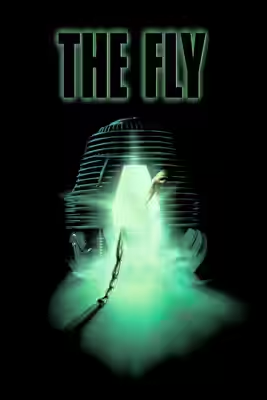
Hulk makes bodily transformation painful through Bruce Banner’s family history, while The Fly centres its horror on a couple we care about. We favour The Fly for the tenderness that makes its horror hurt, though its graphic effects may be too much for some viewers. Hulk suits an appetite for superhero action and family drama, provided we accept the laborious explanations.
What should I watch after Hulk?
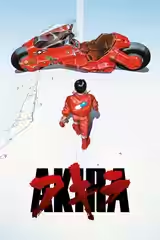
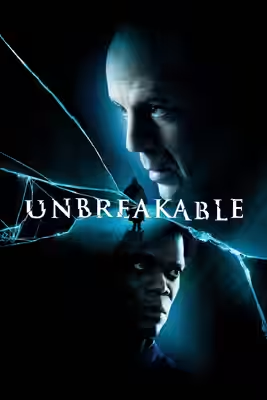
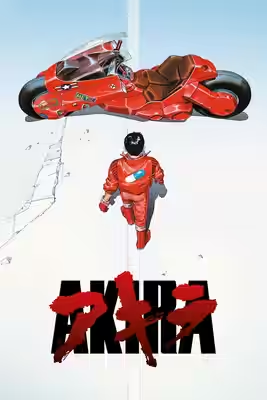
After Hulk, try The Fly (1986, Fi1m 88): Another bodily transformation made painful by the recognisable person trapped inside it. Then Unbreakable (2000, Fi1m 81): For the patient approach to superhuman strength and the awkward life around it; and Akira (1988, Fi1m 83): Suppressed rage and unruly power, with animation that lets the destruction spread.

Cast

If you liked this, try…

  1. The Fly (1986, Fi1m 88)Another bodily transformation made painful by the recognisable person trapped inside it.

  2. Unbreakable (2000, Fi1m 81)For the patient approach to superhuman strength and the awkward life around it.

  3. Akira (1988, Fi1m 83)Suppressed rage and unruly power, with animation that lets the destruction spread.

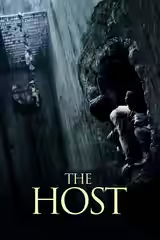
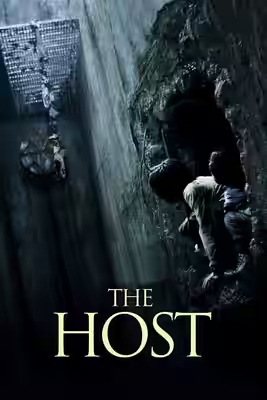
  4. The Host (2006) · not reviewed yetA family takes precedence over monster mechanics, without holding back the creature.

  5. Beauty and the Beast (1946) · not reviewed yetFor tenderness towards a frightening body and feelings that resist polite explanation.

Free account

Know what to watch tonight

Two lists that know where things are streaming, collections you can share, your own score beside ours, and Discover that remembers what you have seen.

  • Want to see, sorted by what is streaming now
  • Seen, with your score out of ten
  • No adverts, ever