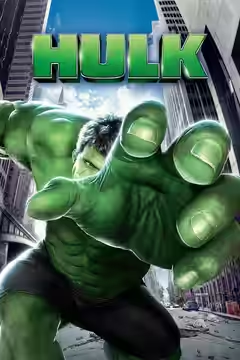
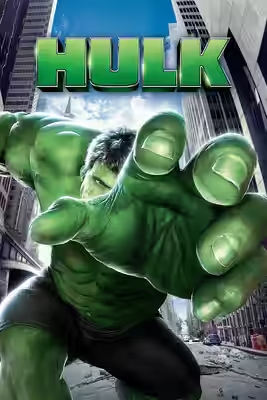
Ang Lee’s Hulk is worth the patience it demands, particularly for Eric Bana and Jennifer Connelly. Its comic-panel editing has more energy than its explanations of childhood trauma, which sometimes stop the drama altogether.
Ang Lee’s Hulk is worth seeing for its performances and its willingness to spend time with an unhappy Bruce Banner. That unhappiness slows an action film almost to a standstill in places, and the result can be absorbing or simply laborious. The director wants the childhood trauma to matter when the Hulk takes over. It does, though the connection would survive considerably less explanation.
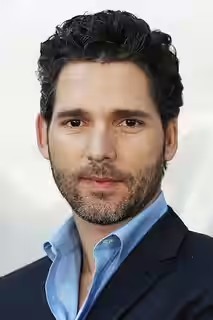
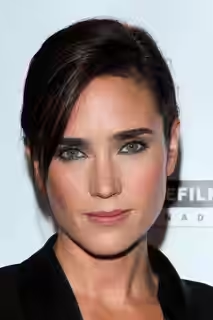
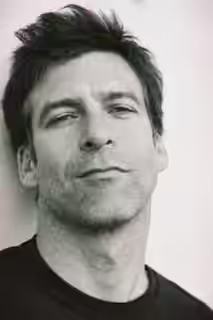
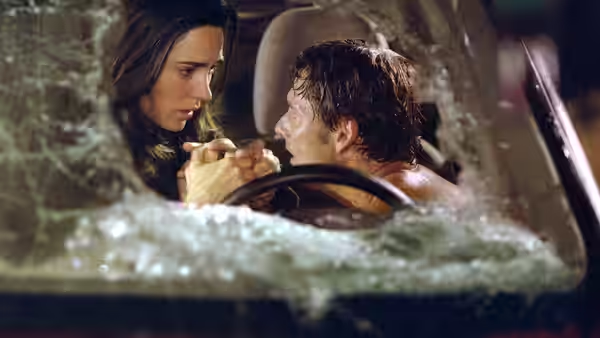
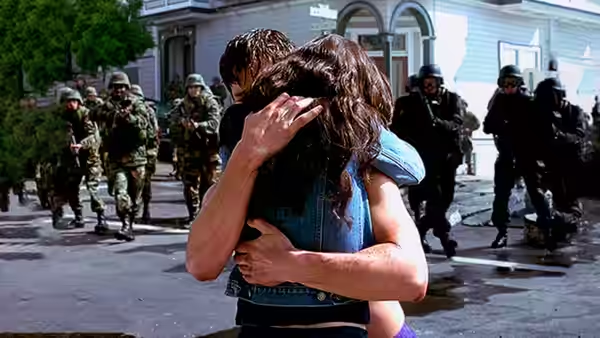
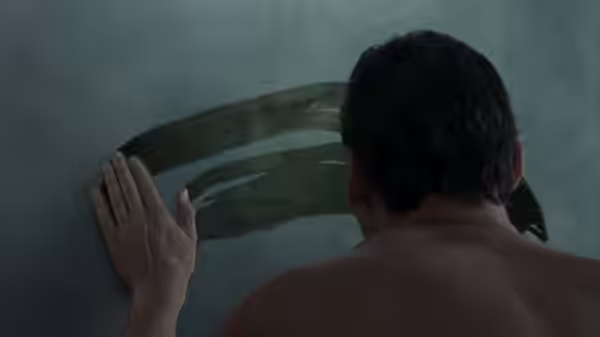
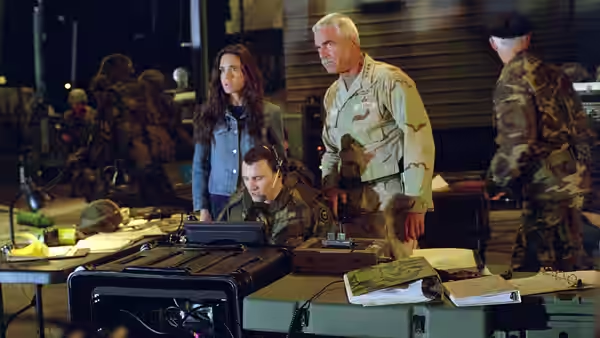
Eric Bana gives Bruce Banner a reserve that can initially look like a shortage of personality, then becomes the performance’s strength. We were moved by the effort of holding the anger back; he makes the restraint look exhausting. Jennifer Connelly’s Betty Ross gives the psychological material an urgency that the screenplay cannot always supply on its own. These performances ask us to pay attention to people whose feelings are difficult to express, and the director is prepared to let that be uncomfortable.
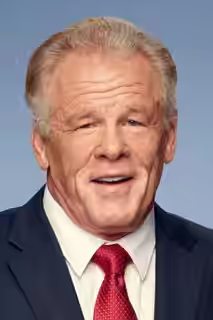
Nick Nolte’s Father is considerably less interested in keeping anything contained. The performance is so unruly that it can pull attention away from Bruce Banner, but its force is welcome among all the careful explanations. Occasionally, the extravagance makes the family history harder to take seriously. Even then, there is pleasure in watching an actor threaten to overwhelm a film that otherwise keeps such tight control of its emotions.
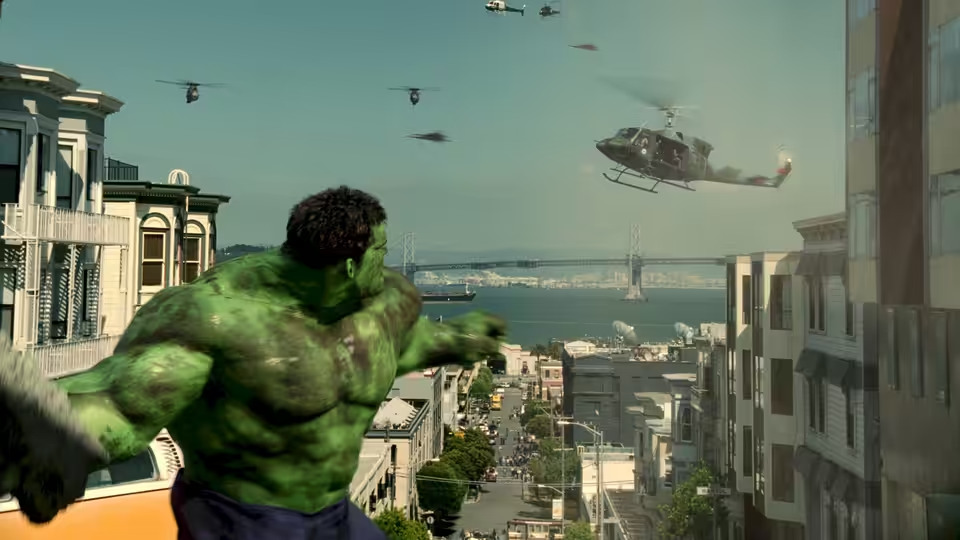
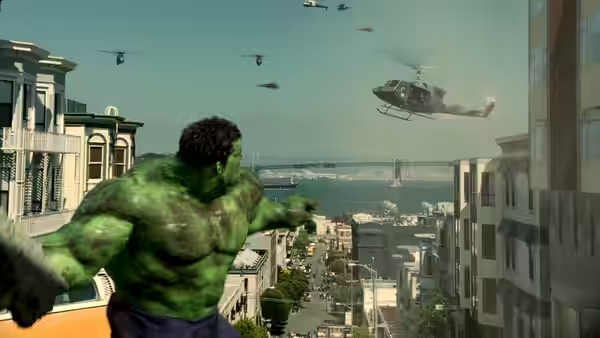
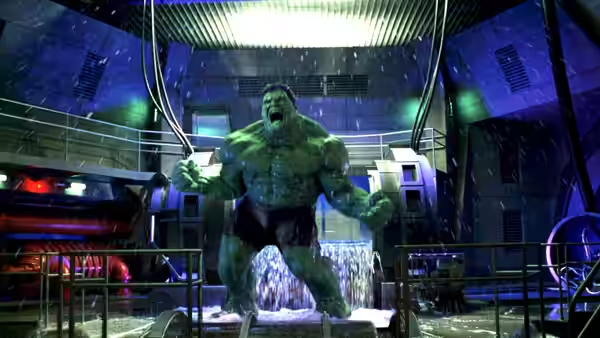
The comic-book approach gives the images a liveliness the conversations sometimes lack. Tim Squyres’s editing divides the screen into panels, making our eye move between pieces of the action rather than simply following one cut after another. The device can make a crowded sequence unusually readable; used repeatedly, it also begins to demand attention for itself. Frederick Elmes’s cinematography gives the desert passages a welcome spaciousness against those busy layouts. We were exhilarated by the Hulk’s movement through that space, which gives his enormous size a freedom the crowded panels cannot.
Rick Heinrichs’s production design keeps the surroundings relatively sober, a useful restraint in a film already so busy with its framing. The effects are less consistent: the Hulk can dominate an image while still seeming oddly detached from the man whose distress we have been watching. The music, credited to Danny Elfman and Mychael Danna, presses the sadness too insistently. Some lightness would have helped the quieter scenes, which already have plenty of pain for the actors to work with.
The screenplay by John Turman, James Schamus and Michael France is most persuasive when it lets the family relationships remain uncomfortable without explaining every cause. Too often, the backstory returns to tell us what the performances have already made clear. At 138 minutes, the film has room to explore an unhappy childhood without continually underlining its importance. The action provides some necessary release, but it cannot always recover the pace lost to those explanations.
Superhero films can afford this much unhappiness, and the cast gives it a purpose beyond making the material seem respectable. We would choose Hulk for an evening when the family drama sounds at least as interesting as the destruction. Anyone coming solely for the smashing should allow for considerably more discussion of childhood than the size of the leading man might suggest.