Walter Salles’s film about the Paiva family, whose father is taken by Brazil’s military in 1971, is calm and exact, with a lead performance from Fernanda Torres that never once asks for sympathy. It is also tidier than life can have been.
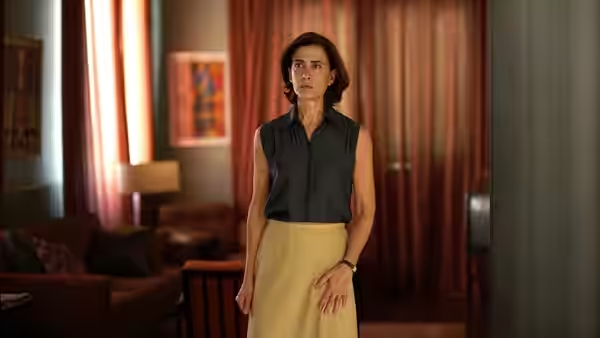
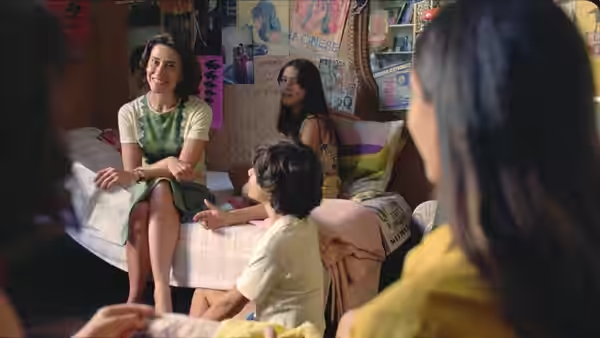
Rio de Janeiro, the end of 1970. The Paivas live in a house across the road from the beach in Leblon, and Walter Salles spends his first half hour there before anything goes wrong. Rubens (Selton Mello), a former congressman who now runs an engineering practice, comes home to a house that is never empty: five children, a dog, a housekeeper called Zezé (Pri Helena), friends who stay for dinner and dance in the sitting room. Eunice (Fernanda Torres) runs it all. The eldest, Veroca (Valentina Herszage), films everything on Super 8 before she leaves for London. Salles knew this family as a teenager, and it shows. He films the house the way you remember a house you loved, not the way you would describe it to a stranger.
Then, one afternoon in January 1971, men in plain clothes arrive and ask Rubens to come and give a statement. He goes, saying he will be back for dinner. Some of the men stay. That is the first act, and everything we will say about what happens, except that the film is taken from a memoir by the son, Marcelo, and that Eunice Paiva is a name that means something in Brazil.
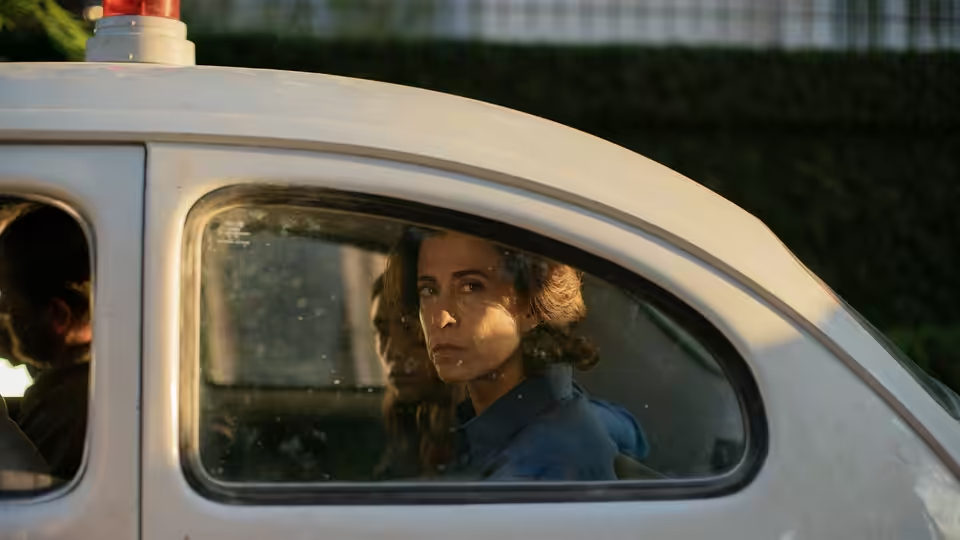
The scene of his taking frightened us more than we expected, and it did so by being polite. Nobody shouts. The men sit in the sitting room as if they had been invited; Eunice is told to carry on as normal and does, laying the table, sending the children upstairs. Adrian Teijido has shot the first half hour with every door and window open, sun across the floorboards and the sea audible in every room. Now the shutters close and the same rooms are dim and full of strangers, and the film has not changed its tone of voice to tell us so.
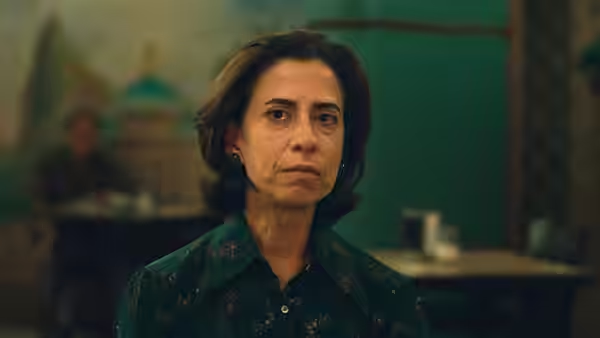
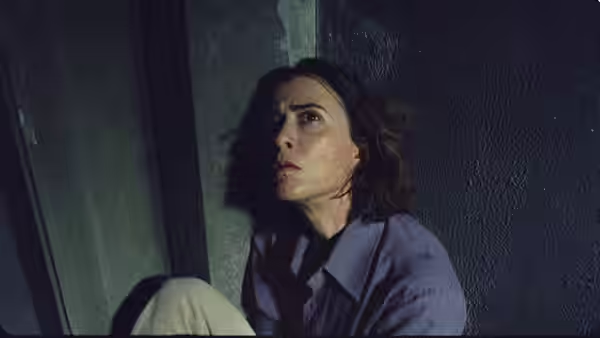
Torres has almost no speeches. Salles and his writers, Murilo Hauser and Heitor Lorega, have decided that Eunice will not be seen to break, and Torres plays a woman making that decision every hour in front of her children. When she is herself taken in for questioning, with her daughter Eliana (Luiza Kosovski), she asks after her husband over and over, and Torres does the work with her jaw and her stillness rather than her eyes. Later a magazine photographer comes to the house and asks the family to look sad for the picture. She tells the children to smile. It moved us more than we thought possible, and the reason is plain: she is not pretending to be fine, she is refusing to hand those men one more thing.
Affonso Gonçalves lets the early scenes run past their natural end, a dinner, a game on the sand, so that we live in the house rather than visit it, then tightens once the men arrive. Warren Ellis’s score is a low held tone, used sparingly; most of the music comes off the family’s record player, Brazilian pop of the period, and that is the right call, because the record player belongs to them and the score does not. Cláudia Kopke dresses Eunice in plain shift dresses and the agents in short-sleeved shirts and slacks, so they look like anyone’s uncle. Veroca’s Super 8 footage keeps coming back, grainy and sun-bleached, and by the fourth time we felt the film leaning on it.
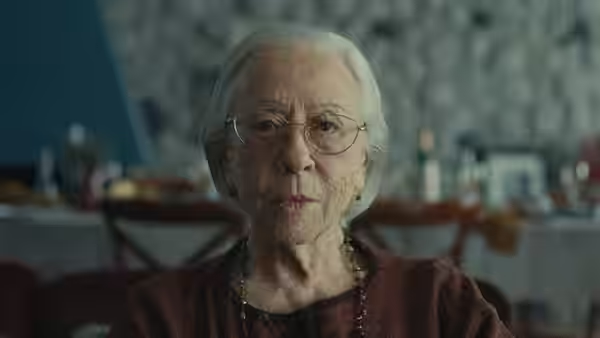
It is a tidy film, and that is our caveat. Rubens is kind, funny and a good dancer, and has no faults the film will admit to; Eunice is right in every scene. The more sceptical reviews call it hagiography, and we half agree. We would have liked one scene where she was unfair from exhaustion, and there is not one. The last stretch jumps forward in time, twice, and the second jump, with Fernanda Montenegro (Torres’s mother, and the lead in Salles’s Central Station) taking over the role, is brief enough to feel like a footnote read aloud. We will not describe it. At 138 minutes the middle years sag a little, too.
See it anyway, and see it for Torres, who makes a case for restraint that most performances of this kind never get near. It is a 15 certificate, and hardly a blow is struck on screen. The rating is for the men in the armchairs, and we think that is fair.