Film review

In the Bedroom

2001 · Directed by Todd Field · 2h 11m · MPA R

In a sentenceA lobster town where everyone keeps their voice down, right up until they don’t

DramaThriller

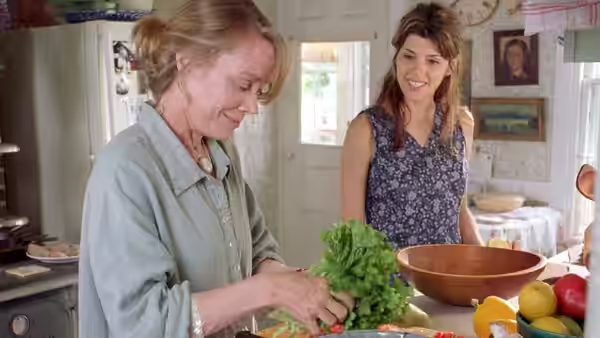
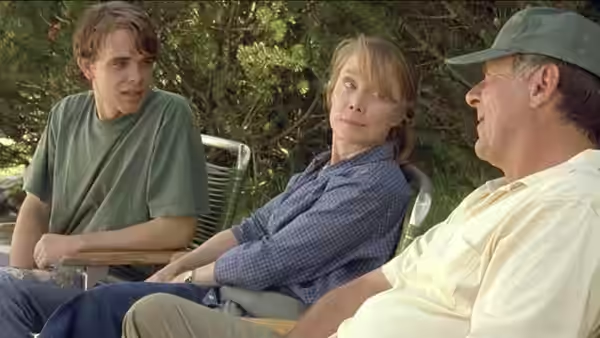
Camden, on the Maine coast, in summer. Frank Fowler (Nick Stahl) is home from college, hauling lobster traps for the season and putting off a decision about graduate school. He has fallen in with Natalie Strout (Marisa Tomei), a few years older, with two small sons and a husband, Richard (William Mapother), from whom she is separated but not yet divorced. Richard’s family owns the fish plant, and Richard does not accept that the marriage is over. Frank’s parents watch from the edges: Matt (Tom Wilkinson), the town doctor, who likes Natalie and rather admires his son’s luck, and Ruth (Sissy Spacek), who runs the school choir and thinks Frank is spending his future on somebody else’s family. Barbecues, a poker night, Richard turning up where he is not wanted. Then the summer ends, abruptly.

Fi1m review

Todd Field’s first film, about a Maine couple whose summer is broken by violence, is patient, exact and acted by Tom Wilkinson and Sissy Spacek with hardly a raised voice. The last half hour turns into a different film, and not quite as good a one.

Todd Field’s first film as director is adapted, with Robert Festinger, from Andre Dubus’s short story Killings, and it tells you what it is about in a scene it then refuses to point at again. Matt Fowler (Tom Wilkinson), a doctor in a lobster town on the Maine coast, is showing one of his son’s girlfriend’s small boys how a trap works. The compartment at the back, he says, is called the bedroom, and if two lobsters end up in there together they will fight. Field puts that early, lets it go, and spends 131 minutes on the fight.

We recommend it, warmly, with one caveat about its last half hour that we will come to. The first act is a summer: Frank (Nick Stahl) hauling traps before he decides about graduate school, Natalie (Marisa Tomei) and her boys at the Fowlers’ barbecue, Ruth (Sissy Spacek) rehearsing her school choir, poker with Willis (William Wise) while Katie (Celia Weston) talks in the next room. Antonio Calvache shoots it in level coastal daylight from a fixed camera, wide enough that people are small in their rooms, and Frank Reynolds cuts slowly, so that by the time anything happens we know the house.

Natalie’s husband Richard (William Mapother), from whom she is separated but not divorced, keeps turning up. His family owns the fish plant, and Mapother plays him as a man who honestly believes he is the injured party, which is more alarming than a villain would be. What happens at the end of the first act we will not describe, though the tagline gives fair warning. Field stages it as an interruption rather than a set piece. Then the film he actually wanted to make begins, and it belongs to Matt and Ruth.

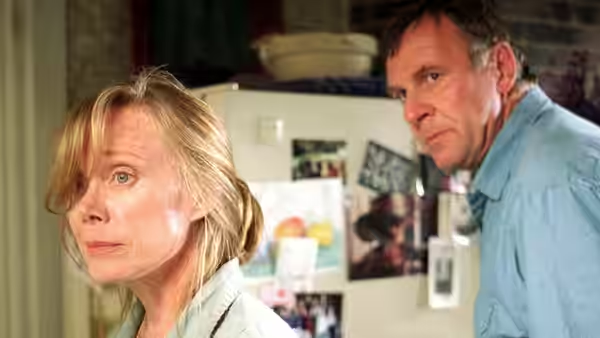
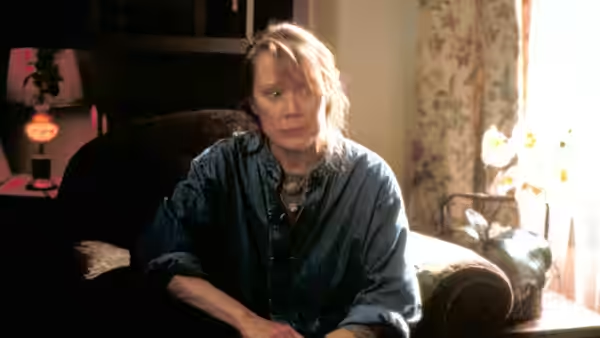
They grieve in different rooms. Ruth sits in front of the television with a cigarette, the volume low. Matt goes back to his patients, does the crossword, keeps the lawn cut, and finds reasons to be out of the house. Melissa Economy dresses Ruth in the beige cardigans of a woman who has decided not to be looked at, and Thomas Newman’s score stays away for such long stretches that when a few piano notes finally arrive they sound like somebody knocking. Wilkinson and Spacek barely raise their voices for the better part of an hour.

The kitchen argument that ends the quiet is the scene we have not been able to shake. Each of them says the thing about the other that has been true all along and that neither would have said while Frank was in the house, and it is over in a few minutes, with a slap and a door. We sat quite still. We did not want to look at the person next to us. Field and Festinger write it with an accuracy about long marriages we did not expect from a first film, and Spacek plays it with her jaw, Wilkinson with his hands.

Then comes the turn. The last half hour moves toward something closer to a thriller, and most critics either forgive it or admire it. We believed every second of the grief and rather less of what the grief leads to. Field films the new material with the same stillness as the old, which is the right instinct, and Wilkinson is as good in it as anywhere, but the plot asks these people to do things the first ninety minutes have taught us they would not, and it leans on chance in a way the earlier film never does. Some critics found the whole thing slow. We did not; the length never troubled us.

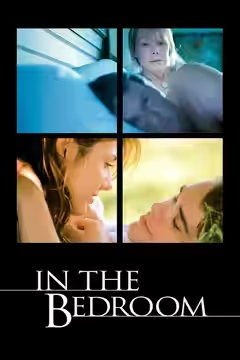
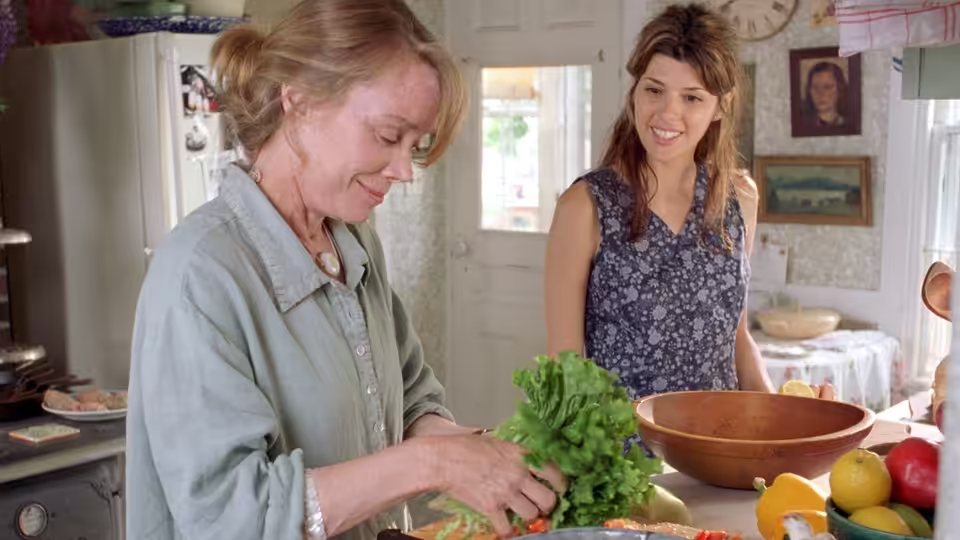
Marisa Tomei deserves more than the tagline gives her. The older woman of the poster is a tired mother of two who likes a kind young man and knows exactly what the town thinks, and Tomei plays her without a trace of temptress. Karen Allen turns up as Marla Keyes and does more with a handful of scenes than the writing asks of her.

Watch it with somebody you have been with for a long time, and do not discuss it until morning. Neither of you will want to.

Critical consensus AI synthesised

82
Positive
15
Mixed
1
Negative
0

The reviews are almost entirely favourable. Most critics call Todd Field’s directing debut unusually assured, praising the patience with which it builds an ordinary New England household before tragedy arrives and its refusal of melodrama once it has. Tom Wilkinson and Sissy Spacek are singled out repeatedly for performances built on repression and choked-back words; Marisa Tomei is mentioned nearly as often. Several critics credit Field’s talent for stillness with making the violence feel as shocking as it would in life.

The reservations, such as they are, gather around the second half’s move into thriller territory. The Guardian finds the shift less plausible and the film slightly short of the sum of its parts, and Eye for Film, the lone mixed voice, finds it slow and too tasteful, with a final turn it does not believe. Otherwise the spread is narrow: even the cooler notices from Roger Ebert and Peter Bradshaw stay firmly positive.

Los Angeles Times
23 November 2001 · Kenneth Turan
90*

Field’s impressive directing debut is an unadorned, unflinching film about fierce passions and grief, told with quiet sureness and exceptional acting that rings true. It rewards confidence in its story and performances that capture the private geography of love, grief, and obsession.

Read the full review →
Slant Magazine
16 October 2001 · Ed Gonzalez
90*

The critic praises Todd Field's assured debut for its subtle, intense handling of grief and resentment without melodrama, highlighting the sophisticated direction and standout performances by Sissy Spacek and Tom Wilkinson. The film is noted for its emotional architecture and shift into thriller territory while maintaining credibility.

Read the full review →
The New York Times
23 November 2001 · NYT Critic’s Pick · Stephen Holden
90*

This profoundly quiet drama about a New England couple coping with their son's murder cuts to the quick with its portrait of grief, rage, and revenge. The director understands that the essence of violence accumulates over time and shows in people's clenched faces and choked-back words.

Read the full review →
Variety
22 January 2001 · festival review
90*

Field marks an accomplished directorial debut with a powerfully dramatic story of a couple's slowly evolving reaction to family tragedy, beautifully acted by a diverse ensemble. The film honors a mature attention span in its evocation of place and unstressed emotions before a shocking murder.

Read the full review →
Empire
· Chris Hewitt
85*

The review calls Field's debut a low-key but emotionally devastating examination of family, grief and vigilante justice that is superbly crafted. Wilkinson, Spacek and Tomei are singled out for magnificent performances alongside Field's sensitive direction.

Read the full review →
Screen Daily
13 February 2001
85*

The critic praises Todd Field's assured directorial debut as a meditative, multilayered drama that chronicles a New England family's response to sudden tragedy with meticulous detail and without sentimentality or melodrama. Strong ensemble performances, especially from Tom Wilkinson and Sissy Spacek, are singled out for their delicacy.

Read the full review →

Cast

Awards

Academy Awards, 2002

Nominated
Best Actor
Nominated
Best Actress
Nominated
Best Picture
Nominated
Best Supporting Actress
Nominated
Best Writing, Adapted Screenplay

Sundance Special Jury Prize for Acting, 2001

Won
Sundance Special Jury Prize for Acting

If you liked this, try…