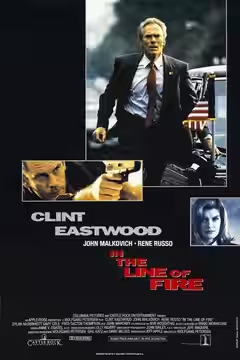
Wolfgang Petersen’s thriller about an ageing Secret Service agent and the assassin who keeps ringing him is tight, handsome and better acted than it needed to be, with John Malkovich giving the villain more wit than the script supplied. The romance is thinner than it should be.
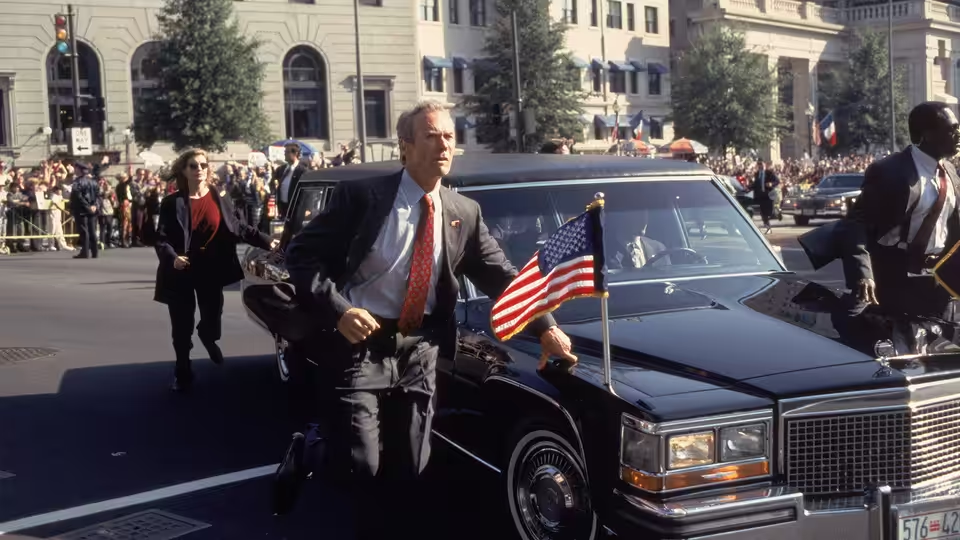
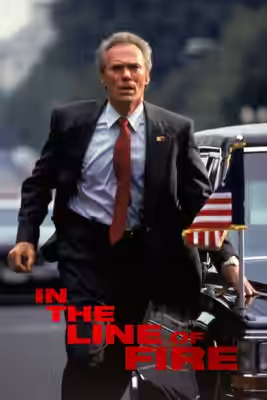
Frank Horrigan is the Secret Service agent who was standing beside the car in Dallas in 1963 and did not move fast enough. Thirty years on he is still in the job, working counterfeit cases in Washington with a young partner, Al D’Andrea. Then a man rings him. He calls himself Booth, he knows all about Dallas, and he intends to kill the President. That is the whole of Jeff Maguire’s idea, and it is a good one: an assassin who does not want to be stopped so much as watched, by the one man who failed last time. In the Line of Fire is a tight, well-made thriller, and we recommend it with a reservation or two about what happens when the phone is put down.
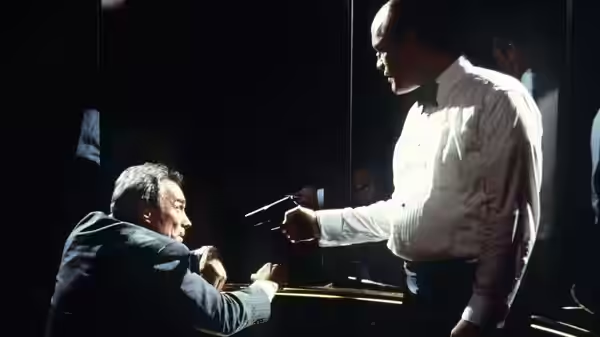
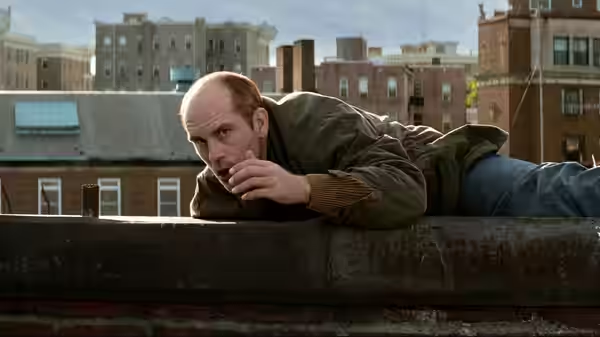
The calls are the film. Wolfgang Petersen stages most of them with Eastwood in a government office full of tape machines and Malkovich somewhere anonymous, a rented room or a payphone, and Anne V. Coates cuts between the two faces at a pace that lets each man finish his thought. Malkovich plays Mitch Leary as someone who has decided feelings are a hobby for other people. He talks softly, he smiles when he is being cruel, and he is at his worst when he is being kind, telling Horrigan that nobody else understands him. We found ourselves leaning towards the screen whenever his voice came through the speaker. It is not a loud performance and it does not need to be.
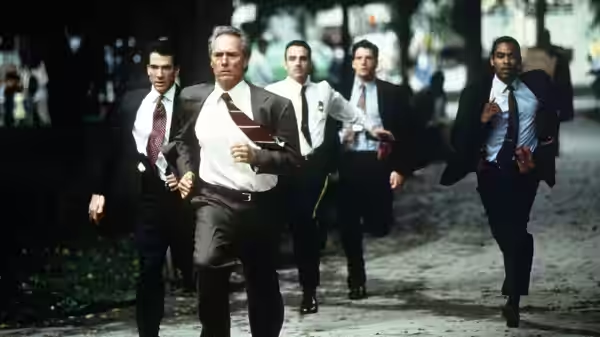
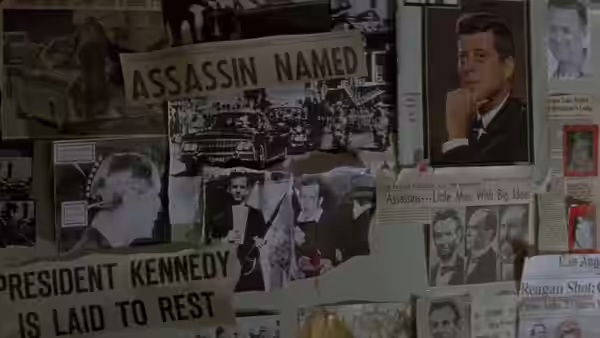
John Bailey shoots Washington in flat daylight rather than the usual sunset over the Capitol, and the crowds he films at rallies and fundraisers are full of ordinary faces, which is the point: Horrigan’s job is to look at a thousand people and find the one. Lilly Kilvert’s production design gives Leary a flat lined with clippings and photographs that is the most frightening room in the film, and her hotel ballrooms and campaign stages have too many doors and too many balconies, which is how a bodyguard sees them. Erica Edell Phillips puts Horrigan in grey suits that have stopped fitting and gives Leary disguises that are plausible rather than theatrical. Ennio Morricone, scoring Eastwood for the first time since the Leone westerns, keeps it low: a piano, some strings, nothing that tells you when to be frightened.
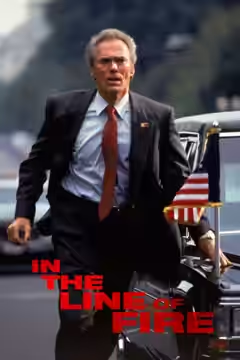
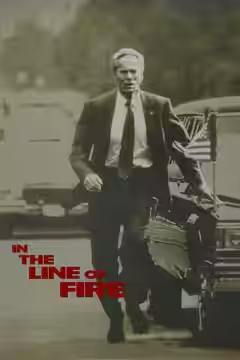
Eastwood plays Horrigan as a man who knows he is too old for the running and has decided to do it anyway. He flirts badly, needles his superiors and is funnier than he has often allowed himself to be. There is a scene, early on, where Horrigan tells Lilly what he saw in Dallas and what he did not do, and his eyes fill. We did not expect it. Eastwood has built a career on a face that gives nothing away, and watching it give something, quietly, in a scene with no action in it, moved us more than any of the chases.
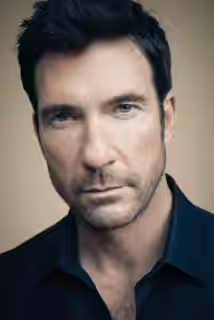
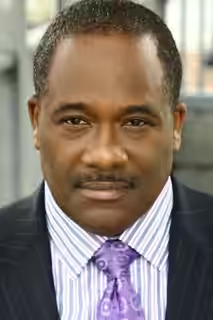
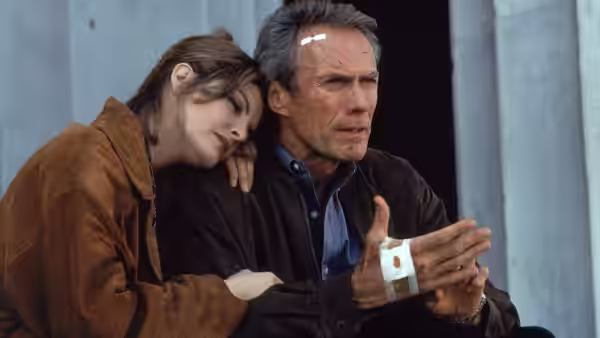
The reservations. Rene Russo is given a capable, dry agent in Lilly Raines and then asked to fall for a man who flirts like a 1950s bartender; she does what she can, and the script does less. The office politics, with Gary Cole’s Bill Watts resenting Horrigan’s presence on the detail and Fred Thompson’s Harry Sargent fretting about the campaign schedule, are stock, and Petersen returns to them more often than they repay. Dylan McDermott’s D’Andrea exists mainly so that something can happen to him. And Leary is a genius in one scene and careless in the next, as these villains tend to be when the plot needs moving.
Petersen made Das Boot, a film about men in a metal tube waiting to find out whether they will die, and he brings the same patience to a crowded ballroom: he is better at the waiting than at the running, and the foot chases here are competent and no more. Set against Eastwood’s own films of the period, this is a studio thriller rather than a personal one, and it does not pretend otherwise. Most critics have liked it about as much as we do, and for the same two reasons.
At 128 minutes it moves, and the last half hour, which we will not describe, pays off the calls without cheating. Watch it for the two men on the phone. The rest is a well-built room for them to talk in.