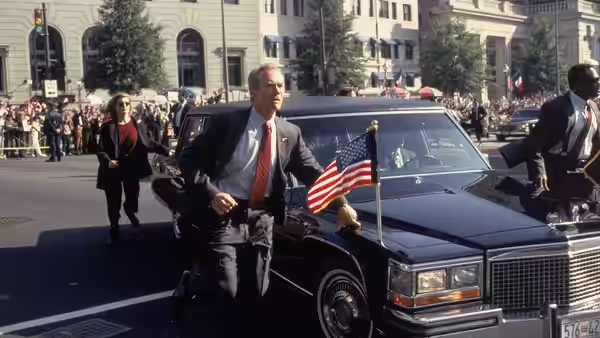
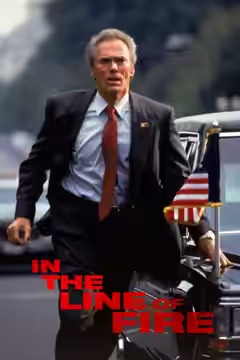
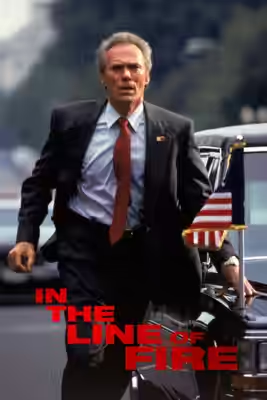
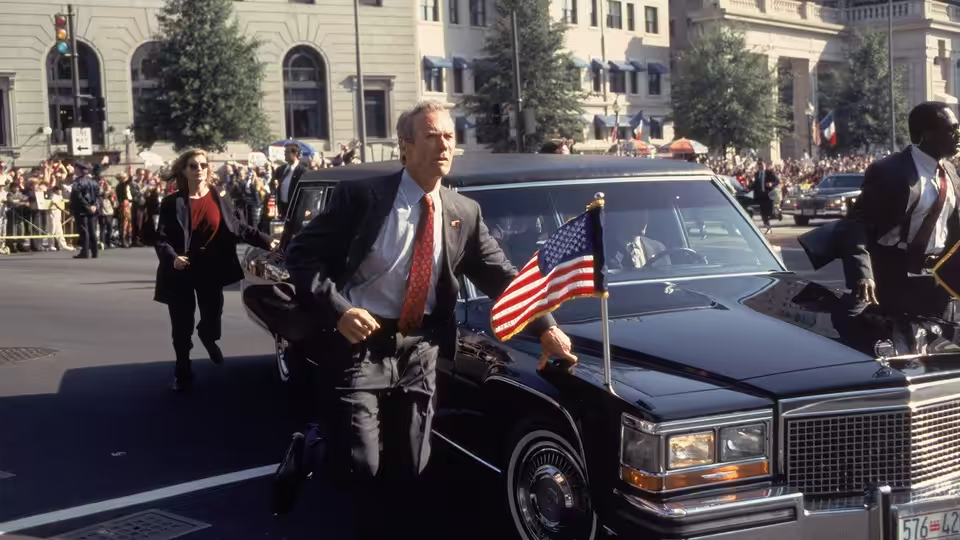
Frank Horrigan (Clint Eastwood) hurries beside a presidential limousine as agents escort it through a crowd
Film review

In the Line of Fire

1993 · Directed by Wolfgang Petersen · 2h 08m

In a sentenceClint Eastwood and John Malkovich talk on the phone for two hours, and nothing with a gun in it is half as tense

Washington, in an election year. Frank Horrigan (Clint Eastwood) is the Secret Service agent who was beside the car in Dallas in 1963 and could not save Kennedy; now he works counterfeiting cases with a younger partner, Al D’Andrea (Dylan McDermott). A man calling himself Booth, Mitch Leary (John Malkovich), rings him, knows all about Dallas, and says he means to kill the President. Horrigan talks his way back onto the protective detail, where he is paired with Lilly Raines (Rene Russo), resented by the detail’s chief, Bill Watts (Gary Cole), and treated as a nuisance by the chief of staff, Harry Sargent (Fred Thompson). Leary keeps ringing.

Fi1m review

Wolfgang Petersen’s thriller about an ageing Secret Service agent and the assassin who keeps ringing him is tight, handsome and better acted than it needed to be, with John Malkovich giving the villain more wit than the script supplied. The romance is thinner than it should be.

Frank Horrigan is the Secret Service agent who was standing beside the car in Dallas in 1963 and did not move fast enough. Thirty years on he is still in the job, working counterfeit cases in Washington with a young partner, Al D’Andrea. Then a man rings him. He calls himself Booth, he knows all about Dallas, and he intends to kill the President. That is the whole of Jeff Maguire’s idea, and it is a good one: an assassin who does not want to be stopped so much as watched, by the one man who failed last time. In the Line of Fire is a tight, well-made thriller, and we recommend it with a reservation or two about what happens when the phone is put down.

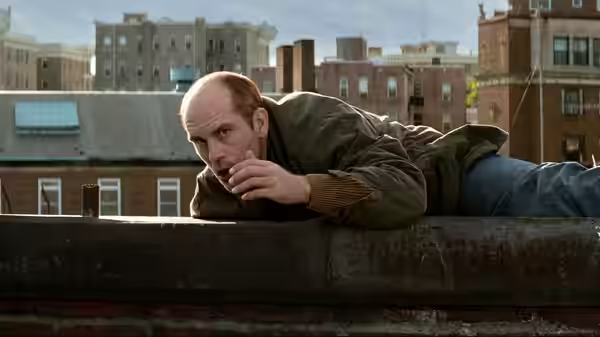
The calls are the film. Wolfgang Petersen stages most of them with Eastwood in a government office full of tape machines and Malkovich somewhere anonymous, a rented room or a payphone, and Anne V. Coates cuts between the two faces at a pace that lets each man finish his thought. Malkovich plays Mitch Leary as someone who has decided feelings are a hobby for other people. He talks softly, he smiles when he is being cruel, and he is at his worst when he is being kind, telling Horrigan that nobody else understands him. We found ourselves leaning towards the screen whenever his voice came through the speaker. It is not a loud performance and it does not need to be.

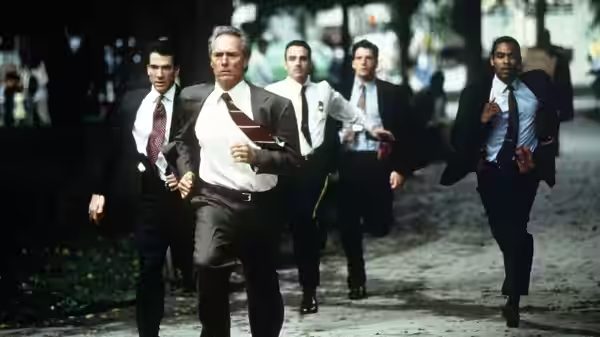
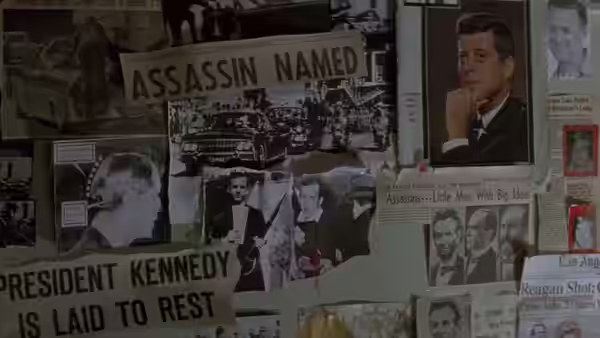
John Bailey shoots Washington in flat daylight rather than the usual sunset over the Capitol, and the crowds he films at rallies and fundraisers are full of ordinary faces, which is the point: Horrigan’s job is to look at a thousand people and find the one. Lilly Kilvert’s production design gives Leary a flat lined with clippings and photographs that is the most frightening room in the film, and her hotel ballrooms and campaign stages have too many doors and too many balconies, which is how a bodyguard sees them. Erica Edell Phillips puts Horrigan in grey suits that have stopped fitting and gives Leary disguises that are plausible rather than theatrical. Ennio Morricone, scoring Eastwood for the first time since the Leone westerns, keeps it low: a piano, some strings, nothing that tells you when to be frightened.

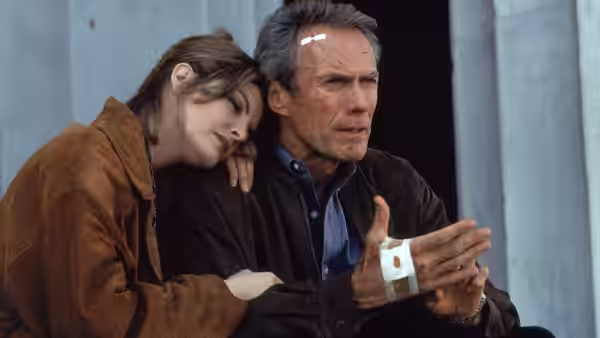
Eastwood plays Horrigan as a man who knows he is too old for the running and has decided to do it anyway. He flirts badly, needles his superiors and is funnier than he has often allowed himself to be. There is a scene, early on, where Horrigan tells Lilly what he saw in Dallas and what he did not do, and his eyes fill. We did not expect it. Eastwood has built a career on a face that gives nothing away, and watching it give something, quietly, in a scene with no action in it, moved us more than any of the chases.

The reservations. Rene Russo is given a capable, dry agent in Lilly Raines and then asked to fall for a man who flirts like a 1950s bartender; she does what she can, and the script does less. The office politics, with Gary Cole’s Bill Watts resenting Horrigan’s presence on the detail and Fred Thompson’s Harry Sargent fretting about the campaign schedule, are stock, and Petersen returns to them more often than they repay. Dylan McDermott’s D’Andrea exists mainly so that something can happen to him. And Leary is a genius in one scene and careless in the next, as these villains tend to be when the plot needs moving.

Petersen made Das Boot, a film about men in a metal tube waiting to find out whether they will die, and he brings the same patience to a crowded ballroom: he is better at the waiting than at the running, and the foot chases here are competent and no more. Set against Eastwood’s own films of the period, this is a studio thriller rather than a personal one, and it does not pretend otherwise. Most critics have liked it about as much as we do, and for the same two reasons.

At 128 minutes it moves, and the last half hour, which we will not describe, pays off the calls without cheating. Watch it for the two men on the phone. The rest is a well-built room for them to talk in.

Critical consensus AI synthesised

74
Positive
6
Mixed
2
Negative
0

Most critics like In the Line of Fire, and the praise clusters almost entirely around its two leads. Nearly every review names the pairing of Clint Eastwood and John Malkovich as the reason to watch, and Malkovich’s would-be assassin is singled out again and again as frightening, taunting and the real engine of the film. Eastwood’s own performance draws notice for its humour and vulnerability, and Petersen’s direction is called assured where it is mentioned at all.

The spread is narrow: no review is negative, and the mixed verdicts are mild rather than cross. Variety finds the film proficient but less textured than the ones Eastwood directs himself, and Time Out thinks the thriller mechanics familiar even when the killer’s scenes are not. The Los Angeles Times calls the romantic subplot the weakest writing in the film. Nobody dissents on the central duel; the reservations are about what surrounds it.

Empire
1 January 2000 · Barry McIlheney
80*

The critic calls it a superior, near-perfect video rental and a standout among major theatrical releases. They particularly praise the compelling Eastwood–Malkovich pairing, singling out Malkovich’s frightening performance.

Read the full review →
Radio Times
★★★★ · Tom Hutchinson
80

Hutchinson calls the film hugely enjoyable and better than two comparable blockbusters. He singles out Eastwood’s tearful performance and the compelling obsession between his character and Malkovich’s would-be assassin.

Read the full review →
Los Angeles Times
9 July 1993 · Kenneth Turan
78*

Turan finds the film crisply entertaining and praises its well-matched duel between Eastwood and Malkovich. He singles out Malkovich’s villainous performance and Petersen’s assured direction, while calling the romantic subplot the least well-written part.

Read the full review →
RogerEbert.com
9 July 1993 · ★★★/4 · Roger Ebert
75

Ebert gives the film a positive verdict, finding it an effective thriller. He singles out the performances of Clint Eastwood and John Malkovich as a strength.

Read the full review →
Variety
6 July 1993 · Todd McCarthy
70*

McCarthy calls it a proficient, solidly commercial thriller, though he finds it less textured than Clint Eastwood’s own films. He praises Eastwood’s humor and vulnerability, as well as John Malkovich’s compelling villain.

Read the full review →
Time Out
· Jeff Maguire
65*

The critic finds the thriller slick and enjoyable, though familiar. They praise its fiendishly brilliant killer’s taunting confrontations with the cop.

Read the full review →

Straight answers AI written, from our review

Is In the Line of Fire worth watching?
In the Line of Fire is worth watching for anyone who likes a thriller built on talk rather than gunfire, and we scored it 78. The telephone scenes between Clint Eastwood and John Malkovich are the film, and Malkovich gives the villain more wit than the script supplied. The romance with Rene Russo is thin and the office politics are stock.
How long is In the Line of Fire, and what is it rated?
In the Line of Fire runs 2h 08m. It is an action and drama film.
Where can I watch In the Line of Fire in Saudi Arabia?
In the Line of Fire is not on any streaming or rental service in Saudi Arabia at the moment. It is available in 20 other countries; change your country at the top of the page to see where. Availability is checked daily.
How violent or frightening is In the Line of Fire, and is it suitable for children?
In the Line of Fire is a 15 in the UK and an R in the US, and it is not for children. The violence is that of a studio thriller, chases and shootings rather than anything lingering, and the frightening parts are quiet: Malkovich talking softly down a phone line and a flat lined with clippings. Teenagers used to adult thrillers will manage it.
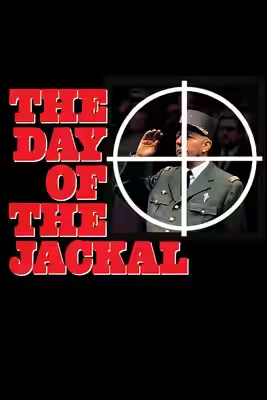
How does In the Line of Fire compare to The Day of the Jackal?
In the Line of Fire is the warmer and more conventional film; The Day of the Jackal is the colder and more patient one. Zinnemann follows his assassin through the work in procedural detail with no phone calls and no mercy, while Petersen builds his film on the conversations between hunter and hunted. The earlier film is the purer thriller; this one has the better pair of performances.
What should I watch after In the Line of Fire?
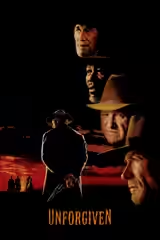
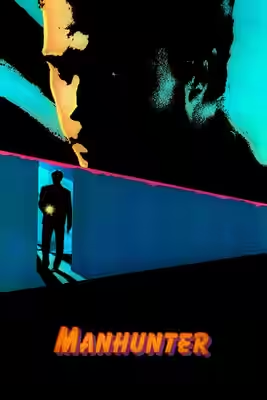
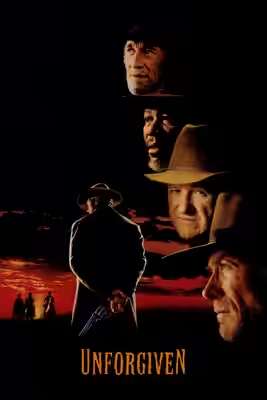
After In the Line of Fire, try The Day of the Jackal (1973, Fi1m 84): The assassin procedural done cold and slow, with no phone calls and no mercy. Then Manhunter (1986, Fi1m 84): Another hunter who understands the killer too well, shot in neon and dread; and Unforgiven (1992, Fi1m 92): Eastwood playing age and guilt properly, in the film this one keeps glancing at.

Cast

Awards

Academy Awards, 1994

Nominated
Best Film Editing
Nominated
Best Supporting Actor
Nominated
Best Writing, Original Screenplay

If you liked this, try…

  1. The Day of the Jackal (1973, Fi1m 84)The assassin procedural done cold and slow, with no phone calls and no mercy.

  2. Manhunter (1986, Fi1m 84)Another hunter who understands the killer too well, shot in neon and dread.

  3. Unforgiven (1992, Fi1m 92)Eastwood playing age and guilt properly, in the film this one keeps glancing at.

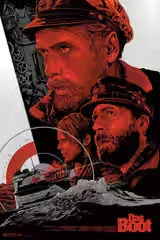
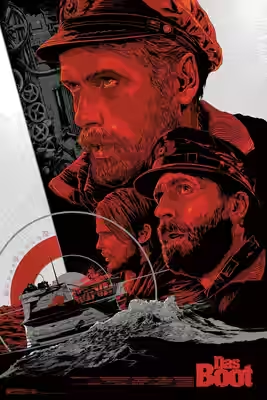
  4. Das Boot (1981, Fi1m 89)Petersen’s long wait in a submarine; the same patience, much higher stakes.

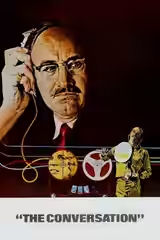
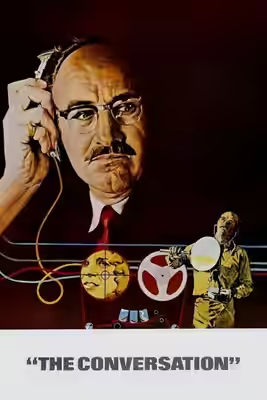
  5. The Conversation (1974, Fi1m 92)A man with headphones, a tape and a conscience, which is the other half of this film.

Free account

Know what to watch tonight

Two lists that know where things are streaming, collections you can share, your own score beside ours, and Discover that remembers what you have seen.

  • Want to see, sorted by what is streaming now
  • Seen, with your score out of ten
  • No adverts, ever