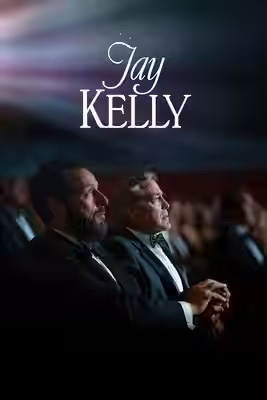
Noah Baumbach has made a warm, handsome comedy about a film star who notices, late, what his fame has cost him. Adam Sandler is quietly wonderful and the memory sequences are the best idea in it; the film likes Jay Kelly rather more than it should.
Noah Baumbach, writing with Emily Mortimer, has made a film about a famous actor and cast George Clooney to play him, which saves the script a good deal of explaining. Jay Kelly is loved by strangers and only half known by his family, and in its 132 minutes he starts to notice the difference. The result is warm, handsome and often funny. It is also softer on its subject than it should be, and that softness is what separates a good Baumbach film from this one.
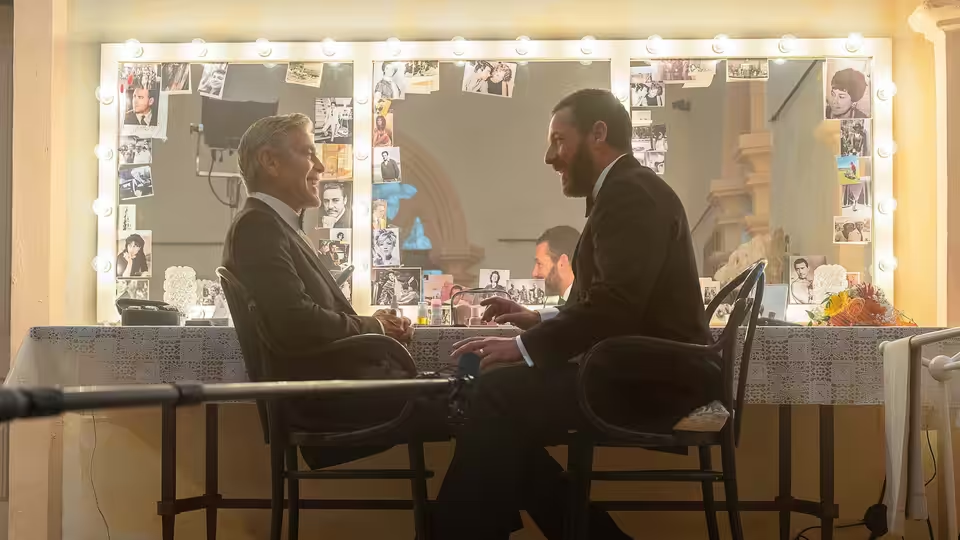
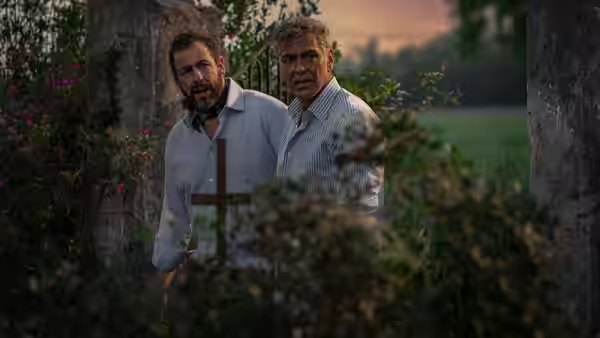
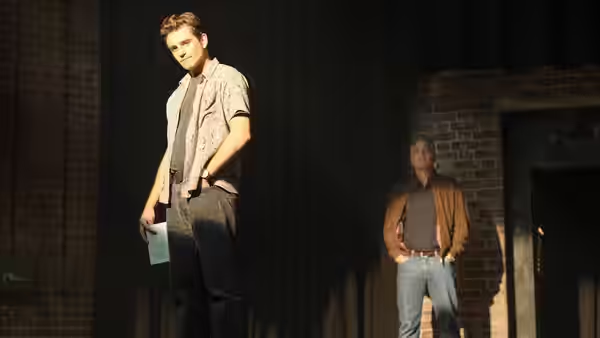
The set-up is quick. Jay finishes a shoot, runs into Timothy (Billy Crudup), an old acquaintance with a grievance, and comes away rattled. His younger daughter Daisy (Grace Edwards) is off to Europe; a tribute is waiting for him in Tuscany; so he follows her, with his manager Ron (Adam Sandler) and the rest of his people packed onto the same train. As the countryside goes by, he remembers. Baumbach stages the memories as small films in their own right, lit and scored and cut like the real thing, and the idea is the best one the film has: a man whose past comes back to him with a crew attached.
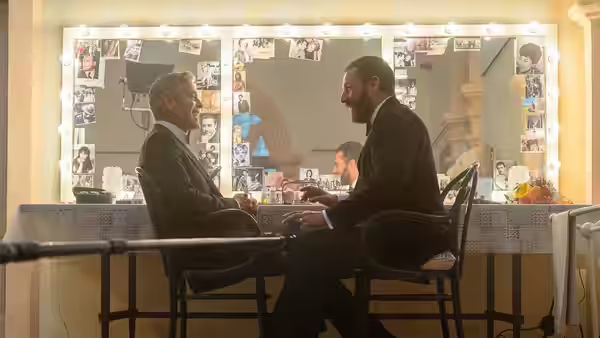
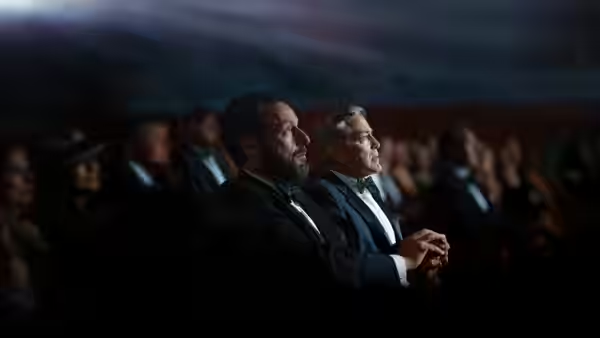
Sandler is the reason to go. Ron is the man who books the rooms, carries the bags and remembers which daughter is which, and Sandler plays him stooped, soft-voiced and always half a pace behind. He does something particular during Jay’s speeches: he listens to stories he has clearly heard before and finds a fresh place to nod. It moved us more than we expected, and more than anything Jay says about himself, which is the film’s problem in a sentence. Sandler barely raises his voice for two hours and we watched him more closely than anyone else on screen.
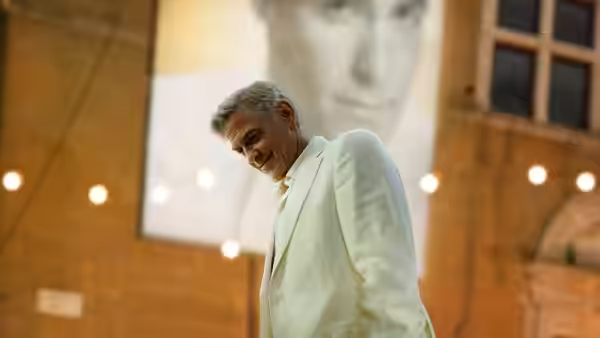
Clooney does the thing he does, the dipped head, the slow grin, the voice that has never had to apologise, and Baumbach wants us to watch it curdle. In places it does. But every time a scene threatens to leave Jay exposed, someone in the frame smiles at him and the script lets him off. The reviews so far are mostly kinder than we are and a couple are much crueller, and we think both camps are responding to the same thing: the film cannot quite bring itself to dislike its own star.
Linus Sandgren shoots Europe in late, honey-coloured light, train windows full of hills, hotel rooms with the curtains half drawn, and it is pretty in a way that costs nothing. Nothing here looks as if it has ever been paid for. Mark Tildesley’s interiors are expensive and unlived-in wherever the train stops, which is right for a man who lives in hotels. Jacqueline Durran dresses Clooney in soft knits and linen that look as if the hotel supplied them. Nicholas Britell’s score swells for the memories, where it belongs, and swells again for the present-day scenes, where it is telling us to feel what Clooney has not yet earned.
Valerio Bonelli and Rachel Durance cut the memory sequences with real snap. The train they let sit, and it sits for a good forty minutes in the middle, while side plots involving Patrick Wilson, Eve Hewson and Alba Rohrwacher come and go without leaving much behind; by the second stop we were looking at the scenery. Laura Dern’s Liz gets a couple of sharp exchanges with Clooney and then rather vanishes. Riley Keough, as the older daughter Jessica, has the film’s hardest job, being angry with a charming man, and does it without shouting. Stacy Keach plays Jay’s father with a stillness the rest of the picture could have used. Jim Broadbent and Greta Gerwig pass through.
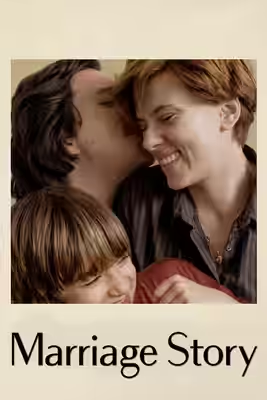
Baumbach’s best films, The Squid and the Whale (2005) and Marriage Story (2019), let their people be unforgivable for a while before anyone is allowed to forgive them. Here nobody stays in the wrong for longer than a scene. The jokes about the business are good and the observations about fatherhood are true, and they are delivered in a light so flattering that neither quite lands.
See it for Sandler, for the memories, and for the pleasure of watching Clooney work; there is real pleasure in that, even when the film is congratulating him. It runs 132 minutes and carries a 15, and the last ten of them are the best, so stay in your seat.