Film review

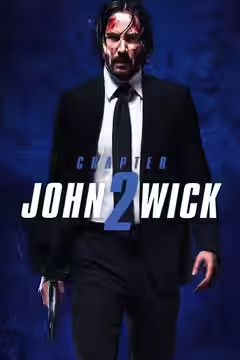
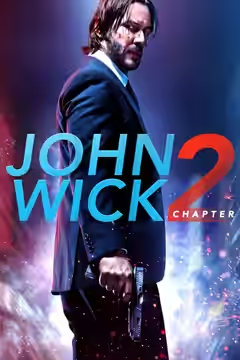
John Wick: Chapter 2

2017 · Directed by Chad Stahelski · 2h 02m · MPA R

In a sentenceKeanu Reeves is measured for a suit, shoots a hundred men in the head, and the suit comes out of it better than they do

ActionThrillerCrime

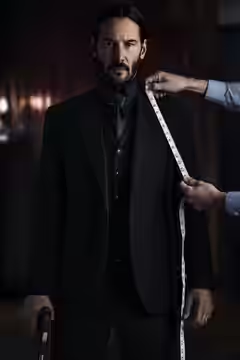
New York, shortly after the first film. John Wick (Keanu Reeves) takes back his stolen Mustang from Abram Tarasov (Peter Stormare), brother of the man he killed for it, and goes home to cement his guns under the cellar floor. Santino D’Antonio (Riccardo Scamarcio) arrives holding a marker, the blood oath John swore years ago for the help that let him retire. Santino wants his sister Gianna (Claudia Gerini) dead so he can take her seat at the High Table. John refuses; Santino burns his house down. Winston Scott (Ian McShane), who runs the Continental hotel where assassins may not kill, tells him the rules leave no choice. John flies to Rome, is fitted for a bulletproof suit, and walks into Gianna’s coronation party in the catacombs.

Plays from YouTube when you press play; nothing loads from them until then.

Fi1m review

Chad Stahelski’s sequel stages its gunfights with more clarity and care than almost anything in the genre, and it knows it. The plot is a chain of errands and the killing blurs after ninety minutes, but the craft is real and the fun is honest.

Chad Stahelski’s 2014 original was a small, sad revenge film with the cleanest gunfights anyone had staged in years. The sequel keeps the gunfights and lets go of the small and the sad. John Wick: Chapter 2 is a 122-minute tour of a criminal world with its own hotels, currency, tailors and rulebook, and Derek Kolstad, who wrote both films, is far more taken with the rulebook this time than with the man. We enjoyed it a great deal and cared about almost none of it.

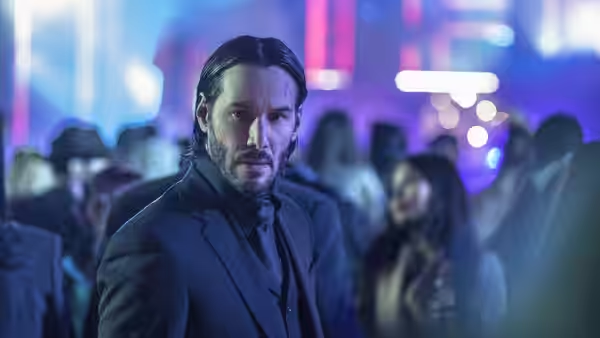
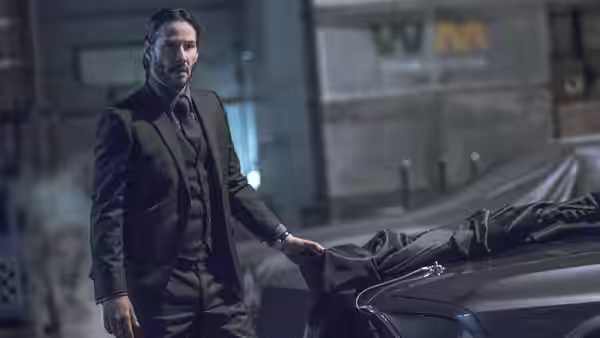
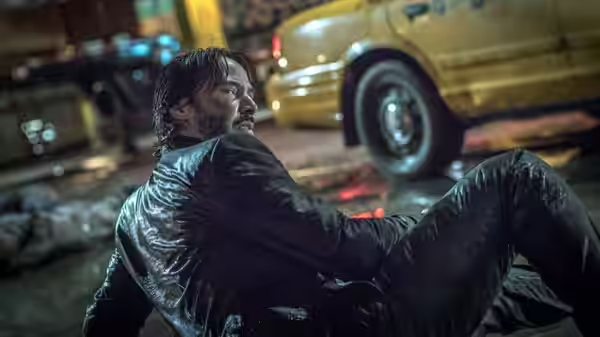
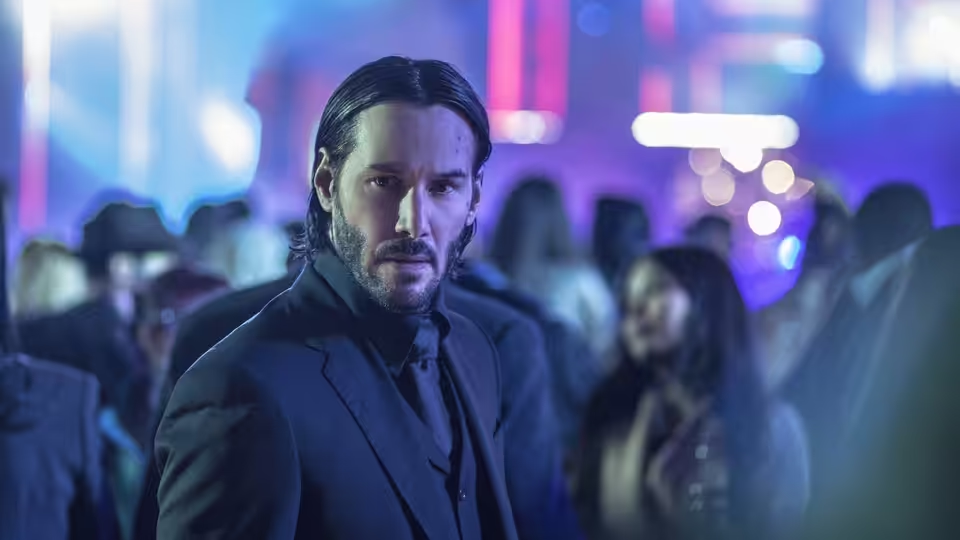
Stahelski was a stunt coordinator before he was a director, and it shows. The fights are staged in long takes with the camera far enough back to see feet, hips and hands, so when Reeves throws a man over his shoulder and shoots him on the way down we can see that it is Reeves doing it. Evan Schiff cuts to clarify, not to hide: a shot lasts until the move is finished. Dan Laustsen lights Rome in amber and the catacombs by torch, floods New York with magenta and blue neon, and ends in a gallery of mirrors and moving light where it is hard to tell a man from his reflection.

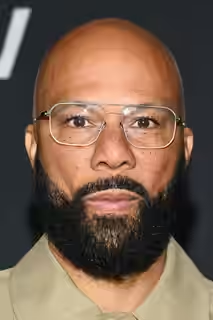
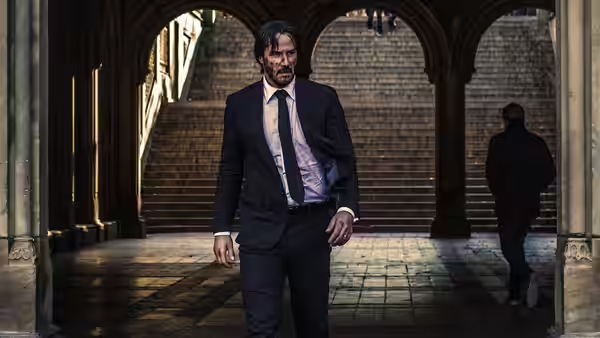
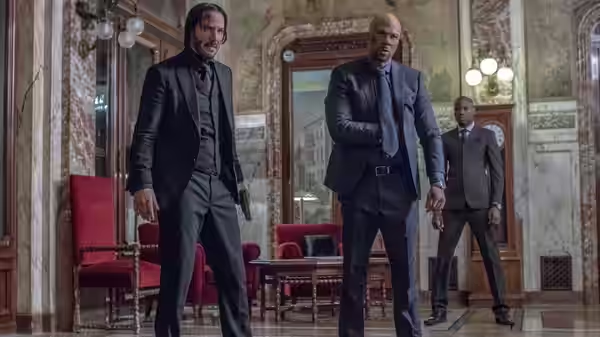
Reeves is the reason it holds. He plays a man who is tired, moving as if every stair costs him something, and the script gives him a few hundred words and lets the body say the rest. The jokes are dry and mostly about the world’s manners: a sommelier who discusses pistols in the language of wine, a tailor who asks about tactical lining. We laughed out loud at the subway fight, in which Reeves and Cassian (Common), Gianna’s bodyguard, shoot at each other with silenced pistols through a crowd of commuters who barely look up, and we were slightly ashamed of ourselves, which we suspect is the point.

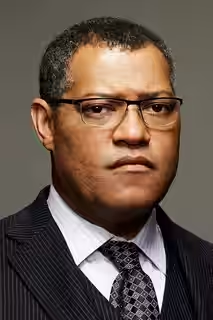
The trouble is that Kolstad has fallen for his own furniture. The first film mentioned a hotel and a gold coin and let us guess the rest. This one explains the marker, the High Table, and a network of beggars and pigeons run by Laurence Fishburne’s Bowery King from a rooftop, and every explanation is delivered as if it were scripture. Fishburne enjoys himself hugely. But the more solemn the film gets, the harder it is to care about a seat at a table we had not heard of half an hour earlier.

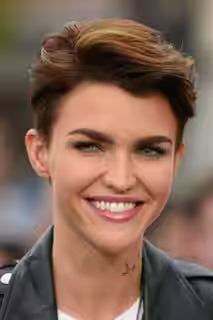
And there is too much of it. Somewhere past the ninety-minute mark, in a stretch where Reeves works through what seems like every hired gun in New York, we noticed we had stopped watching the fights and started watching the lighting. The pattern does not change: draw, fire, reload, fire, throw, fire. It is done with real skill every time, and after a while the skill becomes routine. Riccardo Scamarcio’s Santino is a plausible, oily villain early on and then spends the back half sending other men to die. Ruby Rose’s Ares, his bodyguard, is mute and signs her taunts, which is the one fresh idea the villains get.

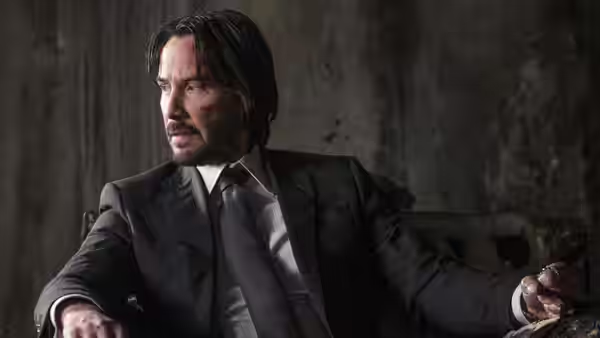
Tyler Bates and Joel J. Richard score it with grinding guitar and a low electronic pulse that suits the neon and wears thin whenever the film sits still. Kevin Kavanaugh’s production design is the film’s second lead: the Continental’s brass and marble, the Bowery King’s rooftop of cages, the Roman Continental where Franco Nero’s Julius asks whether John has come for the Pope. Luca Mosca cuts Reeves’s suits close enough that we believe the tailor when he says they will stop a bullet, a claim the film then tests a few hundred times.

Few people staging gunfights in Hollywood do it with this clarity, and against its genre the film sits near the top. Against the first film it is bigger, louder, better lit and less involving, because that one was about a man who had lost his wife and his dog and this one is about a man who owes a favour. See it on the largest screen you can, and go in knowing that the last forty minutes will be more of the first eighty. It runs 122 minutes and carries a 15.
Critical consensus AI synthesised

71
Positive
20
Mixed
2
Negative
4

Most critics like it, and a fair number think it better than the first film. The praise clusters on the action: the long-take gunfights, the staging of Stahelski’s set pieces, and the sense that the violence has been arranged with the care of choreography rather than thrown together. Reeves’ physical commitment to the part is admired across the board, and the expanded assassins’ underworld, with its codes and its rules, is generally counted a pleasure rather than a burden.

The spread is wide, from four-star notices down to a single star. Where reviewers pull back, it is over the same things: too much mythology, a long middle stretch that repeats itself, and a hero so indestructible that the danger drains away. The Guardian finds it video-gamey; the New York Times misses the first film’s lightness; the Times calls it tedious. The dissent sits largely with the broadsheets, while trade and genre outlets are warm.

Los Angeles Times
9 February 2017 · Justin Chang
90*

There is so much beautiful killing that the movie refuses to look away, yet it maintains a thrilling discipline in its long, choreographed action sequences. It is a connoisseur’s delight, a B-picture with an A-picture soul that showcases Reeves at his most watchable.

Read the full review →
Variety
6 February 2017 · Peter Debruge
90*

This elegantly choreographed sequel elevates brutal confrontations to a dazzling form of modern dance, succeeding on the elegance of its action rather than story. It improves on the original with no animals harmed and a reunion with Laurence Fishburne, achieving something akin to ballet in its violence.

Read the full review →
Empire
6 February 2017 · Chris Hewitt
85*

It expands the criminal underworld mythology and delivers stunning, stylish action sequences with sly humour, while Reeves fits the taciturn hitman role perfectly; a brutal, bruising bullet ballet of a sequel that builds on the original.

Read the full review →
Vulture
10 February 2017
85*

The film settles into a bleak, ritualized bloodbath that is crazy-violent yet beautiful, with breathtaking long-take choreography and a mythic, rule-bound underworld.

Read the full review →
IndieWire
6 February 2017 · B+ · Eric Kohn
83

The film improves on the original's cartoonish mayhem with confident style and exuberant sequences while sticking to the franchise's simple, satisfying rhythms.

Read the full review →
The AV Club
8 February 2017 · B+ · Ignatiy Vishnevetsky
83

The sequel ups the conceptual abstraction into a gothic, mythic journey through a stylized criminal underworld, with surreal action and visual gags taking precedence over pure momentum.

Read the full review →

Cast

If you liked this, try…

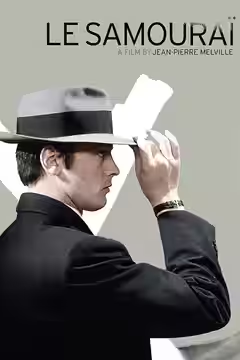
Le Samouraï poster

Le Samouraï

1967 · Alain Delon’s hitman in a raincoat; the same silence, a tenth of the body count

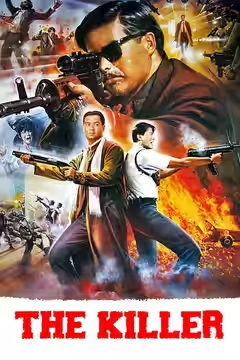
The Killer poster

The Killer

1989 · John Woo taught everyone here how a gunfight could be a dance

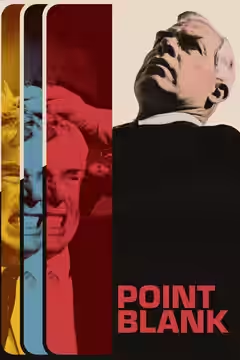
Point Blank poster

Point Blank

1967 · Lee Marvin wants his money back and takes an organisation apart to get it

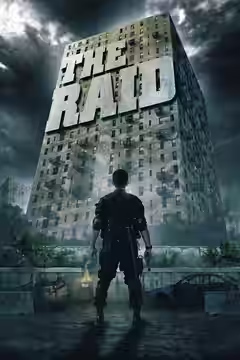
The Raid poster83

The Raid

2011 · One tower block, no rulebook, and fights that make Wick look leisurely

The Villainess poster

The Villainess

2017 · A Korean assassin, a motorbike sword fight, and a first-person opening that outdoes Wick