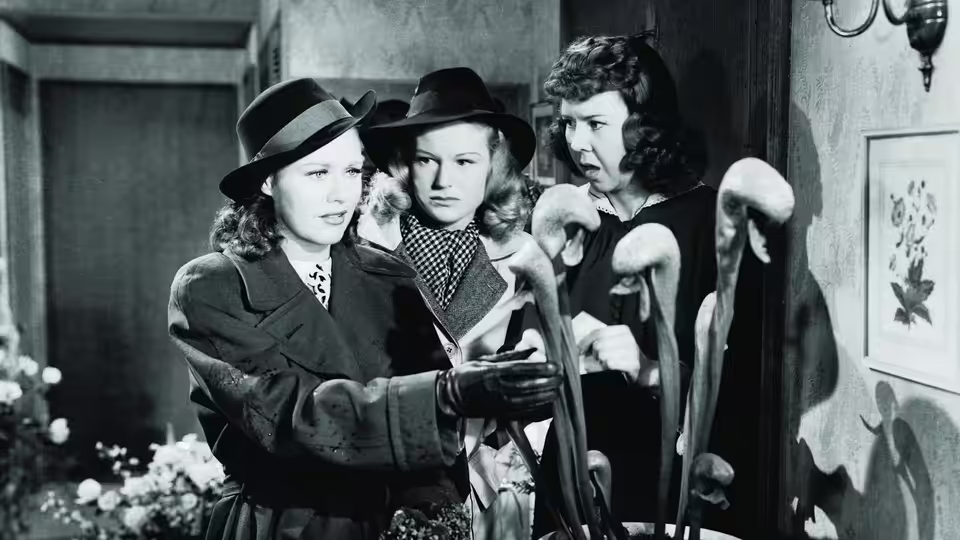
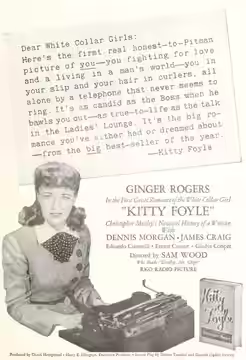
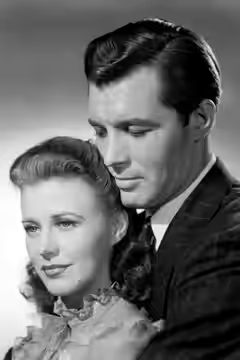
Ginger Rogers carries Sam Wood’s drama about a Philadelphia shopgirl and the rich boy who cannot decide, and she is nearly enough on her own. The two men are thin and the last act reaches for the handkerchief, but the class argument still stings.
Christopher Morley’s novel called itself the natural history of a woman, and Dalton Trumbo’s screenplay keeps the phrase and the ambition. Kitty Foyle wants to be the story of a whole class of American women, the white-collar girls who took the streetcar to an office and paid their own rent. It opens with a short mock-silent prologue about how that class came to exist, then hands the argument to Ginger Rogers, who does not dance a step here. It is a decent film with a fine performance inside it, and the gap between the two is what we noticed most.
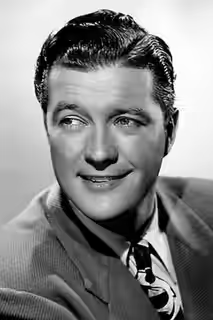
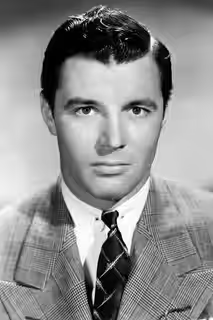
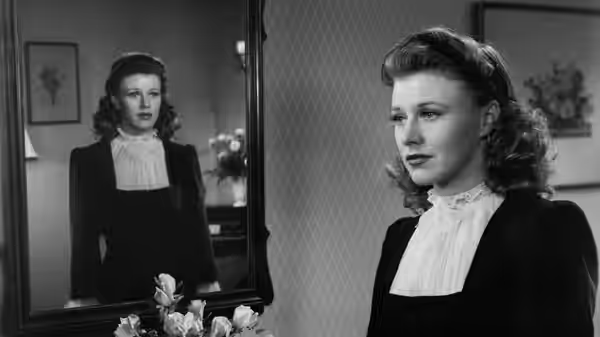
The setup is neat. Kitty (Rogers) is a shopgirl in New York with two men and one night. Mark (James Craig), a doctor with no money, has proposed. Wyn Strafford (Dennis Morgan), the Philadelphia rich boy she has never got over, rings to say he is leaving for South America and there is a place on the boat if she is at the pier by midnight. She goes to her room and talks it over with her reflection, and the reflection talks back. That could have been dreadful. Rogers plays both women without a wink, one tired and one wanting, and we were caught by it: the mirror Kitty says the things a friend would say, and the real one does not want to hear them. Sam Wood shoots it plainly and lets her have the scene.
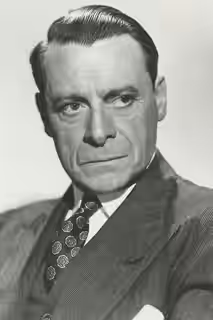
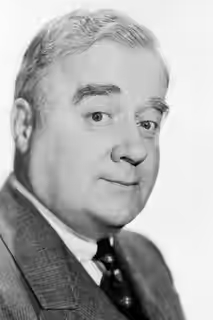
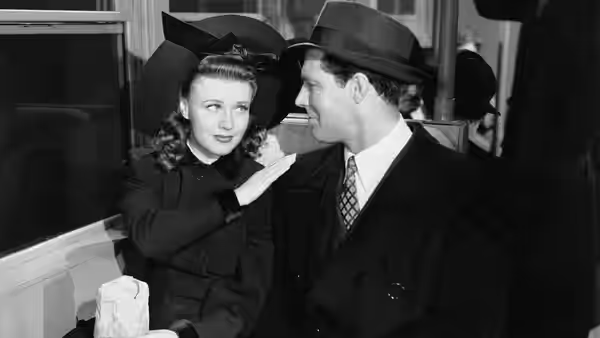
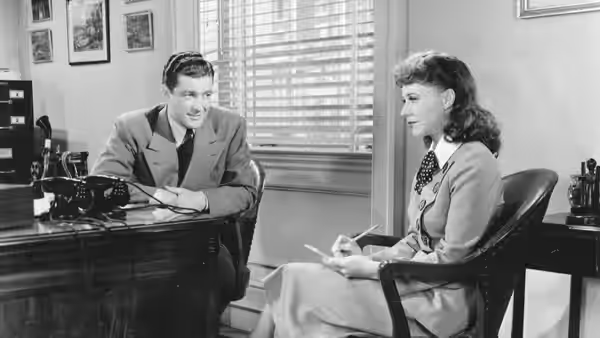
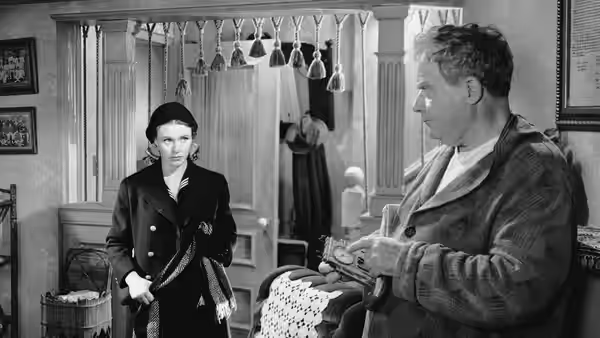
The film then goes back to Philadelphia. Pop (Ernest Cossart), Kitty’s father, is Irish, widowed and unimpressed by the Main Line families across the tracks. Wyn turns up running a small magazine, hires Kitty to type for him, and is charming in the way rich young men are charming when nobody has ever told them no. Cossart is warm and dry and worried, and the scenes at the kitchen table are the film’s most honest. Morgan is handsome and pleasant, and that is about the size of it.
Robert De Grasse photographs Rogers close and soft, and in the mirror scene he lights the reflection as sharply as the woman. Renié dresses Kitty in the dark dress and white collar her class is named for and puts the Strafford women in evening clothes that arrive in a room a moment before they do; the difference is the whole plot. Roy Webb’s score knows when to leave a scene alone. Henry Berman moves between the bedroom and the past with dissolves that never leave us wondering which year we are in.
The trouble is the men. Wyn does not want anything except to be liked, and Morgan cannot find a way to make that interesting for 108 minutes. Mark is a set of sensible opinions with a stethoscope, and Craig delivers them as if reading from the leaflet. Because neither is quite a person, the choice at the pier is never much in doubt. The second half takes turns we will not describe. Enough to say that Trumbo reaches for the standard sorrows of the woman’s picture, and we felt the film go for the handkerchief and our hand stayed in our lap. It was the only stretch in which we did not believe her.
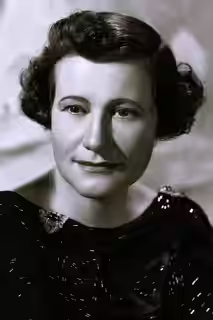
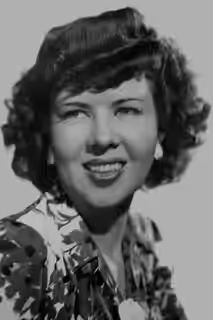
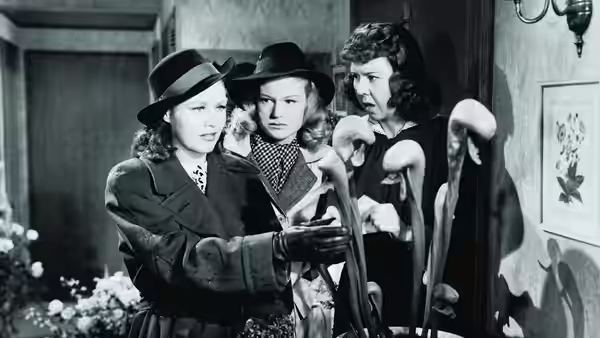
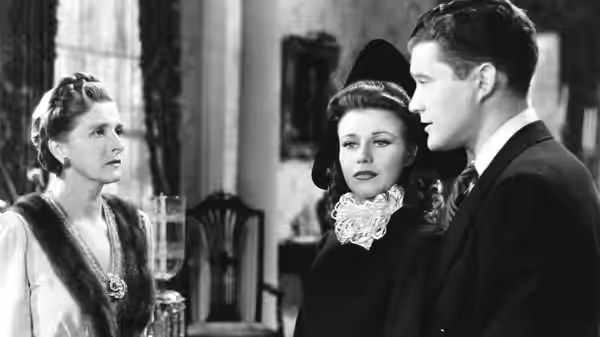
Gladys Cooper, as Wyn’s mother, has a handful of scenes and wins each with good manners; she can make an invitation to sit down sound like a verdict. When the Straffords make clear what they intend to do about Kitty, and Kitty makes clear what she thinks of that, the film is sharper about money and breeding than most American films of the period. Odette Myrtil, as the Frenchwoman who employs Kitty, and Mary Treen and K. T. Stevens as her flatmates Pat and Molly, keep the city scenes cheerful.
Wood had just made Goodbye, Mr. Chips, another film resting on one performer and a lifetime told in pieces, and he directs this the same way, from a respectful distance. Rogers repays it. See it for her, and for Cooper and Cossart, and forgive it the men. It works at home, where the mirror is life-size and the last twenty minutes can be taken with a cup of tea.