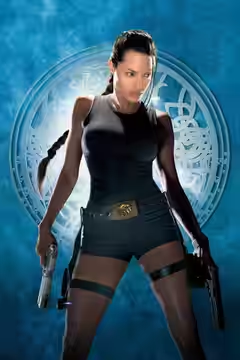
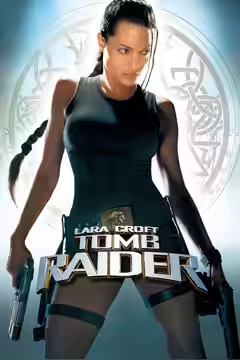
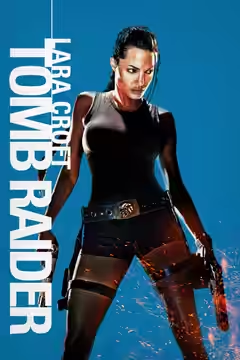
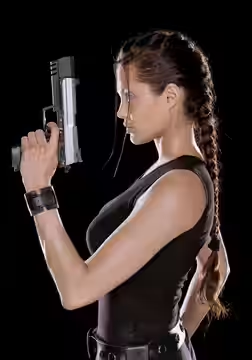
Angelina Jolie makes a persuasive Lara Croft, and Simon West supplies a few action sequences worth sitting up for. But the muddled plotting and thin supporting roles leave this adventure short of reasons to care.
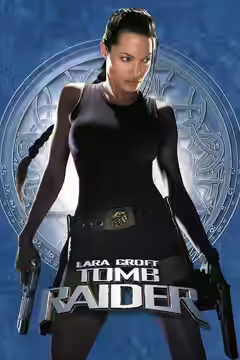
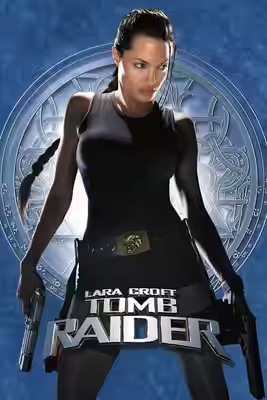
Simon West’s Lara Croft: Tomb Raider is a thin adventure with a lead performance that deserves better company. Angelina Jolie makes the casting seem obvious, but the film rarely gives us a compelling reason to follow Lara from one burst of activity to the next. We get action and fantasy without much curiosity about what happens next. At 100 minutes, it should not be this easy to lose interest.
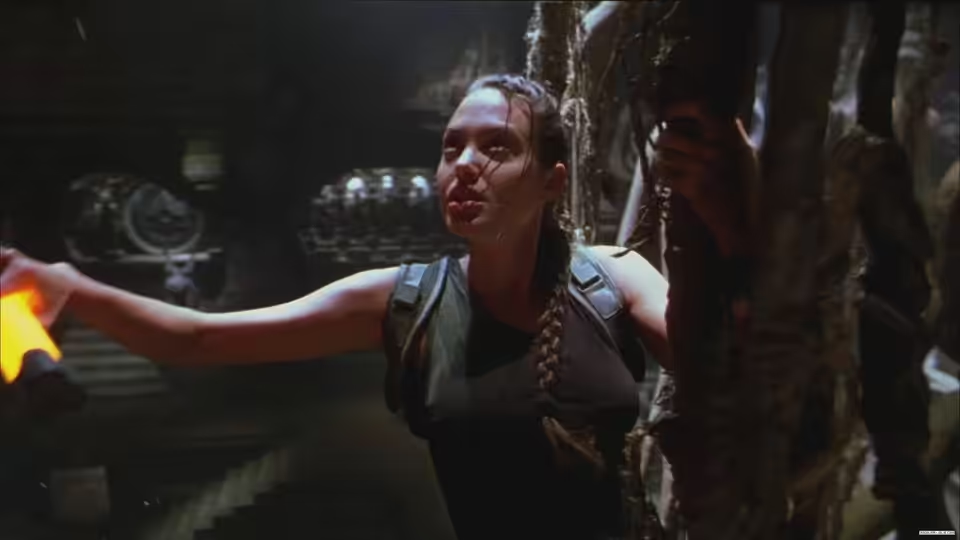
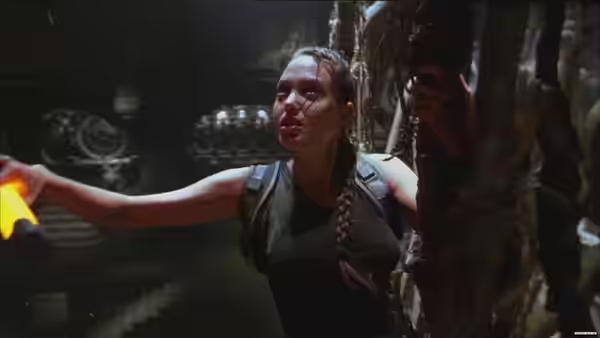
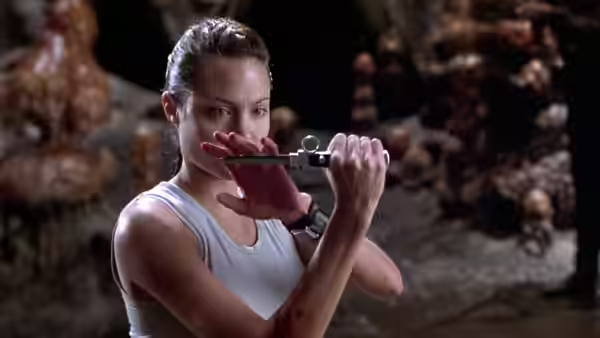
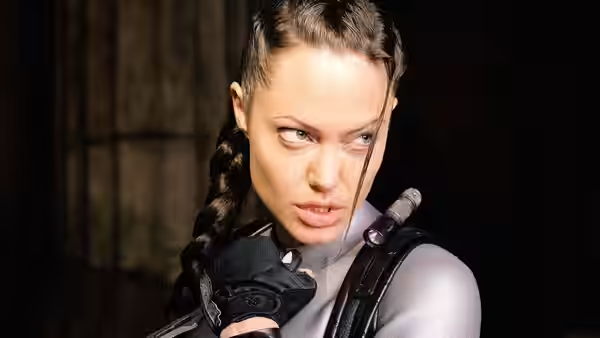
Angelina Jolie is convincing as a woman whose preparation for life has included combat training. There is enough authority in her performance to make Lara seem capable before the film has finished demonstrating it. The humour is less secure: her self-possession can harden into solemnity, leaving little sense of someone enjoying the adventure. Still, she holds our attention, and the film becomes noticeably less interesting whenever the supporting characters have to earn it for themselves.
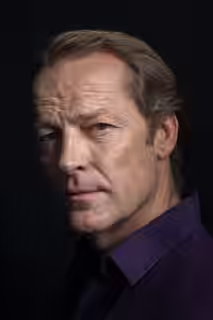
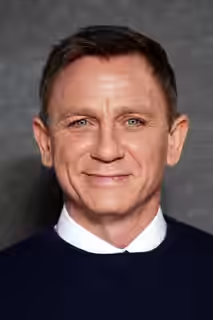
John Zinman and Patrick Massett’s screenplay is the main difficulty. The plotting gives us too little reason to care, and the characters do not supply the interest that the story lacks. Iain Glen’s Manfred Powell and Daniel Craig’s Alex West should be worth watching in their own right; instead, neither makes much lasting impression. We do not need every adventure to provide an elaborate psychological history, but we do need the people in it to want things we can understand.
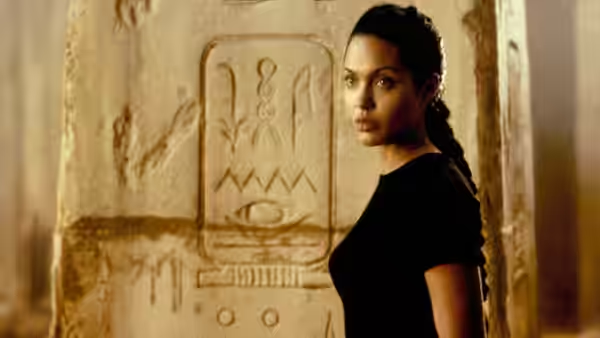
Peter Menzies’s cinematography makes the most of the lead’s presence, giving us ample opportunity to appreciate the casting. Kirk M. Petruccelli’s production design also helps make the film worth looking at, though the surroundings engage us more readily than anything being sought or risked within them. There is pleasure in the locations even when the story has lost our attention.
The gun battle briefly makes the enterprise feel worthwhile. We perked up, because Simon West gives this stretch enough energy to overcome our indifference to the story. Glen Scantlebury, Eric Strand, Mark Warner and Dallas Puett share the editing credit, and the cutting works better when there is an immediate physical task than when the film has to carry us towards another one. The sequence is enjoyable on its own, but it cannot supply the missing interest in the people involved.
Graeme Revell’s music helps the action along without making the danger particularly involving. The score can encourage excitement, but the screenplay has to establish why a setback matters, and too often we are left doing that work ourselves. The film’s occasional camp is more diverting than its attempts to be serious. A lighter touch would have given its capable lead more room to enjoy herself, and us more reason to enjoy her company.
For this sort of adventure, we would happily accept absurdity in return for clear goals, lively company and some pleasure in the discoveries. Here, getting Lara into action too often seems to have been considered enough. The performance and the better action passages offer modest compensation for the dull stretches between them. We would save the evening for something that gives its adventurer a story worth following.