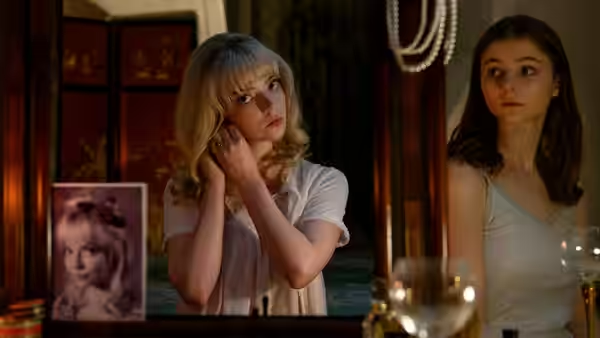
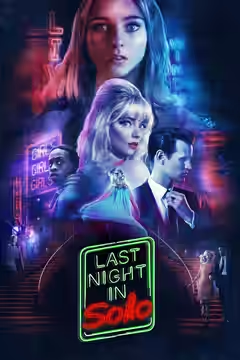
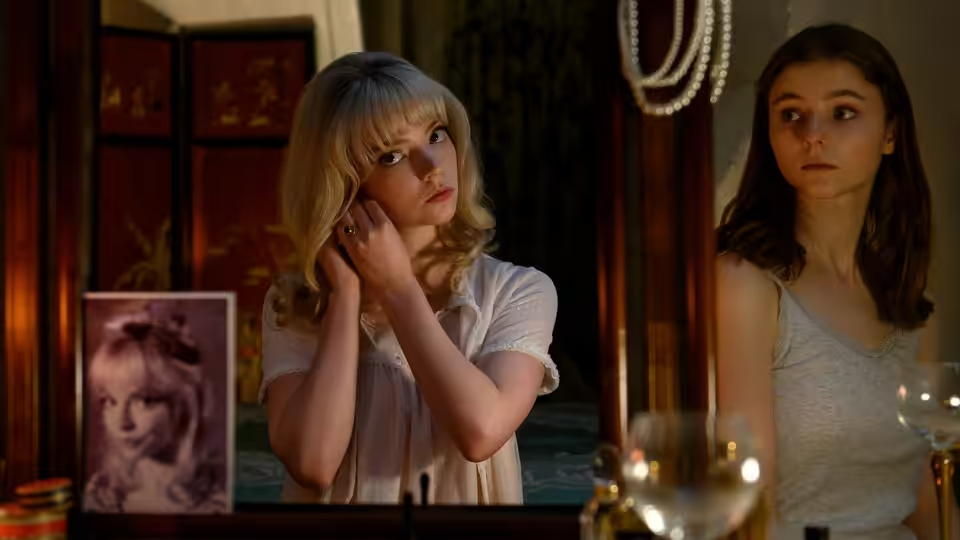
Sandie (Anya Taylor-Joy) and Eloise (Thomasin McKenzie) standing before a vanity mirror
Film review

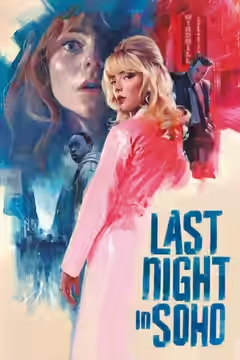
Last Night in Soho

2021 · Directed by Edgar Wright · 1h 57m · ΓΓΤΕ Κ-18

In a sentenceThe nightclub is so persuasive we kept forgiving the murder mystery for interrupting

In present-day London, fashion student Eloise Turner (Thomasin McKenzie) finds herself psychically linked to Sandie (Anya Taylor-Joy), a singer in 1960s Soho. Eloise is trying to make her way in fashion, but her experiences of Sandie’s life draw her attention into another era. At the Café de Paris, Sandie meets Jack (Matt Smith), and the nightclub’s songs and dancing make the past seem inviting. As the two women’s experiences overlap, the attraction begins to give way to unease. Eloise has to reckon with a London she cannot keep safely in the past.

Plays from YouTube when you press play; nothing loads from them until then.

Fi1m review

Edgar Wright’s Soho thriller is carried by its two leads and the pull of its sixties nightclubs. The music beguiles, but a cluttered murder mystery and repetitive scares make the second half a disappointment.

Edgar Wright’s Last Night in Soho is an absorbing visit to a nightclub and a less convincing evening of horror. Its premise gives nostalgia a practical danger: a fashion student can experience the life of a singer in 1960s London, without knowing what she is getting into. We understand the attraction, particularly once the music starts. The trouble is that the murder mystery gradually demands more attention than either woman, and its complications do little to make the film frightening.

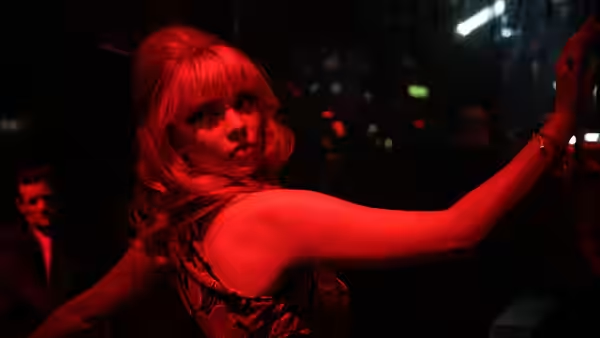
Thomasin McKenzie gives Eloise Turner a vulnerability that makes this excursion into someone else’s life feel risky from the start. Her performance holds our attention even when the present-day scenes feel like interruptions, a weakness the film never quite solves. Anya Taylor-Joy makes Sandie’s ambition immediately legible in the nightclub: she looks as though she expects to belong there. We were delighted by her performance of “Downtown”, which lets us enjoy her singing long enough to understand why Eloise would be captivated.

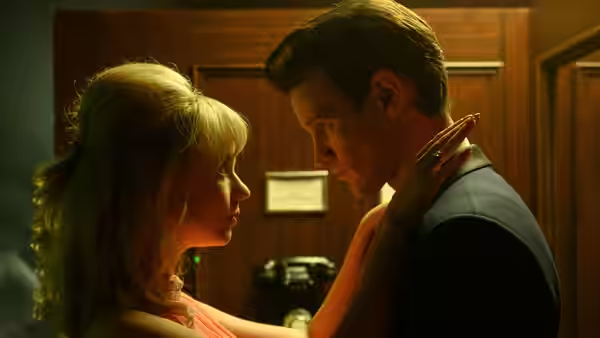
Chung Chung-hoon’s cinematography makes the period nightlife inviting enough for the film’s warning about nostalgia to have some force. Production designer Marcus Rowland supplies a nightclub setting where the clothes, dancing and music belong together, rather than competing for our attention. At the Café de Paris, there is enough life around Sandie and Jack to make their meeting feel like part of an evening out. Matt Smith and Anya Taylor-Joy make appealing company, and their scenes benefit from the attraction between them.

Paul Machliss edits the musical passages with an assurance that makes the early shifts between eras easy to follow. As the shocks accumulate, however, their recurrence becomes predictable, and the pace starts to work against the suspense. Steven Price’s score contributes to the pressure, sometimes too insistently for scenes that already signal trouble. The nightclub songs are more persuasive accompaniment, giving us something to enjoy while the film gradually introduces reasons to feel uncomfortable about enjoying it.

The screenplay by Edgar Wright and Krysty Wilson-Cairns takes seriously the difference between admiring a period and living in it. Its concern with the exploitation of young women has weight, especially while Sandie remains someone with ambitions we can understand. But the increasingly tangled mystery gives those concerns too little space, and the explanations become a distraction. The women’s experiences are frequently squeezed out by preparations for the next shock, just when spending longer with either of them would help.

That is a particular problem for psychological horror, which depends on our staying close to someone whose perceptions we cannot entirely trust. Diana Rigg, as Ms. Collins, brings a welcome firmness to a film increasingly prone to overstatement. Thomasin McKenzie also keeps finding credible distress amid the complications, and the casting deserves much of the credit for holding our attention. The performances remain worth watching even when the mystery becomes difficult to care about.

There is enough here for viewers drawn to period nightclubs, music and an atmosphere of bad decisions. We would recommend it chiefly for its performers and its recreation of Soho, with a warning that the scares become repetitive. A taste for sixties pop will help more than a demand for a tidy mystery.

Critical consensus AI synthesised

69
Positive
19
Mixed
3
Negative
4

Most critics respond warmly to Edgar Wright’s Last Night in Soho, with praise clustering around its imagery, music and recreation of 1960s London. Thomasin McKenzie and Anya Taylor-Joy’s performances draw approval even from several sceptics, while the early journeys into Soho’s past supply much of the excitement. The favourable reviews find an entertaining blend of glamour and menace, with some also crediting its examination of nostalgia and the exploitation of women.

The spread is wide, however, and reservations repeatedly concern the plotting and scares in the second half. Even sympathetic critics find the explanations strained or the horror numbing; harsher reviews argue that the film’s visual invention cannot compensate for its confused storytelling. Collider praises its thoughtful treatment of the past, while The New Yorker finds its critique lost among twists and shock effects. The central disagreement is how much substance survives beneath the stylish presentation.

IndieWire
4 September 2021 · festival review · Nicholas Barber
90*

The critic calls the film a delirious mod delight that feels entirely new while retaining Wright's signature style, deeming it a superb film overall. The one thing singled out is its fresh take on horror and time-travel elements.

Read the full review →
Screen Daily
4 September 2021 · festival review
90*

The review finds the film a riotously entertaining thriller that vividly evokes Soho's past and present with a giallo twist, praising the dual lead performances and the energetic, lurid thrills, especially the supporting turn by Diana Rigg.

Read the full review →
The New York Times
28 October 2021 · Critic’s Pick · Manohla Dargis
90*

The critic praises Edgar Wright’s sumptuous and surprising horror movie for its dazzling imagery and psychic bond between two young women from different eras. They single out the authentic shiver lent by the female lead and the performances of legendary British actors like Diana Rigg and Terence Stamp.

Read the full review →
Empire
15 October 2021 · Beth Webb
80*

Wright's ambitious shift into female-centric horror is strongest when focused on visceral scares and the leads' performances, enhanced by striking cinematography. Some narrative patches exist, but it marks an exciting new direction for the director.

Read the full review →
Radio Times
★★★★ · Emma Simmonds
80

The critic commends the visually arresting psychological thriller for its unsettling blend of past and present, strong performances by McKenzie and Taylor-Joy, and inventive take on horror tropes, while critiquing the somewhat predictable mystery elements.

Read the full review →
The Guardian
31 October 2021 · Mark Kermode
80*

The critic praises the film's heady blend of slasher fantasy and ghostly magic as a deliciously twisted love letter to cinematic pop-culture past. They single out the exhilarating early flashbacks and Wright's personal enthusiasm for the material.

Read the full review →

Straight answers AI written, from our review

Is Last Night in Soho worth watching?
Last Night in Soho is worth watching chiefly for its leads, sixties music and nightclub atmosphere; we score it 64 out of 100. We recommend it to viewers drawn to those pleasures, with a warning that the cluttered murder mystery and repetitive scares make the second half disappointing.
How long is Last Night in Soho, and what is it rated?
Last Night in Soho runs 1h 57m and is rated Κ-18 by the ΓΓΤΕ in Greece. It is a horror and mystery film.
Where can I watch Last Night in Soho in Greece?
Last Night in Soho is available to rent from Apple TV from €3.99. Availability is checked daily; the links above go straight to each service.
How violent or frightening is Last Night in Soho, and is it suitable for children?
Last Night in Soho carries a UK 18 certificate and is not suitable for children or younger teenagers. Its psychological horror involves distress, repeated shocks and the exploitation of young women; we find the scares increasingly predictable rather than consistently frightening, but that does not make it a gentle choice for sensitive viewers.
How does Last Night in Soho compare to Perfect Blue?
Last Night in Soho is the choice for sixties nightclub atmosphere, but we recommend Perfect Blue as the tighter, more disturbing psychological thriller. Both deal with performance and unstable perceptions; Perfect Blue makes the scrutiny of a pop star frighteningly intimate, while Last Night in Soho lets its tangled mystery crowd out its two women.

Cast

If you liked this, try…

Peeping Tom poster

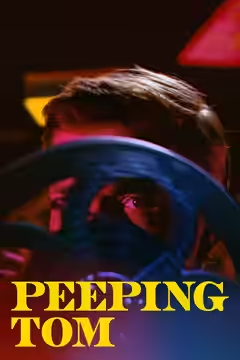
Peeping Tom

1960 · Another London nightmare about watching women, with far less reassurance for the watcher.

Carnival of Souls poster

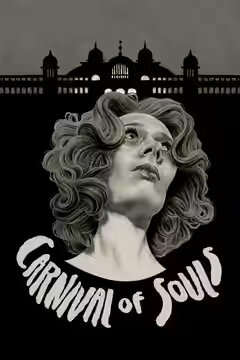
Carnival of Souls

1962 · A woman’s isolation makes ordinary streets and public entertainments feel quietly threatening.

Perfect Blue poster82

Perfect Blue

1997 · Performance, fractured identity and voyeurism become a tighter, more disturbing psychological puzzle.

The Double Life of Véronique poster86

The Double Life of Véronique

1991 · Two women’s unexplained connection receives the patience and tenderness it deserves.

Suspiria poster

Suspiria

1977 · For colour, music and young women entering places they ought to leave.