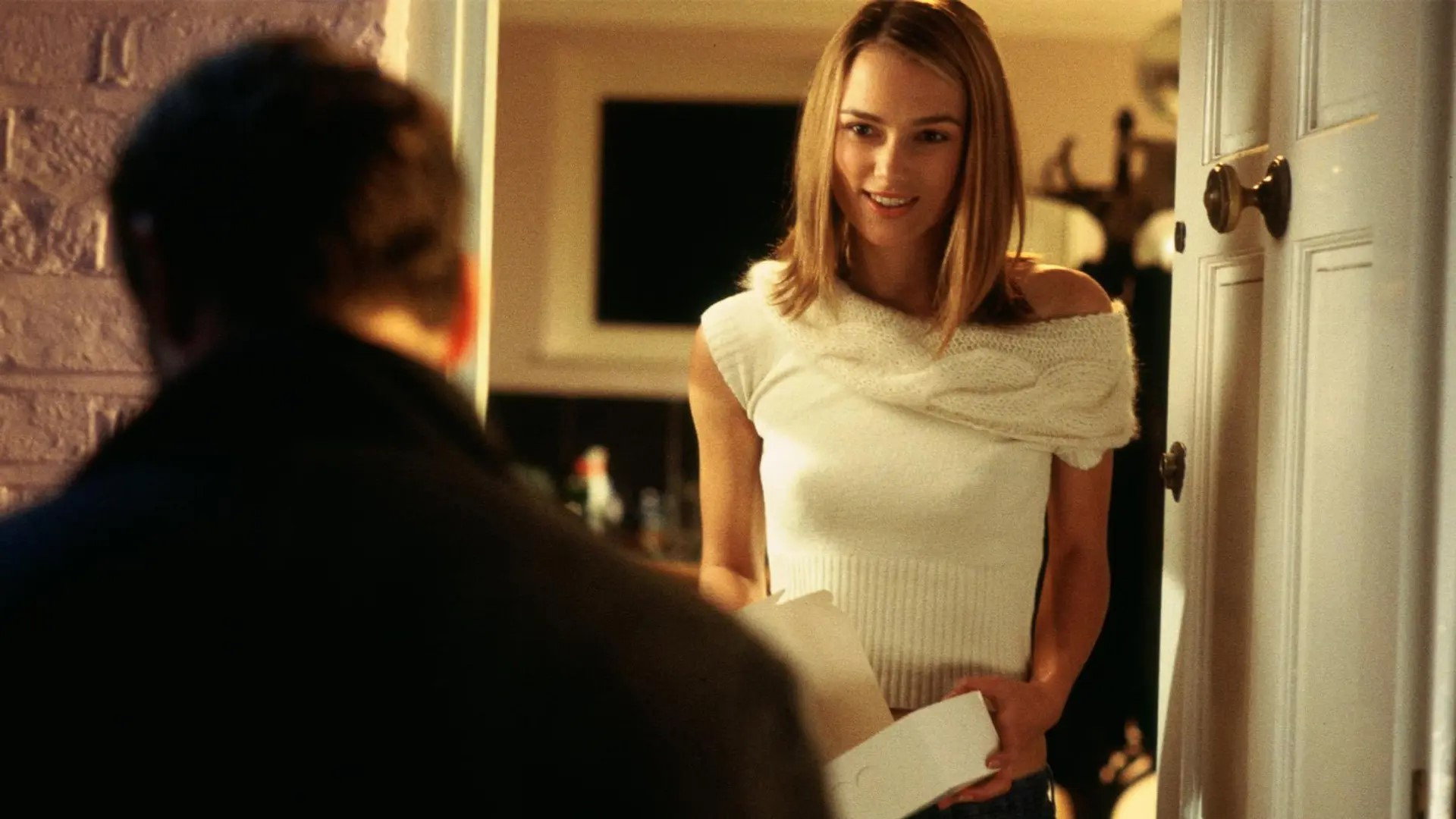
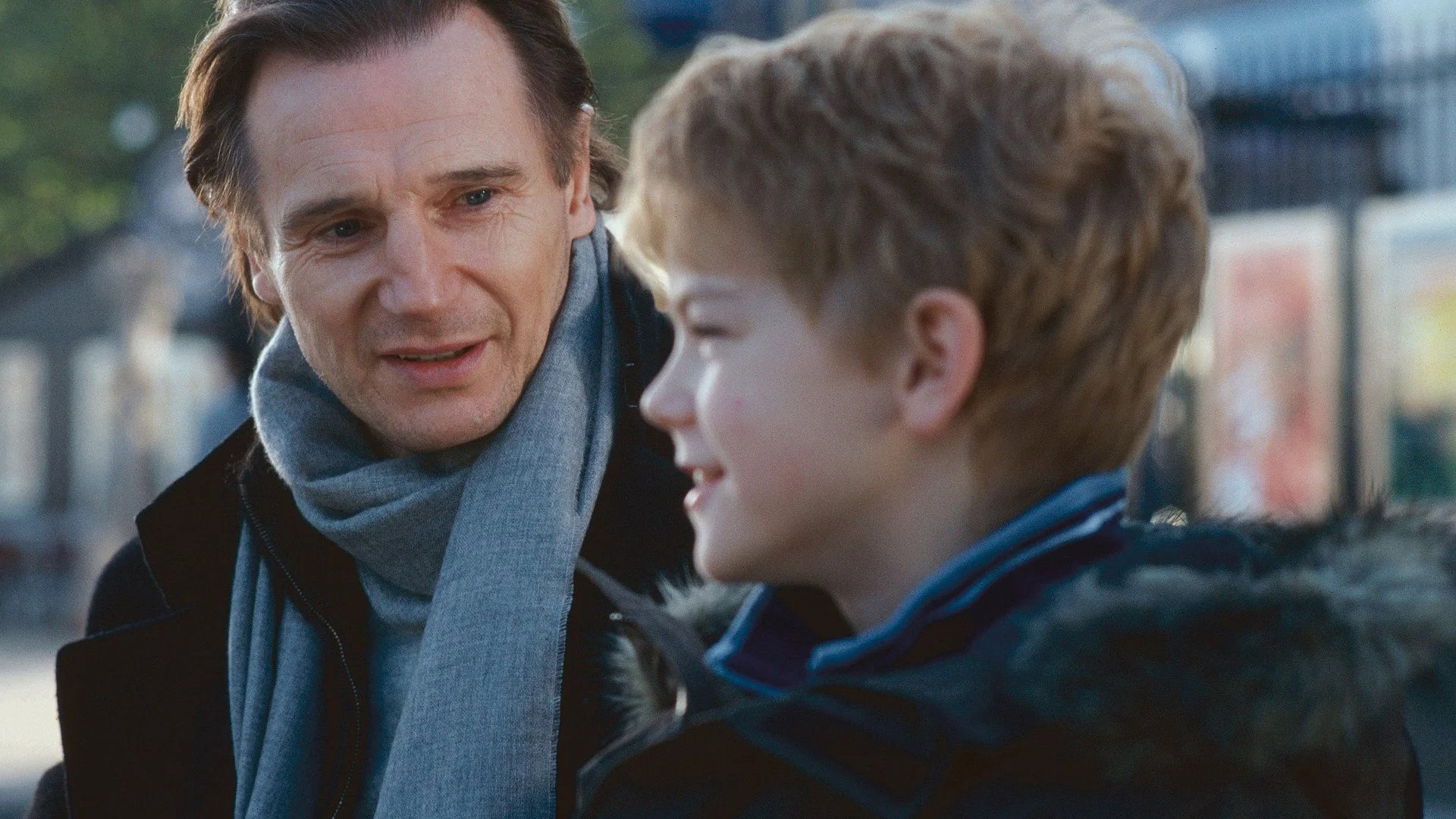
Richard Curtis gathers a cast worth spending Christmas with, then gives too many of them abbreviated stories. Bill Nighy and Emma Thompson make their scenes count, but the relentless encouragement to feel festive becomes wearing.
Richard Curtis fills Love Actually with enough people to make falling in love look like a collective obligation. The result is a mixed Christmas romance: often funny, sometimes affecting, and too crowded to earn the affection it keeps asking for. At 135 minutes, it has plenty of time for its separate stories, yet Curtis’s screenplay spends much of that time introducing and revisiting people rather than allowing them to develop. We keep meeting characters whom we would like to know better.
Bill Nighy, playing faded rocker Billy Mack, is the clearest reason to persevere. His sour delivery makes Curtis’s dialogue funnier, and he allows Billy to be entertainingly disreputable without asking us to excuse him. Hugh Grant’s Prime Minister supplies a more ingratiating kind of comedy, but Grant knows how to make embarrassment look spontaneous. We laughed at his dancing: his willingness to look ridiculous briefly frees the film from trying so hard to charm.
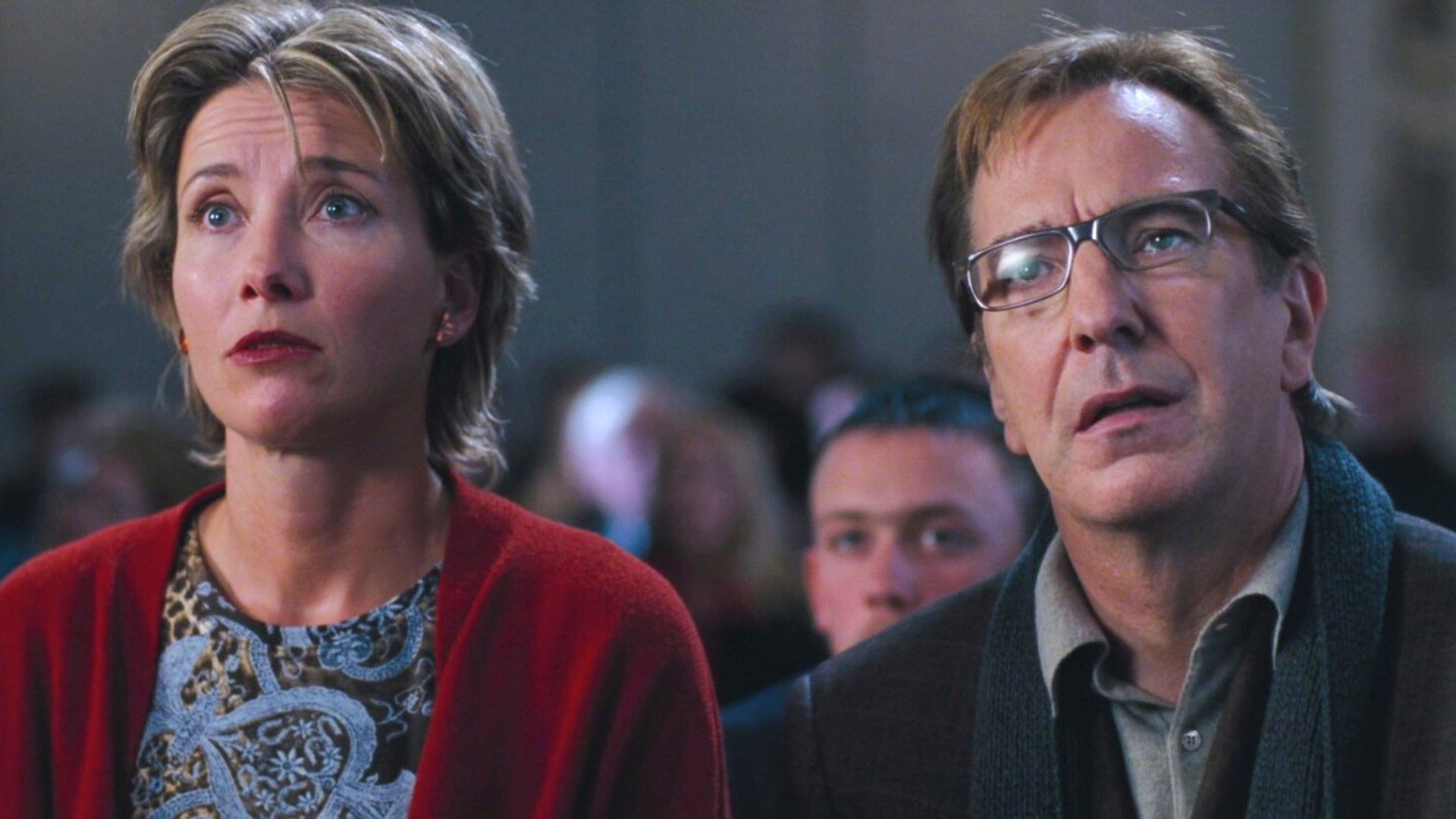
Emma Thompson’s Karen gives us something harder to dismiss. Thompson can suggest hurt without turning every reaction into a request for sympathy, and the film benefits whenever it trusts her to hold our attention. Alan Rickman, as Harry, brings a useful reserve to a screenplay that frequently explains too much; Laura Linney’s Sarah also makes us wish Curtis had stayed with fewer people for longer. These actors suggest lives beyond the scenes allotted to them, but they cannot supply all the missing time.
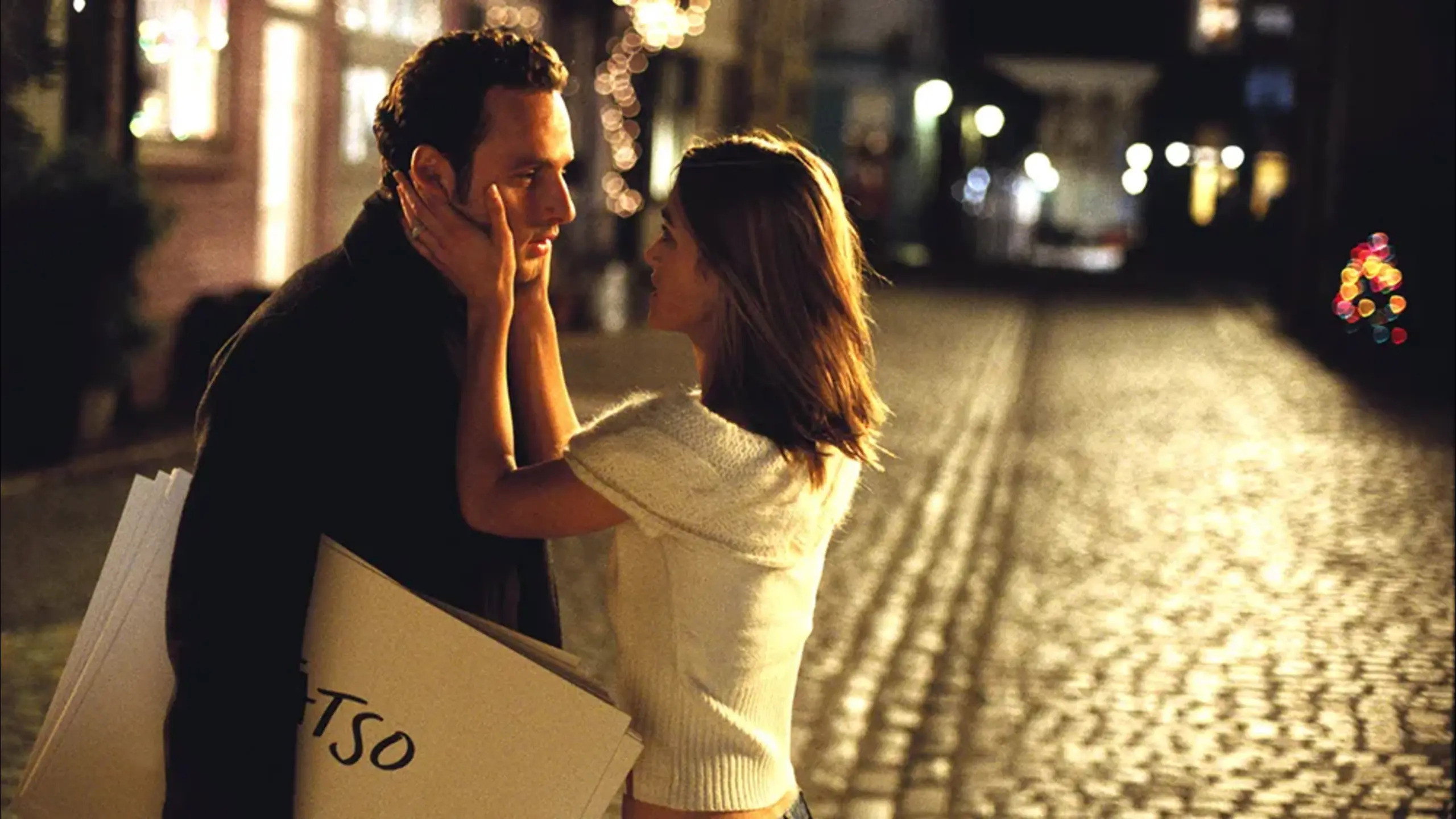
Michael Coulter’s cinematography and Jim Clay’s production design do their share of the persuading: the Christmas cheer is more convincing to us than several of the relationships. Their work gives the separate stories a consistent appeal, although that consistency also makes the characters’ different circumstances feel less distinct. Craig Armstrong’s score is less helpful when it tells us how much an exchange should matter before the actors have persuaded us. The musical warmth is effective in small doses; across so many stories it becomes tiring.
Editor Nick Moore keeps the switches between strands clear, which is no small achievement with this many competing introductions. What he cannot disguise is how often a promising exchange ends just as it needs another minute. Curtis returns to some characters so briefly that an emotional step forward feels like information we have been handed rather than something we have watched happen. Several of the comic passages, meanwhile, could have been shorter.
A romantic comedy can get away with considerable contrivance if it gives us time to understand why two people want each other. Curtis too often relies on the cast to do that work at first sight, then asks the next story to renew our interest when the present one runs thin. We are not objecting to happy possibilities, or demanding that Christmas entertainment become a lecture on disappointment. We are asking for enough ordinary conversation to make the larger emotions credible.
There are enough good performances to explain why the film’s warmth works for many people, and enough funny lines to prevent outright boredom. But liking these actors is a substantial part of the bargain, because Curtis gives several of them so little else to work with. If crowded Christmas company is the attraction, the cast may be sufficient. Expect to supply some of the affection yourself.