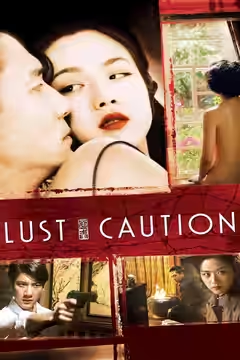
Ang Lee’s spy film is slow by design and better for it: 158 minutes of mahjong, cigarettes and watching, built around a remarkable Tang Wei. Most critics found it cold; we found it frightening, and we think they missed what the silences are doing.
Ang Lee follows Brokeback Mountain (2005) with a spy film in which almost nothing happens quickly. The source is a short novel by Eileen Chang; the shape is Hitchcock’s Notorious turned inside out, a woman sent into a dangerous man’s bed on behalf of a cause, and what the bed does to the cause. Lee’s gamble is to spend most of his 158 minutes on the waiting, at mahjong tables and in cafés, and to let the sex and the violence arrive as interruptions. It is a good film and a demanding one.
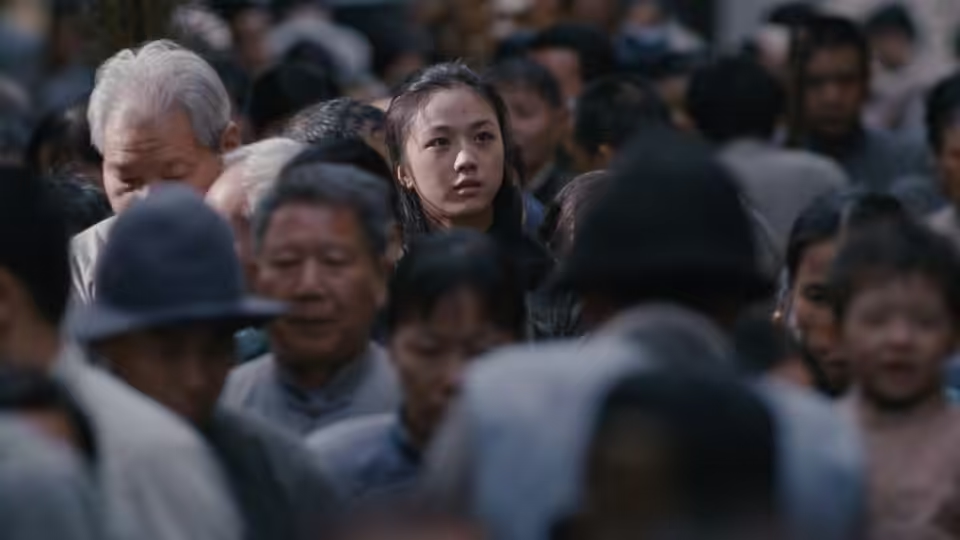
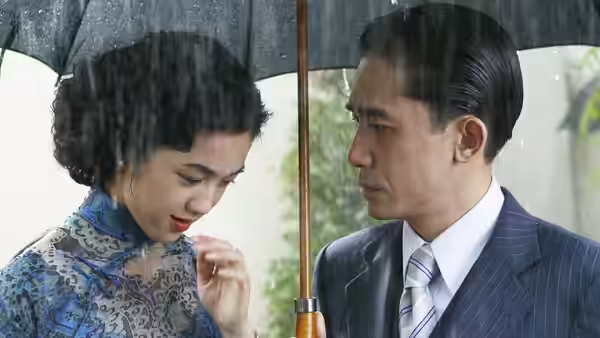
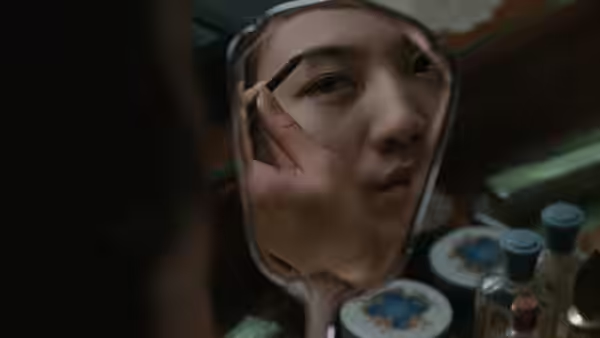
Tang Wei plays Wong Chia Chi twice over: a shy student from Shanghai who finds she can hold a stage, and Mrs. Mak, the bored, well-dressed wife she assembles from borrowed clothes and other women’s cigarette habits. The first woman never quite disappears inside the second. There is a flicker of panic before every smile settles. In a Japanese tavern she sings an old song for Yee, a performance inside a performance inside a performance, and by the end of it we were no longer sure who was pretending, and we are not convinced she was either.
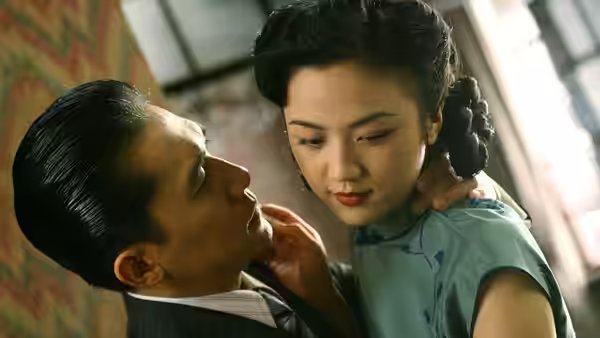
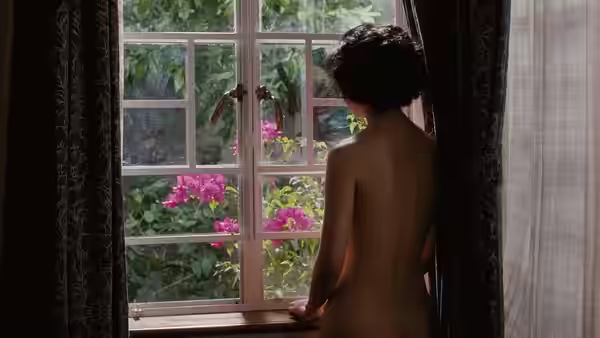
Tony Leung plays Yee as a man who has spent so long expecting a knife that he has stopped expecting anything else. He sits with his back to walls. He watches doors. He barely raises his voice and never drops his shoulders, and his cruelty comes out in small things: keeping a woman waiting, letting a conversation die. The sex scenes, which earned the 18 certificate, are not there to be enjoyed. They are the only place either character stops acting, and Lee shoots them as something close to combat. The first of them frightened us. It is violent, and it is meant to be.
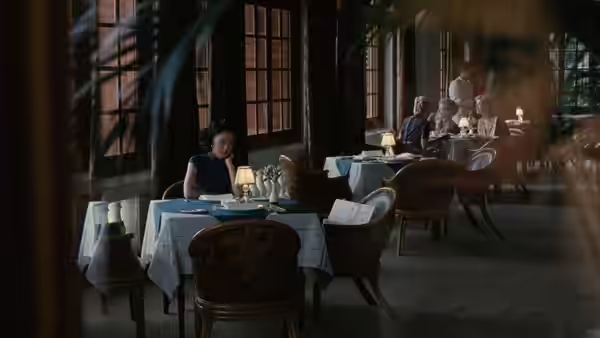
Rodrigo Prieto shoots Hong Kong in soft, warm daylight and Shanghai in brown and grey, so the occupied city looks permanently like late afternoon. The mahjong room is lit from the table up, and the tiles are the loudest thing in it. Lau Sai-Wan and Shandy Lui Fung-Shan build a Shanghai of rationing queues and shuttered shops, and a Yee house of lacquer and locked doors. The cheongsams by Lai Pan and Shandy Lui Fung-Shan tell a story of their own, Wong’s getting tighter and finer as the lies get bigger. Tim Squyres cuts the games as duels, hand to hand to face, so that a discarded tile reads as a question. Alexandre Desplat’s score is a few strings under the longer silences, and it stays out of the mahjong room.
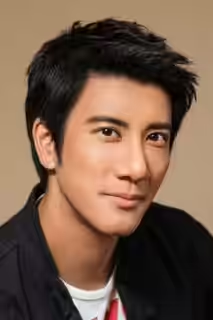
Not all of it holds. Leehom Wang’s Kuang Yu Min, the idealist who recruits Wong, needs to be a man she might have loved, and we did not believe it, because Wang plays him as earnest and nothing else and the screenplay by James Schamus and Wang Hui-ling gives him speeches where it gives everyone else glances. The Hong Kong section runs longer than it needs to. After the move to Shanghai there is a stretch where the resistance, in the shape of Tou Tsung-hua’s Old Wu, briefs and re-briefs, and we found ourselves checking the time. The politics stay in the background. The film tells us Yee works for the Japanese and never asks why.
Most critics have been cooler than this. The reviews split almost down the middle, between those who found the film absorbing and those who found it bloodless and overlong. We think the second camp were waiting for a speech the film was never going to make. These are people who cannot say what they feel because saying it would get them killed, and Lee has built the film the same way. Yee and Wong barely talk because talking is dangerous, and he trusts us to notice.
Crouching Tiger, Hidden Dragon (2000) and Brokeback Mountain were both about wanting with nowhere to go. This is the one where the wanting is also the weapon. See it on a long evening, in one sitting, with the phone in another room. The first hour will test you and the second will tell you why. It runs 158 minutes and carries an 18, and it earns both.