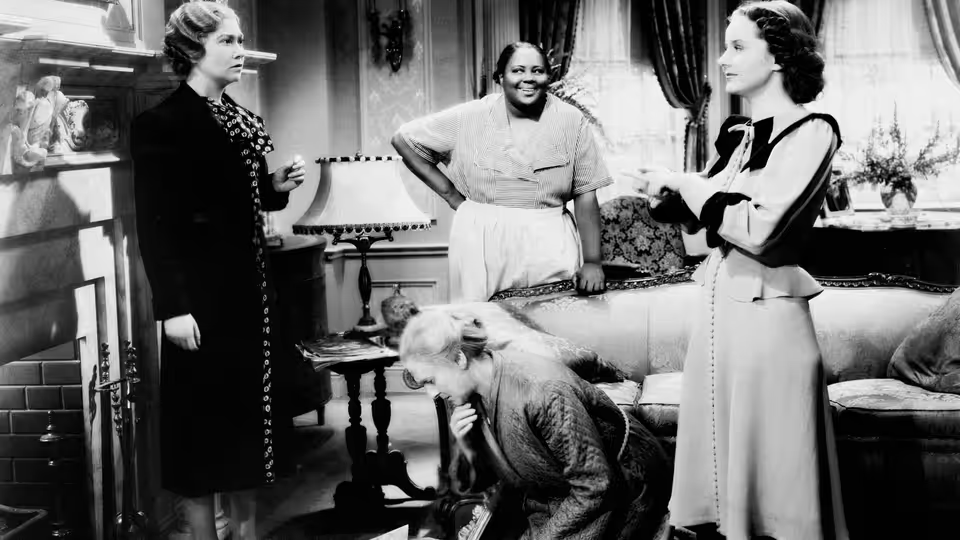
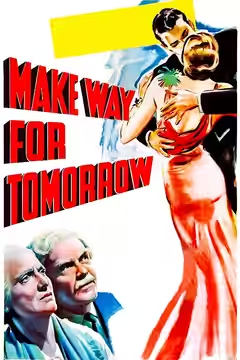
Leo McCarey’s drama about an elderly couple separated by their children is deeply moving without making the family conveniently monstrous. Beulah Bondi gives it remarkable warmth, though the emphasis on infirmity occasionally presses too hard.
Make Way for Tomorrow is a quietly devastating family drama, and we would recommend it even to people who usually avoid films about old age. Leo McCarey takes an elderly couple’s enforced separation and gives proper attention to the family circumstances behind it. Barkley Cooper and Lucy Cooper want to remain together; economic trouble and the demands of their children’s lives make that simple wish difficult to honour. The Depression setting matters because the practical objections cannot just be waved away.
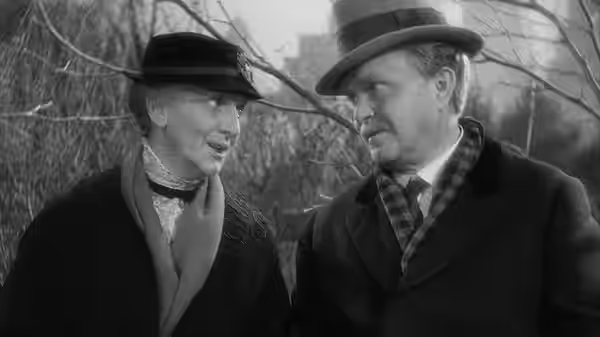
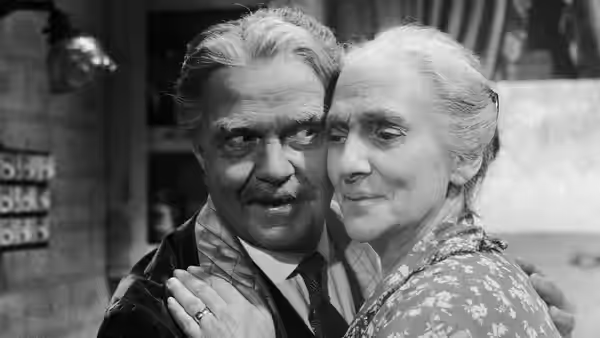
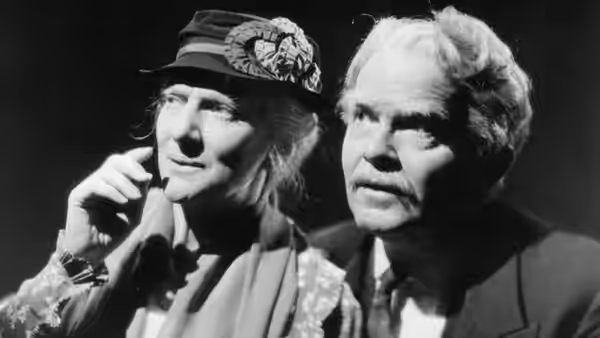
Beulah Bondi gives Lucy an everyday warmth that makes the prospect of separation feel appalling. Her performance needs no speech about the value of companionship. Victor Moore is less consistently persuasive as Barkley; the emphasis on his infirmity sometimes looks like an appeal for sympathy already secured. Together, though, they make the wish to carry on living together feel painfully modest. We were upset by how little they ask, and by their dependence on their children for even that much.
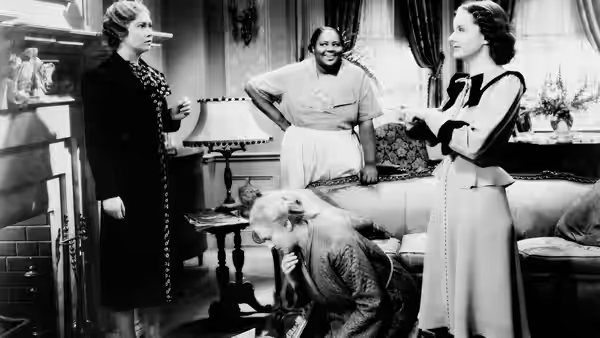
Viña Delmar’s screenplay is attentive to how people make an unwelcome decision sound sensible. The children’s own lives are not trivial, and the film is stronger for allowing their concerns to carry some weight. Thomas Mitchell and Fay Bainter help make the family’s difficulties credible, which makes it harder to dismiss the children and settle comfortably into indignation. The dialogue gives everyone enough reason to keep talking. Meanwhile, the question of what the parents actually want becomes increasingly uncomfortable.
The family awkwardness is also where we most appreciate William C. Mellor’s cinematography and LeRoy Stone’s editing. Small visual cues keep us attentive to the discomfort that reasonable conversation cannot quite conceal. We have time to notice how people respond when another person’s needs become inconvenient. Leo McCarey’s staging makes those responses clear without forcing every slight into a confrontation, and the intimate scale gives the actors room to make embarrassment felt.
The music by George Antheil and Victor Young works best in supporting the tenderness between the couple. At times, though, the film insists on their frailty when their predicament has already made its point. Those passages feel overprotective, as if we might stop caring unless reminded that these people are old and vulnerable. They also narrow the performances, making the parents seem briefly defined by their helplessness. It is an intermittent limitation in a film otherwise alert to the awkward mixture of affection, obligation and impatience within a family.
At 92 minutes, the film gives its central difficulty enough attention to make easy answers seem inadequate. Staying together in old age depends here on money and on other people’s willingness to be inconvenienced. That gives the romance a practical urgency which more decorative accounts of lasting love can lack. The director understands how much feeling there can be in the ordinary expectation of continuing to share a life. The couple should not have to make an exceptional case for it.
There is tenderness here, but we would not mistake it for comfort. Anyone who has been involved in difficult family arrangements may find the reasonable objections especially painful to hear. Choose it when there is time afterwards to talk.