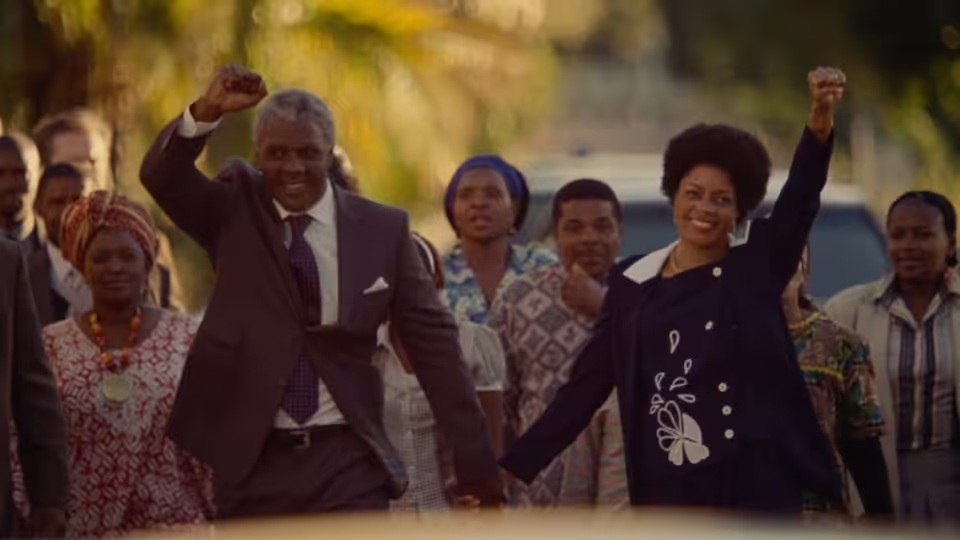
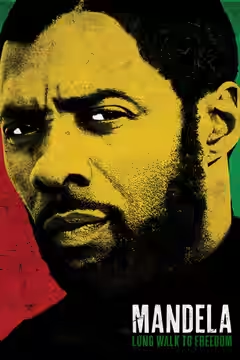
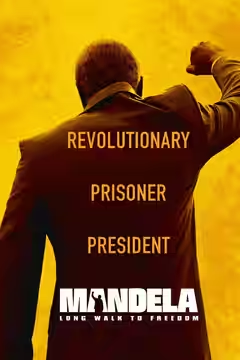
Idris Elba and Naomie Harris bring conviction to a biopic too hurried to give them enough room. Justin Chadwick’s respectful account is competently made, but its sweep through Mandela’s life leaves too much unexplored.
Justin Chadwick’s Mandela: Long Walk to Freedom is a disappointing biopic with two performances that deserve a less crowded film. Its 141 minutes attempt to give a broad account of Nelson Mandela’s life, and William Nicholson’s screenplay struggles to find enough time for the people involved. There is care here, and a reasonable wish to make a complicated history accessible. The difficulty is that the film keeps moving before we have had much chance to think about what it has shown.
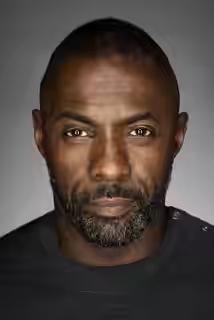
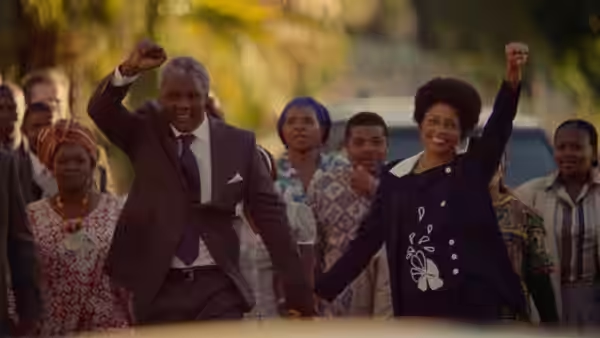
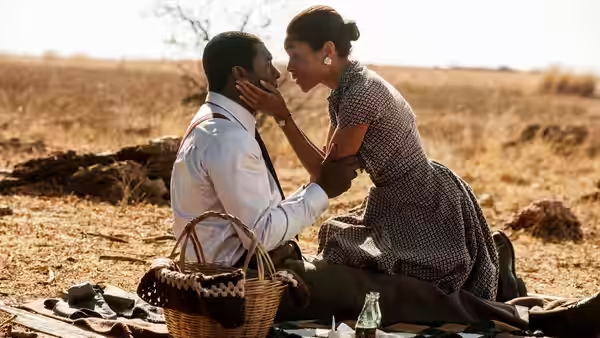
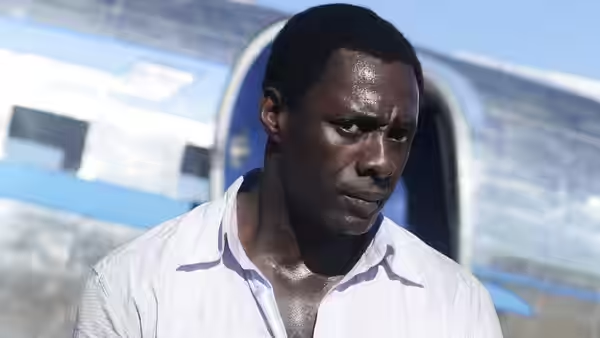
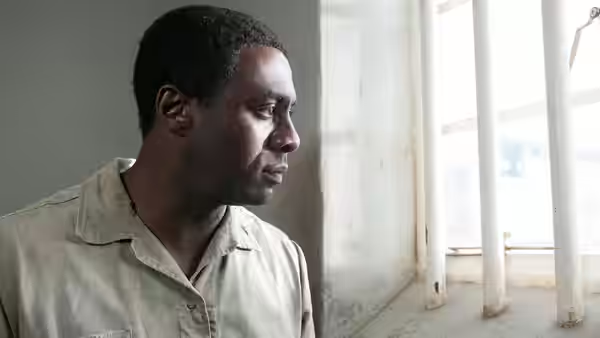
Idris Elba is the reason to stay interested. His early scenes have an ease and confidence that let Mandela seem like somebody whose company might be enjoyable, without constantly insisting on his significance. We warmed to that charm, then felt frustrated as the hurried progression kept interrupting it. Elba has enough control to suggest more than the writing supplies, but too often we are waiting for another glimpse of the person he is trying to play.
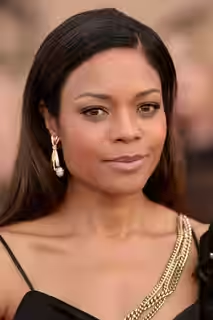
Naomie Harris gives Winnie Madikizela a comparable force, and her presence makes the shortage of time for individual characters more noticeable. We want longer with her because she makes the character worth attending to, not because another part of the biography needs covering. The film is stronger whenever these performances are allowed to hold our attention. Both actors supply a conviction that the succession of episodes cannot sustain.
Nicholson’s problem is selection. By trying to include so much, the screenplay repeatedly settles for a short account where a sustained scene might have made the choices clearer. Rick Russell’s editing gets us through the material, but the transitions do not create enough continuity between one episode and the next. We can follow the sequence without feeling we have understood the decisions, particularly when the film reaches for political complexity and then moves on.
Lol Crawley’s cinematography gives the film a handsome, composed appearance, though that composure can make the respectfulness feel even more restrictive. Johnny Breedt’s production design makes the surroundings persuasive; the scenes seldom last long enough for those places to become familiar. Alex Heffes’s music supports the earnest mood but does little to make the emotional emphasis less predictable. These are capable contributions to a film whose basic approach gives them limited room to surprise us.
A life-spanning biopic has to leave things out, and there is no virtue in demanding that it become an exhaustive history. The more useful question is whether its chosen scenes make a person’s thinking intelligible. Here, the admiration is clear, while the difficult business of examining Mandela’s political choices receives less attention. The film’s sincerity makes that limitation regrettable, because its interest in the subject never seems in doubt.
There is an audience for a broad introduction carried by actors this committed, and the film does not deserve to be dismissed as careless. Yet the repeated hurry leaves it emotionally distant for too much of its length. Elba and Harris give it moments worth attending to, without solving the problems around them. Consider it for those performances; for a searching political drama, look elsewhere.