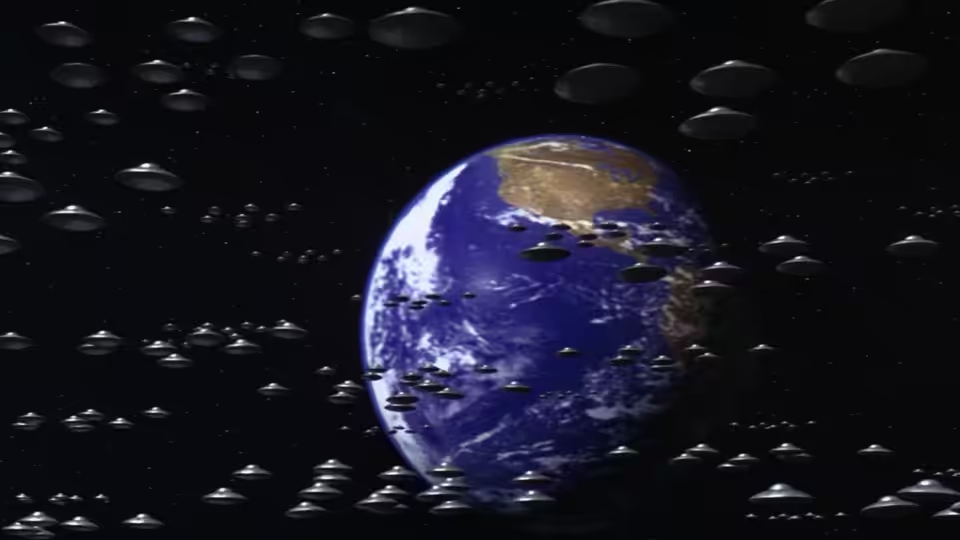
Tim Burton’s Martian invasion is the best-designed comedy of its decade and only about half as funny as it looks. The Martians are a joy; the humans, twelve of them famous, mostly wait around to be vaporised.
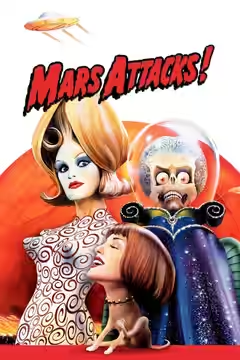
Tim Burton follows Ed Wood with a film that has the same affection for cheap 1950s science fiction and a great deal more money to spend on it. The film comes from a set of Topps trading cards, and it behaves like one: lots of small, lurid pictures of things going wrong, in no particular order. It is good-natured, superbly built and patchy. It is at its best whenever the Martians are on screen and at its slackest whenever they are not, and they are not on screen nearly enough.
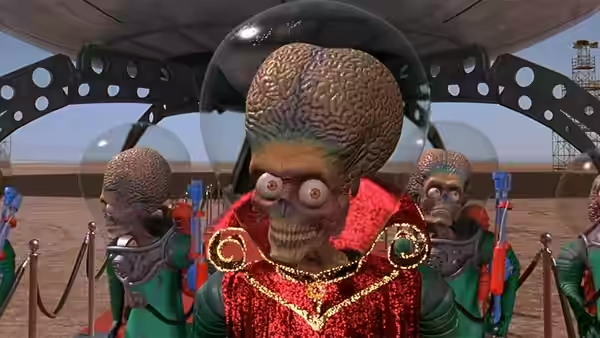
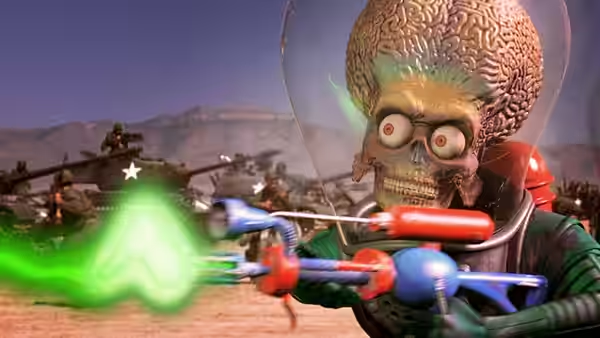
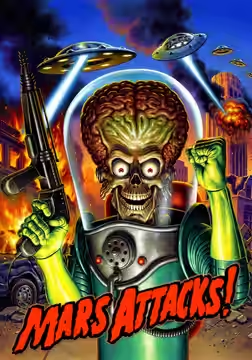
The design is the reason to see it. Wynn Thomas gives the Martians saucers with lights that spin, ray guns that look like Christmas decorations, and a mothership interior of red glass and exposed brains in jars. The Martians themselves are computer-animated but move with the jerk and twitch of stop-motion, all skull and teeth and eyes too big for their sockets. Peter Suschitzky lights everything brightly and flatly, so the Oval Office looks like a set and the desert looks like a postcard, which is the joke. Colleen Atwood puts Close in a stiff red suit and Bening in floating white robes, and dresses the Kansas family in camouflage for a trip to the shops.
The Martians have the best manners in the film and the shortest tempers, and every scene they are in works. At the landing in the desert, a translation machine tells the crowd not to run because the visitors are friends, a hippie lets a dove go, and the Martians shoot it, then everyone else, then the translator repeats that they are friends. We laughed out loud, and then we looked at the floor for a moment, because a good deal of what we had just laughed at was people being turned into red and green skeletons. The Martians also giggle. Danny Elfman gives them a theme of wobbling theremin and marching brass that sounds like every film they might have escaped from, and it is his happiest score in years.
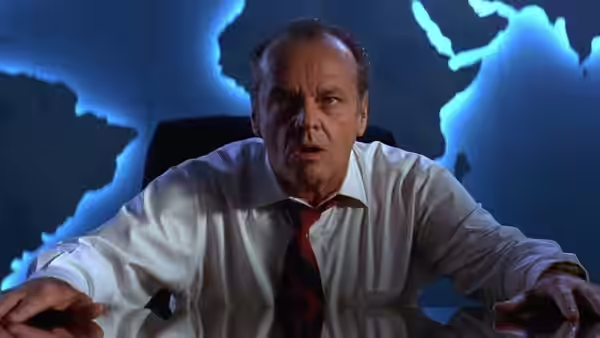
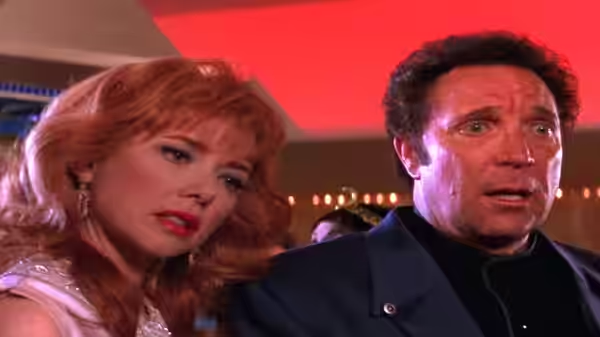
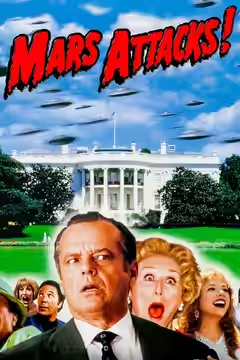
The trouble is the people. Jonathan Gems’s script gives each of them a single note and asks them to play it until the Martians arrive. Nicholson plays the President as a man who has never had a thought without checking it with a pollster, and Art Land as a Vegas developer under a wig, and he is amusing in both without being funny in either. Parker and Fox exist to be in a room when a saucer passes over. Short’s press secretary has one dirty joke. Steiger shouts. Portman gets the sharpest lines and about four minutes to say them. Brosnan is the best of the humans, pipe in hand, professorially certain and wrong about everything, and he plays it entirely straight, which is the only way.
The pacing is the other complaint. Chris Lebenzon cuts between Washington, Las Vegas, Kansas and a television studio for the first half hour, and none of the four strands gathers any speed before the film leaves it for another. It takes a long time to reach the desert. Once the invasion begins, the film becomes a run of sketches, most of them good, none of them building on the last, so that by the final stretch we were still smiling but no longer waiting for anything.
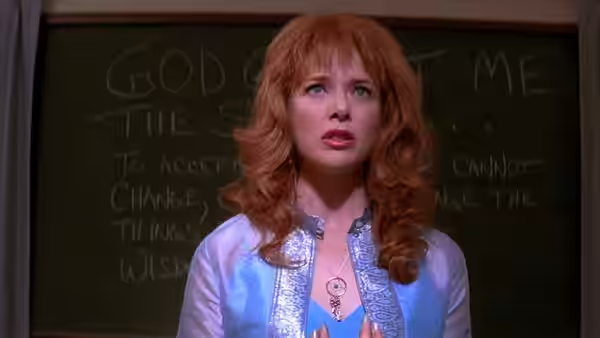
Independence Day, from the same year, asked us to cheer for humanity. This one asks us to enjoy watching humanity lose, and we did, right up until the film began to feel guilty about it and handed us a few people in Kansas to care for. Haas gives that strand the only warmth in the picture, and it sits oddly against everything around it.
Watch it with people who like their comedies mean and their spaceships shiny. It runs 106 minutes and carries a 12 certificate, and the Martians, at least, earn every one of them.