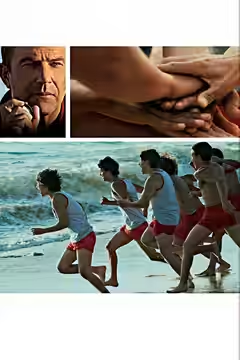
Niki Caro gives this familiar running-team drama enough warmth and attention to its community to make it worth the evening. Kevin Costner keeps it grounded, though the storytelling needs a brisker pace.
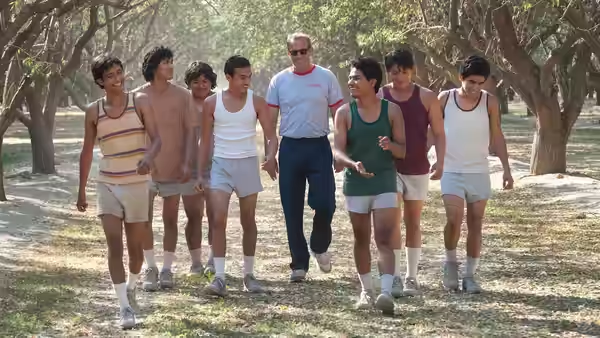
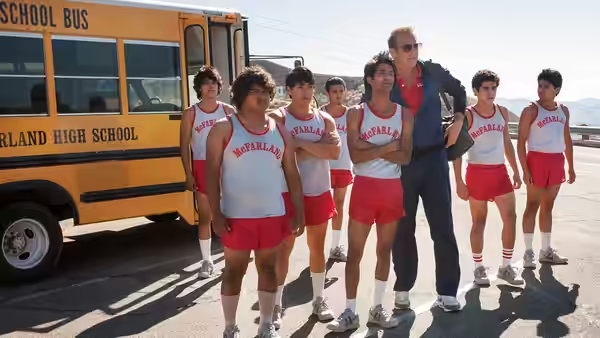
McFarland, USA is a good-hearted sports drama that makes a familiar story worth following, provided familiar is not a disqualification. Niki Caro gives the rural Latino community more attention than the underdog formula strictly requires, and that attention pays off. The young runners have families and ties to a place; they are not simply waiting for a coach to give them something to do. We recommend it for those people, with some patience required for the storytelling.
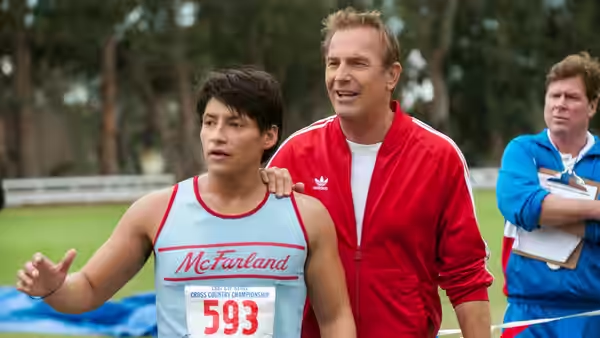
Kevin Costner’s Jim White is useful company in a film that could easily become overbearing. Costner keeps his performance restrained, allowing the coach’s increasing involvement with the team to register without insisting that every change of mind deserves a ceremony. There is authority here, but little actorly fuss. That restraint matters when the screenplay by Grant Thompson, Christopher Cleveland and Bettina Gilois reaches for another familiar piece of sporting encouragement.
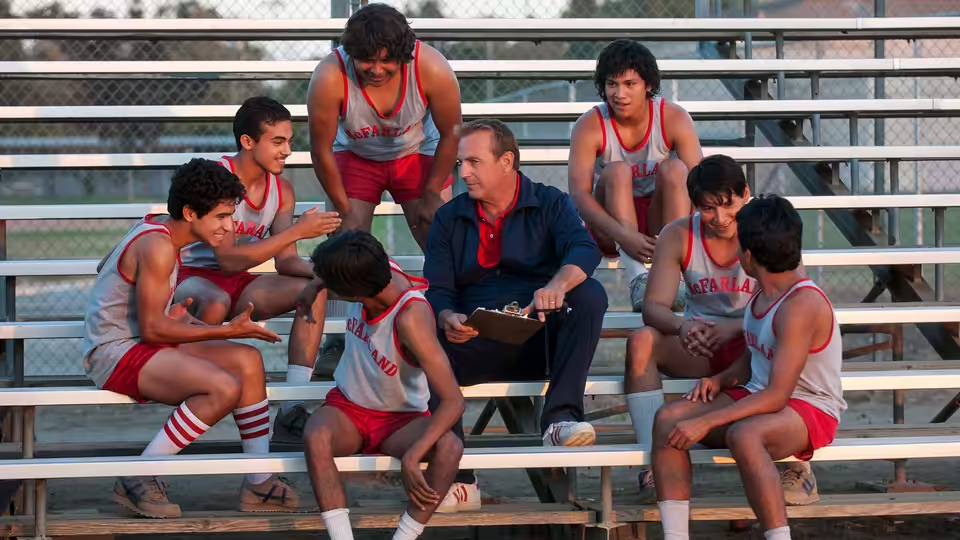
Caro is better at giving the town a shared life than the screenplay is at distinguishing every athlete. The young cast make their connection to one another convincing, even when an individual runner is not given enough to do. Richard Hoover’s production design helps the community feel inhabited, which makes the coach’s outsider perspective less dominating than it might have been. Still, we would have welcomed more time with the boys on their own terms.
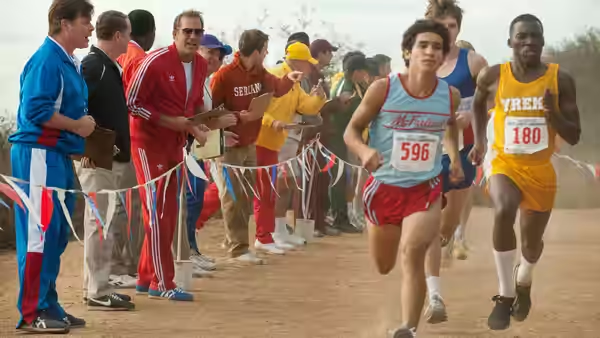
The running itself supplies the strongest reason to care. Adam Arkapaw’s cinematography keeps the athletes clear within a landscape that looks demanding to cross, and Caro gives physical effort its due. We were moved by how hard these young people were working. The strain of covering the ground makes their commitment convincing, without another speech being needed to explain it. These sequences earn the warmth that the film sometimes asks us to accept too readily elsewhere.
The problem is how often that wider community is made to serve Jim’s education. Maria Bello’s Cheryl White has too little room, and the boys sometimes seem less fully considered than the coach’s growing appreciation of them. This is a limitation in a film so plainly interested in families. Caro’s sympathy is persuasive, but sympathy alone cannot give a supporting character the scenes the screenplay has not supplied.
At 128 minutes, it also takes longer than it needs to make fairly straightforward points. David Coulson’s editing is more effective at sustaining the running sequences than at keeping the surrounding drama from feeling protracted. We could have done with less encouragement from Antonio Pinto’s music, too. Neither issue undoes the work of the cast, but a shorter, less emphatic film would have trusted them more.
The underdog sports drama needs to make effort matter, and this one succeeds whenever the runners take over. It is less convincing when it tries to explain a whole community through the experience of one outsider. There is enough here for a family evening, although the leisurely pace may test anyone waiting for the next race. Choose it for the people, and do not expect the plot to keep you guessing.