Dustin Hoffman and Barbra Streisand bring warmth to a comedy that keeps mistaking further humiliation for another joke. The cast provide scattered pleasures, but Jay Roach allows too much repetition and too much time between laughs.
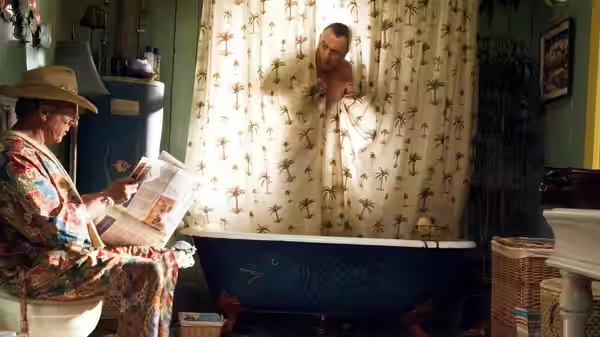
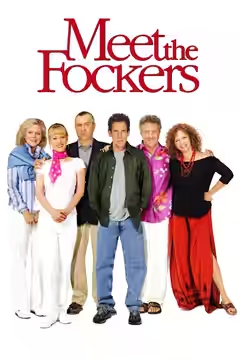
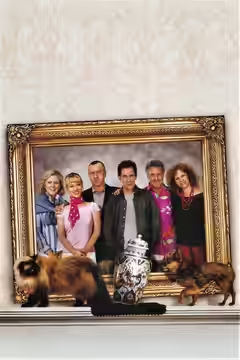
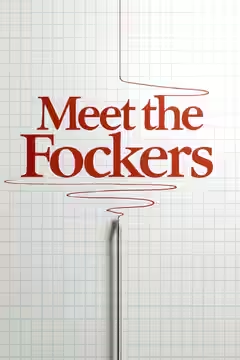
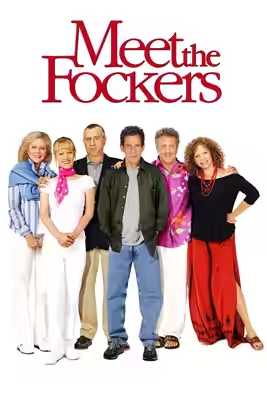
Jay Roach’s Meet the Fockers is an intermittently funny comedy stretched well beyond what its jokes can support. There are scattered pleasures, but 115 minutes is a long commitment for material this repetitive. It keeps returning to humiliation, with increasingly crude gags expected to provide the extra laughs. Dustin Hoffman and Barbra Streisand make the strongest case for staying, largely because their performances have a warmth that survives the effort around them.
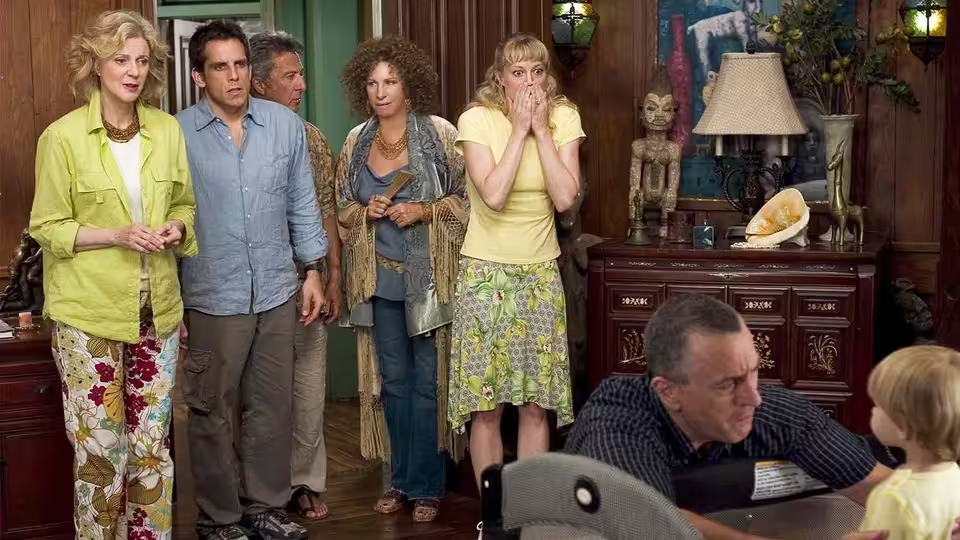
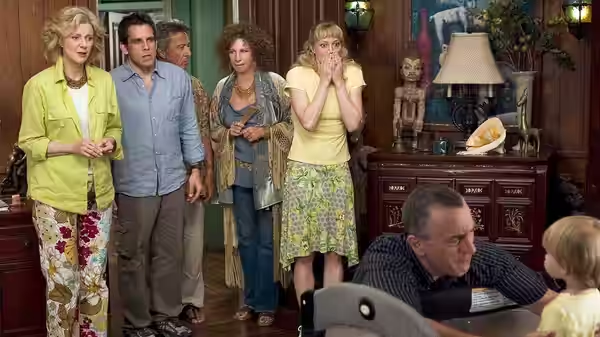
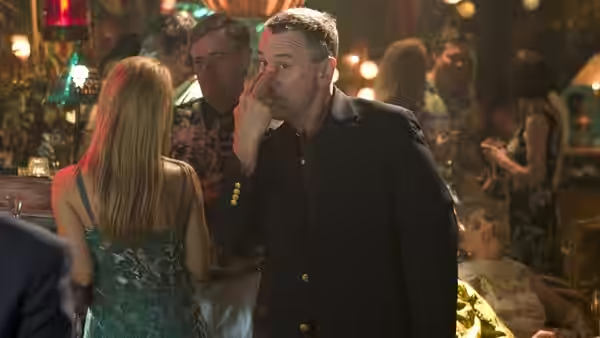
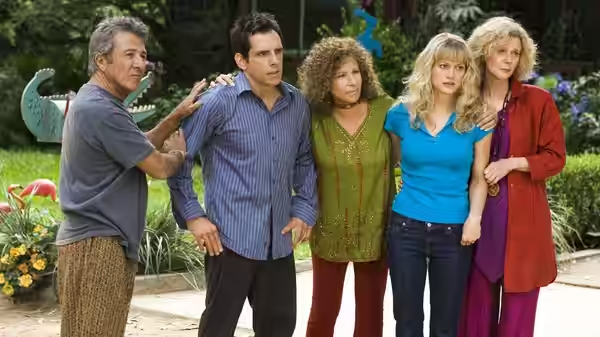
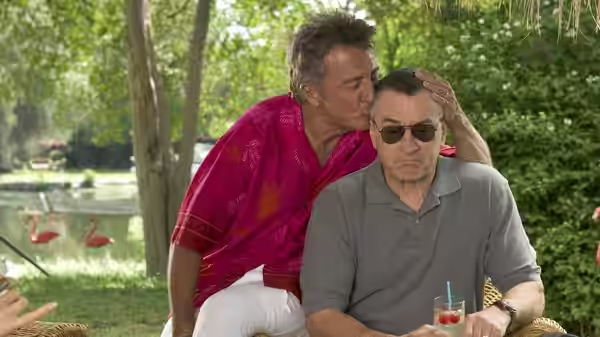
The main pleasure is Dustin Hoffman as Bernie Focker. His good-natured mischief gives the broad comedy an ease it otherwise struggles to find, particularly opposite Robert De Niro as Jack Byrnes. We laughed at their exchanges. The contrast between one actor’s buoyancy and the other’s heavy reactions gives the scenes some momentum without requiring another outrageous gag. Robert De Niro’s more exaggerated responses can become tiresome, but the pairing occasionally makes that excess useful.
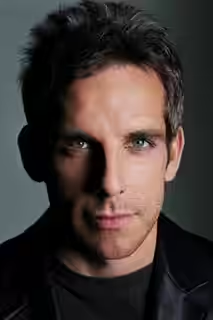
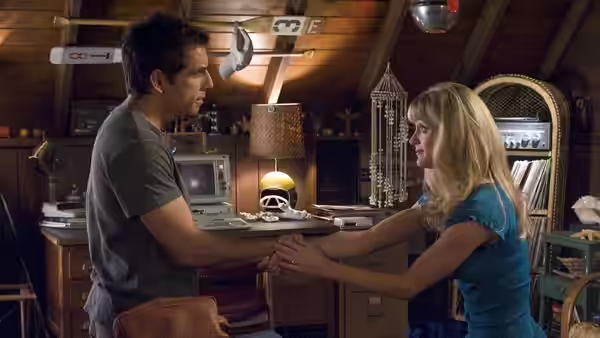
Barbra Streisand as Rozalin Focker is similarly welcome, taking her time with material that other performances seem anxious to sell. Her relaxed delivery allows a joke to arrive without quite so much insistence on its arrival. Ben Stiller, playing Greg Focker, has less opportunity to surprise us, and the repetition matters more whenever the attention returns to him. A comic lead needs something beyond another variation on discomfort, however accomplished the actor may be at supplying it.
The trouble lies mainly with Jim Herzfeld and John Hamburg’s screenplay. Crude jokes can be funny, but they need fresh details and some sense of when to stop. Here, the promise of further humiliation too often substitutes for a new comic idea, and Jay Roach pushes the reactions harder when a scene needs a better reason to continue. The good-natured stretches make this especially frustrating, because the cast can plainly hold our attention without another escalation.
John Schwartzman’s cinematography keeps attention on the actors, a sensible choice when they provide most of the amusement. Rusty Smith’s production design does its job without supplying much additional comic interest; we rarely find ourselves enjoying the surroundings while waiting for a joke to improve. Randy Newman’s music encourages us to take the proceedings in good humour, although it cannot make the weaker material any more inviting. These are serviceable contributions to a film whose problems begin with what the performers are asked to do.
Lee Haxall, Alan Baumgarten and Jon Poll’s editing does too little to reduce that wait. Too many comic situations continue after their possibilities are clear, leaving time for us to anticipate an indignity and then wait for it to happen. In this kind of family farce, that is a serious weakness: surprise is part of the laugh, and repetition needs careful timing. A brisker film might have made the same material easier to enjoy, even without finding anything new to do with it.
There is enough good humour here to make us wish the film were less determined to be outrageous. Those especially fond of Dustin Hoffman or Barbra Streisand will find their patience rewarded in patches. We would save it for an evening when their names alone are enough of an invitation.