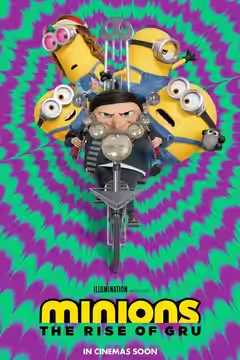
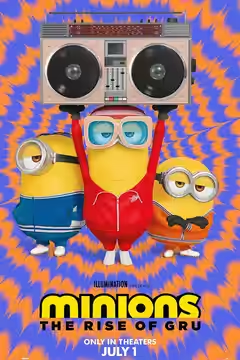
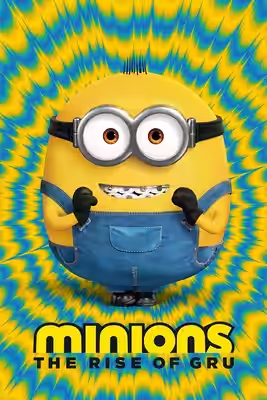
Kyle Balda’s cartoon delivers enough inventive slapstick to justify an undemanding evening. Pierre Coffin’s Minions do most of the work; the fragmented story and lengthy action stretches make the film more tiring than it needs to be.
Kyle Balda’s Minions: The Rise of Gru is a decent family diversion with a story that repeatedly gets in the way of its comedy. Taking Gru back to the beginning gives the film an excuse for a 1970s setting, a collection of extravagant villains and plenty of physical foolishness. That is enough to get it going, and often enough to make us laugh. The difficulty comes when Matthew Fogel’s screenplay tries to keep several strands moving without making any of them particularly absorbing.
Steve Carell gives Gru the necessary determination, though the writing never makes his criminal ambition particularly interesting. There is some pleasure in hearing such seriousness applied to becoming a villain, but the origin-story business takes up space that could have gone to jokes. Alan Arkin is particularly good as Wild Knuckles, giving the character a personality through vocal delivery that the crowded plotting struggles to provide. Taraji P. Henson’s Belle Bottom is another presence we would have preferred the film to spend more time with.
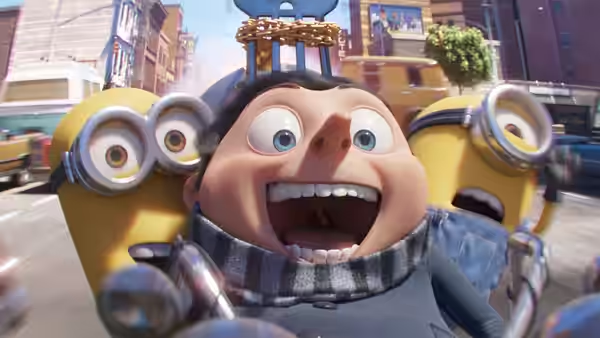
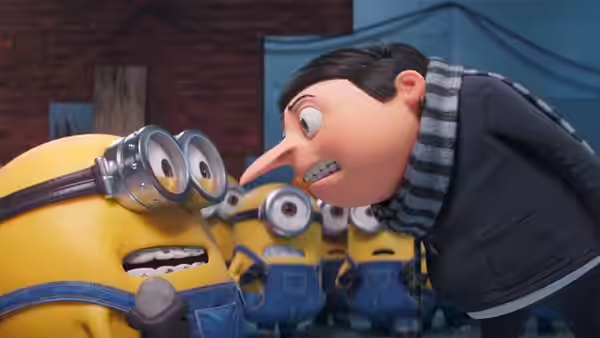
Pierre Coffin’s voice work makes the Minions’ foolishness sound committed rather than merely noisy. He gives their exertions a comic urgency that helps the physical gags without needing the larger story to explain why they ought to be funny. We laughed at the kung-fu training, where the effort to impose discipline on these companions gives the animators something specific to work with. Those routines have a clarity that the surrounding criminal complications lack.
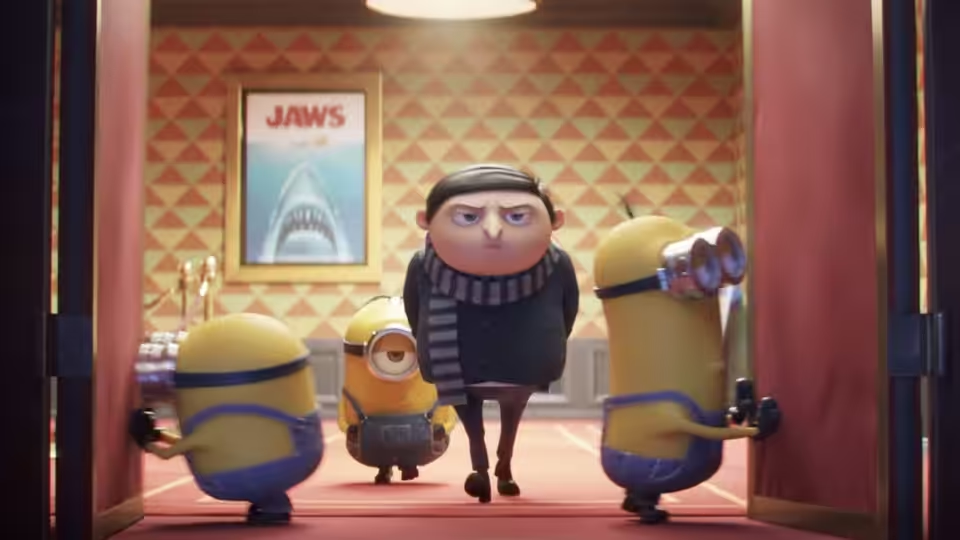
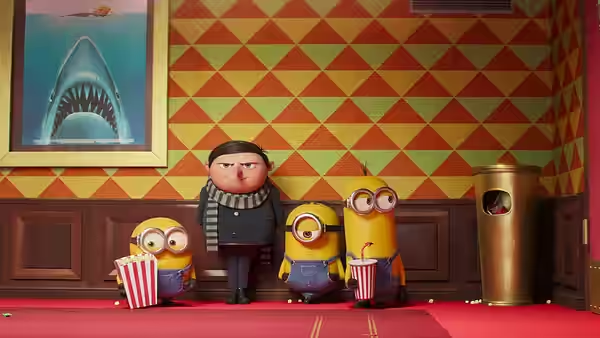
The animation is detailed enough to reward looking beyond the characters, and the 1970s styling gives the surroundings a distinct identity. Balda also keeps the movement readable when the comedy depends on a body getting something wrong. We can see the effort and the mistake, rather than just a blur followed by an impact. The smaller visual jokes make better use of that care than the crowded action does.
Claire Dodgson’s editing gives individual comic routines a useful snap, but the switches between subplots keep interrupting the film’s momentum. Heitor Pereira’s music helps maintain the bustle, though there is already plenty of activity competing for attention. The period soundtrack does an efficient job of reminding us which decade we are in. Between the music, the rapid movement and the frequent changes of focus, the film offers few chances for a joke to linger.
The weakness is the insistence on doing so much with so little story. A family comedy can manage perfectly well with a simple objective and a few characters, but Fogel keeps dividing our attention between loosely connected business. As the action grows more extended, the fights and chases begin to feel like time being filled, with fewer jokes to justify their length. The Minions’ loyalty gives the film some warmth, but it cannot make every diversion necessary.
At 87 minutes, it should be easier company than it is. There are enough good gags to make its weaknesses forgivable, particularly for anyone already fond of these characters. We would happily have watched more of the training and less of the competing storylines. Choose it for the slapstick, with modest expectations of everything joining up.